
Neuroproteasomes Regulate Endogenous Tau Paired Helical Filament Formation in an APOE Genotype- and Age-Dependent Manner
The study published in Nature Neuroscience demonstrates that neuroproteasomes directly regulate the formation of endogenous tau paired helical filaments (PHFs) in mice, with effects varying by APOE genotype and age. Using novel cell‑impermeant proteasome inhibitors, the authors show that neuroproteasome inhibition drives accumulation of sarkosyl‑insoluble tau, especially in APOE4 carriers and older animals. Proteomic and electron‑microscopy analyses confirm that disrupted proteasome activity accelerates tau aggregation pathways linked to Alzheimer’s disease. The work provides a mechanistic bridge between proteostasis collapse, genetic risk, and age‑related tau pathology.

An Unexpected Molecular Explanation for How Tau Aggregation Begins in Alzheimer’s Disease
Researchers have identified that loss of the neuronal plasma‑membrane proteasome, termed the neuroproteasome, triggers the conversion of normal tau protein into aggregates resembling those in Alzheimer’s disease. The study shows aging and the APOE4 genotype—both major AD risk factors—drive neuroproteasome...

The Multiple Scales of Astrocytic Functional Units
The Nature Neuroscience review proposes that astrocytes function through a hierarchy of spatially distinct units, ranging from nanometer‑scale perisynaptic processes to micron‑scale domains and millimeter‑scale networks. By integrating morphological data, molecular profiling, and calcium signaling studies, the authors argue that...
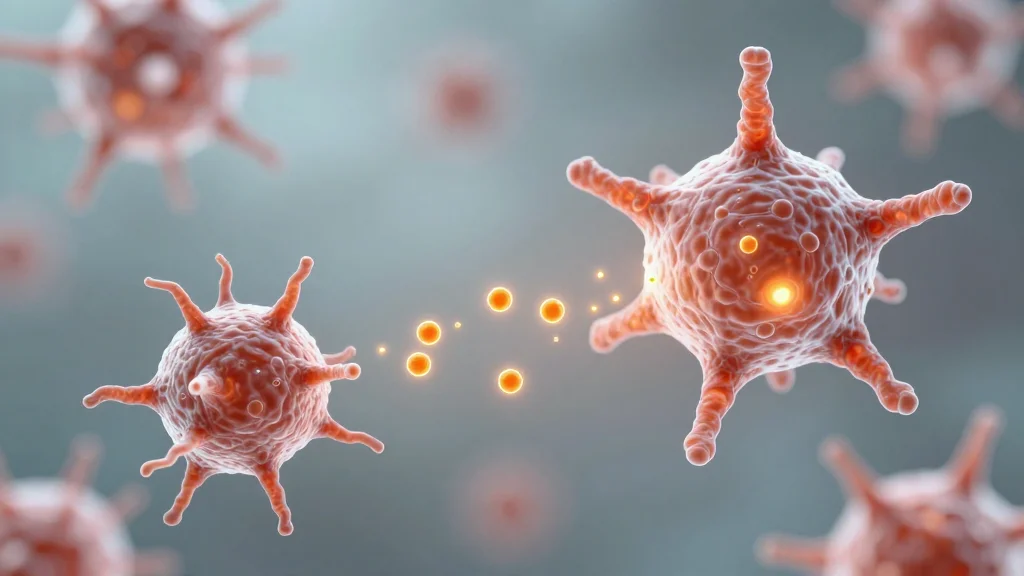
Microglial Mitochondria Transfer to Astrocytes via GPNMB-Enriched Extracellular Vesicles Alleviates Cognitive Deficits in Tauopathy Mice
Researchers discovered that microglia in PS19 tauopathy mice package functional mitochondria into extracellular vesicles enriched with glycoprotein nonmetastatic melanoma protein B (GPNMB) and deliver them to astrocytes. The mitochondrial transfer restores astrocytic function, mitigates tau pathology, and improves cognitive performance...

Low-Dimensional Population Dynamics in the Brainstem Gate REM Sleep
Researchers used Neuropixels probes in head‑fixed mice to record hundreds of neurons across midbrain and pontine REM‑regulatory areas. Dimensionality reduction showed that population activity is low‑dimensional, dominated by two principal components: PC1, which spikes during REM sleep, and PC2, which...
Fixation Duration on Natural Scenes Is Explained by Memory Encoding Not Processing Demand
A large‑scale MEG and eye‑tracking study of five participants viewing 4,080 natural scenes shows that fixation duration is driven by memory‑related processes rather than visual processing demand. Neural pattern stabilization occurs at consistent latencies regardless of how long a fixation...
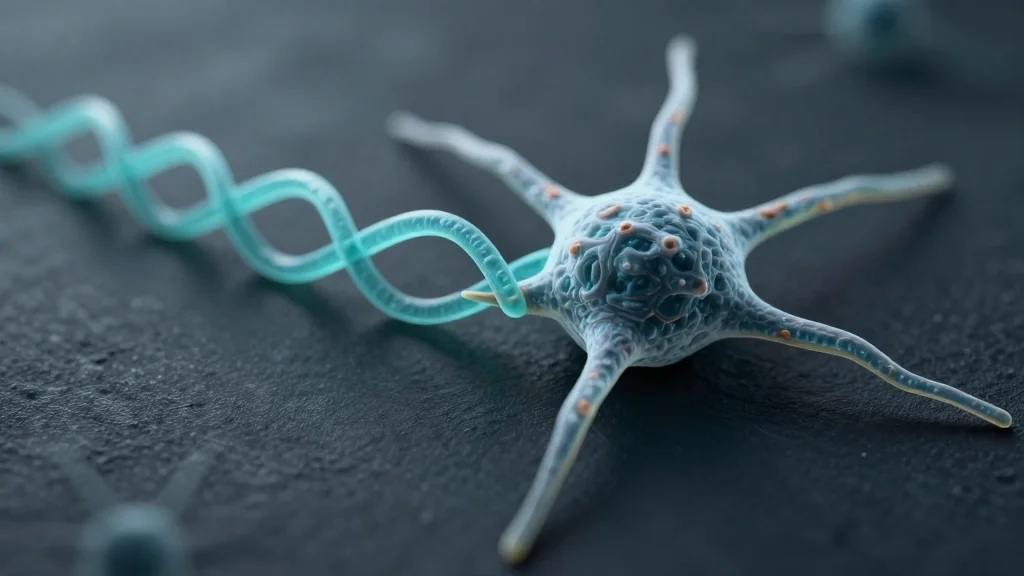
Tau Aggregates Cause Reactivation of Transposable DNA Elements, Leading to Z-RNA–ZBP1-Mediated Neuronal Death
Researchers discovered that pathological tau aggregates reactivate dormant transposable DNA elements in neurons, producing left‑handed Z‑RNA. The Z‑RNA is recognized by the innate immune sensor ZBP1, which initiates a RIPK3‑MLKL necroptotic cascade leading to neuronal death in tauopathy mouse models...
Considering Biological Limitations of Lesion Network Mapping
Lesion network mapping (LNM) has become a popular method for linking focal brain lesions or atrophy clusters to distributed functional networks. Recent work by Pini, Salvalaggio and Corbetta argues that LNM mainly captures elementary topological features of the normative connectome...
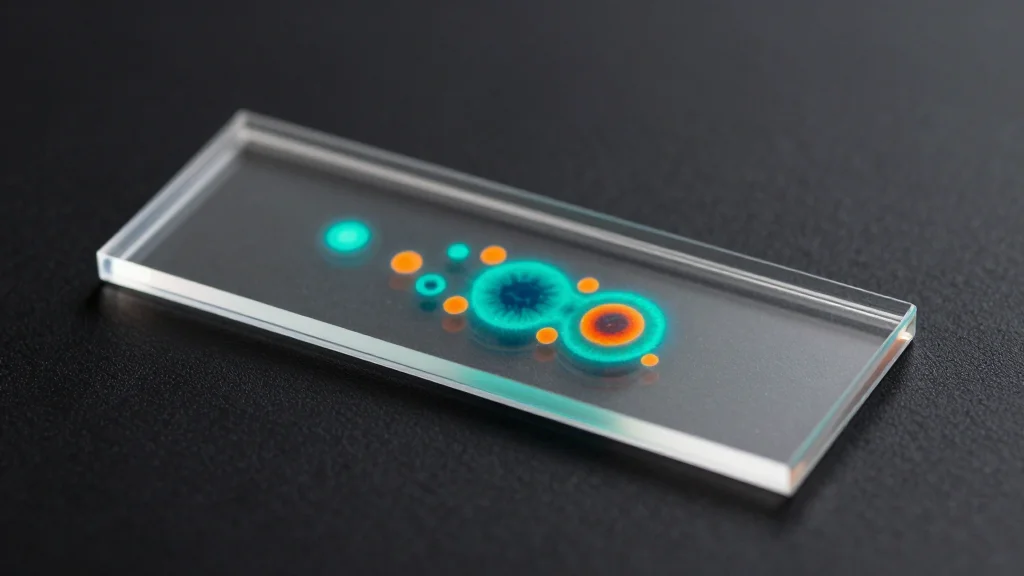
Spatial Proteomic Analysis in Human Alzheimer’s Disease Brains Enables Identification of Microenvironment-Dependent Microglial Cell States
Researchers adapted the CODEX multiplex immunofluorescence platform for formalin‑fixed paraffin‑embedded human brain tissue, creating the CODEX‑CNS workflow. Using 32‑protein panels on 51 samples (26 Alzheimer’s disease and 25 controls), they mapped microglial phenotypes at single‑cell resolution. The analysis revealed a...
Parsing Autism Spectrum Heterogeneity Through fMRI
Researchers from UNC and international partners published a cross‑species fMRI study in Nature Neuroscience that uncovers two principal dysconnectivity signatures in autism. The signatures emerged from analyses of 20 mouse models of autism risk and were each tied to distinct...
Excitatory Synapses Onto Axonic Spines Jump-Start Action Potentials and Route Information Flow
Researchers identified excitatory synapses on axonic spines that can directly trigger action potentials, effectively jump‑starting neuronal firing. Using two‑photon imaging, patch‑clamp recordings, and mGRASP mapping, the team showed that these synapses accelerate spike onset and reroute information flow within cortical...

Synchronous Climbing Fiber Activity Enables Instructive Signaling for Cerebellar Learning Through Modulation of Disinhibitory Circuits
The study reveals that climbing fibers (CFs) in the cerebellum preferentially synapse onto a subset of molecular layer interneurons (MLI2) that inhibit other interneurons (MLI1), creating a disinhibitory circuit. Using dense electron‑microscopy reconstruction and in‑slice electrophysiology, the authors show that...

Closed-Loop Stimulation Modulates Attention Shifting in Children
A team of researchers published in Nature Neuroscience that real‑time closed‑loop brain stimulation can modulate how children shift attention. Using invasive sEEG in children with epilepsy, MEG in typically developing and ADHD cohorts, and TMS‑EEG in adults, they identified neural...

Neurons for Seeing and Imagining
A study in Science recorded 714 neurons in the ventral temporal cortex of 16 epilepsy patients. Researchers found 456 category‑selective cells, with 80% encoding objects along low‑dimensional axes derived from deep neural networks. This axis‑based code enabled reconstruction of viewed...

Screening for Photoreceptor Survival
Researchers used human retinal organoids to screen compounds that affect cone survival under glucose starvation. They identified two kinase inhibitors, CS‑KI‑1 and CS‑KI‑2, targeting CK1 and MAPK11, that protected cones and rods in vitro and in a mouse model of...