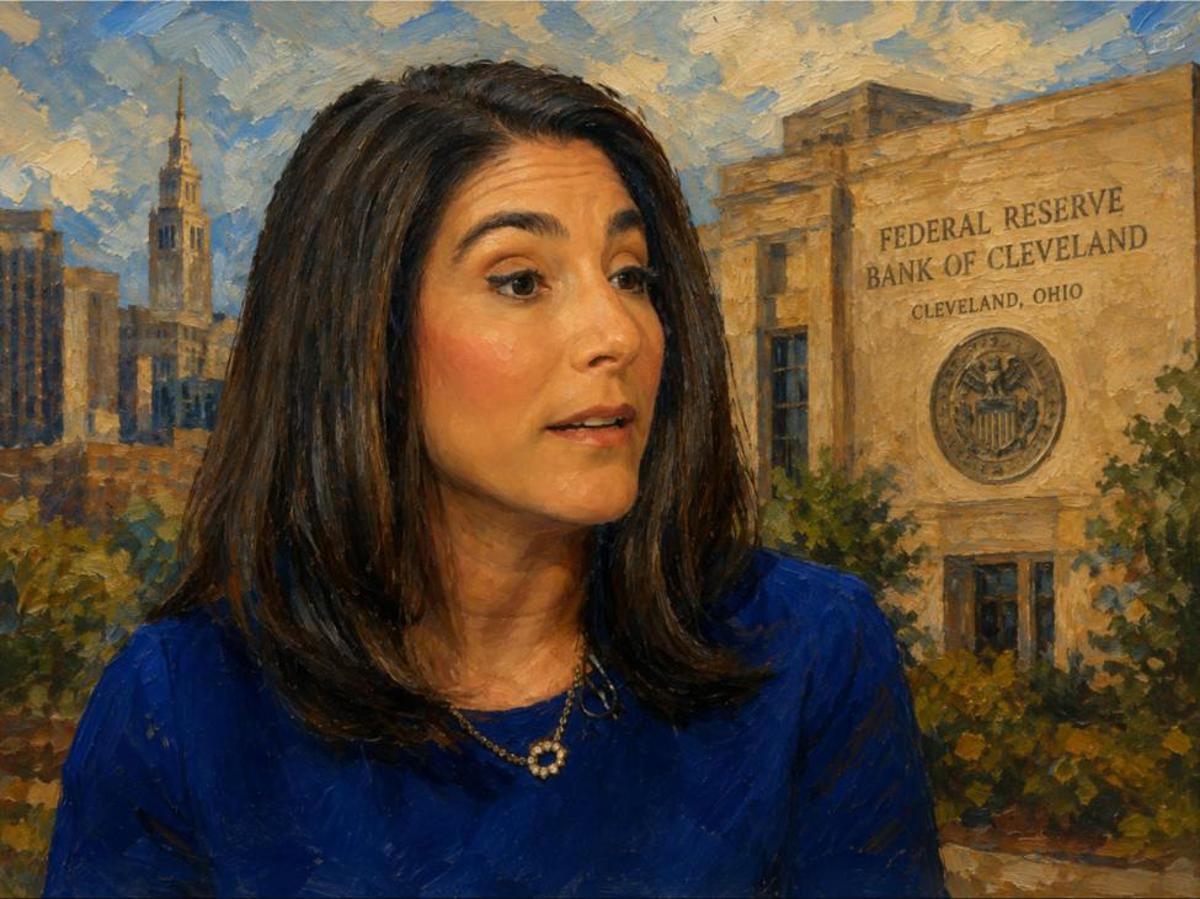
Fed's Hammack: I See a Lot of Uncertainty in Economic Outlook
Why It Matters
The remarks suggest the Fed will keep policy restrictive longer, shaping borrowing costs and inflation expectations across markets. Investors and businesses must plan for sustained higher rates amid geopolitical risks.
Key Takeaways
- •Hammack calls for neutral stance amid heightened economic uncertainty.
- •She expects Fed rates to stay unchanged for an extended period.
- •Inflation pressures could persist due to higher prices and Iran conflict.
- •Labor market remains tight with low unemployment and low turnover.
- •She opposed policy language suggesting an easing bias at the last meeting.
Pulse Analysis
Beth Hammack’s recent remarks underscore a growing consensus within the Federal Reserve that policy should remain on hold despite a volatile macro backdrop. After the latest FOMC meeting, the Fed kept the federal funds target at 3.50%‑3.75%, but Hammack’s dissent over the easing‑bias language signals a reluctance to signal any near‑term rate cuts. This cautious tone aligns with the broader "higher‑for‑longer" stance that has guided monetary policy since mid‑2023, reinforcing expectations of steady borrowing costs for businesses and consumers.
Inflation remains the central concern, with Hammack pointing to rising consumer prices and the potential for the Iran conflict to exacerbate price pressures. Higher energy and commodity costs tied to geopolitical instability could embed inflation expectations more deeply, limiting the Fed’s flexibility. For households, persistent price growth forces tougher financial trade‑offs, eroding disposable income and dampening demand. Market participants should monitor commodity price trends and any escalation in the Middle East, as these factors could influence the Fed’s inflation outlook and, consequently, its policy trajectory.
The labor market, while still robust with low unemployment and a "low‑hire/low‑fire" environment, does not yet provide a clear case for easing. Hammack’s opposition to language hinting at future cuts reflects a desire to keep the Fed’s messaging disciplined. As the institution prepares for the arrival of new Chair Christopher Waller, the emphasis on policy neutrality and inflation anchoring is likely to persist, shaping expectations for investors, lenders, and corporate planners alike.
Fed's Hammack: I see a lot of uncertainty in economic outlook
Comments
Want to join the conversation?
Loading comments...