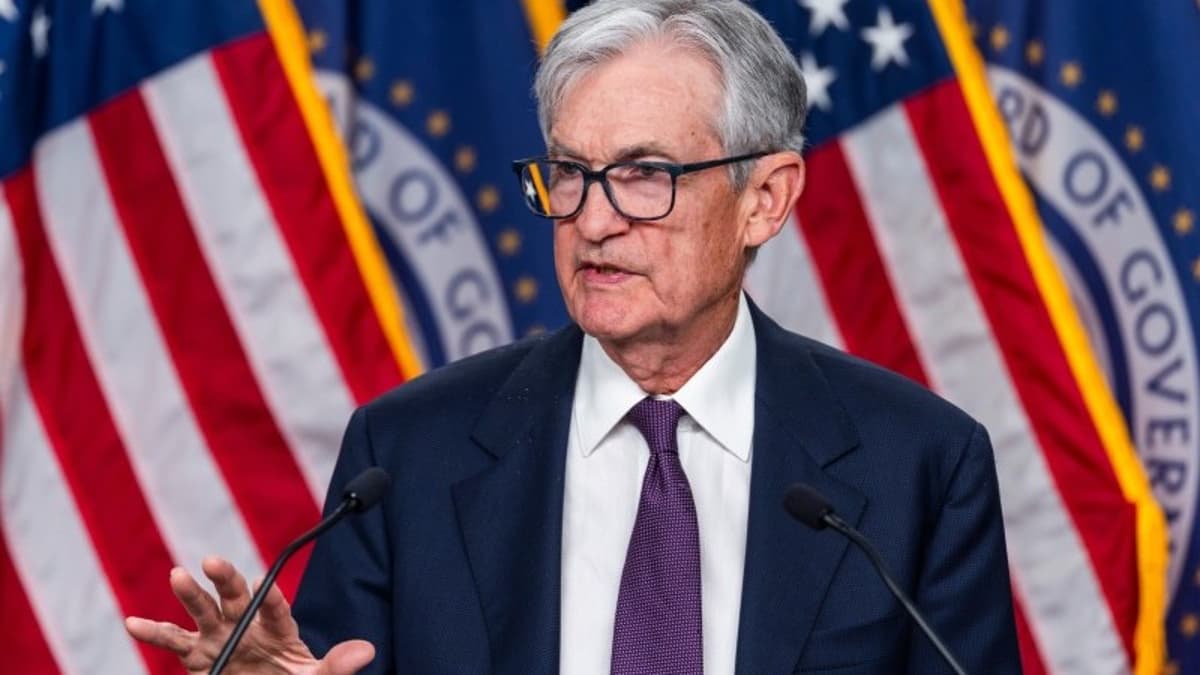
Middle East Stasis Set to Keep Fed on Hold at Chair Powell’s Swan Song
Why It Matters
The outlook shapes global bond yields, the dollar’s trajectory, and corporate financing costs, while Powell’s potential extension adds political uncertainty to monetary policy decisions.
Key Takeaways
- •Powell’s term ends May 15, but he may stay chair pro tempore
- •Fed funds futures show unchanged April rate, cuts priced by year‑end
- •Middle‑East tensions keep inflation above 4%, delaying aggressive Fed easing
- •Fed’s balance sheet grew $185 bn in securities, T‑bill purchases now $25 bn/month
- •Dollar could rise if Powell signals hawkish stance amid high energy prices
Pulse Analysis
Jerome Powell’s impending departure marks a rare transition point for the Federal Reserve, yet the political backdrop suggests his tenure may extend beyond the formal May 15 deadline. Senate opposition tied to a Justice Department probe over the Fed’s headquarters renovation has stalled the confirmation of his successor, Kevin Warsh. This uncertainty fuels market speculation, prompting investors to watch Powell’s press conference for clues about a possible pro‑tempore extension and its impact on policy continuity. The lack of a clear successor also heightens the stakes for any shift in the Fed’s communication tone.
Inflation remains the dominant constraint on monetary easing. While the pandemic‑era supply chain shock has faded, a new energy‑driven price surge—exacerbated by ongoing Middle‑East tensions—has pushed headline CPI back above 4%. The Fed’s latest projections still see only a single 25‑basis‑point cut in its 2026 outlook, with most forecasters betting on two cuts later in 2024. The labor market shows minimal momentum, adding to the view that the committee will maintain a modestly restrictive stance until inflation expectations are firmly anchored.
On the balance‑sheet front, the Fed’s securities holdings have risen by roughly $185 bn since the December restart of its Treasury‑bill buying program, now totaling over $425 bn in T‑bills. The New York Fed’s decision to reduce monthly purchases to $25 bn signals confidence in liquidity conditions but also raises questions about future roll‑offs, especially in mortgage‑backed securities. A more dovish successor could accelerate bond sales, pressuring long‑term yields and potentially strengthening the dollar if Powell adopts a hawkish tone amid stubborn energy prices. Investors should monitor these dynamics as they influence equity valuations, credit spreads, and foreign‑exchange markets.
Middle East stasis set to keep Fed on hold at Chair Powell’s swan song
Comments
Want to join the conversation?
Loading comments...