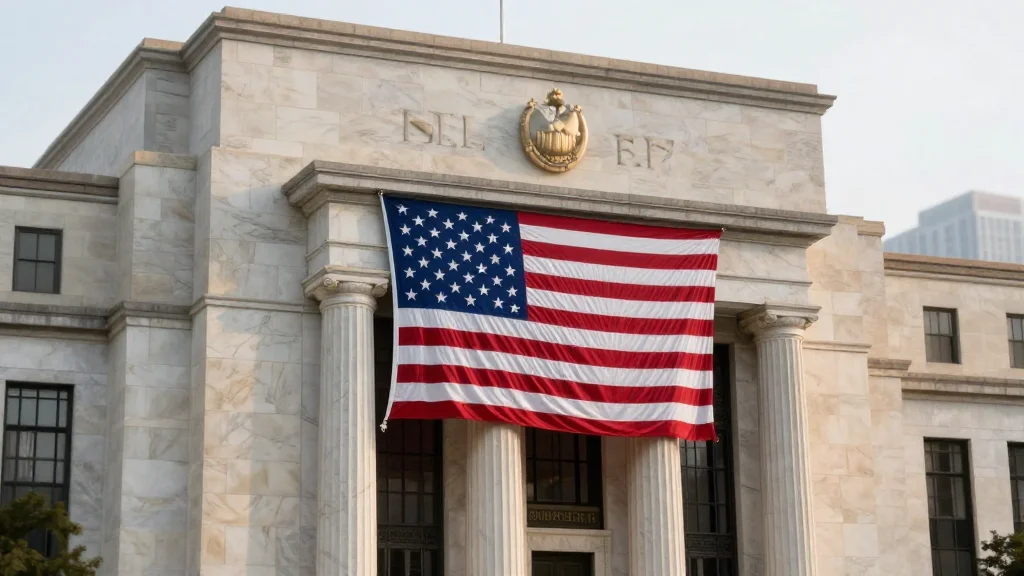
New Fed Chair Kevin Warsh Signals Reform Push as Markets Rally on S&P Forecast

Companies Mentioned
Why It Matters
Warsh’s reform‑focused stance could reshape the Fed’s approach to inflation targeting, balance‑sheet normalization, and forward guidance, directly influencing borrowing costs for businesses and households. A shift toward tighter policy would affect mortgage rates, corporate financing, and the broader credit environment, potentially slowing the current earnings‑driven market rally. Simultaneously, Goldman Sachs’ upgraded S&P 500 forecast underscores the resilience of corporate earnings, especially in AI‑driven sectors. If the Fed maintains a dovish posture, the earnings boom may continue to fuel equity gains. Conversely, a policy pivot could temper equity enthusiasm and re‑price risk assets, highlighting the delicate balance between growth and price stability in the U.S. economy.
Key Takeaways
- •Kevin Warsh became Federal Reserve chair on May 24, 2026, with President Trump's explicit support.
- •Trump said Warsh "will have the full support of his administration," signaling political backing for potential policy changes.
- •Goldman Sachs raised its S&P 500 year‑end target to 8,000, up from 7,600, on strong corporate earnings.
- •The brokerage lifted its EPS forecasts to $340 for 2026 and $385 for 2027, reflecting confidence in profit growth.
- •Analysts anticipate Warsh’s first major policy speech at the June Fed meeting could hint at tighter rates or balance‑sheet reforms.
Pulse Analysis
Warsh’s ascent marks the first major leadership change at the Fed since the pandemic, and his reform rhetoric suggests a willingness to revisit the extraordinary measures that kept rates near zero for years. Historically, new chairs have used the early months to signal intent—Ben Bernanke’s 2006 easing and Janet Yellen’s 2014 balance‑sheet tapering are prime examples. Warsh appears to be positioning himself similarly, but with a political ally in President Trump who has repeatedly advocated for lower rates to spur growth.
The market’s bullish response, epitomized by Goldman Sachs’ aggressive S&P 500 target, reflects a broader belief that corporate earnings—particularly in AI and semiconductor sectors—can outpace inflationary pressures. However, this optimism rests on a fragile foundation: energy price volatility from the Middle East conflict and lingering supply‑chain constraints could quickly erode profit margins. If Warsh opts for a more hawkish stance, the resulting rate hikes could increase financing costs for tech firms that rely on cheap capital, potentially cooling the AI‑driven rally.
Looking ahead, the June FOMC meeting will be a litmus test. A clear signal of rate hikes or accelerated balance‑sheet runoff would likely temper equity enthusiasm and re‑price risk assets, while a hold could reinforce the earnings‑driven narrative. Investors should monitor Warsh’s language on inflation expectations and the Fed’s balance‑sheet timeline, as any deviation from the current steady‑hand approach could reshape the trajectory of U.S. growth and the broader global financial environment.
New Fed Chair Kevin Warsh Signals Reform Push as Markets Rally on S&P Forecast
Comments
Want to join the conversation?
Loading comments...