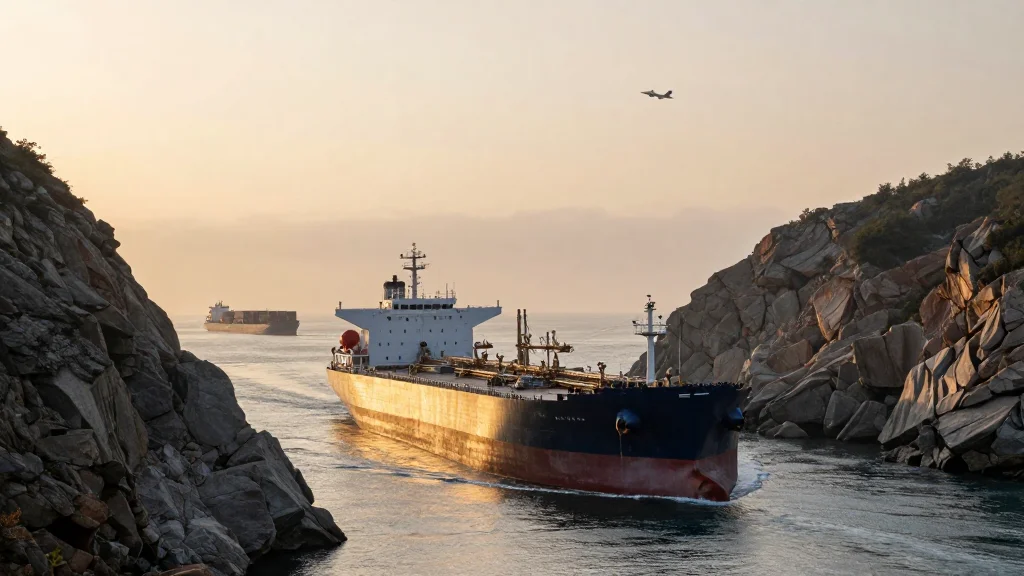
Trump Heads to Beijing Seeking Chinese Help to Reopen Strait of Hormuz Amid Iran War

Why It Matters
The Strait of Hormuz is a critical artery for global oil markets; any disruption reverberates through U.S. gasoline prices, inflation, and corporate earnings. By pulling China into the diplomatic effort, the United States is leveraging the world’s largest oil consumer to mitigate a supply shock that could otherwise force the Federal Reserve to tighten policy further. Moreover, the summit tests whether the two economic superpowers can compartmentalize geopolitical friction and keep trade channels open, a balance that underpins the stability of global supply chains and the health of the U.S. economy. If Beijing succeeds in influencing Tehran, the immediate benefit would be lower energy costs and reduced market volatility, supporting consumer spending and corporate profit margins. Failure, however, could entrench higher oil prices, exacerbate inflation, and heighten the risk of a renewed U.S.–China trade confrontation, all of which would weigh heavily on U.S. growth forecasts for the remainder of 2026.
Key Takeaways
- •President Trump arrives in Beijing on May 13 to press China on Iran and the Strait of Hormuz.
- •Strait of Hormuz carries roughly 20% of global crude oil; its closure has pushed Brent above $107/barrel.
- •U.S. Trade Representative Jamieson Greer warned the talks must not derail broader US‑China relations.
- •China imports about 50% of its crude oil and one‑third of its LNG from the Middle East.
- •U.S. sanctions on three China‑based firms for satellite imagery to Iran triggered Beijing’s blocking statute.
Pulse Analysis
Trump’s Beijing trip is less a traditional state visit and more a high‑stakes economic maneuver. By framing the Iran war as a supply‑chain issue, the administration is trying to turn a geopolitical crisis into a lever for energy market stabilization. The strategy hinges on Beijing’s dual role as Iran’s biggest oil buyer and a major consumer of U.S. goods. If China can coax Tehran into a cease‑fire, the immediate payoff is a modest reduction in oil prices, which would ease inflationary pressure and give the Federal Reserve breathing room. However, the diplomatic calculus is fragile; Beijing’s risk‑averse stance, as noted by Chatham House, suggests it will avoid overt pressure that could jeopardize its own energy security.
Beyond oil, the summit tests whether the United States can separate trade disputes from security concerns. Both sides have signaled a desire to avoid a tariff war, yet the backdrop of sanctions on Chinese firms and the looming threat of a broader confrontation over technology and supply‑chain resilience remains. The outcome will likely set the tone for upcoming multilateral forums—APEC in Shenzhen and the G‑20 in Miami—where trade, climate, and security agendas will intersect.
In the longer view, the visit underscores a shift in U.S. foreign‑economic policy: leveraging great‑power diplomacy to manage commodity markets rather than relying solely on domestic policy tools. Whether this approach can deliver tangible economic benefits without compromising strategic objectives will be the key question for policymakers and investors alike.
Trump heads to Beijing seeking Chinese help to reopen Strait of Hormuz amid Iran war
Comments
Want to join the conversation?
Loading comments...