
Social•Mar 2, 2026
Separate User and Buyer Personas: Tailor Message, Timing, Channel
If the user and the buyer are different people, what are you trying to convince each of? When? (Trials vs discovery) Where? (In-product vs sales material) Etc. Treat as specific, separate personas.
By Jason Cohen

Social•Mar 1, 2026
Blend AI and Human Creativity for Optimal Results
You don’t need to go all AI or NO AI with your creatives… leaning too far either way means wasting budget on low-quality output or falling behind brands launching faster. The smarter approach sits in the middle. We use AI as a...
By Kody Nordquist
Social•Mar 1, 2026
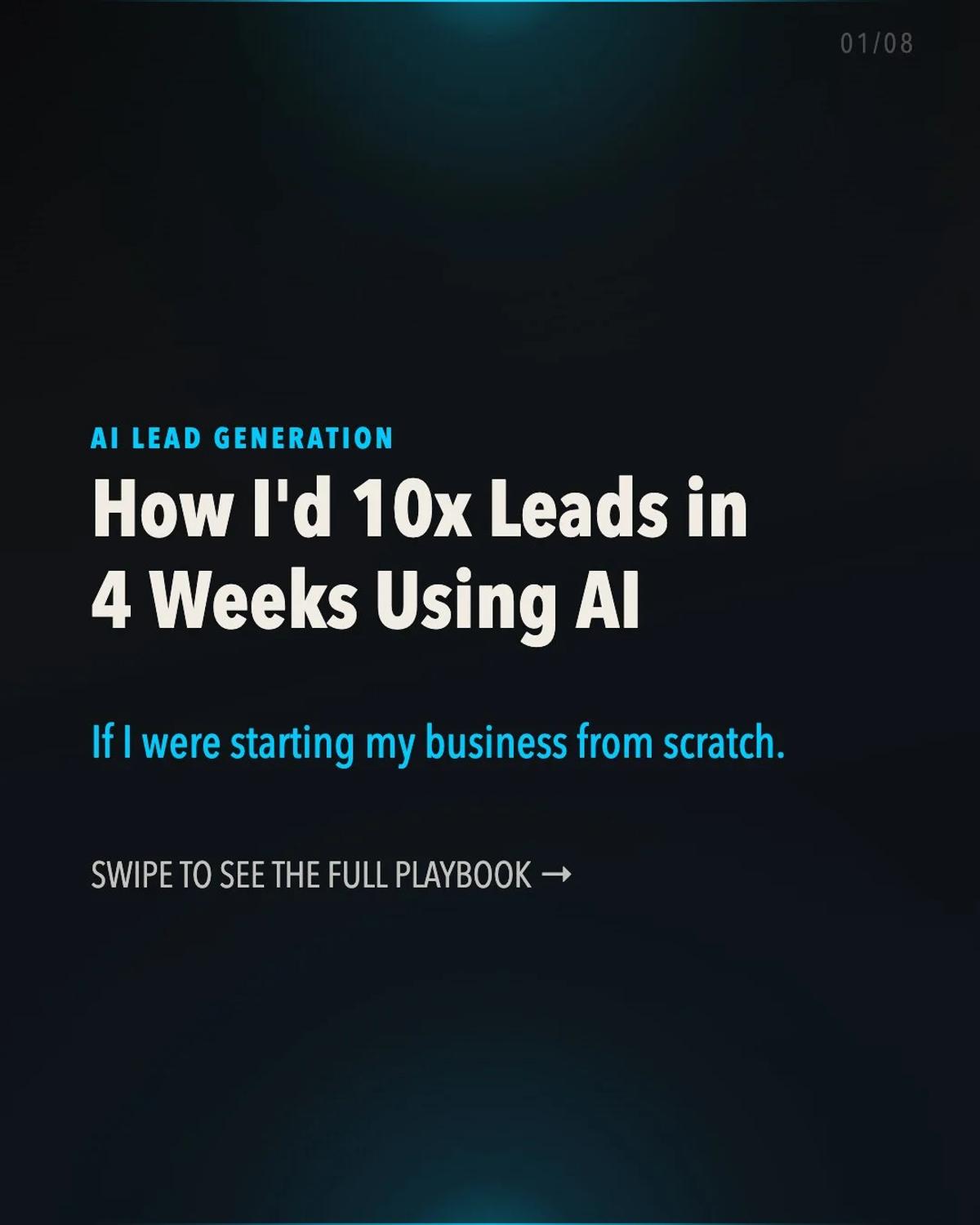
Boost Leads 10x in 4 Weeks with AI
How I'd 10x leads in 4 weeks using AI, if I were starting my business from scratch.
By Tom Bilyeu

Social•Mar 1, 2026
Six Essential Questions to Avoid “No Decision”
6 non-negotiables for me to uncover in every sales cycle. Without it, you're likely to lose often to 'no decision.' And no - this is not MEDDIC. It's the concept of 'why change' and why an investment is required. 1. 𝐈𝐝𝐞𝐧𝐭𝐢𝐟𝐲 𝐚 𝐜𝐨𝐦𝐩𝐚𝐧𝐲-𝐬𝐩𝐞𝐜𝐢𝐟𝐢𝐜 𝐨𝐛𝐣𝐞𝐜𝐭𝐢𝐯𝐞 How...
By Brian LaManna

Social•Feb 28, 2026
Meta's New Metrics Overstate ROAS; Focus on Profit
Meta quietly rolled out two new breakdowns in Ads Manager. 1. First time vs. repeat purchase conversion data. 2. Visibility into how much of your performance is being driven by their AI. It’s worth pulling, but not worth trusting blindly. We've seen...
By Kody Nordquist

Social•Feb 28, 2026
Continuous Testing Breaks Growth Ceilings, Not Past Successes
The thing that got you to $1M won't get you to $10M. What got you to $10M won't get you to $50M. Brands hit a ceiling when they stop testing. They find a winner and protect it instead of building the...
By Kody Nordquist

Social•Feb 28, 2026
Metadata‑Driven MRR Schedules Unlock Revenue Intelligence
As I was building my MRR analysis feature, I realized that there is much more power in our MRR schedule than we realize. With the correct metadata, we have a revenue intelligence engine that will provide more insight for our sales...
By Ben Murray

Social•Feb 28, 2026
Cumulative Ratings Buffer Negatives, Incremental Highlight Them
The same ratings look better or worse, depending on the format they are presented in. Researchers find: “Cumulative formats tend to buffer negative feedback, making poor scores appear less severe. This can help reduce customer churn and maintain trust in platforms. In contrast, incremental...
By Nancy Harhut

Social•Feb 27, 2026
Early Bets Win; Amazon’s Late Entry Costs Billions
Early positioning beats late capital every time. Amazon just invested $50 billion in OpenAI for 6 percent ownership and distribution rights. Microsoft invested $13.8 billion starting in 2019 and owns 23.5 percent with exclusive IP, revenue sharing, and API control locked through...
By Hiten Shah

Social•Feb 27, 2026
Enterprise Focus Beats Freemium Hype, Drives $300M Growth
Vineet Jain's board: "Why aren't you doing freemium? Why are you swimming upstream?" Box and Dropbox were giving it away. Raising billions. He refused. Freemium is for consumers. Not enterprises. 2016: Gartner puts @Egnyte in the Leader quadrant. Next to companies that raised...
By Omer Khan
Social•Feb 27, 2026
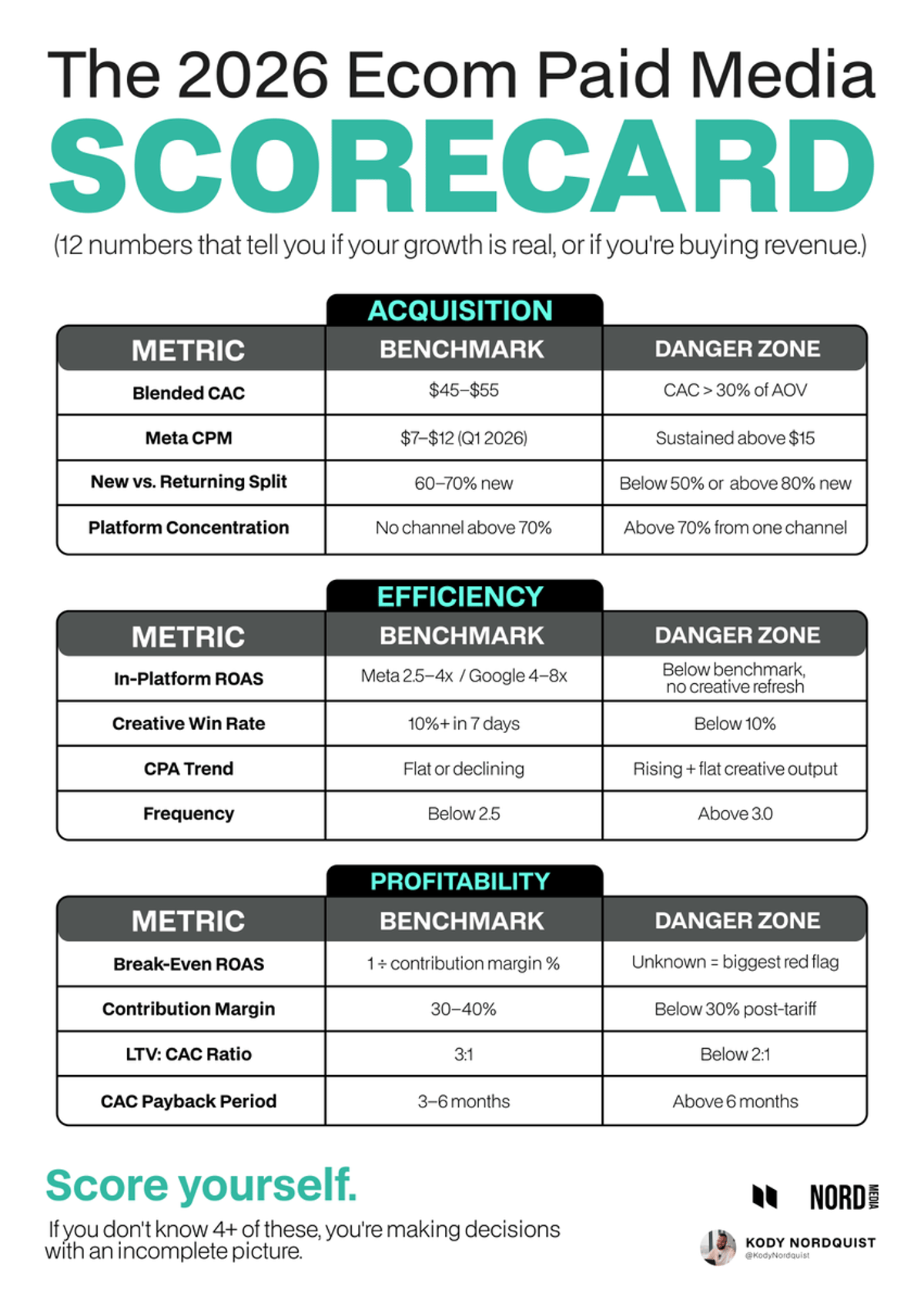
Know Your 12 Key Ecom Metrics or Fail
Ecom operators are surrounded by data meant to guide them, yet they’re still operating in the dark. Plenty of brands know their ROAS. Far fewer know their: - Break-even ROAS - Blended CAC against contribution margin - CPMs relative to 2026...
By Kody Nordquist

Social•Feb 27, 2026
Predict Demand, Optimize Inventory with E‑commerce Data
Using #Ecommerce Datasets to Predict Demand and Optimize Inventory - B2B Marketing Blog | Webbiquity - https://t.co/psCIERg8OO
By Tom Pick

Social•Feb 27, 2026
AI Threatens Marketers: Paid Media’s Uncertain Future
The death of marketers, is it over for paid media?, the bear and bull case for AI https://t.co/9NjhfPjOfn
By Eric Siu

Social•Feb 27, 2026
Word of Mouth: Byproduct of Growth, Not a Tactic
Word of mouth is not a tactic, but rather a byproduct of growth. This is an important distinction, because we tend to look at things in marketing through a tactical and operational lens, where we can take steps to predictably and...
By Liam Moroney

Social•Feb 27, 2026
Clients Choose You: Accident or Earned Expertise?
The last client you closed, how did they find you? Was it by accident or did you put the work in to be the expert that they sought after?
By Bianca S. Robinson