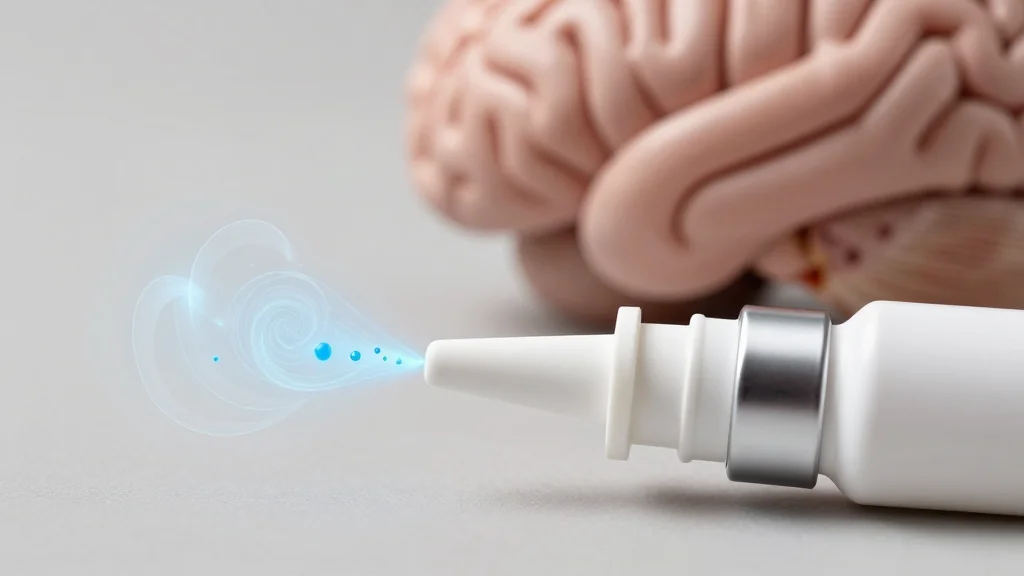
Texas A&M Nasal Spray Reverses Brain Aging in Weeks, Restores Memory

Why It Matters
The study tackles neuroinflammaging, a root cause of dementia, by using a minimally invasive delivery platform that could democratize brain‑health interventions. If human trials succeed, the therapy could shift the paradigm from chronic medication to short‑term, targeted treatments, reducing healthcare costs and improving quality of life for an aging population. Moreover, the approach highlights how bio‑engineered vesicles can be harnessed for precise gene regulation, a technique that may extend beyond neurology into broader anti‑aging and regenerative medicine fields. Beyond clinical impact, the research fuels a broader debate about DIY biohacking: the allure of a simple nasal spray that promises cognitive rejuvenation may accelerate self‑experimentation, raising ethical and safety concerns. Clear regulatory pathways and public education will be essential to ensure that breakthroughs are adopted responsibly rather than becoming untested home remedies.
Key Takeaways
- •Two‑dose nasal spray reversed brain‑aging markers in mice within weeks
- •Therapy uses extracellular vesicles loaded with microRNAs to suppress neuroinflammation
- •Memory performance improved and persisted for months after treatment
- •Researchers aim to start human safety trials later in 2026
- •Potential to reshape dementia treatment and spark DIY biohacking interest
Pulse Analysis
The Texas A&M breakthrough arrives at a moment when the biohacking ecosystem is hungry for scalable, low‑risk interventions that promise measurable cognitive gains. Historically, anti‑aging research has been dominated by pharmaceutical pipelines that require long‑term dosing and invasive delivery. By leveraging EVs—a platform already explored for cancer and gene therapy—the team sidesteps many of those hurdles, offering a proof‑of‑concept that could accelerate investment in vesicle‑based therapeutics.
From a market perspective, the therapy could create a new niche between prescription‑only dementia drugs and over‑the‑counter nutraceuticals. Investors are likely to watch the upcoming Phase I trial closely; a positive safety signal could unlock $200‑$300 million in venture funding, as seen in recent EV‑focused biotech rounds. At the same time, the DIY community may attempt to replicate the protocol, pressuring regulators to define clear boundaries for at‑home use. Early engagement with the FDA, perhaps through a Breakthrough Therapy designation, could set a precedent for how novel delivery methods are evaluated.
Looking ahead, the key challenge will be translating rodent neurobiology to human complexity. Human brains exhibit far more heterogeneous inflammatory pathways, and microRNA payloads may behave differently across individuals. If the trials confirm efficacy, the technology could expand to other age‑related conditions—such as sarcopenia or retinal degeneration—by swapping microRNA cargoes. Conversely, any safety setbacks could dampen enthusiasm for EV‑based biohacking, reinforcing the need for rigorous clinical validation before consumer adoption.
Texas A&M Nasal Spray Reverses Brain Aging in Weeks, Restores Memory
Comments
Want to join the conversation?
Loading comments...