

Real‑time Biological Data Is the Missing Link for AI
🧵 Unlocking the true potential of AI and bioinformatics hinges on one missing link: real-time biological data. I saw that Prof. Nikolai Slavov posted this, and that reminds me of how complicated a single cell is. https://t.co/UCUeL2Bdge

Choosing Cutoffs for P‑values, Log2
🧵“What cutoff should I use for p-value, log2FC, or mito content?” This is the most common question I get. Here's why it’s not simple: https://t.co/A4P37eEwdc

Claude Code Automates Browser Testing Directly From Terminal
Claude Code can control your browser. I asked it to test a form on localhost. It opened Chrome, typed in the fields, submitted bad data, and caught a validation error. All from my terminal. No Selenium. No Playwright.
Curated 10‑course Bioinformatics Curriculum Essentials
10 courses for my dream bioinformatics curriculum: 1. Unix Commands with Greg Wilson https://t.co/83VHvTqbMt 2. statistics and R with Rafael Irizarry https://t.co/ofYSIiChoW
Claude Code Now Runs as Recurring Cron Loop
Claude Code just became a cron job. /loop 5m check if the deployment finished. It runs any prompt on a recurring interval while you keep coding in the same session.

Mixed Metastatic Sites Confound Apparent Treatment Effects
Your clinical trial baseline is a mix of liver mets, lung mets, bone mets, and primary tumors. You compare it to post-treatment samples from different sites. The "treatment effects" you find will mostly be tissue site differences. https://t.co/0PyjMM2Znl

Lymph-Node CD8+ T Cells Amplify PD-1 Blockade in GI Cancer
PD-1 antibody-bound progenitor-exhausted CD8+ T cells in lymph nodes boost PD-1-blockade anti-tumor immunity in gastrointestinal cancer https://t.co/VKoxzy6oUq https://t.co/cQG2sLWtL2
Three AI Reviewers Auto‑audit Code in Parallel
After Claude Code writes my code, I make it review its own work. /simplify spawns 3 AI reviewers in parallel: one hunts dead code, one checks naming and structure, one profiles for performance. All running at the same time.

Every Biological Question Is Fundamentally Computational
🧵"All biology is computational biology." That sounds bold. But it’s true. Here’s why: https://t.co/sjibYRKxbM https://t.co/QZNlIFAnXb

Cheap AI Models Quickly Hallucinate Fake Data and Events
I built a personal AI assistant on a Mac Mini. Within 48 hours, cheap models had poisoned its memory with fabricated colleagues, fictional file shares, and an imaginary costume party. Here is what I learned. https://t.co/84IrdoktKa

AI‑augmented Team Rewrites Claude in Rust Overnight
Two developers and 10 AI agents rewrote Claude Code from scratch in Rust. In one night. The repo hit 50K GitHub stars in 2 hours. It now has 172K. It is called claw-code. https://t.co/2A1tkP5PYx

Stay Grounded Amid Rapid Bioinformatics Advances
🧵Bioinformatics evolves fast. New tech. New data. New analysis. But here's how to stay grounded and not get overwhelmed: https://t.co/VdWFpeE93W
One Prompt, 24 Agents, 22 PRs Merged
One prompt. 24 parallel agents. 22 PRs merged. Claude Code /batch takes a single instruction and fans it out into a multi-agent swarm. Each agent gets its own git worktree. Each opens its own PR.

Biological Data Is Messy Because Humans Make Errors
1/ Biological data isn’t just messy. Humans generate it. And humans make mistakes. As a bioinformatician, this will be your reality 🧵 https://t.co/yS2KH17NIH

Most Ignore Claude Code's Key /Compact Keep Option
Everyone knows /compact in Claude Code. Almost nobody uses the part that actually matters. You can tell it what to keep.

Not All scRNA‑seq Zeros Are Dropouts—Distinguish Real Signals
Your scRNA-seq matrix is 90% zeros. You assume it is dropout. Some of those zeros are real biology. Some are your platform failing to capture transcripts. Treating them the same way will wreck your analysis. https://t.co/z9SDKz3ZZv

37°C Causes scRNA‑seq Data to Mislead Researchers
37 degrees Celsius. That is the temperature where your scRNA-seq experiment starts lying to you. https://t.co/FXrk5fgWTQ

Rescue a Running Remote Job Without Killing It
1/ Last year I was running a 6-hour alignment job on a remote server. Then I realized: I forgot to start screen or tmux. My laptop was about to die. Panic mode. Here's exactly how I saved that process without killing it:...

Synonymous Mutations Can Disrupt TF Sites and Cause Disease
Every exome analysis I have seen filters out synonymous variants first. "Silent mutations, skip them." But 15% of human codons sit inside transcription factor binding sites. A synonymous change that breaks a TF site can cause disease with the protein completely intact. https://t.co/yzkdi82kEd
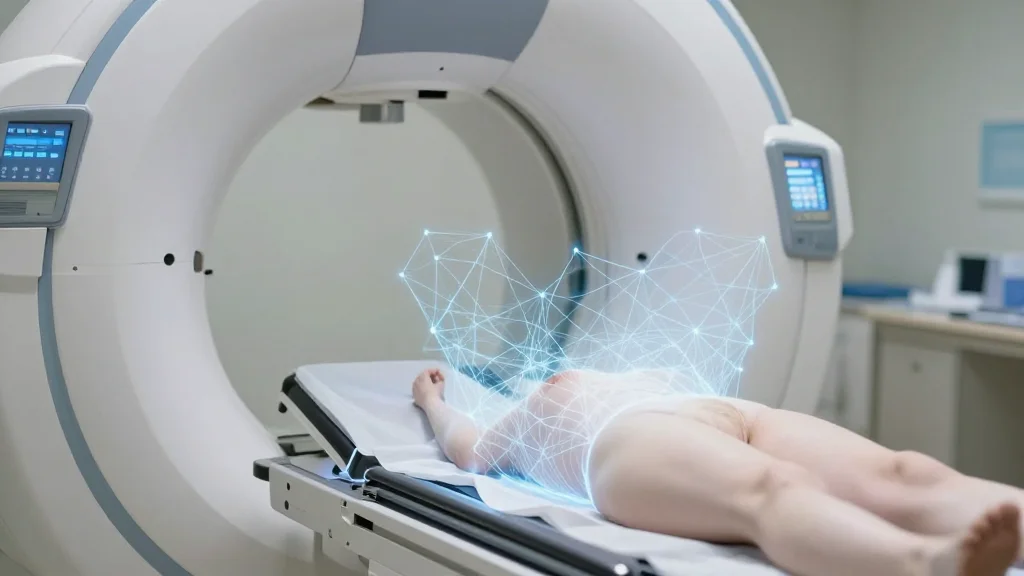
AI as Second Reader Boosts Breast Screening Accuracy
Impact of using artificial intelligence as a second reader in breast screening including arbitration https://t.co/15eScV9DfT

Collaboration Between Bioinformaticians and Wet Biologists Drives Science
🧵The most underrated superpower in science: Bioinformaticians and wet biologists working together. Here’s why it matters. https://t.co/PRuGiq6CbV
Bookmark This List to Keep Up with AI
Do yourself a favor to bookmark this list to stay current of the AI. 1. follow anthropic X https://t.co/w6p3u12EeF and Linked account 2. follow Boris, the creator of Claude Code https://t.co/qFhQZ0R9sO

Claude Code Thread Mixes Truth with Provocation
That "I reverse-engineered Claude Code" thread is going viral. I use Claude Code everyday. Half the observations are legit. The "employee-only secret fixes" framing is designed to make you angry. https://t.co/13O7ehs5h8 https://t.co/rgkIwSp7Jl
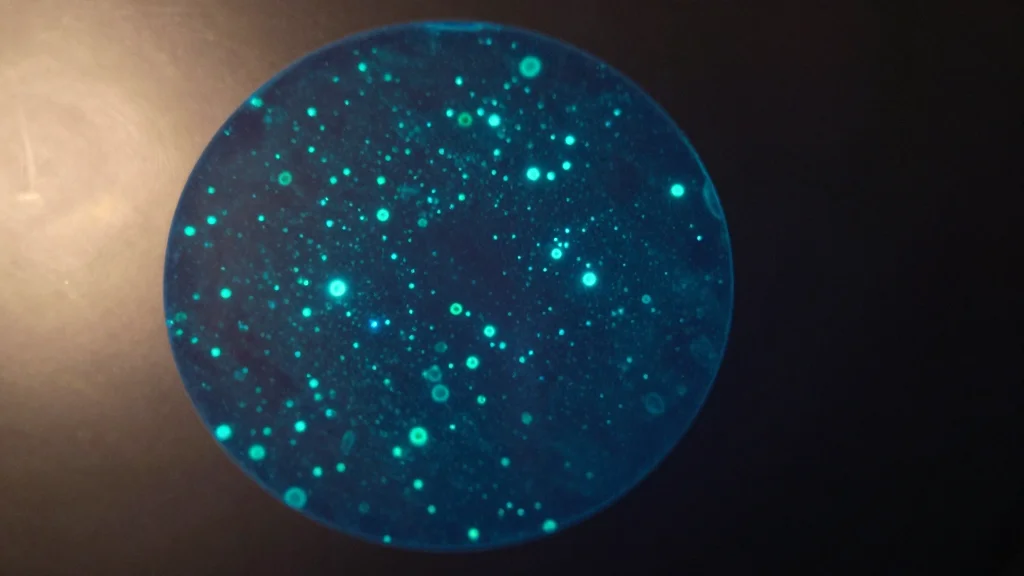
ER Binding Sites in MCF7 Cells Span 1,000–20,000
If I told you the answer to “How many ER binding sites are in MCF7 cells?” is anywhere between 1,000 and 20,000—would you believe me?
Creator Reveals Daily Claude Code Workflow, Uncovers New Features
The guy who built Claude Code shared how he actually uses it. I've been using it daily for months and half these features were new to me.

Document Successful Commands Immediately, Never Postpone
You ran 15 commands. One worked. You moved on. In 6 months you'll need to re-run it and you won't remember which one. Write the working command down right after it works. Not later. Later is never. https://t.co/JLnbmkFUoA
Claude Code Auto‑records My Commands and Coding Patterns
Claude Code has been taking notes on me. Build commands I use, mistakes it made, my coding patterns. Type /memory, then 'Open auto-memory folder'. Plain markdown files. It's been doing this automatically.

Enforce File-Write Restrictions to Stop AI Editing Configs
Claude Code kept editing my .env file. I told it not to in the prompt. It did it anyway two sessions later. So I set up a PreToolUse hook. Now it physically can't write to .env or config files. Blocked before...

Published Errors Survive; Faulty Experiments Kill
You can publish a paper with wrong data. You can't make a working drug with a wrong experiment. I wrote about HeLa contamination a few days ago. Then an Oxford researcher told me his story. https://t.co/77vvQQ8kq0

Use /Doctor Command to Diagnose Issues Instantly
I spent 20 minutes debugging why Claude Code couldn't find my MCP server. Checked the config, restarted the process, read the docs. Turns out there's a /doctor command. It diagnosed the problem in 3 seconds.

TTN's High Mutation Rate Reflects Size, Not Significance
TTN shows up as one of the most mutated genes in almost every cancer exome. New bioinformaticians see it and think they found something. They didn't. It's a 364-exon gene encoding the largest human protein. It collects mutations like a lint...
Always Diff AI Code Edits Before Committing
I let Claude Code edit 5 files in one turn. Didn't check what it actually changed. Committed. Broke something unrelated. Now I run /diff after every turn. It opens an interactive viewer showing exactly what Claude changed, file by file.
Token Drain Explained: Skills, Auto‑Memory, MCP Tools
I kept running /compact every 20 minutes wondering why my Claude Code sessions filled up so fast. /context showed me exactly what was eating my tokens. Skills, auto-memory, MCP tools, CLAUDE.md. All mapped out.

Code Ran Fine, but Biology Flagged Label Error
I almost sent a figure with wrong cluster labels to my collaborators. The R code ran perfectly. No errors, no warnings. I caught it because cluster 2 showed upregulated genes in RNAseq but reduced chromatin accessibility in ATACseq. Biologically, that's backwards....

Control Your Local Machine From Phone via QR
Claude Code now streams to your phone. /remote-control gives you a QR code. Scan it with the Claude mobile app. You're controlling your local machine from your pocket. Files, tools, MCP servers, all of it. https://t.co/lFDBeMQyLF

Thousands of P-Values, only a Handful Are Real
1/ You ran 20,000 differential expression tests. 1,000 genes came back with p < 0.05. How many are real? Maybe 50. Maybe fewer. Most bioinformaticians learn p-values in stats class. Almost nobody learns why they break at scale. Let me explain: https://t.co/btC71ABX5N

Sex‑specific Epigenetic Network Drives Cholesterol and Atherosclerosis
Sex-specific KDM6A-HNF4A-CREBH network controls lipoprotein cholesterol metabolism and atherosclerosis via epigenetic reprograming of hepatocytes https://t.co/2XpUt6ndcs https://t.co/r5DvCeGMeS

AI Audit Reveals My Hidden Time‑wasting Habits
I ran /insights in Claude Code. It read a month of my sessions and told me exactly where I'm wasting time. I didn't ask for this level of honesty. https://t.co/hojo5cud35

Focus on Fundamentals, Not Every New Sequencing Method
1/ I used to panic every time a new *Seq method dropped. ATAC-seq, CUT&Tag, scNOMe-seq, SHARE-seq... the list never ends. I tried to learn them all. I burned out. Here's what I wish someone told me earlier. https://t.co/xUlsvXmaQh

Anthropic Shares 9 Skill Categories and Patterns for Claude Code
I've been building Claude Code skills for a month. Turns out I was missing half the picture. Thariq from Anthropic just published lessons from hundreds of skills they use internally. 9 categories, dozens of patterns. https://t.co/tOGCfYjNpo
Real Bioinformatics Data Is Messy, Not Perfect
1/ Every bioinformatics tutorial is lying to you. They give you clean data, perfect sample names, and zero missing values. Then you open a real dataset and nothing works. Here's what they don't teach you.

Simple Models Outpace Deep Learning in Most Bioinformatics Tasks
1/ Hot take: deep learning is overkill for 90% of bioinformatics problems. I've watched teams spend months building neural networks that get outperformed by XGBoost trained in an afternoon. Here's why simpler models keep winning. https://t.co/fjEiVVMu7r

AI Agents Lack Security Guardrails; NVIDIA Releases NemoClaw
Your AI agent can execute code and call external APIs. How many security guardrails does it have? For most people: zero. NVIDIA just open-sourced NemoClaw. https://t.co/2Kwv30NOkN

Use /Btw in Claude Code for Hidden Side Questions
1/ Most people don't know about /btw in Claude Code. It lets you ask a side question without interrupting what Claude is working on. The response doesn't get saved to your conversation history. Your main context stays clean. https://t.co/2bOywYfBn4

Contaminated Cell Line Turns Liver Cancer Papers Retracted
1/ A researcher spent 2 years studying liver cancer biology. Published 3 papers. Then discovered the "liver cancer" cell line was actually HeLa -- a cervical cancer line that contaminated their stock decades ago. Those papers? Retracted. https://t.co/q3a9g0G04s

Deubiquitinase Complex Protects Oocyte Epigenome, Fertility
Polycomb repressive-deubiquitinase complex safeguards oocyte epigenome and female fertility by restraining Polycomb activity https://t.co/M6JjHH2JG2 https://t.co/dnHknjJmJy

Toggle Dispatch Off/On to Unstick Claude Messages
1/ Claude's new Dispatch feature is cool but buggy. If your pending messages get stuck, here's the fix: Go into settings, turn the entire Dispatch feature off, refresh the app (Cmd+R), then turn it back on. It catches up to your...
Claude Code Workflow Unlocks Extended Thinking in Genomics
1/ My last thread on Claude use cases got a lot of attention. The number one question: "how do you actually use extended thinking for biology?" Here's my exact Claude Code workflow for genomics questions where regular prompting falls short.

Most Papers Misinterpret P-Values; Here's a Clear Guide
1/ You probably don't understand p-values. And that's fine, because most published papers misinterpret them too. Here's what a p-value actually is, explained with a coin flip. https://t.co/jhTRVpP01k

Claude Does More than Search—Unlock Hidden AI Potential
1/ I'm a bioinformatian who uses Claude (and code) every day. Most people use it like a search engine. Anthropic quietly published a page that shows you what you're actually missing. https://t.co/CE5lNKlLK6