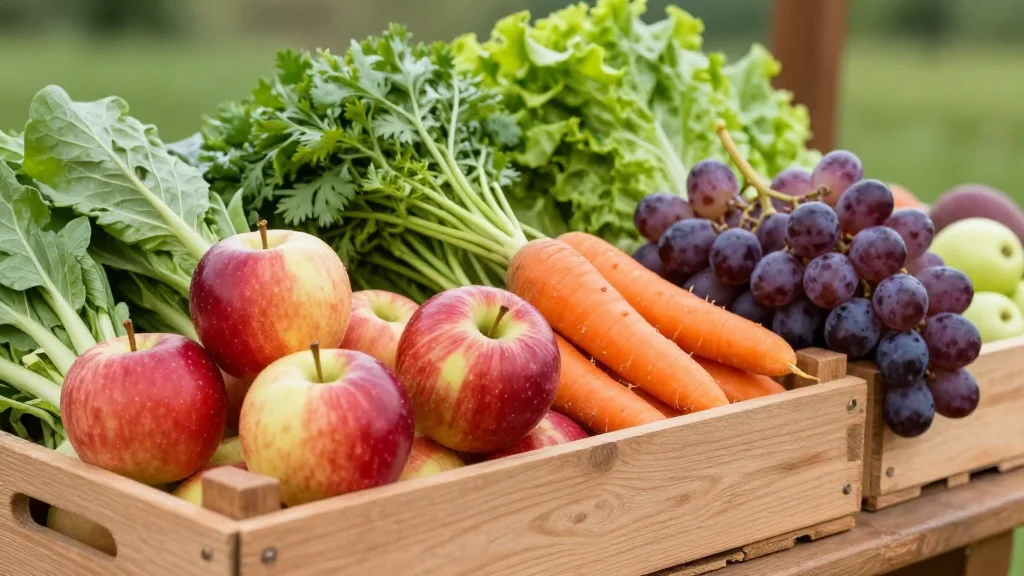
Oregon Governor Signs Bill to Bolster Farm Stands and Local Food Sales

Why It Matters
The legislation directly addresses the declining profitability of small farms by unlocking new revenue channels without sacrificing agricultural land. By formalizing agritourism and farm‑stand operations, Oregon can strengthen local food systems, reduce food‑miles, and keep more dollars circulating within rural communities. Moreover, the bill’s collaborative development process demonstrates a model for aligning government, industry and consumer interests around sustainable agriculture. If the new permit framework proves effective, it could inspire similar policies nationwide, reshaping how states balance economic development with land‑use preservation. The ripple effect may boost demand for locally produced foods, encouraging investment in regional supply chains and enhancing food security.
Key Takeaways
- •Governor Tina Kotek signed House Bill 4153, creating optional farm‑store permits
- •Bill protects existing farm‑stand permits and clarifies agritourism rules
- •Rep. Vikki Breise‑Iverson highlighted agriculture’s $X billion economic impact in Oregon
- •Kat Topaz praised broad stakeholder support for the legislation
- •Counties will receive new enforcement guidelines for access, parking, noise and sanitation
Pulse Analysis
HB 4153 arrives at a moment when Oregon’s agricultural sector faces mounting pressure from climate variability, rising input costs and shifting consumer preferences toward locally sourced foods. By institutionalizing a modest but flexible permit system, the state sidesteps the heavy‑handed zoning restrictions that have historically hampered farm‑based retail ventures. This incremental approach mirrors successful policies in states like Vermont, where farm‑stand licensing reforms spurred a 15% rise in direct‑to‑consumer sales over five years.
The bill’s emphasis on agritourism—while deliberately limiting full‑service hospitality functions—reflects a strategic compromise. Lawmakers aim to capture the economic upside of seasonal attractions without triggering the land‑use conflicts that can arise when farms transition into de‑facto commercial centers. If counties adopt the new standards smoothly, the reduced regulatory friction could accelerate the rollout of farm‑store pilots, generating data on revenue diversification that will be critical for future legislative tweaks.
Looking ahead, the real test will be whether the optional permits translate into measurable growth for family farms. Early adopters will likely serve as case studies for neighboring states, especially those with similar agricultural profiles. Should Oregon see a sustained uptick in farm‑stand profitability, the model could evolve into a broader national framework that balances rural economic development with farmland preservation, reinforcing the resilience of America’s food supply chain.
Oregon Governor Signs Bill to Bolster Farm Stands and Local Food Sales
Comments
Want to join the conversation?
Loading comments...