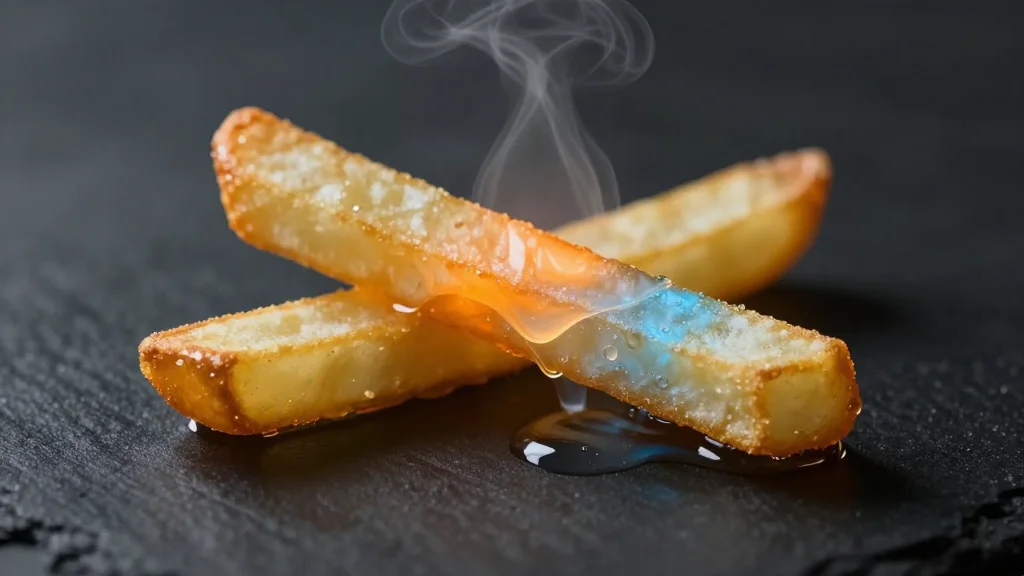
University of Illinois Method Cuts Fry Oil by Half While Keeping Crunch

Why It Matters
The breakthrough addresses a persistent tension between taste and nutrition in processed foods. French fries are among the most consumed fried items worldwide, and their high fat content contributes to diet‑related chronic diseases. By delivering a method that retains the sensory qualities that drive demand while cutting caloric density, the research offers a tangible tool for public‑health initiatives without requiring drastic changes in consumer behavior. Beyond individual health, the technology could influence supply chains, prompting manufacturers to redesign fry‑preparation equipment and reformulate oil‑use protocols. If fast‑food giants adopt the method, the cumulative impact on national health metrics could be significant, reinforcing the role of food‑science innovation in combating the obesity epidemic.
Key Takeaways
- •University of Illinois researchers combine frying and microwave heating to halve oil absorption in french fries
- •Published findings appear in *Current Research in Food Science* and *The Journal of Food Science*
- •Laboratory tests show fat reduction from ~15 g to ~7 g per serving without taste loss
- •Technique shortens cooking time by ~20% and can be implemented with existing kitchen gear
- •Pilot programs with major fast‑food chains planned for late 2026
Pulse Analysis
The dual‑heat method arrives at a moment when the food industry is under pressure to deliver healthier products without alienating taste‑driven consumers. Historically, attempts to reduce fry fat—such as air‑frying or using alternative oils—have struggled to match the mouthfeel of traditional deep‑frying, limiting their market penetration. By integrating a microwave step, the University of Illinois team sidesteps the texture trade‑off that has hampered prior innovations, offering a solution that fits seamlessly into current operational workflows.
From a competitive standpoint, early adopters stand to differentiate their menus on a health front while preserving the iconic crunch that defines fries. This could translate into incremental sales gains, especially among health‑conscious millennials and Gen Z diners who scrutinize nutritional labels. Moreover, the energy savings from reduced frying time align with sustainability goals, adding an ESG (environmental, social, governance) dimension to the value proposition.
Looking ahead, the technology’s modular nature suggests broader applicability. Similar hybrid heating could be explored for other oil‑intensive foods like onion rings, chicken nuggets, and even certain baked goods. If the upcoming field trials confirm scalability and cost‑effectiveness, the method may become a new standard in food‑service kitchens, prompting a shift in how the industry balances indulgence with nutrition.
University of Illinois Method Cuts Fry Oil by Half While Keeping Crunch
Comments
Want to join the conversation?
Loading comments...