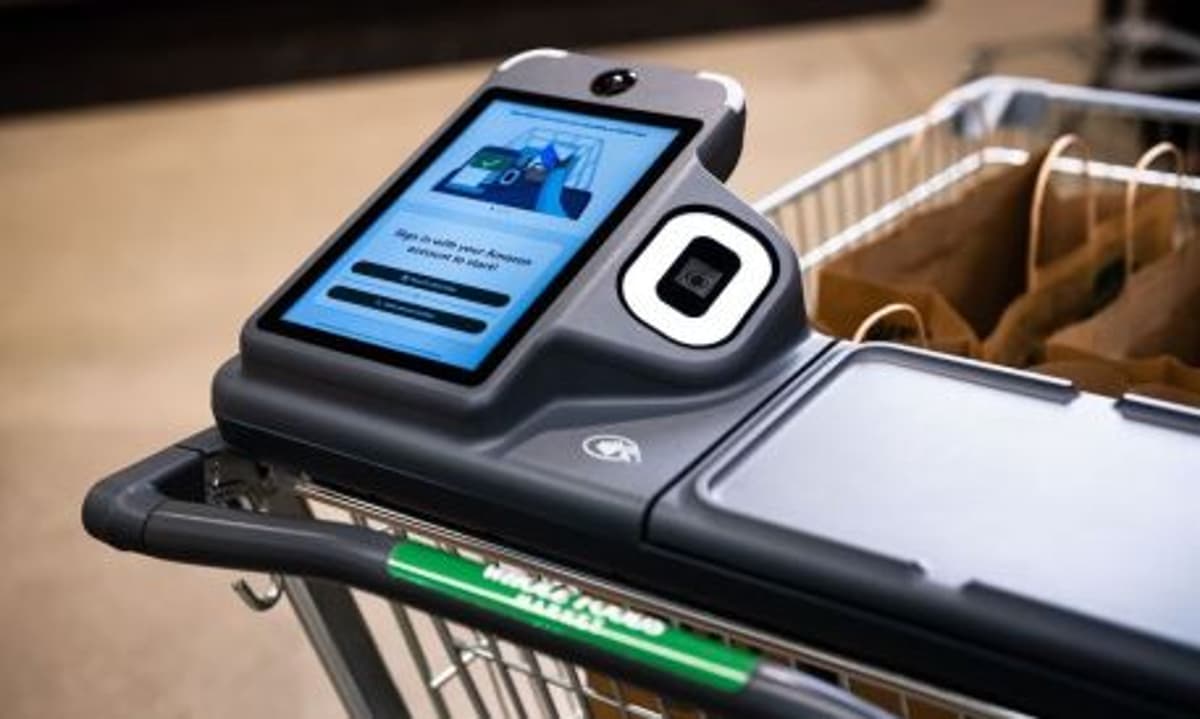
Amazon Adds More Payment Options to Latest Smart Shopping Cart
Companies Mentioned

Why It Matters
By widening payment methods and improving usability, Amazon strengthens its checkout‑less strategy, compelling traditional grocers to accelerate digital transformation. The enhancements also generate richer shopper data, fueling Amazon’s Store Analytics platform and influencing brand placement decisions.
Key Takeaways
- •Dash Cart expands to dozens of Whole Foods locations nationwide
- •Cart now accepts credit cards, mobile payments, Amazon-linked methods
- •New design is 25% lighter, 40% higher capacity
- •Integrated screen shows prices, maps, personalized deals instantly
- •Built-in produce scale and improved scanner speed checkout
Pulse Analysis
Amazon’s smart‑cart rollout marks a pivotal step in the broader shift toward frictionless retail. First introduced in 2020, the Dash Cart has evolved from a novelty to a scalable solution that blends physical shopping with digital convenience. By embedding a touchscreen, real‑time pricing, and an Alexa‑linked shopping list, Amazon blurs the line between online and offline experiences, positioning itself ahead of legacy grocers still reliant on traditional point‑of‑sale systems.
The latest iteration’s expanded payment suite directly addresses a common barrier to adoption: limited checkout options. Allowing credit cards, mobile wallets and the customer’s Amazon‑linked payment method removes the need for a separate Amazon account, widening the cart’s appeal to casual shoppers. Coupled with a lighter chassis, 40% greater capacity, and a built‑in produce scale, the cart reduces aisle‑time and minimizes manual scanning errors, delivering measurable time savings and higher basket sizes. Retail operators can also leverage the cart’s interactive map and personalized deal engine to drive impulse purchases and improve inventory turnover.
Beyond the shopper experience, the Dash Cart feeds anonymized transaction and movement data into Amazon’s Store Analytics service, giving brands granular insight into product discovery pathways. This data advantage pressures competitors to develop comparable analytics platforms or partner with third‑party providers. As more retailers adopt checkout‑free technologies, the industry will likely see a consolidation of payment ecosystems and a heightened focus on data‑driven merchandising, reshaping the economics of brick‑and‑mortar grocery.
Amazon Adds More Payment Options to Latest Smart Shopping Cart


Comments
Want to join the conversation?
Loading comments...