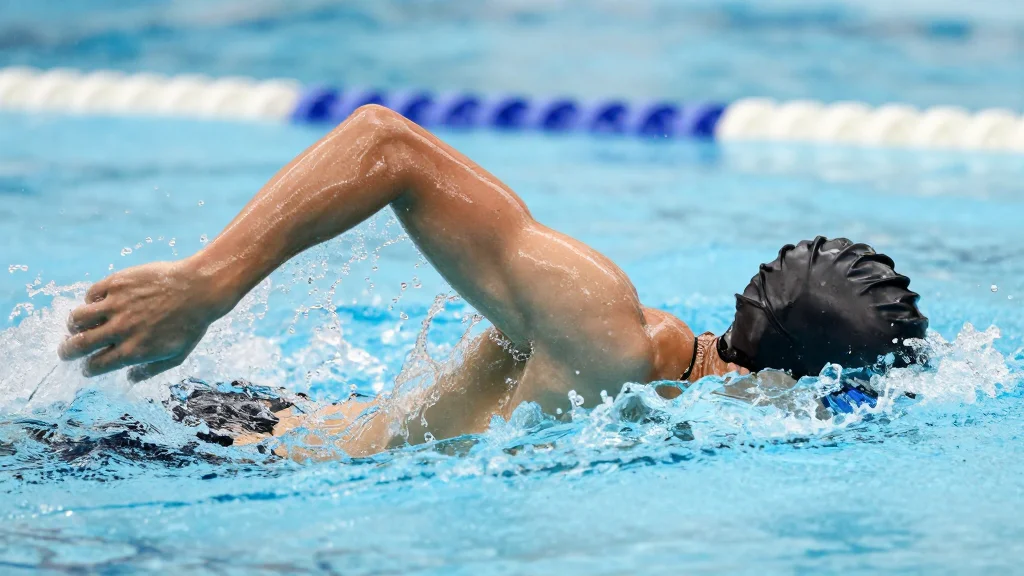
Lewis Clareburt Sets New NZ 200m Freestyle Record at Australian Open

Why It Matters
Clareburt’s record challenges the perception that elite swimming success is confined to nations with deep funding pools. By demonstrating that strategic relocation and mental preparation can produce world‑class results, his story may inspire other athletes from under‑resourced countries to seek similar pathways, potentially diversifying the sport’s competitive landscape. For the broader fitness community, the case underscores the value of environment‑specific training, data‑backed pacing, and psychological resilience. Coaches and gyms can translate these insights into programs that emphasize individualized performance metrics, cross‑training opportunities, and mental‑skill development, thereby raising the overall standard of athletic preparation.
Key Takeaways
- •Clareburt posted 1:45.57 in the 200m freestyle, a new New Zealand record
- •Time ranks him 9th globally for the 2026 season
- •Record was set after moving training base to Nunawading, Australia
- •NZ Swimming officials praise the achievement but warn of talent‑drain risks
- •Performance highlights a trend of athletes seeking overseas high‑performance hubs
Pulse Analysis
Clareburt’s breakthrough arrives at a moment when the fitness industry is increasingly data‑centric and globally networked. Historically, swimming powerhouses have relied on centralized national programs; however, the rise of boutique training centres in Australia, the United Kingdom, and the United States offers athletes a modular approach to elite preparation. Clareburt’s success validates this shift, suggesting that the marginal gains from superior coaching, competition density, and sports‑science support can outweigh the benefits of staying within a home federation’s limited resources.
From a market perspective, the record is likely to attract sponsorship interest not only for Clareburt but also for ancillary services—performance analytics platforms, recovery technologies, and nutrition brands targeting high‑performance swimmers. Companies that can deliver remote monitoring and personalized coaching at scale stand to benefit as more athletes emulate Clareburt’s cross‑border training model. Moreover, the narrative reinforces the commercial appeal of ‘underdog’ stories, which resonate with fans and can drive viewership for events featuring athletes from non‑traditional swimming nations.
Looking forward, the key question is whether New Zealand can translate Clareburt’s individual success into systemic growth. If the federation channels his visibility into grassroots investment—upgrading pools, expanding coaching education, and creating scholarship pathways—the record could catalyze a new era of Kiwi swimming. Conversely, if talent continues to migrate abroad, the sport may remain dependent on a handful of expatriate athletes. The balance between individual ambition and national development will shape the next decade of competitive swimming and, by extension, the fitness strategies that underpin elite performance.
Lewis Clareburt Sets New NZ 200m Freestyle Record at Australian Open
Comments
Want to join the conversation?
Loading comments...