Blog•Mar 5, 2026
At the Heart of Quantum Matter: Geometry
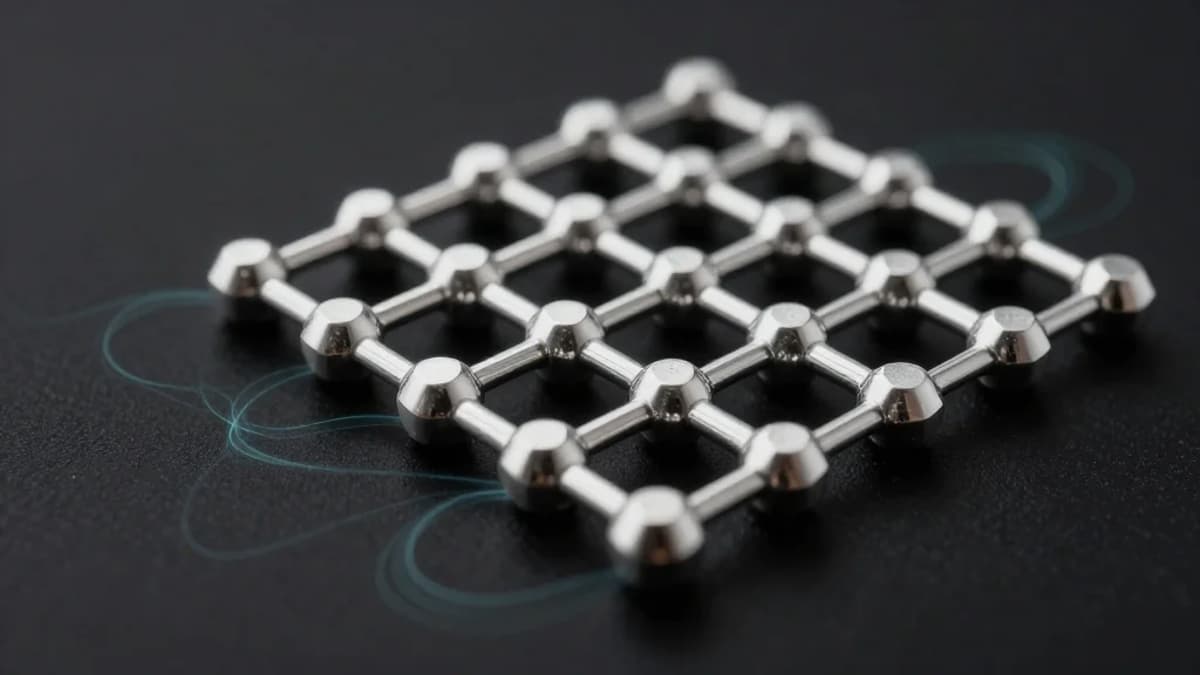
Researchers from the University of Geneva, the University of Salerno and CNR‑SPIN have directly detected the quantum metric—a geometric property of electron wavefunctions—at the interface of strontium titanate and lanthanum aluminate, as reported in Science (Aug 2025). The quantum metric, previously only a theoretical construct, was shown to bend electron trajectories under strong magnetic fields, analogous to how gravity bends light. This observation confirms that quantum geometry is an intrinsic feature of many quantum materials. The work opens pathways for designing terahertz‑frequency electronics, superconductors and advanced light‑matter devices.
By FrogHeart

Blog•Mar 4, 2026
Vocxi Health and Forj Medical Partner to Miniaturise MyBreathPrint Device
Vocxi Health has teamed with Forj Medical to shrink its MyBreathPrint breath‑analysis system from a tabletop prototype to a handheld device the size of a deck of cards. The platform leverages graphene‑based nano sensors and AI‑driven algorithms to detect disease‑linked...
By Med-Tech Insights

Blog•Mar 2, 2026
A Quantum Property Is Hiding in One of the Most Common Lab Nanoparticles
Researchers have uncovered a room‑temperature quantum‑spin response in widely used carbon quantum dots, showing that their photoluminescence changes under modest magnetic fields. By heating simple amino‑acid powders, the team produced 19 dot variants, 16 of which displayed measurable magneto‑photoluminescence at...
By Nanowerk

Blog•Mar 2, 2026
AI Solves a Key Barrier to Making Hydrogen Cars More Affordable
Korean researchers at KAIST and Seoul National University used artificial intelligence to redesign hydrogen fuel‑cell catalysts, discovering that zinc directs platinum and cobalt atoms into a high‑performance intermetallic structure. The AI‑predicted Zn‑mediated catalyst outperforms commercial platinum catalysts in activity and...
By Nanowerk
Blog•Mar 2, 2026
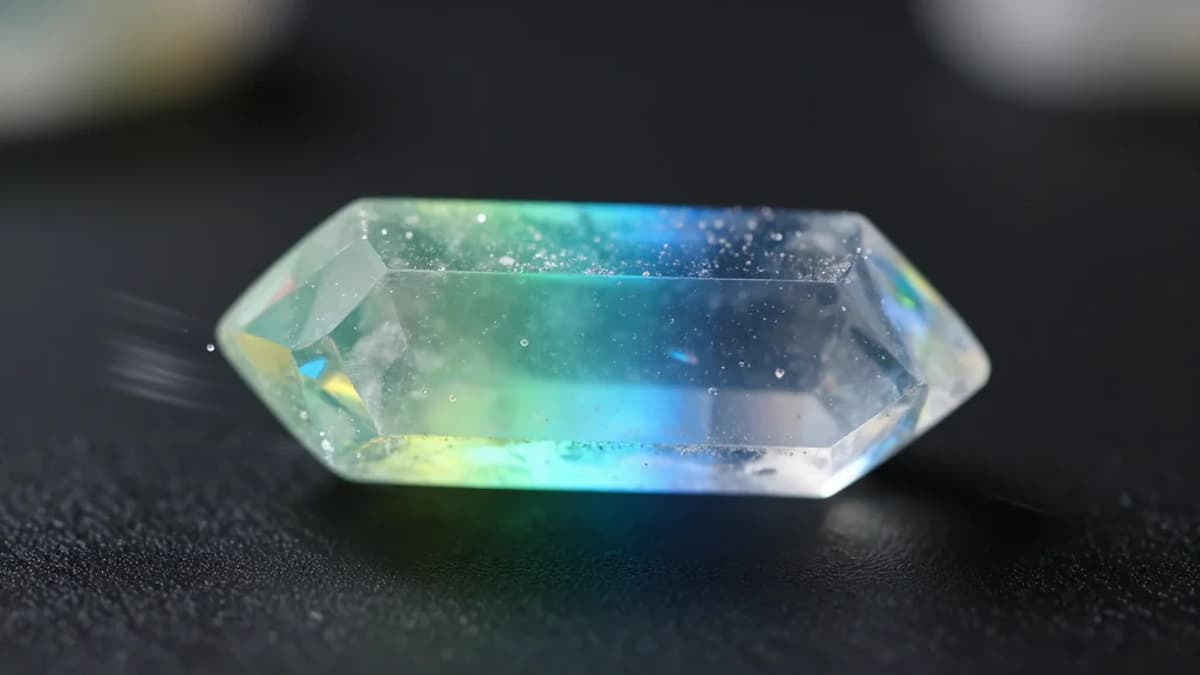
A Crystal that Changes Fluorescence Color and Moves when Heated
Chemists at National Taiwan University reported that a nonporous pentiptycene‑derived crystal can undergo a two‑step solid‑state transformation when gently heated. The first step creates gear‑like molecular rotations that open transient channels, allowing trapped dichloromethane to escape and shifting fluorescence from...
By Nanowerk

Blog•Mar 2, 2026
Nanophotonics Boost Quantum Emitter Links on a Chip
Researchers at the University of Southern Denmark and collaborators have unveiled an integrated nanophotonic platform that uses surface‑plasmon‑polariton (SPP) interference to mediate long‑range interactions between solid‑state quantum emitters on a chip. The design achieves a peak concurrence of 0.493, approaching...
By Quantum Zeitgeist
Blog•Mar 1, 2026
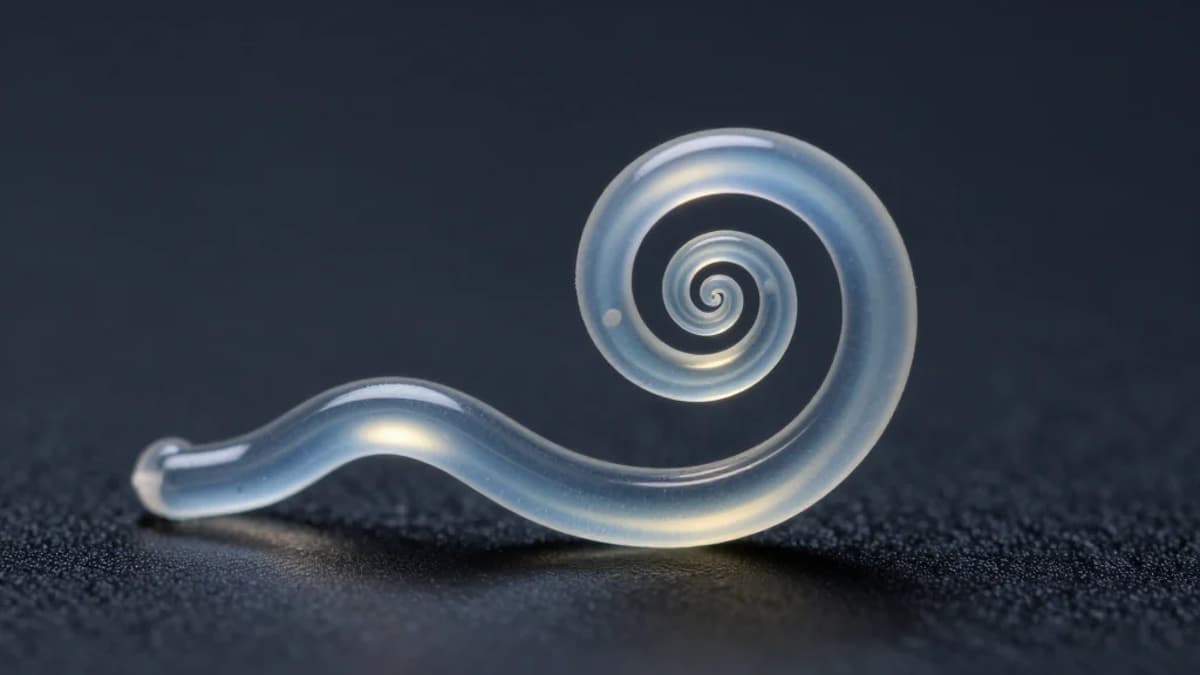
Synthetic Hydrogel Helices Amplify Movement without Muscles or Motors
The team from POSTECH and the University of Tokyo introduced a photopolymerization method that creates hydrogel helices with built‑in density gradients, enabling autonomous winding and unwinding. By using a helically wrapped UV‑blocking tape and a dissolved ruthenium absorber, they generate...
By Nanowerk

Blog•Feb 27, 2026
Light Alone Programs and Reprograms a Crystal Surface to Guide Living Cells
Researchers at Italy’s National Research Council have created an all‑optical bio‑photovoltaic interface using iron‑doped lithium niobate crystals. By projecting patterned laser light, they inscribe reversible electric fields that trap, align, and deform fibroblast cells without any electrodes or wiring. Cells...
By Nanowerk

Blog•Feb 27, 2026
Femtosecond Laser Pulses Enable Ultrafast Broadband Optical Switching
Researchers at Waseda University used femtosecond laser pulses to raise the electronic temperature in an indium‑nitride (InN) film, triggering transient Pauli blocking that makes the material switch from opaque to transparent. The effect spans the visible to near‑infrared spectrum and...
By Nanowerk

Blog•Feb 27, 2026
Polar Bear Hair Inspires Graphene Fibers that Sense, Insulate, and Power Smart Clothing
Researchers in China have created hollow graphene aerogel fibers that replicate the hollow, porous structure of polar‑bear hair. The fibers achieve a record‑low thermal conductivity of 1.28 mW·(m·K)⁻¹ and an electrical conductivity of 1,457 S·m⁻¹ after high‑temperature annealing. Their architecture provides exceptional...
By Nanowerk

Blog•Feb 27, 2026
Electric Eel Biology Inspires Powerful Gel Battery
Researchers at Penn State have created a fully hydrogel‑based power source that mimics the ionic discharge of electric eels. By spin‑coating four 20 µm hydrogel layers, they achieved ultra‑thin electrocytes with dramatically lower internal resistance. The resulting gel battery delivers power...
By Nanowerk

Blog•Feb 27, 2026
Nanoplastics Can Interact with Salmonella to Affect Food Safety
Researchers at the University of Illinois discovered that polystyrene nanoplastics trigger Salmonella enterica to up‑regulate virulence genes and form thicker biofilms, potentially heightening food‑borne risk. The bacterial response is biphasic: an initial offensive surge followed by a defensive, energy‑conserving mode...
By Nanowerk

Blog•Feb 26, 2026
Liquid Metal Droplets Fuse Themselves Into Stretchable Circuits
Researchers at Qingdao University and China University of Petroleum discovered that liquid‑metal droplets can self‑sinter during ordinary solvent evaporation, using a Marangoni‑driven surface‑tension gradient between ethanol and toluene. The process creates a Janus film with a conductive liquid‑metal‑rich layer and...
By Nanowerk

Blog•Feb 26, 2026
Covalent Organic Frameworks Assembled Inside Tumor Cells Trigger Cancer Cell Death and Immune Activation
Researchers at the University of Macau have demonstrated the first in‑situ synthesis of covalent organic frameworks (COFs) inside lysosomes of cancer cells, using acidic pH‑driven imine condensation of TAPB and DMTP. The crystalline UMCOF1 particles rupture lysosomal membranes, liberating ferrous...
By Nanowerk

Blog•Feb 26, 2026
Atomic Precision Unlocks Smarter Oxygen Reduction Catalysts
Researchers at Tohoku University demonstrated that the exact nitrogen coordination around a single cobalt atom dramatically changes its oxygen‑reduction reaction (ORR) performance. By synthesizing Co‑Nx sites with x = 3, 4, and 5 on carbon nanotubes, they showed asymmetric Co‑N₃ delivers the highest overall activity,...
By Nanowerk