
Nanoscale Device Converts Wasted Infrared Light Into Usable Energy
Researchers at the University of New South Wales have built a nanoscale solid‑state device that upconverts low‑energy infrared and red photons into higher‑energy visible light, achieving an 8.2% photon‑conversion efficiency—the highest reported for this architecture. The ultrathin film can be fabricated with semiconductor‑style processes, making it far more practical than earlier liquid‑based systems. By turning otherwise wasted infrared light into usable energy, the technology promises to boost solar‑panel output, improve infrared sensing, and enable new capabilities in additive manufacturing and medical treatments.

DNA Barcodes Help Nanopores Detect Multiple Heavy Metals
Researchers unveiled a DNA‑barcoded nanopore platform that multiplexes detection of six heavy metals—lead, mercury, uranyl, calcium, manganese and zinc—in water and soil extracts. Each probe integrates a metal‑specific DNAzyme nanoswitch with a short DNA barcode, allowing the nanopore to read...

Defect-Engineered Zinc Oxide Turns Tiny Strain Into Near-Infrared Light
Researchers have engineered zinc oxide by substituting a fraction of Zn²⁺ with sodium ions, converting the material into a rare‑earth‑free, near‑infrared mechanoluminescent sensor. The Na‑doped ZnO emits light around 750 nm when subjected to reversible microstrain as low as 6 µε, corresponding...

First Separation of Interfacial Proton Transport in Ultrathin Energy Device Materials
Researchers at JAIST, Tokyo University of Science, and the University of Calgary have introduced a technique that isolates proton transport at individual polymer‑electrode interfaces in ultrathin ionomer films. By extending impedance spectroscopy to lower frequencies and varying electrode pad length,...
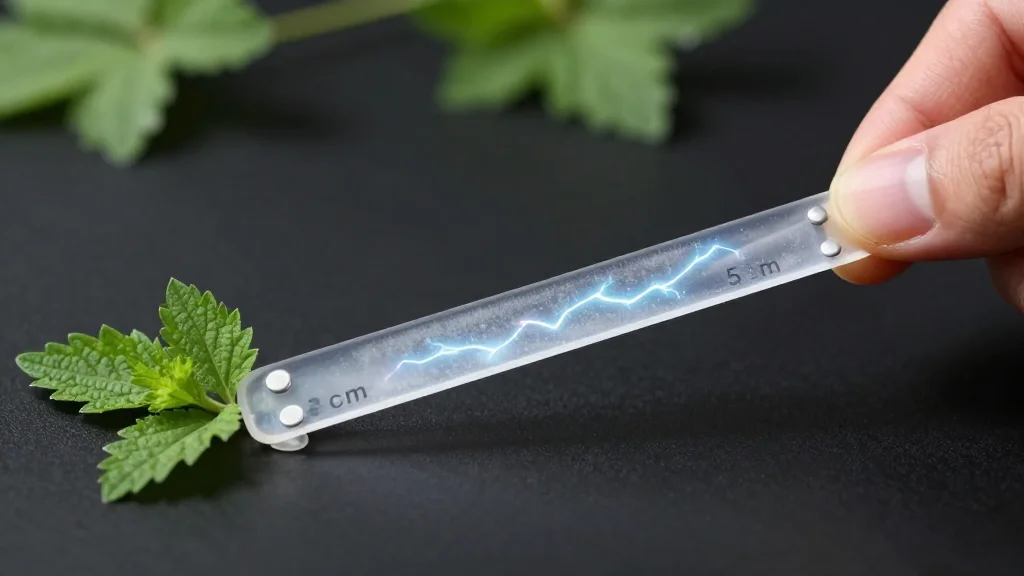
Stevia-Based Hydrogel Improves Triboelectric Nanogenerator Performance
South Korean researchers have created a stevia‑infused polyvinyl alcohol hydrogel triboelectric nanogenerator (S‑TENG) that outperforms conventional designs. The device delivers 2–5 times greater mechanical strength and 3–8 times higher electrical output, producing about 800 V over 16,000 cycles without degradation after...

ISS Expedition 74 Crew Conducts DNA Nano-Therapy and Space Agriculture Research
On Thursday, Expedition 74 crew members performed a suite of high‑impact experiments aboard the ISS. NASA engineer Jessica Meir used a spectrophotometer to study DNA‑like nanomaterials, data that could accelerate cancer‑targeting nano‑therapies. ESA’s Sophie Adenot tended alfalfa in the Veggie unit, probing...

Glucose Nanoparticles Help CBD Cross the Blood-Brain Barrier
Researchers have engineered glucose‑coated polymer nanoparticles that dramatically improve cannabidiol (CBD) delivery across the blood‑brain barrier. The particles use a PEG‑PHB core to solubilize CBD and a surface glucose layer to hijack GLUT‑1 transport, while reactive‑oxygen‑species triggers release in inflamed...

Paper Mill Waste and Liquid Metal Combine Into a 96% Efficient Solar Absorber
Researchers have engineered a coating that blends paper‑mill lignin with gallium‑indium liquid‑metal nanoparticles, achieving 96% broadband solar absorption. The graded structure traps light and channels heat, raising surface temperature to about 75 °C under one‑sun and delivering a power density of...

New Molecular Design Produces Bright Twisted Light in the Near Infrared
Researchers at Kyushu University have engineered a new class of chiral organic radicals that emit bright circularly polarized light across the 650‑nm to 800‑nm window, covering deep‑red to near‑infrared wavelengths. The best‑performing compound achieves photoluminescence quantum yields roughly 30 times higher...

Bottled Water Nanoplastics Are Not Simple Bottle Fragments
A new study in Advanced Science uses mid‑infrared photothermal microscopy to examine nanoplastics in bottled water one particle at a time. Researchers found 9.9 × 10⁴ particles per litre, with nanoplastics making up 64 % of the load, and identified PET as the...
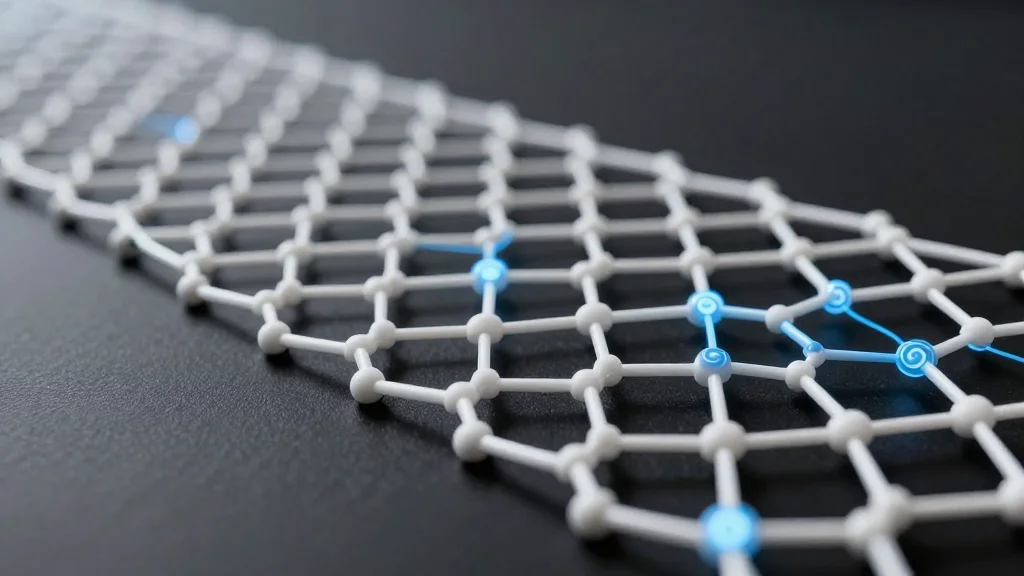
Researchers Steer Electron Spin Ballistically in Graphene
Researchers at the University of Manchester have demonstrated that electrons in ultra‑clean graphene can be steered ballistically while preserving their spin orientation. Using transverse magnetic focusing, they created lens‑like trajectories that carry a clear spin signature, observable over micrometre distances....

Researchers Separate Colloidal Particles According to Size and Guide Them on Different Paths
Researchers from German universities and the Polish Academy of Sciences introduced a magnetic checkerboard method that steers colloidal particles according to size. By lowering particles closer to a patterned magnetic layer, size‑dependent energy landscapes emerge, allowing independent transport of different‑sized...

Stacking 2D Materials on Bulk Semiconductors Yields Smarter, Faster Photodetectors
A new review outlines how stacking atomically thin 2D crystals onto bulk 3D semiconductors creates photodetectors with record‑high responsivity, detectivity and gigahertz‑level speed. Van der Waals bonding eliminates lattice‑mismatch defects, allowing seamless integration of materials like graphene, TMDCs and black phosphorus with...

Targeting Crop-Munching Agricultural Pests with Nanotechnology
Researchers at Agriculture and Agri‑Food Canada, using the Canadian Light Source synchrotron, have demonstrated a nanotechnology‑based screening platform that maps chemicals inside crop pests such as lygus bugs and cutworms. By combining X‑ray fluorescence imaging with 3‑D virtual‑reality models, the...

Twisting Atom Thin Materials Reveals New Way to Save Computing Energy
A KTH-led study published in Nano Letters shows that twisting two atom‑thin van der Waals antiferromagnet layers creates strong altermagnetic magnons, enabling magnetic‑based information transfer without electric currents or external magnetic fields. The approach leverages twist engineering to alter crystal...

Plasmonic Nanomachines Use Light to Create Motion
A new Perspective in Advanced Materials outlines how plasmonic nanomachines convert light into motion by creating local potential gradients. Gold or silver nanostructures generate optical, thermal, or electrochemical forces, but only asymmetric designs produce net propulsion or torque. The article...
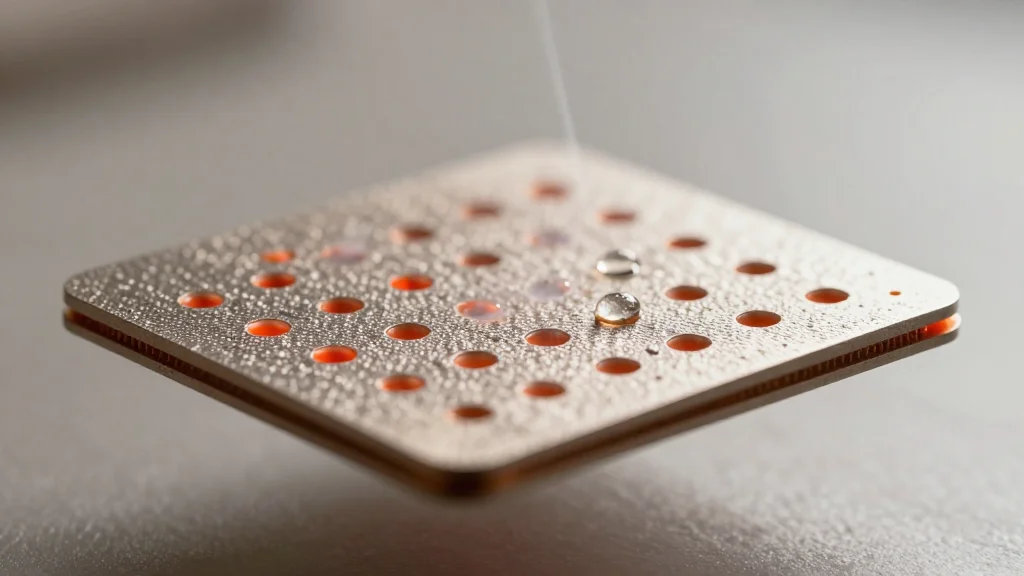
Turning CO2 Into Valuable Chemicals: Tiny Material Interfaces Make a Big Difference
Researchers at National Taiwan University and the University of North Dakota have demonstrated that palladium nanoparticles supported on indium oxide (Pd/In₂O₃) dramatically improve electrochemical CO₂ reduction to formic acid. At –1.1 V vs RHE the catalyst lifts Faradaic efficiency from ~30%...

Piezoelectric MXene Scaffold Promotes Cartilage Repair While Limiting Vessel Growth
Researchers unveiled an origami‑folded PLLA/MXene scaffold that converts joint motion into piezoelectric signals and, when exposed to near‑infrared light, generates mild heat. The dual‑modality design doubles electrical output versus pure PLLA and reaches ~41 °C, a temperature that suppresses VEGF‑driven angiogenesis...

Nanocellulose From Pineapple Waste for Soil-Saving Desert Agriculture
Researchers have transformed pineapple peel waste into nanocellulose fibers that dramatically improve sandy‑soil performance. In laboratory tests on three UAE desert sands, the amendment raised water‑holding capacity by up to 32.7% and cut permeability by 58%, while quadrupling compressive strength...

Multiplex Modular Nanorobots Combine Magnetic Control with Reusable Catalysis
Researchers from Basel, Max Planck, Heidelberg and Seoul have created modular nanorobots that combine a magnetic Janus particle with enzyme‑loaded polymersomes using DNA‑mediated self‑assembly. The magnetic module provides wireless steering and recovery, while the polymer‑encapsulated enzymes retain catalytic activity even after...

Bio-Based MOF Aerogel Combines Electromagnetic Shielding, Fire Resistance, and Insulation
Researchers at Beijing Institute of Technology and the University of Southern Queensland have created a bio‑based aerogel that merges electromagnetic shielding, fire resistance, thermal insulation, and sound absorption. By embedding nickel‑based metal‑organic frameworks into a cellulose matrix and carbonizing the...

Room-Temperature Photodetector Spans Visible Light All the Way to Terahertz
Researchers have demonstrated a room‑temperature photodetector built from the topological insulator SnBi₂Te₄ that detects light from the visible spectrum through terahertz frequencies. The device merges a conventional photoconductive effect for high‑energy photons with an electromagnetic‑induced well mechanism that captures low‑energy...
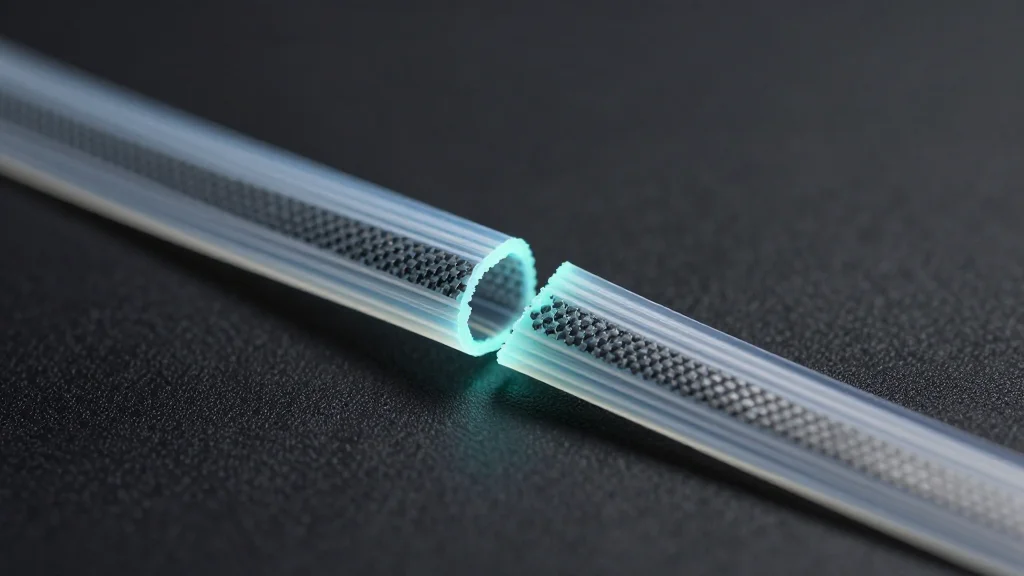
Self-Healing Synaptic Transistor Recovers Memory After Damage
Researchers have created a fully self‑healing, stretchable synaptic transistor that regains most of its function after being cut in half. The device restores about 80% of its operating current and over 90% of its memory within 24 hours without external triggers,...

Promising New Technique Uses Nanoparticles to Detect Pancreatic Cancer
Scientists at Oregon Health & Science University have unveiled a blood‑based assay that uses an electronic jolt to harvest tumor‑derived nanoparticles, achieving 97% accuracy in detecting pancreatic cancer. The technique, validated in a blinded study of 36 participants, outperforms the...

Plasmonic Nanocatalyst Splits Hydrogen Activation From Hydrogenation Step
Researchers at Nankai University and partners have created a light‑driven photocatalyst that combines palladium single atoms with plasmonic gold nanoparticles to convert phenylacetylene into styrene at 298 K and atmospheric pressure. Visible‑light excitation of the gold generates nonequilibrium charge carriers that...

New Nanoreactor Design Rule Improves Catalysis by Balancing Transport and Kinetics
Researchers at Tohoku University discovered that slightly restricting reactant transport in hollow nanoreactors improves catalytic efficiency. By matching the rate of mass transport through the porous shell with the intrinsic reaction kinetics of the interior nanoparticles, the nanoreactors avoid site...

Atomic Imaging Makes Mechanism-Driven Growth of 2D Materials Possible
In‑situ atomic imaging during chemical vapor deposition revealed that molybdenum disulfide (MoS₂) forms through a multistep pathway—amorphous clusters, partially ordered 2D embryos, then stable crystalline nuclei. The real‑time view supplies the mechanistic insight missing from conventional post‑growth analysis. Researchers documented...

Twisted Boron Nitride Boosts Deep-UV Light Emission for LEDs
Researchers at South Korea's POSTECH have created a moiré quantum well by stacking twisted hexagonal boron nitride (hBN) layers, achieving deep‑ultraviolet (200‑230 nm) light emission about 20 times more efficient than conventional aluminum‑gallium nitride (AlGaN) LEDs. The weak interlayer bonding of...

Explosive Evaporation Unlocks New Possibilities in 3D Printing and Chemical Analysis
Researchers at OIST demonstrated that charged water droplets on a silicone‑oil‑lubricated, frictionless surface spontaneously emit microdroplet jets as they evaporate. The study, published in PNAS, identified two distinct charge‑surface‑tension thresholds that trigger droplet elongation followed by Coulomb fission. By adjusting...

MXene Plasmonic Sensor Reveals Faint Molecular Fingerprints in Ultrathin Films
Researchers have demonstrated an acoustic MXene plasmon (AMP) sensor that uses a 10 nm Ti₃C₂Tₓ film coupled with gold nanodisks to concentrate infrared light inside ultrathin analyte layers. The device delivers broadband surface‑enhanced infrared absorption (SEIRA) spanning roughly 5000 cm⁻¹, reaching into...

Penguin-Inspired Film Combines Thermal Control and Microwave Shielding
Researchers have created a flexible Janus composite film that alternates between heating, cooling, and microwave shielding without moving parts. One side, coated with vanadium dioxide nanofibers, absorbs sunlight and becomes conductive above ~68 °C, turning the film into a high‑frequency shield....
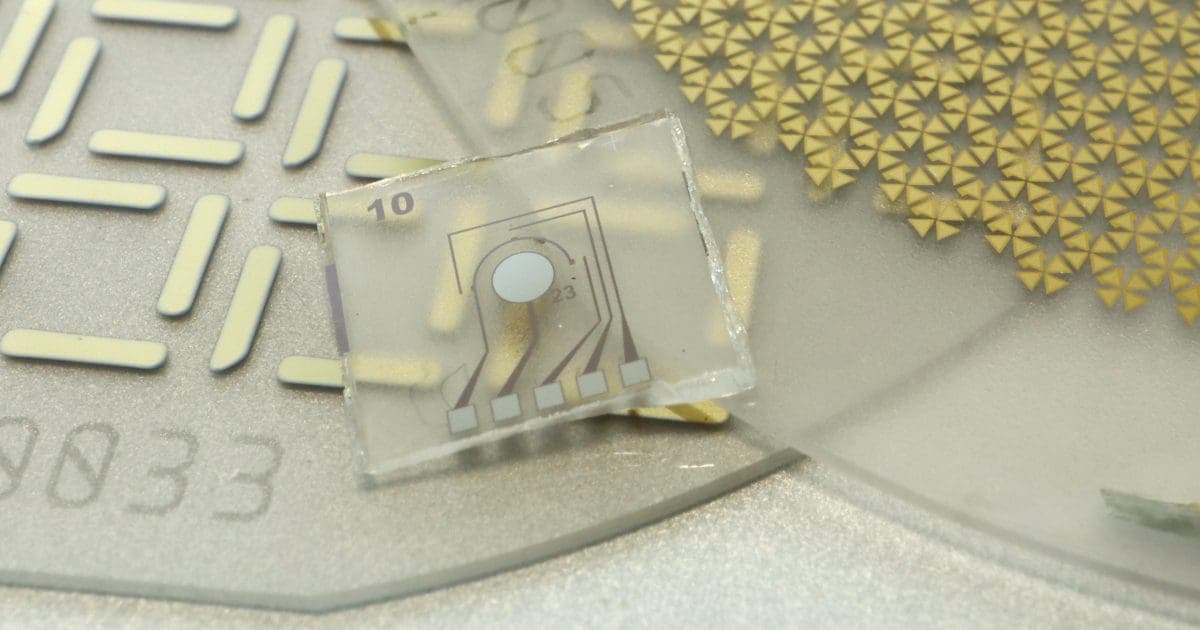
Paragraf & Archer Materials Target Quantum Computing With Graphene
Paragraf, a UK graphene‑electronics specialist, has teamed with Australia’s Archer Materials to create graphene‑based structures for qubit detection. The partnership combines Paragraf’s wafer‑scale graphene deposition process with Archer’s quantum‑device expertise, aiming to move quickly from research to functional prototypes. By...

The Nanotechnology Behind Biohacking: What Works, What Is Early, and What Is Hype
Nanowerk’s new guide categorizes nano‑enabled biohacking tools into mature, emerging, and hype‑driven claims. It highlights FDA‑cleared over‑the‑counter glucose monitors and a 2026 microneedle patch that can track multiple biomarkers, while warning that many supplement and peptide claims lack solid human...

Scientists Tame Unusual Thermal Shrinking in Two-Dimensional Materials, Paving Way for Ultra-Stable Nanoelectronics
A new review in Nano Research details how two‑dimensional materials such as graphene and hexagonal boron nitride shrink when heated, a phenomenon called negative thermal expansion (NTE). The authors explain the underlying phonon, rigid‑unit and spin‑lattice mechanisms and outline ways...

Nanofiltration Removes Glyphosate From Water More Efficiently
Researchers at Germany’s Karlsruhe Institute of Technology discovered that the hydration shell of glyphosate and its metabolite AMPA critically affects their removal by nanofiltration membranes. The study, published in Nature Communications, shows that higher pH enlarges the hydration layer, improving...
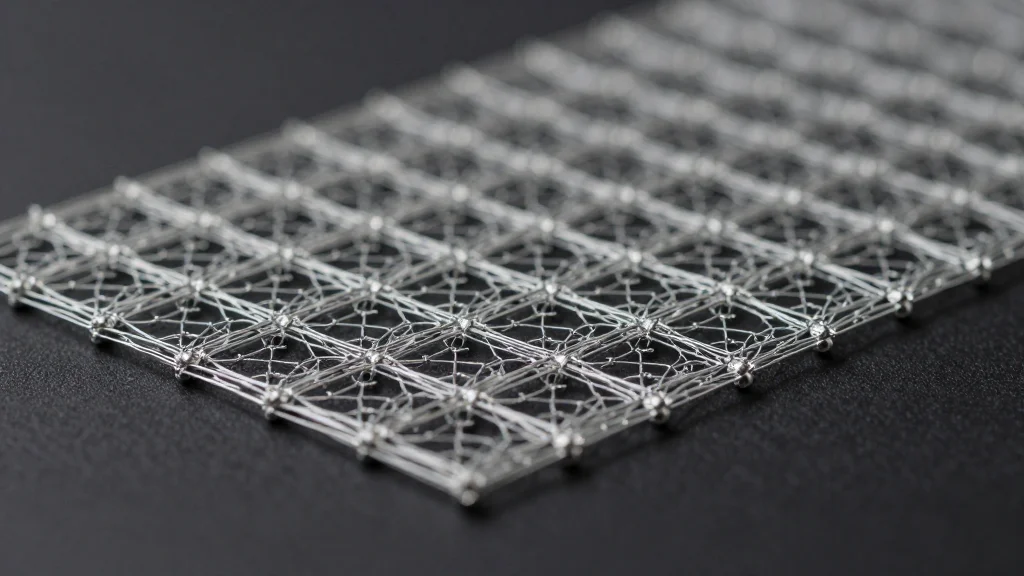
South Korea’s Nanotechnology Master Plan and National Strategic Technology Framework
South Korea’s National Science and Technology Advisory Council approved the sixth nanotechnology master plan (2026‑2035) and an upgrade to its national strategic technology framework. The nanotech plan outlines 13 priority tasks and five first‑of‑its‑kind research areas, aiming to place the...

New Nitride Magnets Let Electricity Flip Hidden Spin Patterns
Researchers have identified wurtzite‑type nitride compounds MnSiN₂ and MnGeN₂ as room‑temperature multiferroic altermagnets. First‑principles calculations show that reversing their ferroelectric polarization also reverses the non‑relativistic spin splitting, providing electric control of hidden spin patterns. The intrinsic switching barriers are 0.96 eV...

New Roadmap Highlights Surface Acoustic Wave Technologies
A new "Surface Acoustic Waves Roadmap 2026" collates insights from over fifty leading researchers, outlining the decade‑long trajectory of SAW technology. The document highlights the shift from traditional radio‑frequency filters to advanced roles in quantum chips, optomechanics, and biomedical sensing....

Nanozymes Against Brain Tumors
Researchers at Empa and HOCH Health Ostschweiz are developing biocompatible nanozymes that can be applied directly during brain‑tumor surgery to attack astrocytoma cells. The nanozymes act like enzymes, generating reactive‑oxygen species and activating drug precursors, and they are triggered by...

Researchers Boost SLA Resin Conductivity With PEDOT:PSS
Researchers have formulated a UV‑curable SLA resin infused with the conductive polymer PEDOT:PSS and nano‑graphite, delivering measurable electrical conductivity while preserving the fine resolution and surface finish typical of stereolithography. The blend overcomes the usual light‑attenuation and viscosity penalties of...

Graphene Instead of Silicon? Simulations From Kiel Show Light-Controlled Electrons in the Femtosecond Range
Researchers at Georgia Tech and Tianjin University reported semiconducting epitaxial graphene on silicon carbide with a 0.6 eV bandgap and carrier mobility above 5,000 cm² V⁻¹ s⁻¹. In September 2025, the University of Kiel simulated femtosecond laser pulses that can locally excite electrons in graphene...

Ordinary Nail Polish Turns Surfaces Into Removable Nanogenerators
Researchers have demonstrated that commercial nail polish can be brushed onto surfaces to create a removable triboelectric nanogenerator (TENG). The paintable layer acts as a positive tribo‑active film, delivering up to 400 V and 40 µA when paired with a PDMS counter‑electrode,...

New Nanocomposite Enables Removal and Detection of Radioactive Iodine in Water
Researchers at the Hefei Institutes of Physical Science have created a silver‑decorated, metal‑organic‑framework‑derived TiO₂‑x nanocomposite that both captures and visually detects trace radioactive iodine in water. The material, built from the MIL‑125 MOF, features oxygen vacancies and a Ag/TiO₂‑x Schottky...

Ashvattha Therapeutics Announces Presentations Highlighting Mechanism of Action for Migaldendranib in Diabetic Macular Edema and Neovascular Age-Related Macular Degeneration
Ashvattha Therapeutics presented Phase 2 data on its subcutaneous nanomedicine migaldendranib (MGB) for diabetic macular edema and neovascular age‑related macular degeneration at ARVO. The two‑stage trial showed stable central subfield thickness for up to 12 weeks and maintained visual acuity without...

The Reason Nanoscale Gaps Can Produce Terahertz Radiation
Researchers have demonstrated a nano‑plasma device that generates 2 W peak terahertz power at 0.4 THz using a 100‑500 nm air gap. The breakthrough relies on a secondary electron emission avalanche (SEEA) on the substrate, which creates an ultra‑dense electron sheet that seeds...
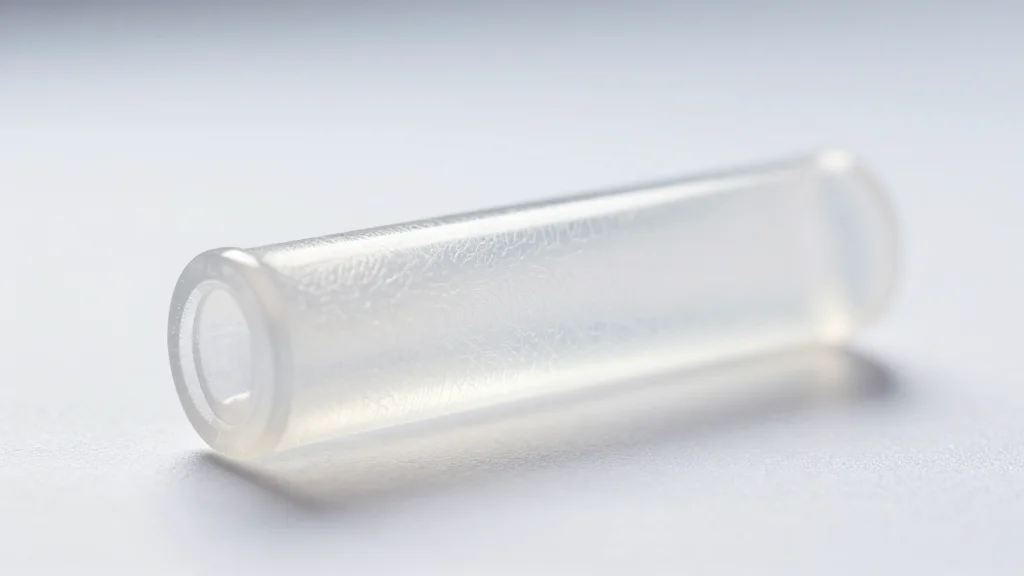
Rapid Nanofiber Spinning Fills the Gap in Small-Diameter Vascular Grafts
Researchers at Harvard have demonstrated a focused rotary jet spinning (FRJS) process that fabricates custom small‑diameter vascular grafts in minutes. The technique produces nanofiber scaffolds with tunable architecture, achieving 0.5 mm inner‑diameter tubes in under 90 seconds and larger 10 mm grafts...

Neural Network Switching Controller Reduces Tracking Errors in Nano-Positioning
A team from Huazhong University of Science and Technology and the University of Victoria has unveiled a neural‑network‑based switching output regulation controller (NN‑SORC) that dynamically adapts to abrupt changes in reference signals for piezoelectric nano‑positioning stages. The controller, implemented on...

Modular Transistor Blocks Snap Together to Form Electronic Skin that Senses and Learns
A new study demonstrates modular organic electrochemical transistor (OECT) blocks mounted on self‑adhesive SEBS polymer that snap together to form reconfigurable electronic skin. Four independently optimized modules—ion‑sensing, temperature‑sensing, neuromorphic synapse, and logic inverter—retain high performance after stacking, 30% stretch, and...

Graphene Layers Steer Nickel Foam Toward More Active Oxygen Evolution Catalyst Phase
Researchers at Zhejiang and Dalian universities coated nickel foam with electrochemically exfoliated graphene, directing the surface oxidation toward the highly active γ‑NiOOH phase during the oxygen evolution reaction (OER). The graphene‑mediated electrodes exhibited lower overpotentials, faster kinetics and sustained performance...

Liquid Metal Nanoparticles Freeze Into Spikes that Kill Drug-Resistant Cancer
Researchers have engineered bismuth‑doped gallium liquid‑metal nanoparticles that become spiky during freezing, puncturing cancer cells and killing drug‑resistant lung, colorectal and ovarian tumor organoids. The alloy reduces supercooling, raising the fraction of deformable particles from 2% to roughly 10% and...