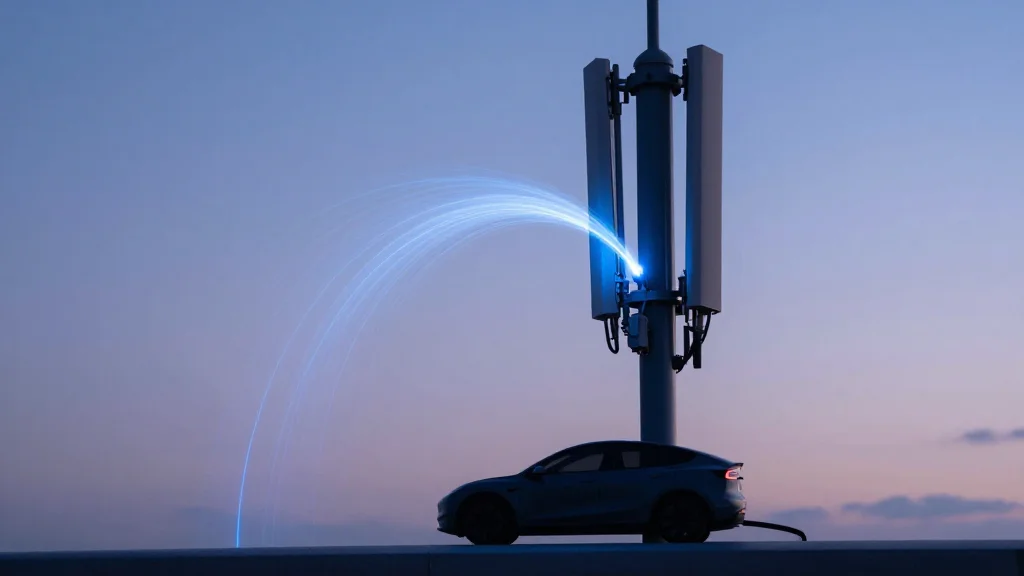
Nokia’s AI Applications Study: “Physical AI” May Require RAN Redesign to Support High‑volume, Low‑latency Uplink Traffic
Key Takeaways
- •Physical AI drives uplink traffic up to four times average capacity.
- •Sub‑20 ms latency requires guaranteed scheduling, not best‑effort.
- •AI‑RAN designs add programmability and real‑time resource allocation.
- •Semantic communication can cut data volume while preserving decision relevance.
- •Operators may need tiered pricing for latency‑critical enterprise services.
Pulse Analysis
The rise of Physical AI marks a departure from traditional consumer‑centric mobile traffic. Unlike video streaming, which can buffer data, real‑time sensor feeds and high‑definition video from autonomous systems must reach the cloud within milliseconds to inform immediate actions. This creates an uplink‑centric traffic pattern that strains existing radio access networks, which were built around downlink‑heavy, best‑effort delivery models. As AI workloads migrate to the edge, the volume of latency‑sensitive uplink data is set to outpace current capacity planning assumptions.
Addressing this shift requires a new generation of AI‑RAN infrastructure. Programmable radio units, AI‑driven orchestration, and fine‑grained QoS mechanisms will enable deterministic scheduling and dynamic resource allocation. Network slicing can isolate latency‑critical flows, while semantic communication techniques compress raw sensor streams by transmitting only decision‑relevant features. Together, these technologies reduce the need for massive overprovisioning and make high‑throughput, sub‑20 ms uplink feasible at scale. Operators that adopt such flexible, edge‑aware architectures will gain a strategic edge in supporting autonomous vehicles, tele‑robotics, and industrial automation.
From a business perspective, the transition opens fresh monetization pathways. Service providers can introduce performance‑based pricing tiers, charging enterprises for guaranteed latency and reliability rather than flat data caps. This aligns revenue with the value derived from mission‑critical AI applications, turning network performance into a marketable service. As 6G research accelerates, the integration of AI directly into the RAN will become a cornerstone of next‑generation mobile strategy, positioning operators that invest early as the preferred partners for high‑value, AI‑driven industries.
Nokia’s AI Applications Study: “Physical AI” may require RAN redesign to support high‑volume, low‑latency uplink traffic
Comments
Want to join the conversation?