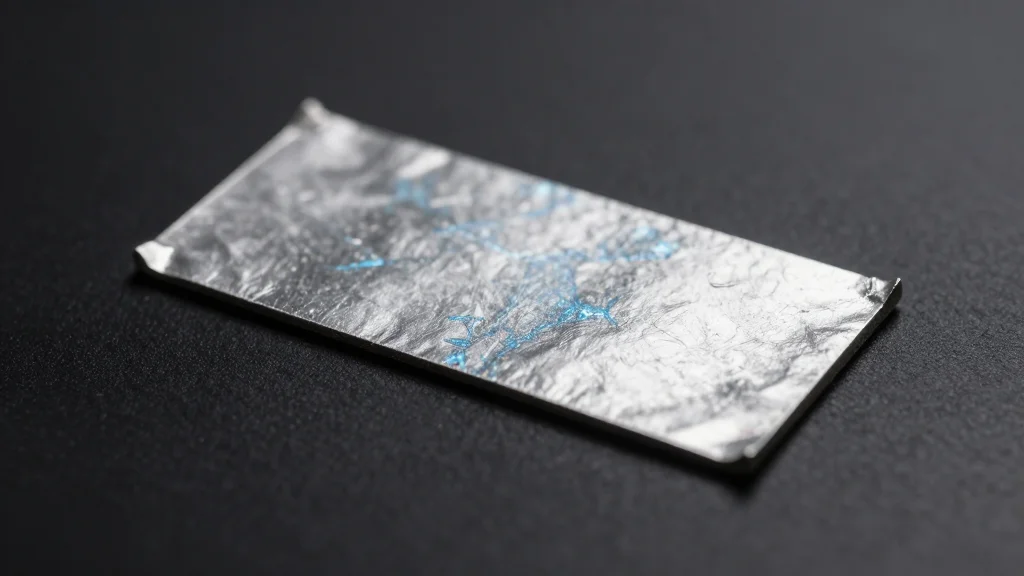
EcoPro Lands CAD 6 Million From Canada to Boost Solid‑state Lithium‑metal Anodes

Companies Mentioned
Why It Matters
The development of lithium‑metal anodes hinges on nanoscale engineering of metal foils, interfaces, and solid‑electrolyte compatibility—core nanotechnology challenges that have stymied commercial solid‑state batteries for years. By unlocking a higher energy density, the technology could dramatically improve electric‑vehicle range and reduce battery weight, addressing two of the biggest barriers to broader EV adoption. Moreover, the Canada‑South Korea partnership diversifies the global supply chain for critical battery materials, mitigating geopolitical risks and fostering standards for safe, high‑performance solid‑state cells. If EcoPro’s pilot succeeds, it will validate a manufacturing pathway that other nanotech firms can emulate, potentially spurring a wave of investment in related processes such as atomic‑layer deposition, nanostructured electrolyte coatings, and ultra‑thin foil rolling. The ripple effect could accelerate research funding, talent migration, and cross‑border collaborations, reshaping the competitive landscape of the battery industry for the next decade.
Key Takeaways
- •EcoPro Innovation receives CAD 6 million (≈$4.5 M) from the Canadian federal government.
- •Funding supports a full‑scale lithium‑metal anode pilot line in Canada, slated for completion by March 2027.
- •The grant is part of Canada’s Energy Innovation Program aimed at building a domestic solid‑state battery supply chain.
- •Lithium‑metal anodes could deliver up to ten‑fold higher energy density than graphite, extending EV range by 30‑40%.
- •EcoPro already operates a 40‑tonne solid‑electrolyte pilot in Ochang, South Korea, and partners with Hydro‑Quebec.
Pulse Analysis
EcoPro’s infusion of Canadian public money marks a strategic pivot from pure R&D to manufacturing readiness, a transition that many solid‑state players have struggled to achieve. The nanotech hurdle—creating a uniform, defect‑free lithium‑metal foil that can survive repeated plating and stripping—requires precision equipment and stringent quality control, both of which are capital‑intensive. By leveraging Canadian incentives, EcoPro can amortize these costs over a larger production footprint, reducing per‑unit expense and making the technology more attractive to automakers.
Historically, solid‑state battery development has been fragmented, with companies focusing on either electrolyte chemistry or anode design. EcoPro’s integrated approach—spanning lithium‑metal production, high‑purity refining, and ultra‑thin foil fabrication—mirrors the vertical integration strategy that propelled Tesla’s lithium‑ion dominance. If the pilot demonstrates reliable cycle life and safety, EcoPro could capture a niche in high‑energy‑density EVs and premium consumer electronics, forcing incumbents like Panasonic and CATL to accelerate their own nanotech roadmaps.
The broader market implication is a potential shift in the geopolitical balance of battery manufacturing. Canada’s willingness to fund a South Korean firm signals a new model of collaborative innovation, where host nations provide risk‑sharing capital while foreign firms bring specialized nanotech expertise. This could catalyze a cluster of solid‑state battery hubs across North America, Europe, and East Asia, each leveraging local policy support to overcome the steep cost curve of nanomanufacturing. The next critical milestone will be the pilot’s performance data—if it meets or exceeds projected energy density and safety targets, we may see a cascade of follow‑on investments, both public and private, that finally bring solid‑state batteries out of the lab and onto the road.
EcoPro lands CAD 6 million from Canada to boost solid‑state lithium‑metal anodes
Comments
Want to join the conversation?
Loading comments...