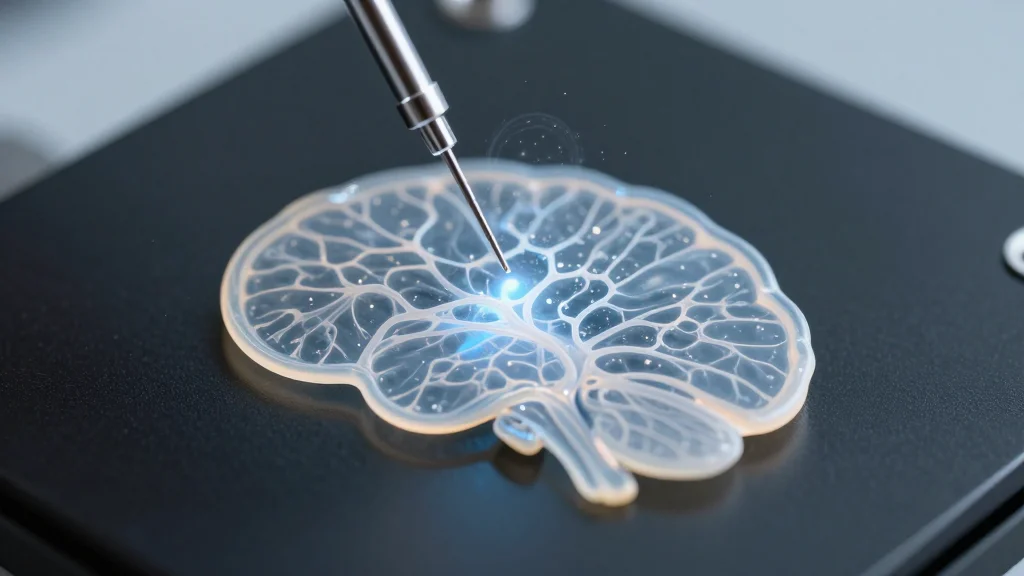
Scientists Reconstruct 1 Mm³ Human Cortex Using Nanotech, Mapping 100 Million Synapses

Why It Matters
This breakthrough demonstrates that nanotechnology can move beyond materials science to reconstruct complex biological systems at a scale previously reserved for animal models. By providing an unprecedented view of human cortical wiring, the work bridges a critical gap between cellular neuroscience and systems‑level understanding, enabling more accurate disease models and accelerating therapeutic testing. The open‑data approach also democratizes access to high‑resolution brain maps, fostering collaboration across academia, biotech and AI firms. In the broader nanotech ecosystem, the study showcases a practical application of nanoscale imaging and fabrication techniques to solve a biomedical challenge. It validates the commercial viability of high‑throughput electron microscopy platforms and data‑analysis pipelines, signaling potential growth for companies that supply these tools and for cloud‑based analytics services that can handle petabyte‑scale datasets.
Key Takeaways
- •Researchers reconstructed a 1 mm³ human cortical fragment using serial‑section electron microscopy.
- •The dataset includes >100 million synaptic connections and thousands of neurons.
- •A new class of directionally oriented deep‑layer neurons was identified.
- •All raw data and analysis software have been released under an open‑access license.
- •The methodology offers a scalable route for high‑resolution human brain mapping, with implications for drug discovery and AI‑driven neuroscience.
Pulse Analysis
The nanotech community has long sought a "human‑in‑the‑loop" benchmark for brain‑scale modeling. This study delivers that benchmark by marrying nanoscale imaging with open‑science principles. Historically, the field has been hampered by two constraints: limited access to high‑quality human tissue and the prohibitive cost of generating terabyte‑scale image stacks. By exploiting surgical waste and leveraging automated sectioning rigs, the researchers have effectively lowered both barriers.
From a market perspective, the ripple effects are immediate. Companies that provide high‑throughput electron microscopes, such as Thermo Fisher Scientific and Zeiss, can anticipate heightened demand for instruments capable of continuous, unattended operation. Likewise, cloud‑infrastructure providers will see new workloads as labs upload and process petabyte‑scale datasets. Startups that specialize in AI‑driven image segmentation—already emerging in the pathology space—are poised to expand into neuroscience, where the need for rapid synapse detection is acute.
Looking forward, the real test will be whether the structural maps can be integrated with functional data to produce predictive models of cognition and disease. If successful, this could usher in a new generation of "digital twins" for the human brain, transforming both basic research and precision medicine. The open‑access stance taken by the authors accelerates that timeline, inviting a global community to iterate, validate, and ultimately commercialize the technology.
Scientists Reconstruct 1 mm³ Human Cortex Using Nanotech, Mapping 100 Million Synapses
Comments
Want to join the conversation?
Loading comments...