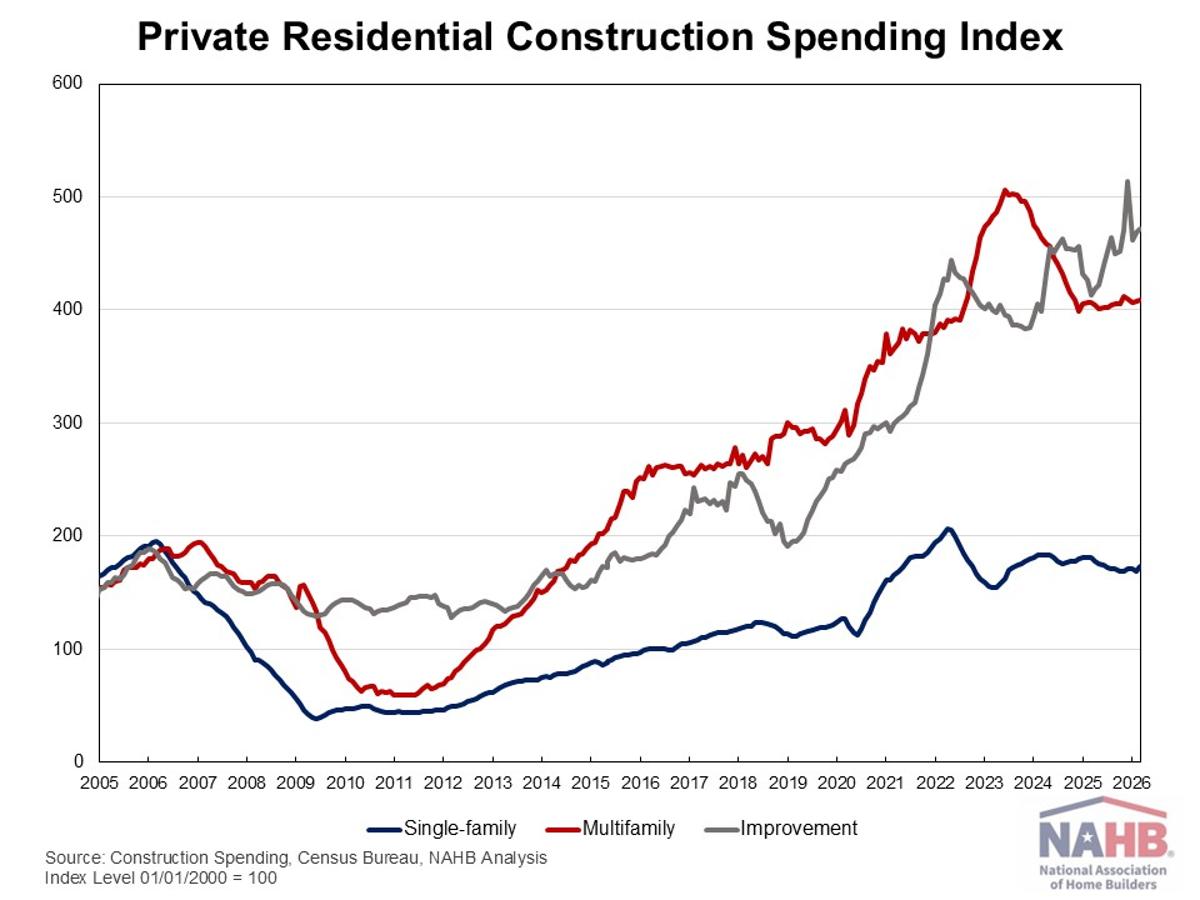
Private Residential Construction Spending Increases in March
Private residential construction spending rose 1.7% in March 2026, ending two consecutive months of decline and putting the year‑over‑year figure 3.6% higher. Gains were broad‑based, with single‑family construction up 2.7% month‑over‑month, multifamily edging up 0.3%, and home‑improvement spending increasing 0.9%. Despite the rebound, single‑family output remains 4.2% below a year ago, while remodeling leads with a 14.3% annual increase. Non‑residential construction fell 2.1% YoY, driven by a $39 billion drop in manufacturing projects.
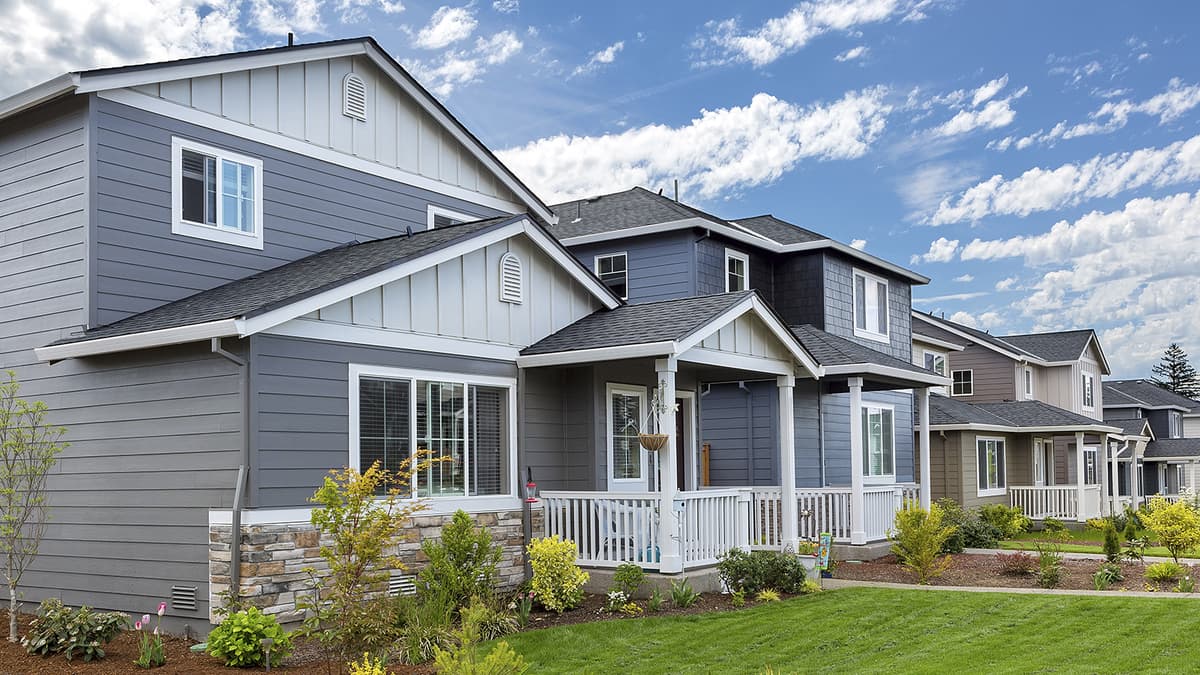
Multifamily Developer Confidence Holds Steady in First Quarter
The National Association of Home Builders’ Multifamily Market Survey shows developer confidence held steady in Q1 2026, with the Multifamily Production Index (MPI) unchanged at 44 year‑over‑year. Meanwhile, the Multifamily Occupancy Index (MOI) slipped to 69, a 13‑point decline. Growth...
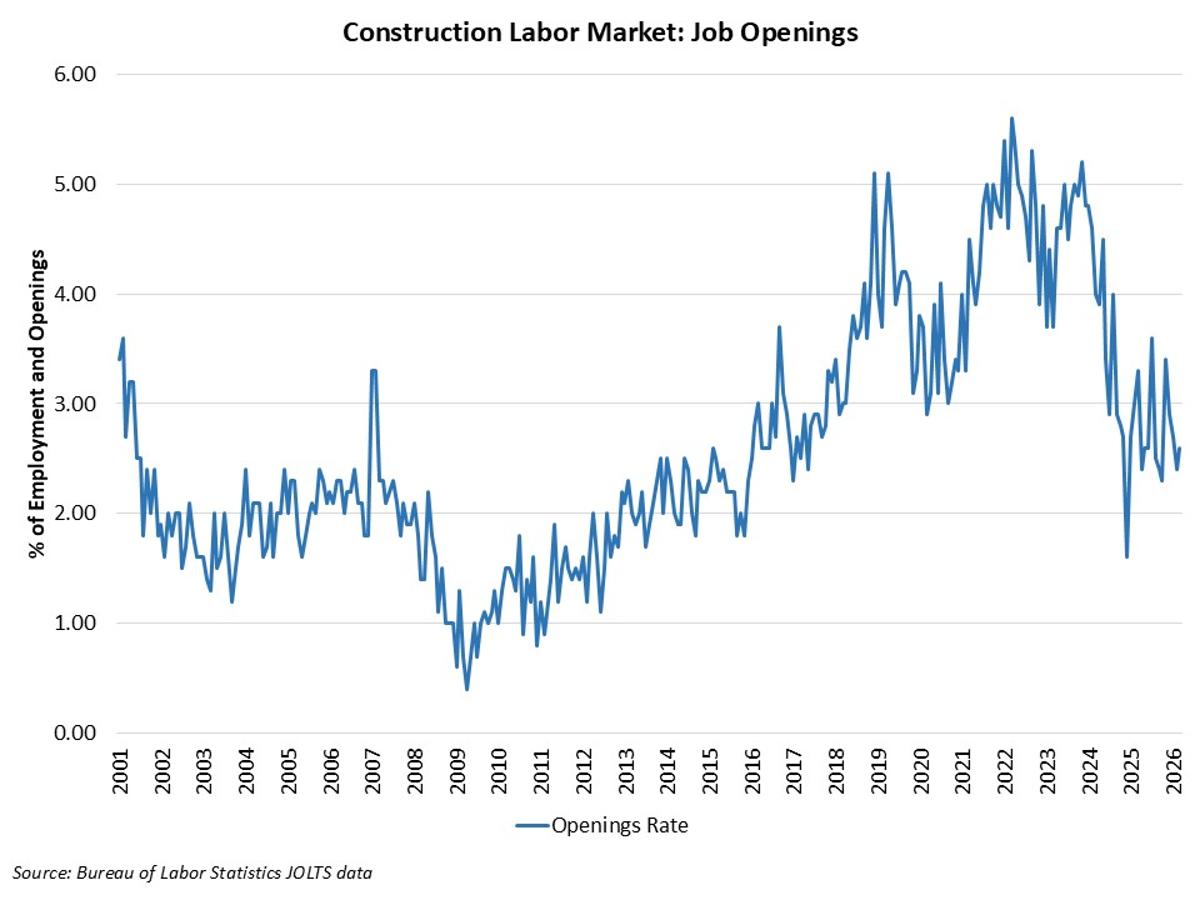
Slight Rise for Open Construction Jobs in March
The Bureau of Labor Statistics reported that open construction jobs rose modestly in March, increasing to 224,000 from 201,000 in February. Despite the uptick, the figure remains well below the 278,000 openings recorded a year earlier and reflects a broader...
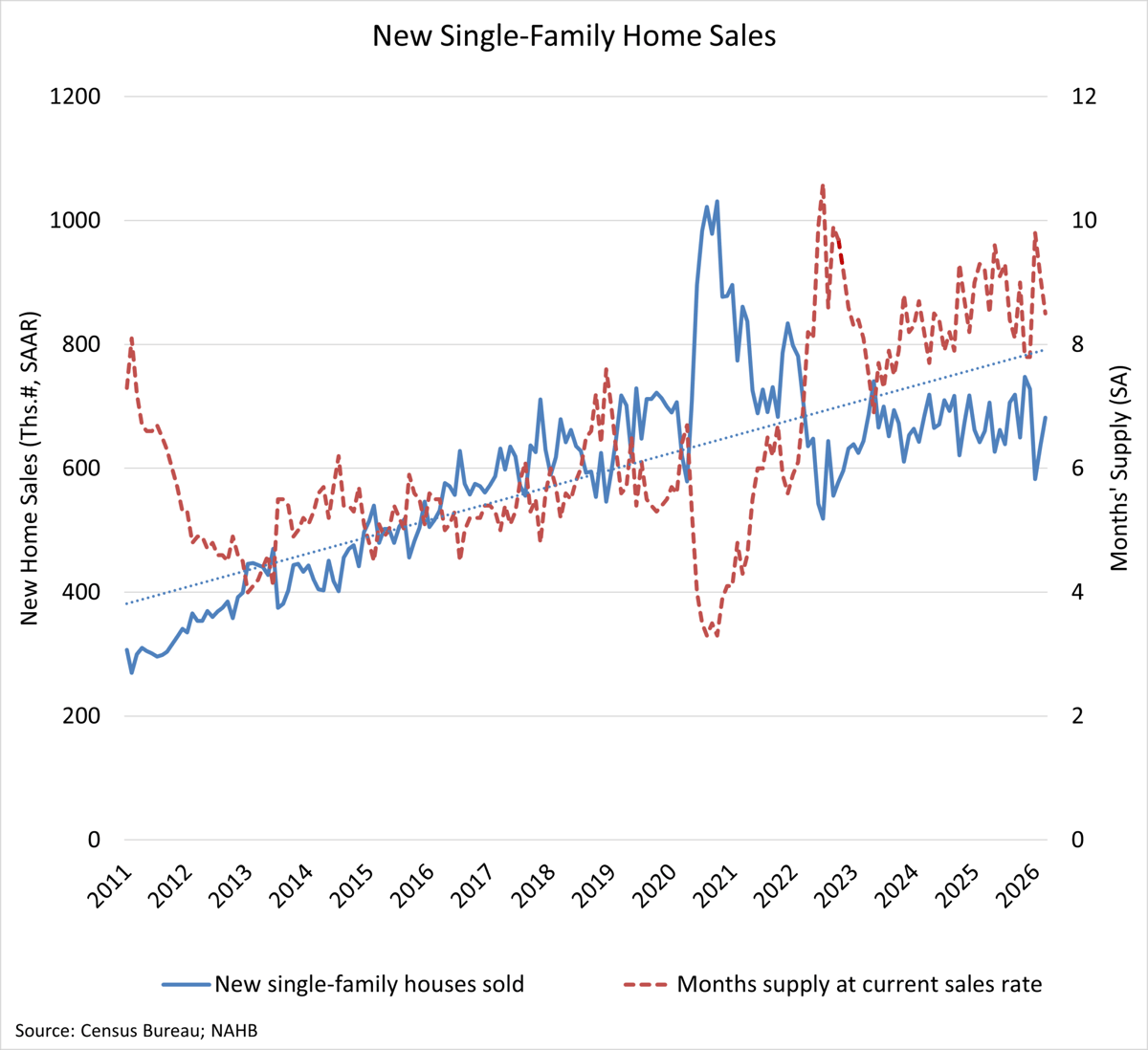
New Home Sales Rise, Supported by Limited Existing Inventory
New single‑family home sales rose 7.4% month‑over‑month in March, reaching a seasonally adjusted annual rate of 682,000 units and a 3.3% year‑over‑year gain. Inventory slipped to 481,000 homes, putting the months’ supply at 8.5 months—down from 9.2 a year ago...
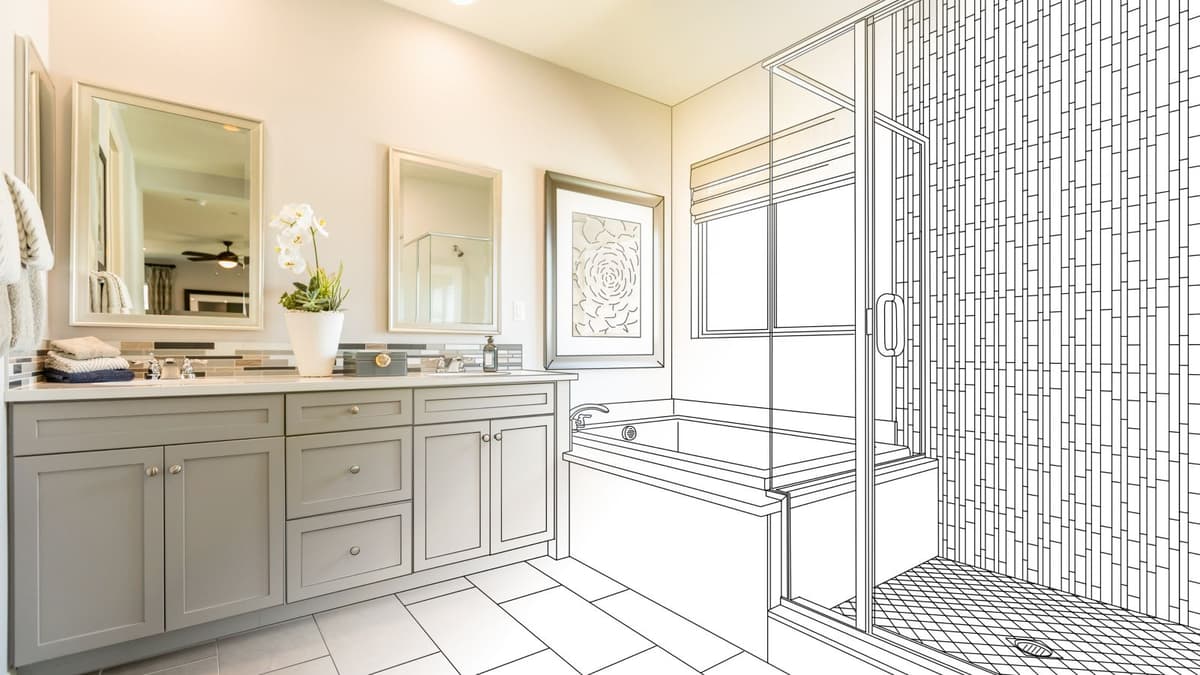
NAHB Debuts New Resource that Estimates Quarterly Remodeling Spending by State
The National Association of Home Builders (NAHB) introduced the State Projections of Remodeling (SPR), a quarterly, state‑level estimate of remodeling market share and dollar value released a month after the NAHB Remodeling Market Index. In Q4 2025, national remodeling spending reached...
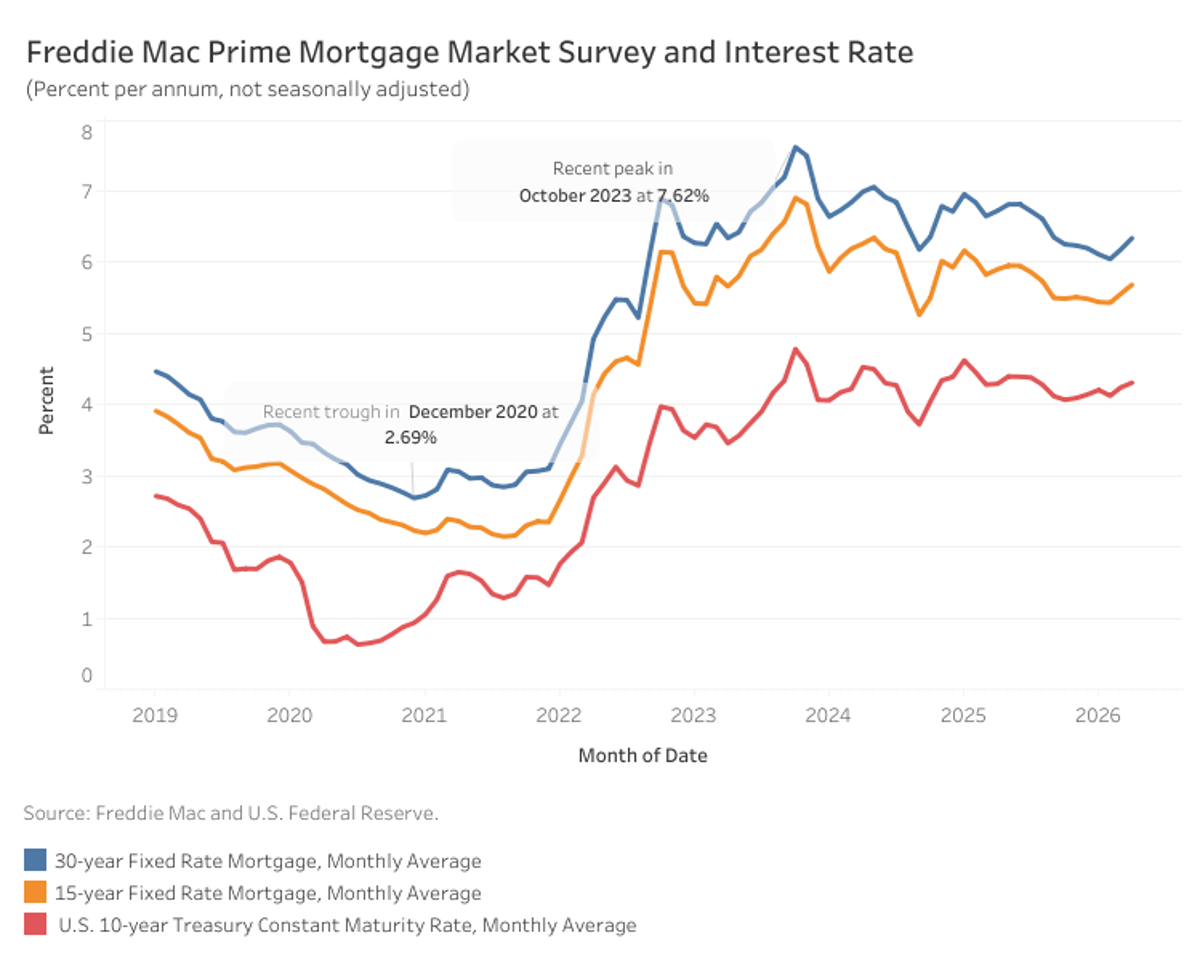
Mortgage Rates Climb as Inflation Rebounds and Yields Rise
Mortgage rates rose in April, with the 30‑year fixed reaching 6.34% and the 15‑year climbing to 5.69%, marking a 16‑basis‑point and 13‑basis‑point increase respectively. The jump mirrors a higher 10‑year Treasury yield of 4.31%, up 7 basis points, as oil...
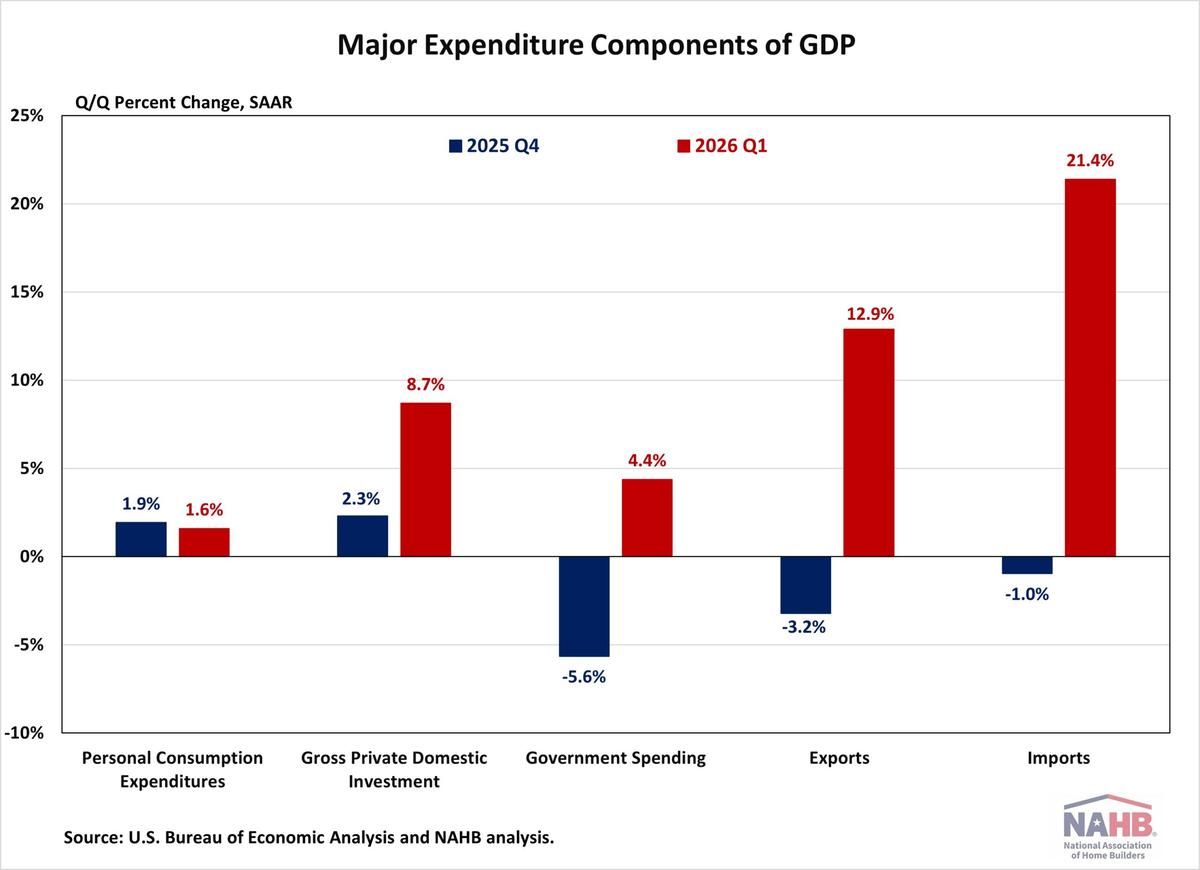
U.S. Economy Rebounded in the First Quarter of 2026
U.S. real GDP expanded at a 2.0% annualized rate in Q1 2026, rebounding sharply from a 0.5% gain in Q4 2025. The surge was anchored by a resurgence in federal non‑defense spending and a 17.2% jump in business equipment investment driven by...
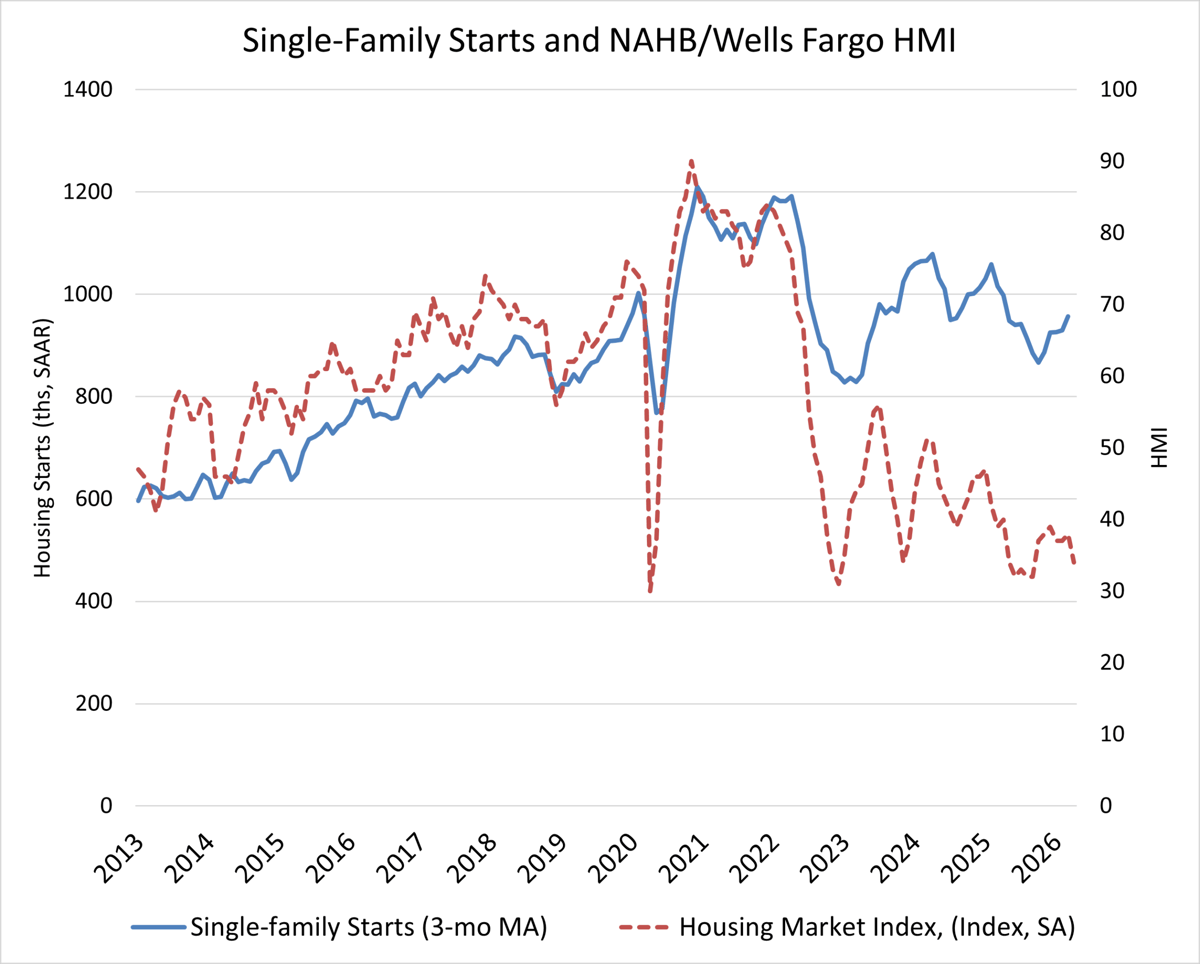
Home Building Shows Signs of Stabilization with Monthly Gain in Starts
U.S. housing starts rose 10.8% in March to a seasonally adjusted annual rate of 1.5 million units, driven by rebounds in both single‑family and multifamily construction. Single‑family starts increased 9.7% to 1.03 million units, while multifamily starts jumped 13.3% to a 470,000‑unit...
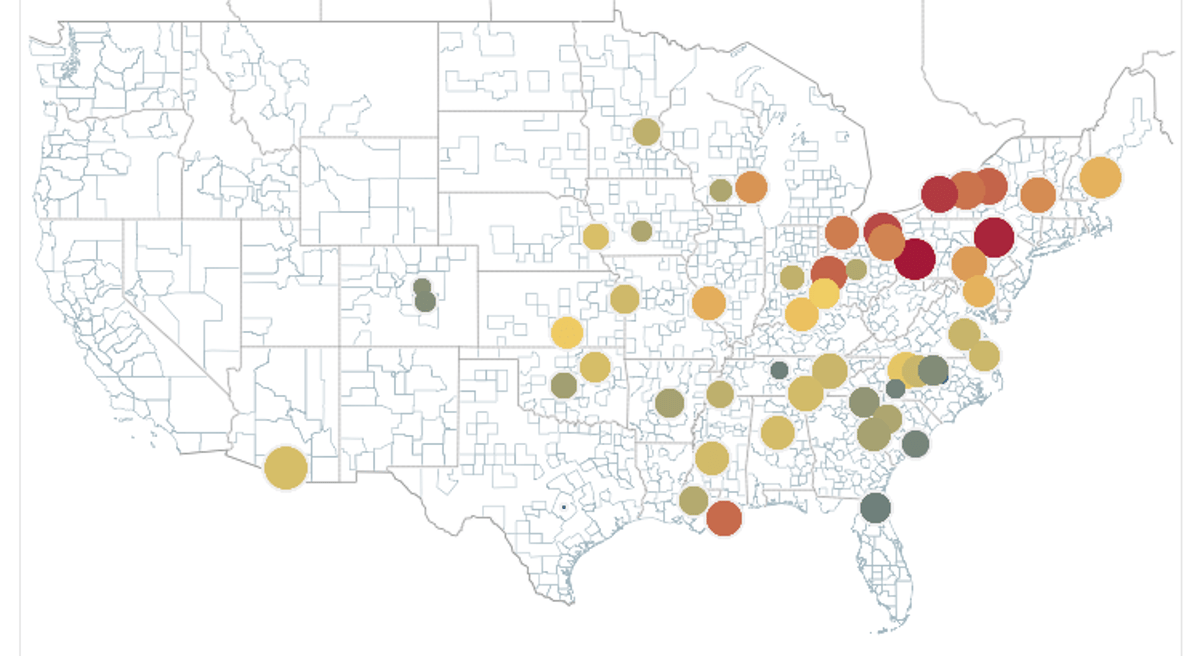
The Silver Tsunami Isn’t Landing Where It’s Needed Most
The United States’ 61.2 million seniors—who own roughly 34 % of all homes and hold about $13.8 trillion in housing equity—are poised to generate a sizable wave of inventory as they downsize or relocate. However, the impact will be uneven: high‑cost coastal metros...
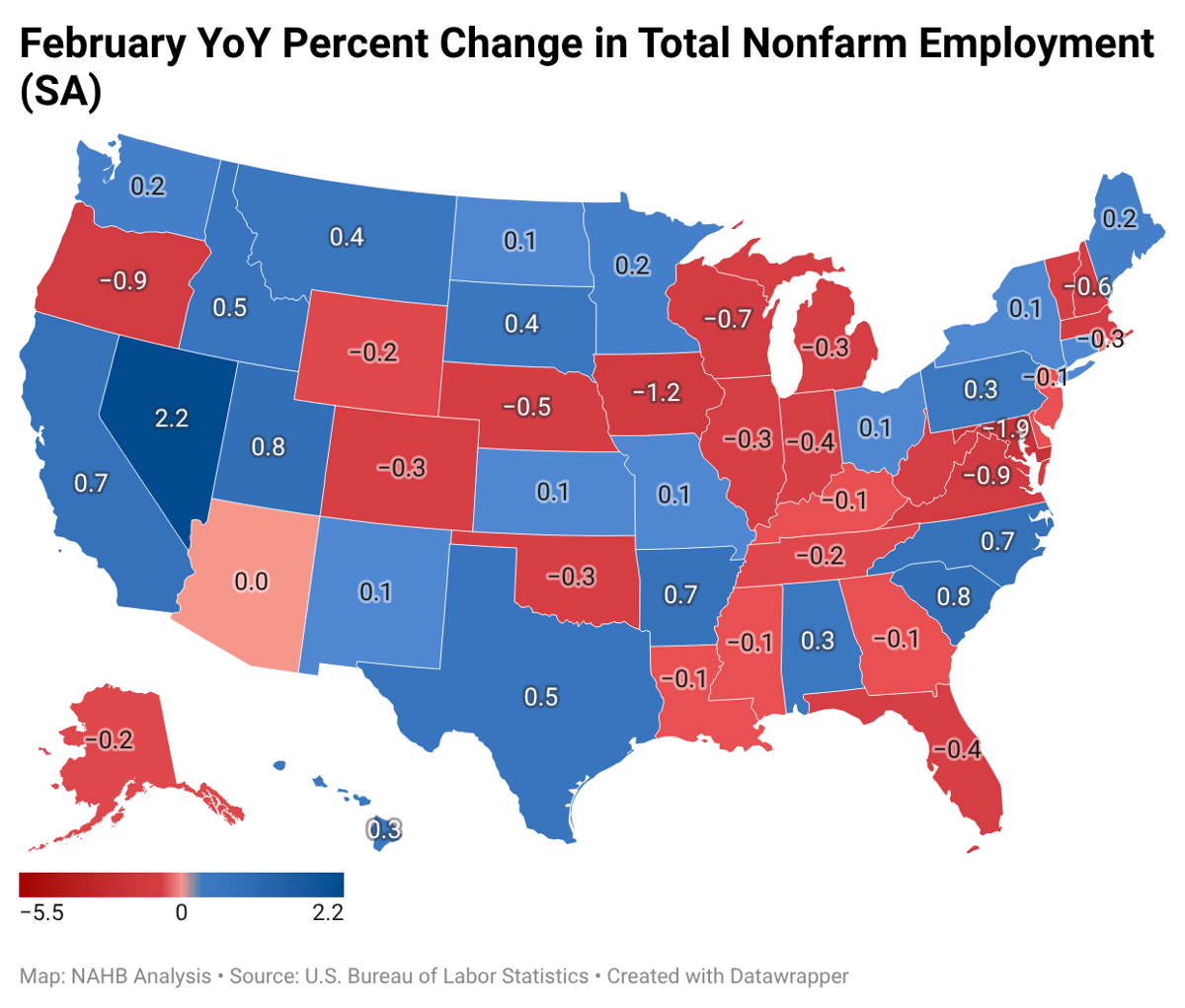
State-Level Employment Situation: February 2026
February 2026 saw U.S. nonfarm payrolls contract by 133,000, reversing January's 160,000‑job gain. Job losses were widespread, with 36 states posting declines while only 14 recorded modest gains. The construction sector added to the softness, shedding a net 13,000 jobs...
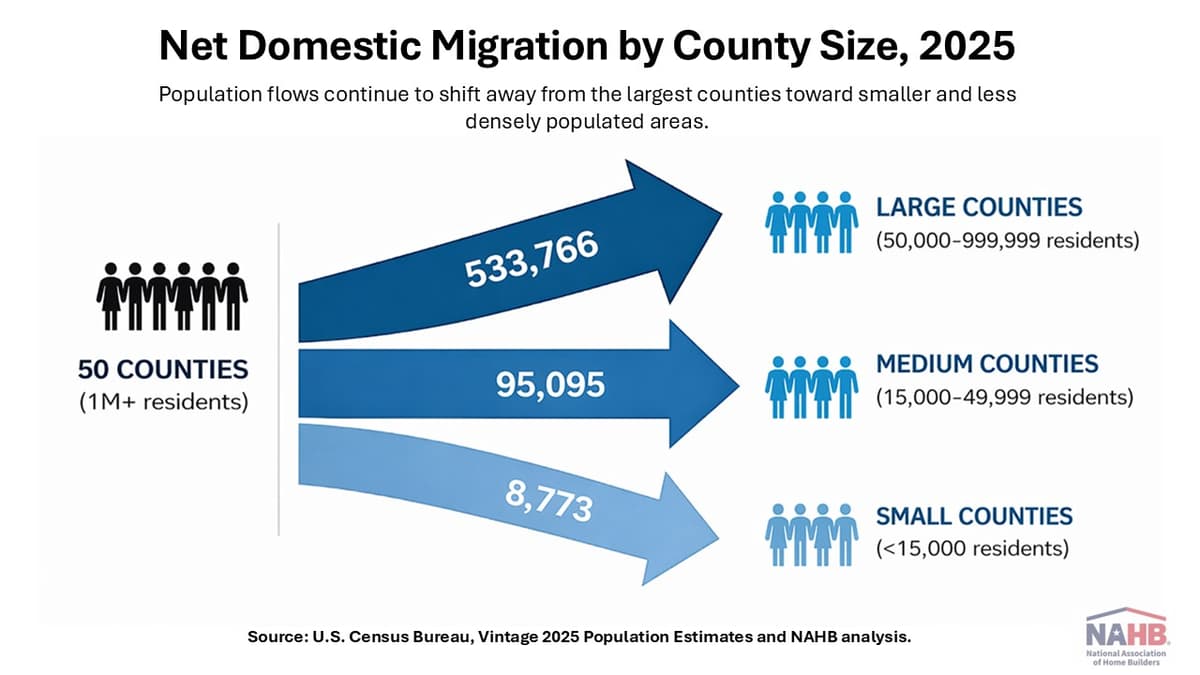
Population Growth and Housing Supply Dynamics at the County Level in 2025
The commentary highlights a demand for county‑level data linking job creation, population migration, and new housing starts in 2025. It posits that employment growth fuels inbound migration, which in turn pressures housing supply. The author seeks analysis of how job‑friendly...

Construction Workforce Shifts: Fewer Tradesmen, More White-Collar Jobs
The National Association of Home Builders reports that construction employment has edged past its 2005‑2006 peak, but the workforce composition has shifted dramatically. Tradesmen now account for just 58.8% of the 12.1 million workers, down from 71% in 2005, while management...
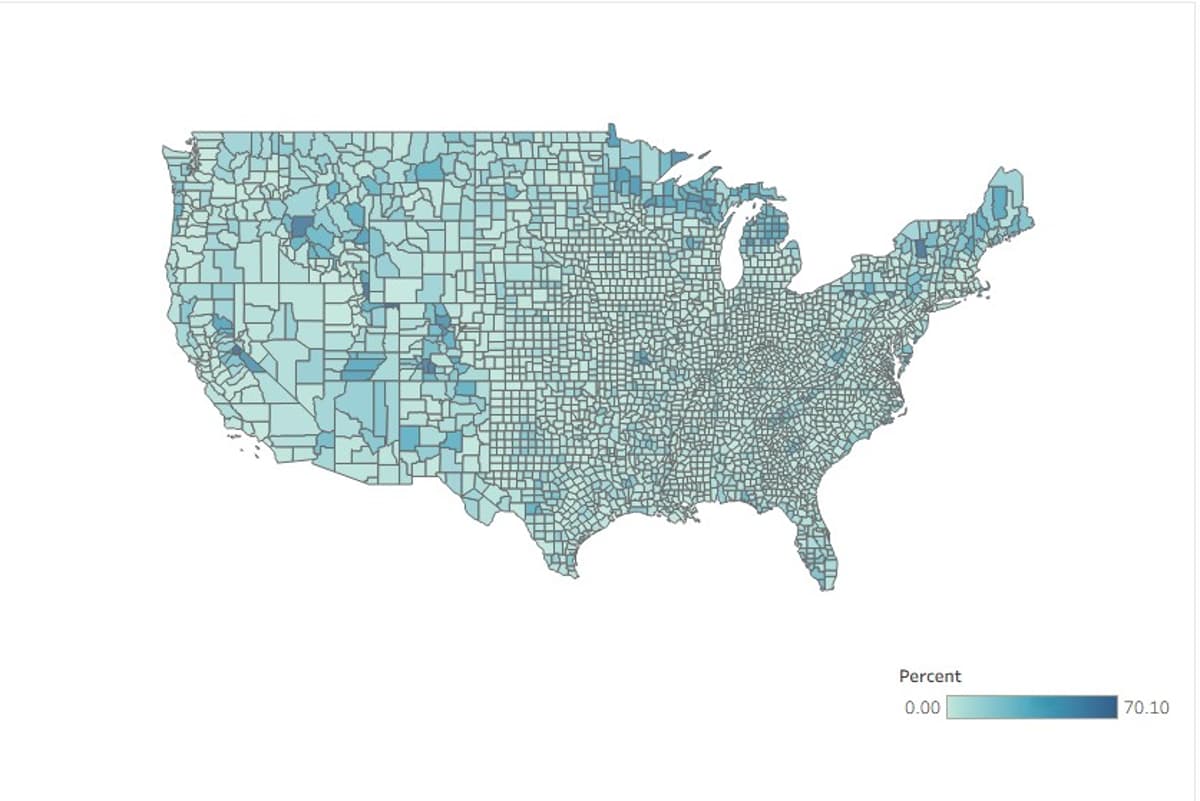
Count of Second Homes Declines in 2024
U.S. second homes declined to 6.2 million in 2024, representing 4.3% of the housing stock, down from 6.5 million in 2022. The drop signals a modest cooling after the pandemic‑driven surge. Florida remains the leader with nearly 944,000 units, while eight states...
Builder Sentiment Posts Notable Decline on Economic Uncertainty
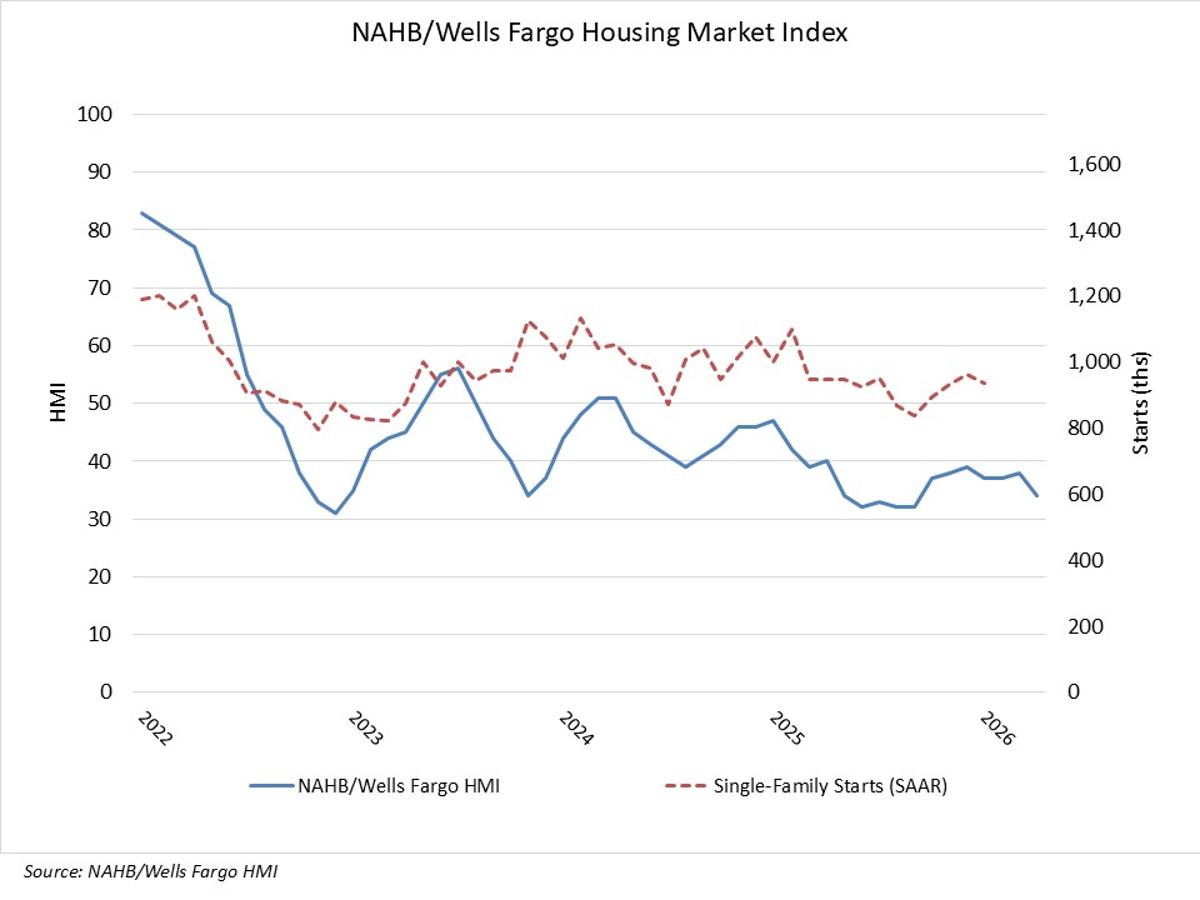
Builder confidence for new single‑family homes slipped to 34 in April, the lowest reading since September 2025, according to the NAHB/Wells Fargo Housing Market Index. The decline reflects persistent high mortgage rates, rising material costs tied to higher fuel prices, and...

Single-Family Permits Decline Sharply to Start 2026
Residential construction entered 2026 with a stark split between housing segments. Single‑family permits dropped 15.2% year‑over‑year to 62,034 units, reflecting higher borrowing costs and tightening affordability. Multifamily permits held steady, slipping only 0.5% to 38,215 units, showing resilience amid regional...
2025 Regional and State-Level GDP Data
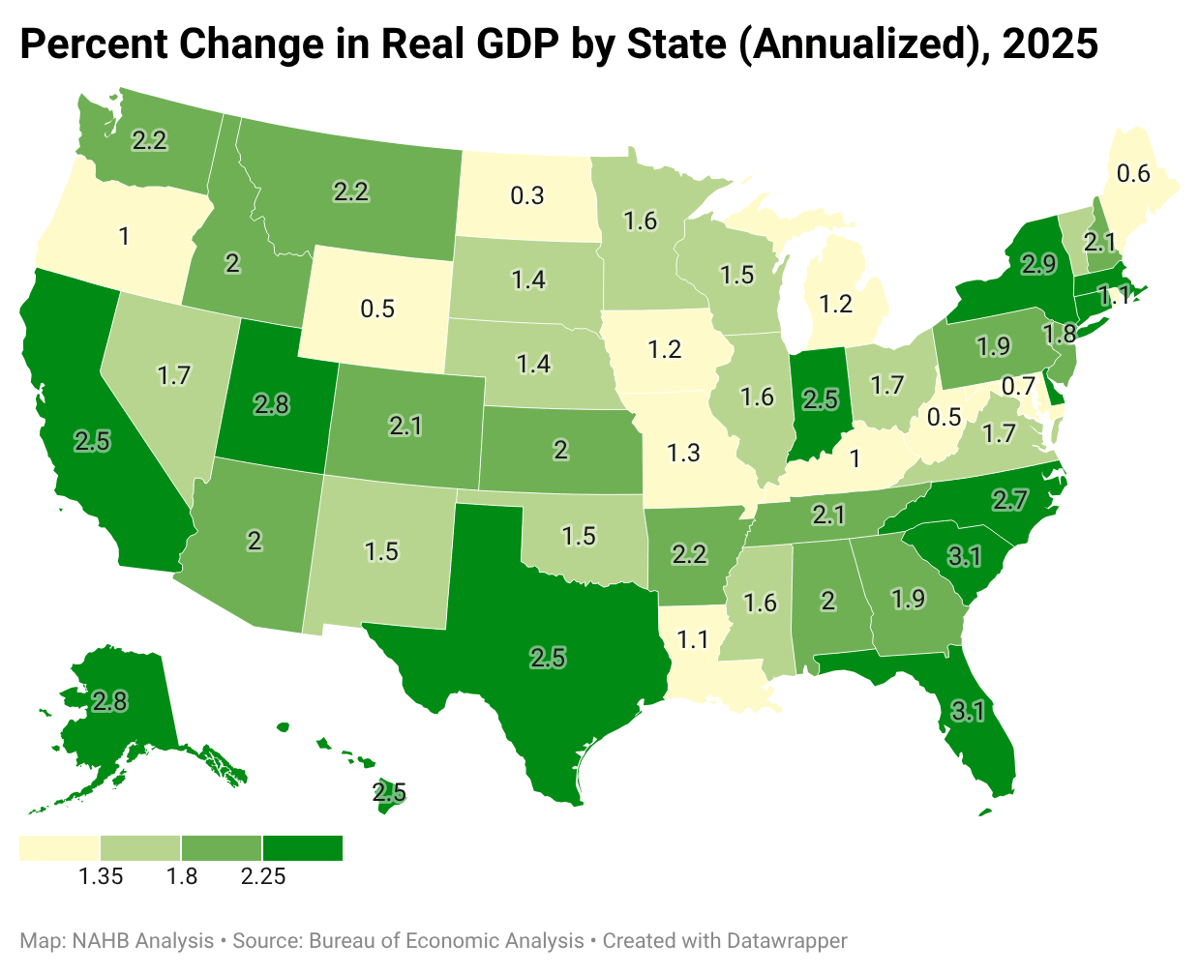
The Bureau of Economic Analysis reported that U.S. real GDP grew 2.1% in 2025, marking a modest expansion after stronger prior years. Every state posted positive growth, but the pace varied widely, from a 3.1% increase in Florida and South...
State-Level Employment Situation: January 2026
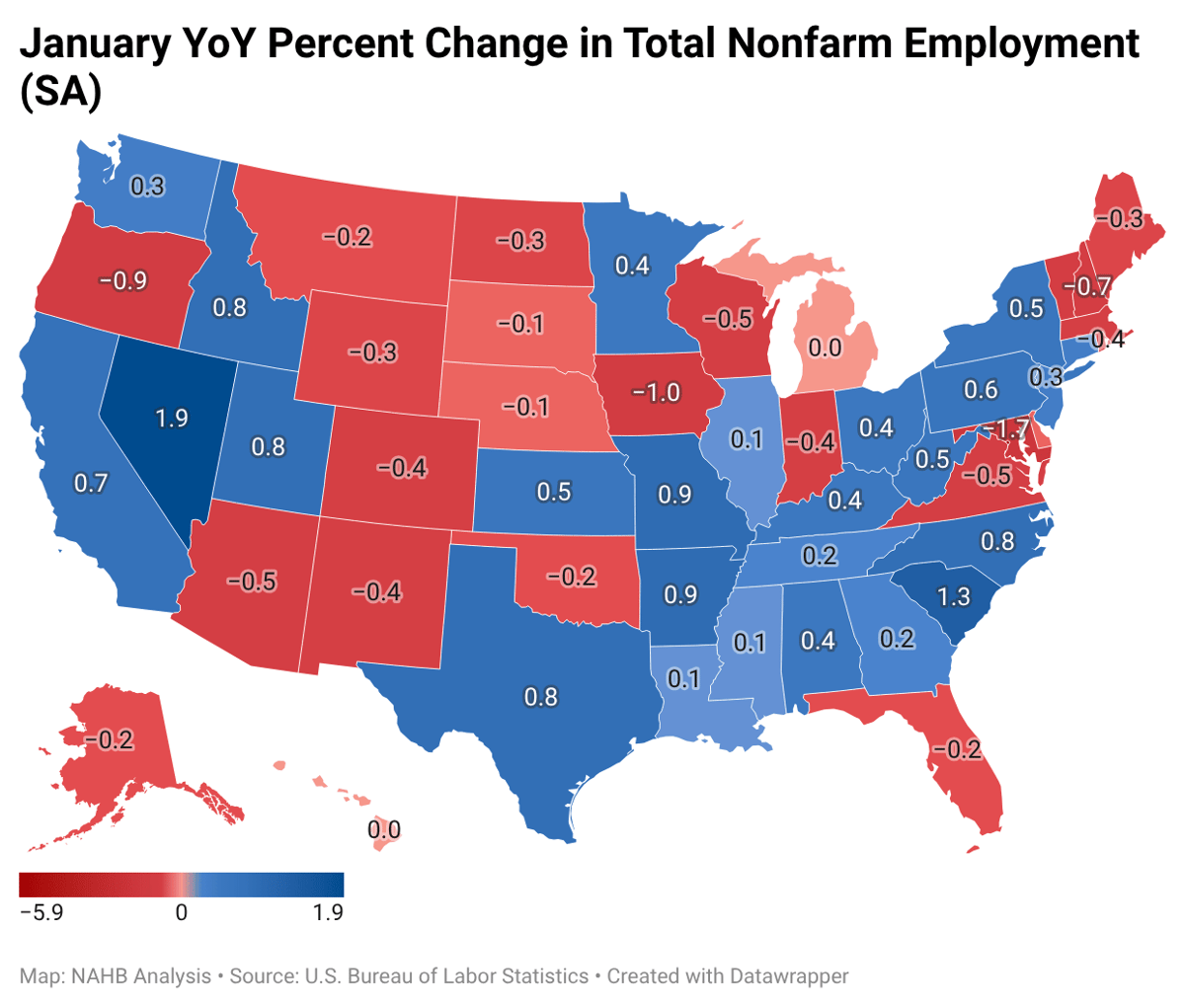
The U.S. labor market rebounded in January 2026, with total nonfarm payrolls rising by 160,000 jobs after a sluggish 2025. Employment gains occurred in 45 states, led by California (+93,500) and Texas (+40,100), while the District of Columbia posted the...

Inflation Surged to a Nearly Two-Year High in March
U.S. consumer prices jumped to a near two‑year high in March, with the CPI climbing 3.3% year‑over‑year, the strongest gain since May 2024. The surge was driven primarily by energy costs, as gasoline prices topped $4 per gallon for the first...
Remodeling Market Sentiment Edges Down but Remains Positive in First Quarter
The NAHB/Westlake Royal Remodeling Market Index (RMI) posted a reading of 62 in Q1 2026, slipping two points from the previous quarter but remaining comfortably above the neutral 50 mark that separates optimism from pessimism. The index aggregates the Current...

Rising Rates Weigh on Mortgage Activity
Mortgage activity slipped in March as the average 30‑year fixed rate climbed to 6.37%, up 13 basis points from February. The Mortgage Bankers Association’s Market Composite Index fell 4.3% month‑over‑month, though it remains 30.8% above a year ago. Refinance applications...

Which States and Construction Trades Depend the Most on Immigrant Workers?
The article draws a sharp distinction between legal immigrants and undocumented migrants working in U.S. construction, arguing that the former are assimilating citizens while the latter lack long‑term plans and send large remittances abroad. It claims that illegal workers undermine...

Job Growth Rebounds in March
The U.S. labor market posted a modest rebound in March, with nonfarm payrolls rising by 178,000 after a revised February loss of 133,000 jobs. The unemployment rate slipped to 4.3%, while job gains were led by healthcare, construction, and transportation...

Private Residential Construction Spending Slips in January
Private residential construction spending slipped 0.8% in January 2026 after two months of gains, pulling the sector back to a modest year‑over‑year increase of 2.3%. Single‑family construction fell 0.2% month‑over‑month, while multifamily dropped 0.7%, reflecting softer builder confidence. Home‑improvement spending...

Soft Construction Labor Market Shows Decline for Open Positions
The Bureau of Labor Statistics reported that construction job openings fell to 202,000 in February, down from 230,000 in January and 255,000 a year earlier. Overall U.S. job openings slipped to 6.88 million, a decline from January’s 7.24 million. The...

NAHB HBGI: Micro Markets Lone Bright Spot for Single-Family Building in Fourth Quarter
The NAHB Home Building Geography Index shows single‑family construction fell in every market except sparsely populated micro counties, which posted a 1.6% year‑over‑year gain in Q4 2025. Large metro core counties experienced the steepest decline at 12.8%. In contrast, multifamily permits...

Almost Half of the Owner-Occupied Homes Built Before 1980
Nearly half of U.S. owner‑occupied homes were built before 1980, pushing the median home age to 42 years in 2024, up from 31 years in 2005. New construction from 2020‑2024 added just 3.6 million units—only 4% of the total stock—while homes...

Comparing New and Resale Prices: 4Q25
In Q4 2025 the median price of a new single‑family home was $405,300, about $9,600 lower than the $414,900 median for existing homes. This marks the third straight quarter where existing‑home prices exceed new‑home prices, a reversal of a decade‑long premium....

Demolition Activity Slows Down But Remains Above Pre-Pandemic Levels
Residential demolition permits slipped 0.1% year‑over‑year in 2025 but remain 34.2% above 2018 levels, indicating sustained activity above pre‑pandemic norms. The market stays heavily concentrated in California, Florida and New Jersey, with New Jersey now the third‑largest source, overtaking Texas...

Building Material Price Growth Remains Entrenched Above 3%
The Producer Price Index shows residential construction inputs rising 0.7% in February, pushing the year‑over‑year price index for new‑home inputs to 3.4%. Goods components, which make up roughly 60% of the index, climbed 1.1% month, the strongest gain since August...

Small Gains for New Single-Family Home Size
New single‑family home sizes have plateaued after years of decline, with Q4 2025 median square footage holding steady at 2,183 sq ft and the mean nudging up to 2,447 sq ft. The brief size surge in 2021, driven by ultra‑low mortgage rates, receded as rates...

Flat Conditions for Open Construction Jobs
The Bureau of Labor Statistics reported that construction job openings were essentially flat in January, with 231,000 vacancies, matching the level a year earlier. Overall U.S. job openings rose to 6.20 million, up from December but down from a year ago....

Custom Home Building Expanded in 2025
Despite a 6% decline in overall single‑family housing starts in 2025, custom home building posted growth. NAHB data show 186,000 custom starts for the year, a 3% increase over 2024, even though fourth‑quarter starts slipped 4% year‑over‑year. Custom homes now...

Weaker Conditions for Single-Family Built-for-Rent Housing
Single-family built‑for‑rent (SFBFR) construction slipped in Q4 2025, with starts falling to roughly 15,000 units, a slight decline from the prior year and contributing to a 19% drop in total 2025 starts versus 2024. The slowdown reflects higher financing costs...

Flat Conditions for Townhouse Construction
Townhouse construction in 2025 remained essentially flat, with 173,000 starts versus 174,000 in 2024. The fourth quarter saw a soft 38,000 attached starts, the weakest since early 2023, while townhouses accounted for over 17% of all single‑family starts. A one‑year...

Single-Family Permits End 2025 on a Soft Note
Single-family housing permits slipped to 909,280 units in 2025, a 7.4% year‑over‑year decline, while multifamily permits rose to 516,886 units, up 5.6%. The downturn was most pronounced in the South and West, where single‑family activity fell 8.5% and 10.4% respectively,...

AD&C Loan Volume Falls Despite Declining Financing Costs
Single‑family acquisition, development and construction (AD&C) loan stock slipped 1.5% in Q4 2025, reaching $456.3 billion despite two Fed rate cuts. While overall AD&C volume fell, 1‑4‑family residential construction loans rose 1.7% year‑over‑year, marking a second consecutive YoY gain. Nonaccrual and...
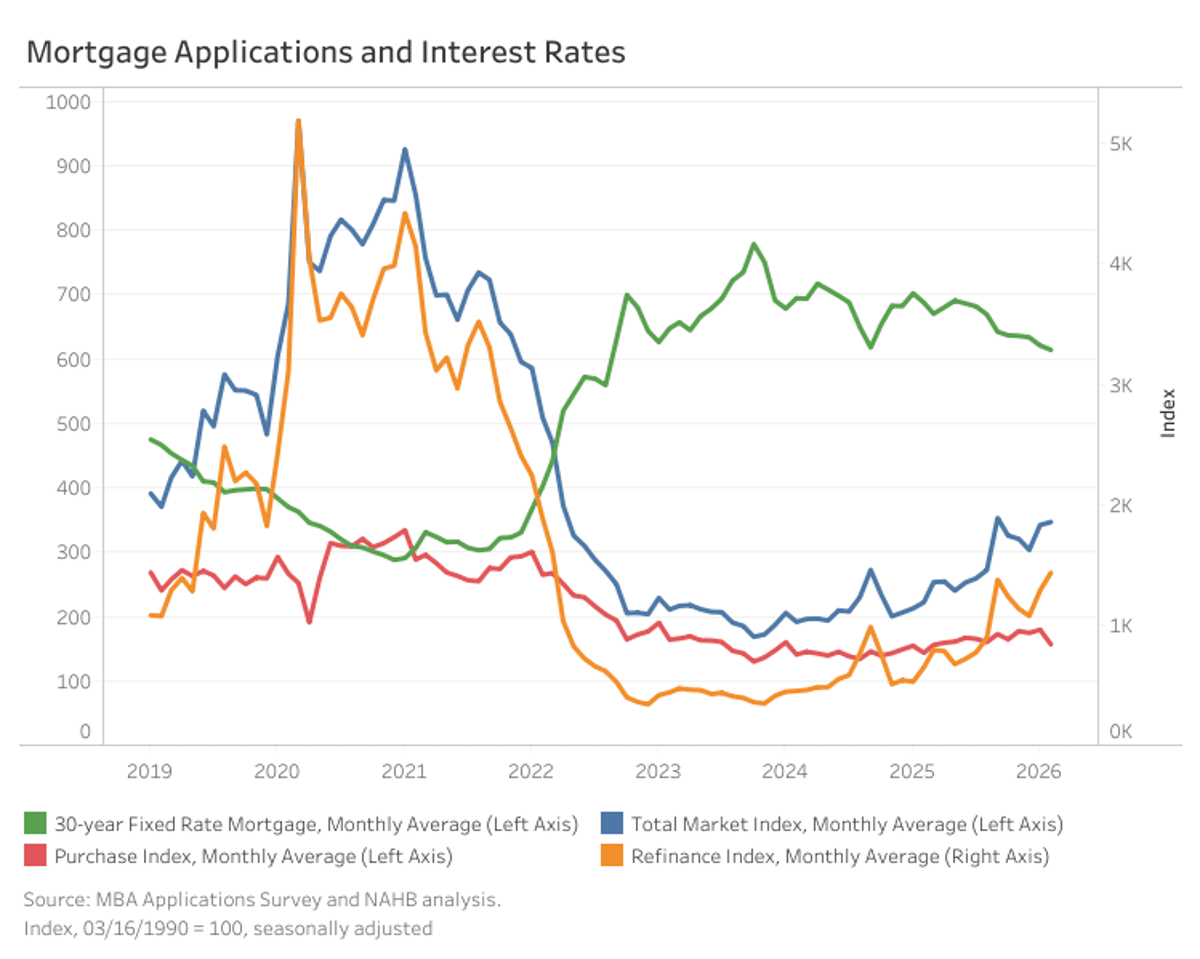
Lower Mortgage Rates Boost Refinancing While Purchase Activity Slows
Mortgage applications rose 1.5% month‑over‑month as the 30‑year fixed rate slipped to a three‑year low of 6.14%, driven by a decline in the 10‑year Treasury yield. Refinancing activity surged 11.3%, while purchase applications fell 12.3% amid tight inventory and winter...

U.S. Economy Loses 92,000 Jobs in February
The U.S. labor market contracted in February as nonfarm payrolls dropped by 92,000, marking the second‑largest monthly loss since early 2025. The unemployment rate ticked up to 4.4% and the labor‑force participation rate fell to 62.0%, the lowest level since...
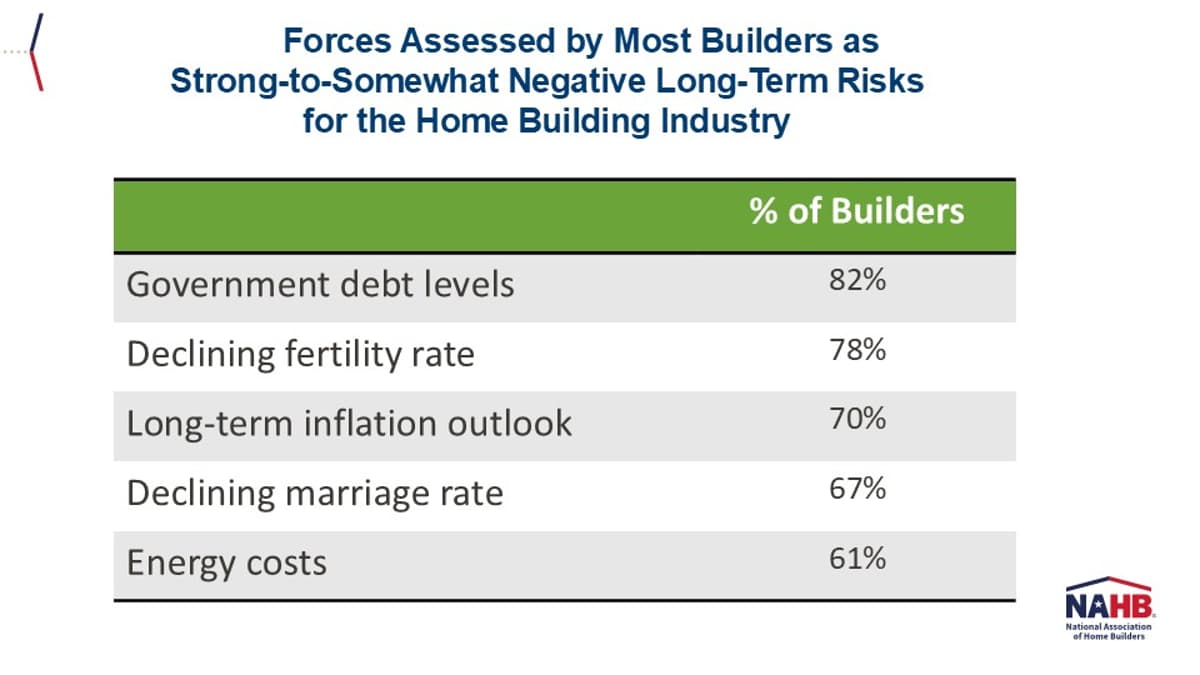
Builders Identify Key Long-Term Forces Shaping Housing Demand and Industry Health
Home builders surveyed by NAHB/Wells Fargo evaluated 14 long‑term forces that could shape housing demand over the next decade. They identified five risks—government debt, declining fertility, long‑term inflation, falling marriage rates, and energy costs—as likely to weigh on industry health....
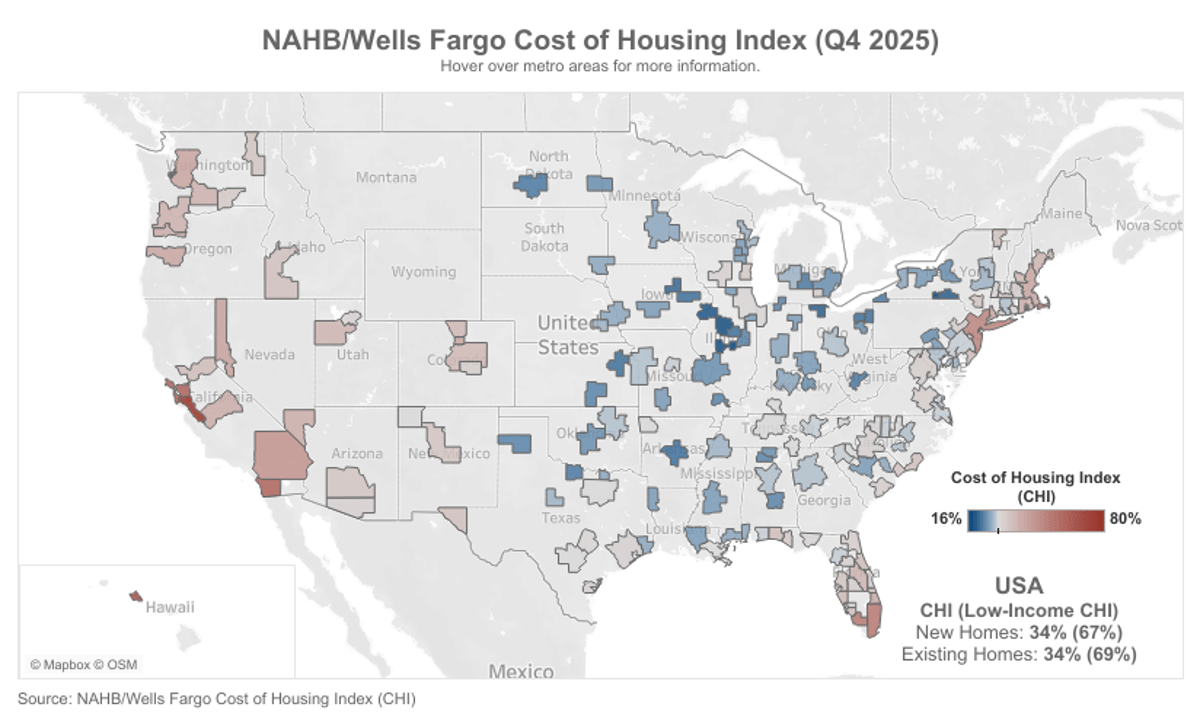
Affordability Posts Mild Gains in Second Half of 2025 but Crisis Continues
The NAHB/Wells Fargo Cost of Housing Index shows a modest uptick in affordability in Q4 2025, with a median‑priced new home requiring 34 % of a typical family’s income and an existing home 34 % as well. Low‑income households still face severe strain, needing...
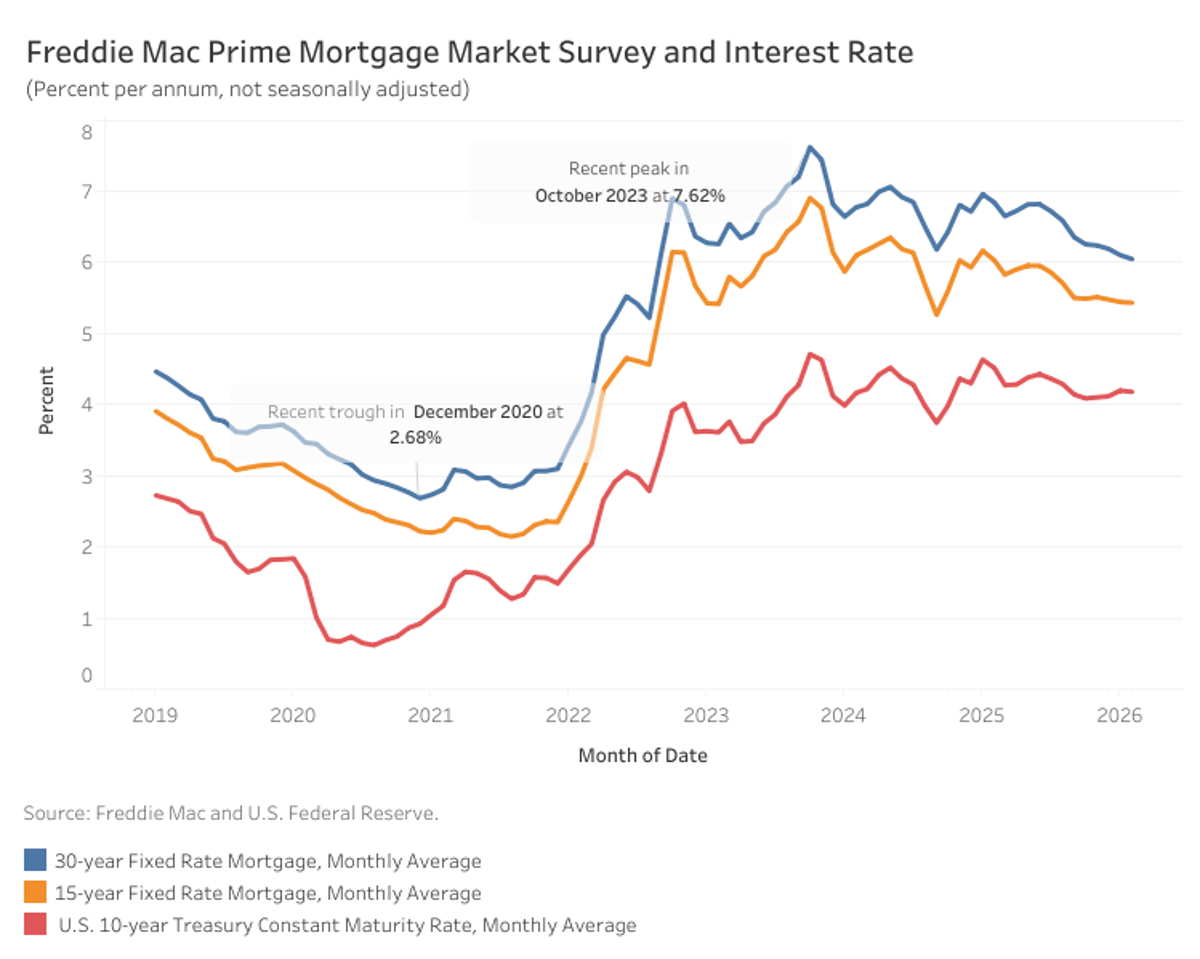
Mortgage Rates Dipped Below 6% in February Amid Treasury Rally
Mortgage rates slipped further in February, with the 30‑year fixed‑rate mortgage averaging 6.05% and briefly dipping below the 6% mark, while the 15‑year rate fell to 5.43%. The 10‑year Treasury yield held near 4.18% for most of the month before...
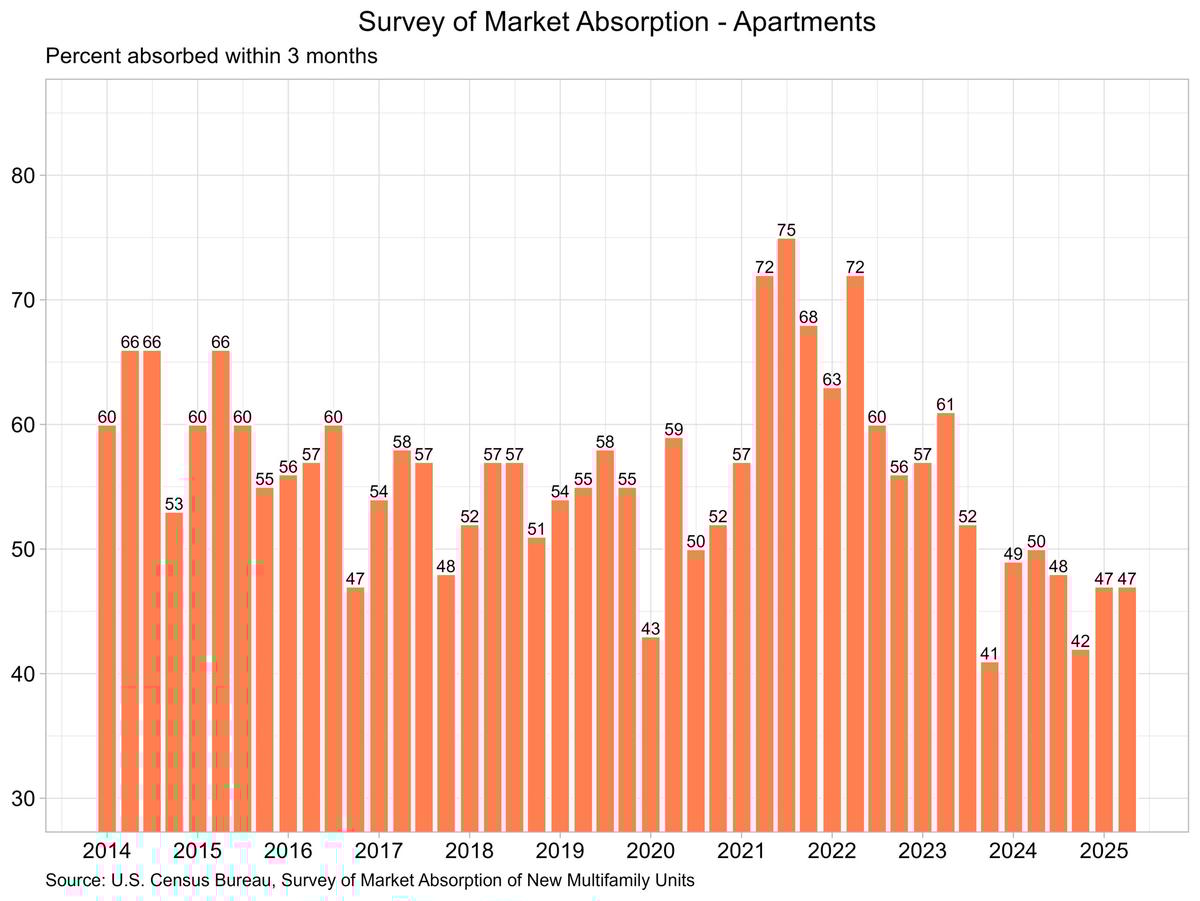
Multifamily Absorption Rate Remains Below 50%
The Census Bureau’s SOMA report shows the three‑month absorption rate for new apartments stayed below 50% for the fourth consecutive quarter, slipping to 47% in Q2 2026. Despite modest growth in completions—over 90,000 units for the seventh straight quarter—median asking...

Private Residential Construction Spending Edges Higher in December
Private residential construction spending rose 1.5 % in December 2025, driven by gains in single‑family builds and home‑improvement projects. Single‑family construction increased 1.6 % month‑over‑month but remains 3.6 % below a year earlier, while multifamily spending edged up 0.1 % for a seventh straight...
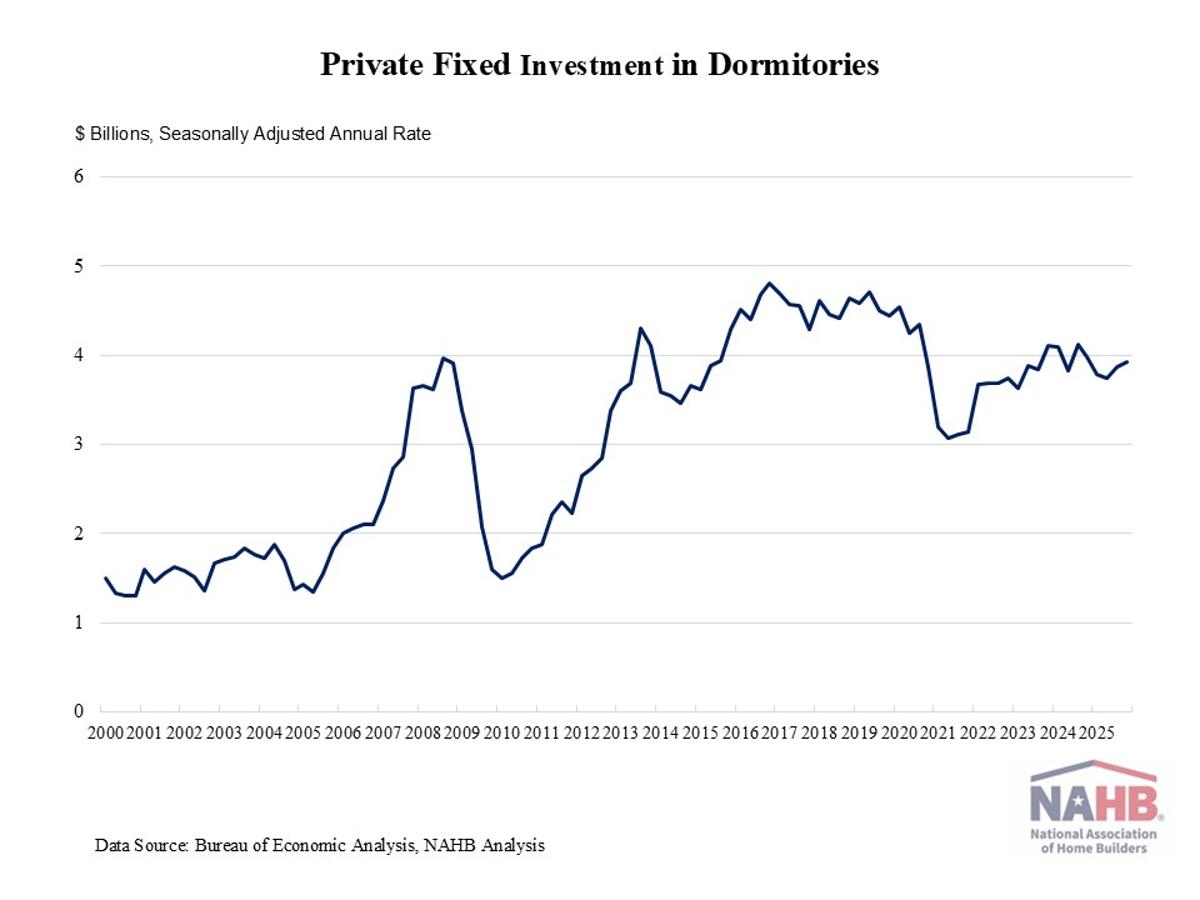
Gains for Student Housing Construction in the Last Quarter of 2025
Private fixed investment in student dormitories rose 1.5% in Q4 2025, reaching a seasonally adjusted annual rate of $3.9 billion. The gain follows three quarters of decline but remains 1.3% below the same quarter a year earlier. Pandemic‑induced drops had pushed investment...
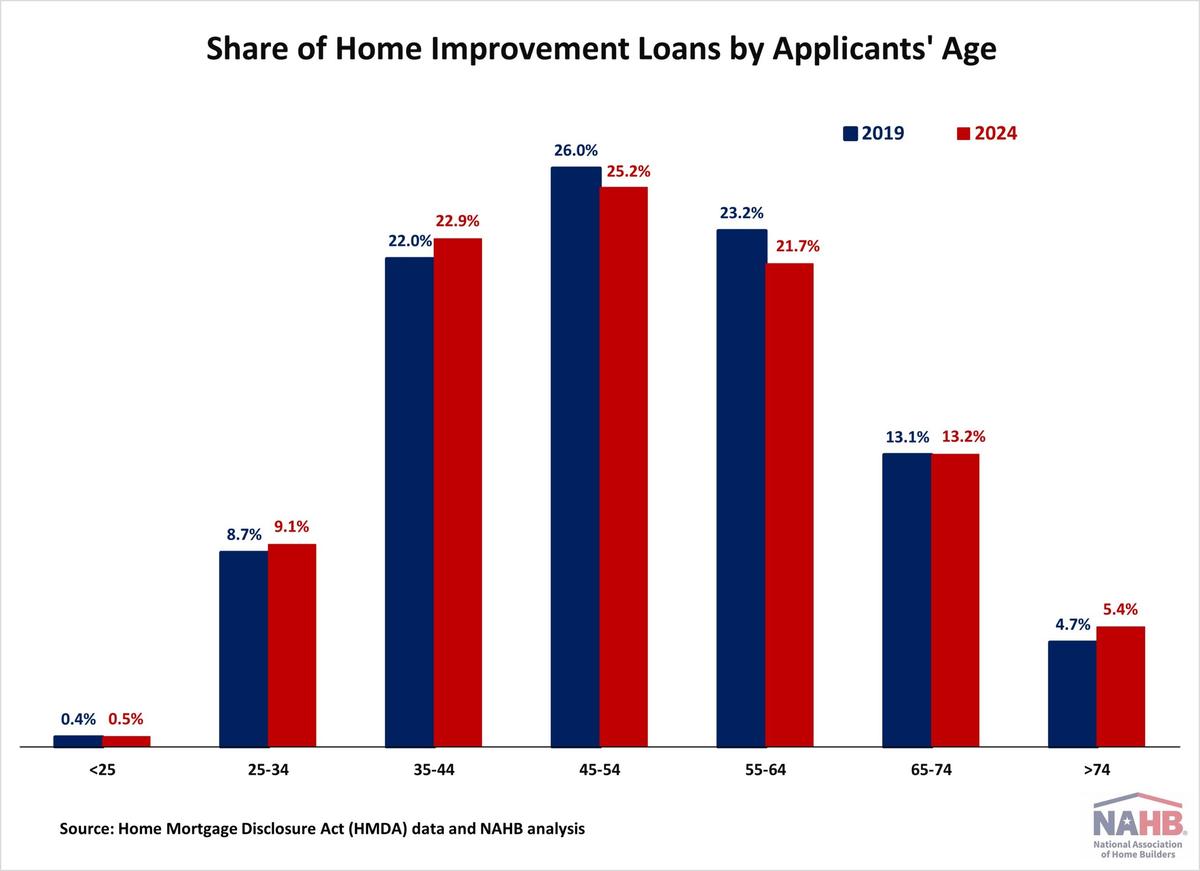
Home Improvement Loan Applications Moderate as Borrower Profile Gradually Ages
Home‑improvement loan applications peaked at 1.49 million in 2022 and have moderated to 1.20 million in 2024, remaining above pre‑pandemic levels. The borrower age profile is gradually aging, with the 65‑74 and 75+ cohorts expanding modestly. Meanwhile, the 45‑54 group stays the...
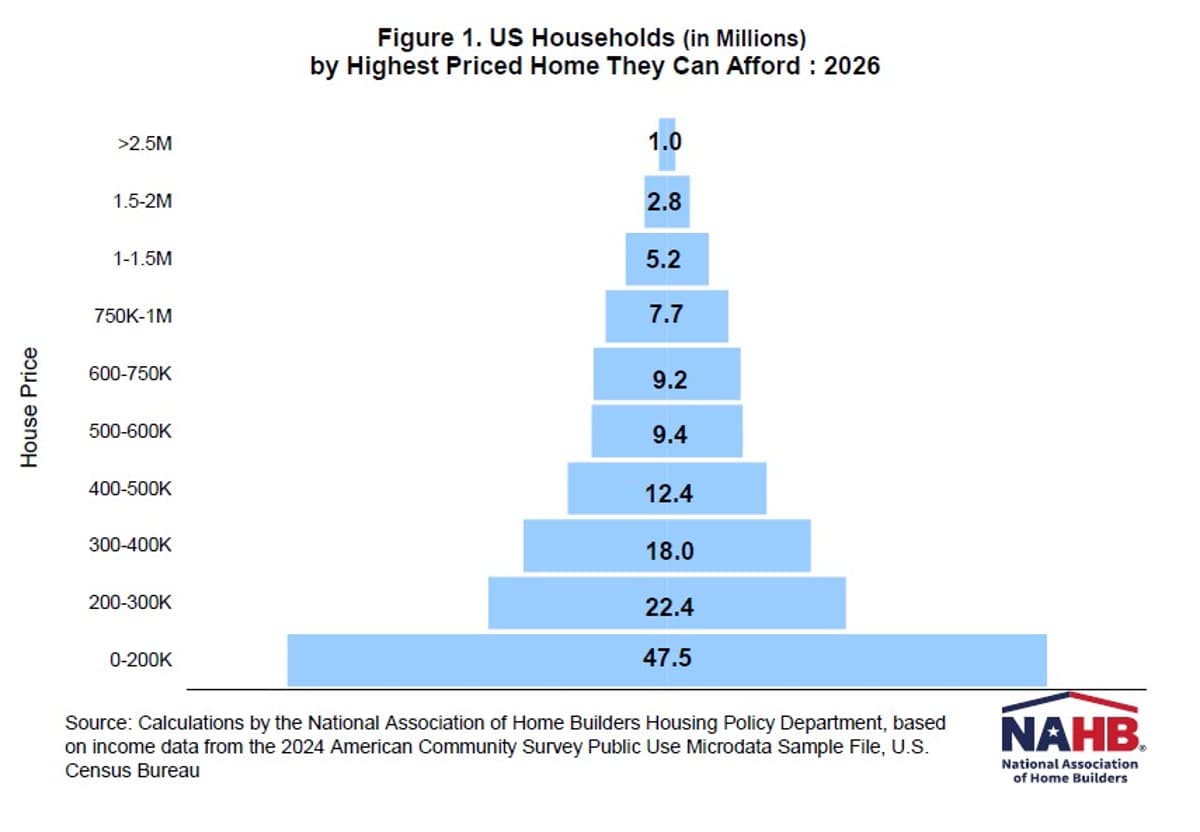
Affordability Pyramid Shows Over Half of U.S. Households Cannot Buy a $300,000 Home
The National Association of Home Builders' 2026 Priced‑Out Analysis reveals that 52 % of U.S. households—about 70 million—cannot afford a $300,000 home, while the median new‑home price is expected to reach $410,000. The affordability pyramid shows 47.5 million households limited to homes under...

Young Adult Headship Rates in 2024: Cyclical Slip or New Equilibrium?
Young adult headship rates slipped to 43.7% in 2024, reversing the post‑pandemic rise that peaked at 44.2% in 2023. While this figure still exceeds the 40.2% level recorded in 2017, it remains below the roughly 46% benchmark of the 1990s‑early...