
News•Mar 11, 2026
Is It Normal My Teenager Has No Friends? A Psychologist Explains 4 Things Parents Should Know
Teen psychologist Dr. Carolyne Keenan explains that having few or no friends can be a normal part of adolescent development, especially when teens favor one‑on‑one connections or online communities. She highlights that social anxiety, confidence issues, or a preference for quieter interactions can shape a teen’s friendship landscape. While most cases are benign, signs of distress—withdrawal, low mood, or negative self‑talk—signal a need for parental attention. Keenan advises parents to engage in open dialogue, prioritize quality over quantity, and seek professional support when isolation escalates.
By Netmums

News•Mar 11, 2026
Calls for 'Healthy Relationship' Lessons for Kids, After 75 Women Killed in Domestic Homicides Last Year
Campaigners, backed by reality stars, urged primary schools to teach healthy relationships after 75 women were killed in domestic homicides in the year ending March 2025. They highlighted the need for early consent education and increased funding for refuges, noting...
By Netmums

News•Mar 11, 2026
Midwife with 14 Years' Experience Shares Simple Trick to Settle Babies Who Won't Stay in Their Cot
Claire Wilson Metcalfe, a midwife with 14 years experience, posted on TikTok a simple technique to settle newborns who cry when placed in a cot. The method involves comforting the baby, then laying them back down while keeping a hand...
By Netmums

Social•Mar 11, 2026
Say This First to Prevent ADHD Meltdown During Corrections
A child psychologist trick: what to say before correcting an ADHD child so a meltdown doesn’t start
By Anwen Farsley

Social•Mar 10, 2026
Offer a Quick Choice to Jump‑start ADHD Homework
A child psychologist trick: what to do when an ADHD child refuses to start homework
By Anwen Farsley

Video•Mar 10, 2026
Why Toddlers Hit (It’s Not What You Think)
The video tackles a common parenting reflex—pretending to cry when a toddler hits—and argues that this dramatic response does not teach the child why hitting is wrong. It reassures viewers that an isolated incident won’t damage attachment, but stresses that...
By PedsDocTalk (Dr. Mona Amin)

News•Mar 10, 2026
Opinion: Making Afterschool & Summer Programs More Affordable for Millions of Families
A new America After 3PM study shows that while parents of nearly 30 million children desire after‑school or summer programs, only about 7 million are actually enrolled. Cost remains the primary obstacle, with almost 60 % of families unable to afford participation and...
By The 74

Social•Mar 10, 2026
Psychologist’s Simple Trick to Detox ADHD Kids’ Screens
A child psychologist trick: how to detox an ADHD child’s brain after too much screen time
By Anwen Farsley

Social•Mar 10, 2026
ADHD Kids See Corrections as Immediate Threat Signals
The real reason ADHD kids react strongly to small corrections When they hear correction, the brain may instantly interpret it as:
By Anwen Farsley

Video•Mar 9, 2026
Do Socks Delay Baby’s Walking?
The video tackles the perennial parenting question of whether infants should stay barefoot or wear socks, debunking the notion that one approach is universally correct. It explains that barefoot exposure supplies crucial sensory input, helping babies develop balance and coordination, while...
By PedsDocTalk (Dr. Mona Amin)
:max_bytes(150000):strip_icc():format(jpeg)/GettyImages-1318340767-2000-734d8490434049e3927fba4c31b68ec2.jpg)
News•Mar 9, 2026
Massage Techniques to Soothe and Connect With Your Baby
Infant massage, endorsed by the International Association of Infant Massage, offers measurable health and developmental benefits for babies and their caregivers. Research links regular gentle strokes to better sleep, reduced stress hormones, improved digestion, and accelerated motor and cognitive milestones....
By Parents
:max_bytes(150000):strip_icc():format(jpeg)/GettyImages-184390590-5a4547257d4be800364e87c1.jpg)
News•Mar 9, 2026
How to Balance Foremilk and Hindmilk for Your Baby's Health
Breast milk shifts from foremilk to hindmilk during a feeding, delivering distinct nutritional profiles. Foremilk is lactose‑rich and low‑fat, while hindmilk provides higher fat and calories that promote satiety. An overabundance of foremilk can lead to digestive discomfort, frequent nursing,...
By Parents
:max_bytes(150000):strip_icc():format(jpeg)/Foap-Little_Miss_Temper-2e0af0dd61c04f2da9d743480ea8ee17.jpg)
News•Mar 9, 2026
Understanding and Managing Temper Tantrums in Toddlers
Toddler tantrums are a normal developmental response to unmet needs and emerging independence, typically occurring between ages one and four. Experts like Dr. Ray Levy and Dr. Linda Rubinowitz stress that these outbursts are not a sign of poor parenting...
By Parents
:max_bytes(150000):strip_icc():format(jpeg)/proud-grandmother-watches-daughter-holding-newborn-grandson-108438156-57ded5b85f9b586516503483.jpg)
News•Mar 9, 2026
Supportive Ways Grandparents Can Respect New Parents’ Wishes
New parents are increasingly setting strict visitation boundaries for grandparents during the postpartum period, both in hospitals and at home, to protect recovery, bonding time, and health. Limits stem from the need for rest, privacy, germ concerns, and the pressure...
By Parents

Social•Mar 9, 2026
Use Calm Pause Technique to De‑escalate ADHD Meltdowns
A child psychologist trick: What to do when an ADHD child melts down over small things?
By Anwen Farsley
:max_bytes(150000):strip_icc():format(jpeg)/mother-student-school-anxiety-2000-43f2d9ce0f654db4be8e6d91b5d8eff3.jpg)
News•Mar 9, 2026
Empower Your Child to Overcome School Anxiety: Strategies for Every Age
School anxiety affects roughly 2%‑5% of children, manifesting from daycare through elementary grades. Experts explain that separation anxiety, unfamiliar routines, and academic pressure drive these fears at each developmental stage. Practical tactics—such as brief goodbyes, separation games, preschool tours, and...
By Parents
:max_bytes(150000):strip_icc():format(jpeg)/GettyImages-2160567445-11e610cdb9864edaad48dc53b96dce50.jpg)
News•Mar 9, 2026
The Emotional Regulation Skills Parents Need to Teach Kids, According to Experts
Experts emphasize that teaching emotional regulation early equips children to handle stress, reduces tantrums, and lowers long‑term anxiety risk. Dr. Rachiit Bhatt notes infants benefit from warm, structured responses, while school‑age kids can learn labeling, breathing, and mindfulness techniques. Parents...
By Parents

Video•Mar 5, 2026
How Do I Redirect Tantrums?
The video explains how caregivers can redirect toddler tantrums by prioritizing physiological regulation over verbal insight, emphasizing that a child’s rational brain is offline during meltdowns. It argues that music, movement, and calm proximity instantly soothe an overstimulated nervous system, allowing...
By PedsDocTalk (Dr. Mona Amin)

Video•Mar 4, 2026
How to Handle Hitting and Throwing During Toddler Tantrums
The video explains how toddlers’ brains drive physical outbursts during meltdowns, emphasizing the immature pre‑frontal cortex versus the always‑on emotional brain stem. It outlines what not to do—yelling, shaming, or ignoring aggression—and then gives a step‑by‑step protocol: check adult triggers, spot...
By PedsDocTalk (Dr. Mona Amin)
Video•Mar 2, 2026
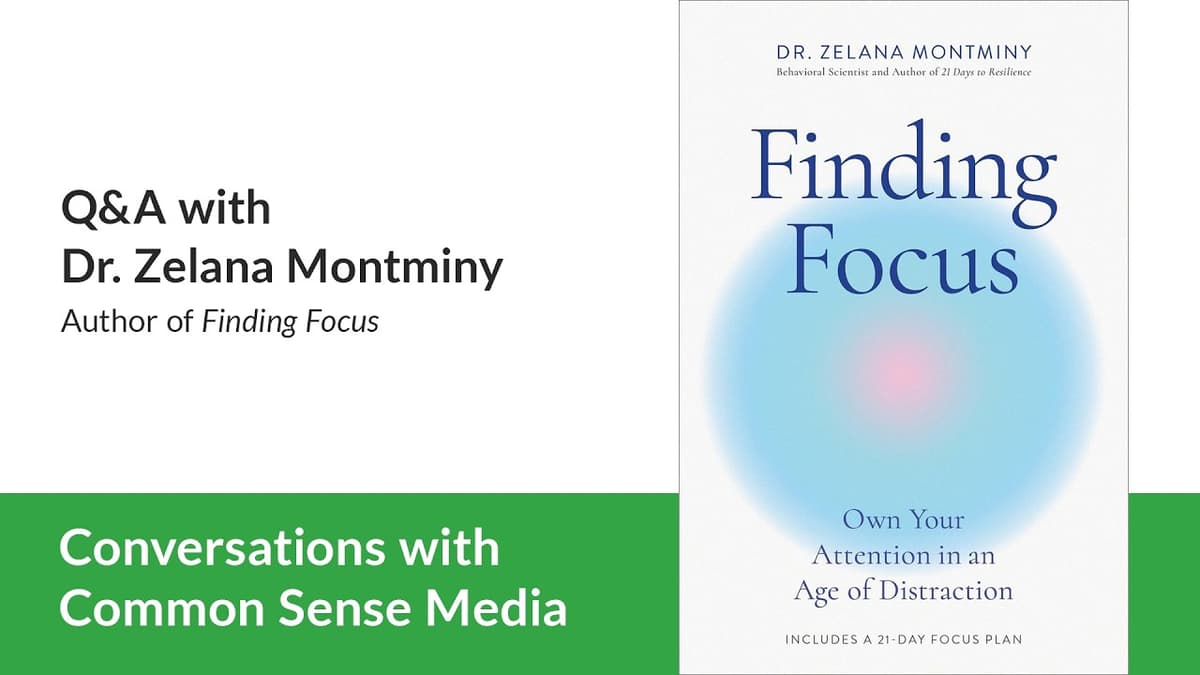
Q&A with Dr. Zelana Montminy | Conversations with Common Sense Media
The video features a conversation between Eda Collins Coleman of Common Sense Media and psychologist Dr. Zelana Montminy, centered on reclaiming attention in an age of constant digital distraction. The discussion frames focus not as a productivity skill but as...
By Common Sense Media

Video•Feb 28, 2026
Does Formula Damage Baby’s Gut?
The video tackles a pervasive claim that a single bottle of formula can permanently damage a baby’s gut, arguing that the assertion is unfounded and fuels unnecessary fear. The presenter, a certified lactation consultant, emphasizes that infant gut microbiomes are...
By PedsDocTalk (Dr. Mona Amin)

Video•Feb 27, 2026
Does Cold Weather Make You Sick?
The video tackles the common belief that cold weather makes children sick, clarifying that viruses—not low temperatures—are the true cause of respiratory infections. It explains that colder months bring drier indoor air, which can dry out nasal passages and reduce their...
By PedsDocTalk (Dr. Mona Amin)

Video•Feb 27, 2026
Boys Research with Desmond Patton and Ashanti Branch | Conversations with Common Sense Media
The episode of Conversations with Common Sense Media brings together Common Sense research lead Mike Rob, Penn professor Dr. Desmond Patton, and Ever Forward Club founder Ashanti Branch to unpack the newly released Common Sense boys research report. The report...
By Common Sense Media

Video•Feb 26, 2026
Why Kids Lie (It’s Not What You Think)
The video tackles a common bedtime scene—children pretending to brush their teeth—to illustrate why kids lie and how parents can respond. It argues that childhood falsehoods are rarely calculated deceptions; instead, they serve as shortcuts to avoid an uncomfortable task...
By PedsDocTalk (Dr. Mona Amin)