Video•Mar 12, 2026
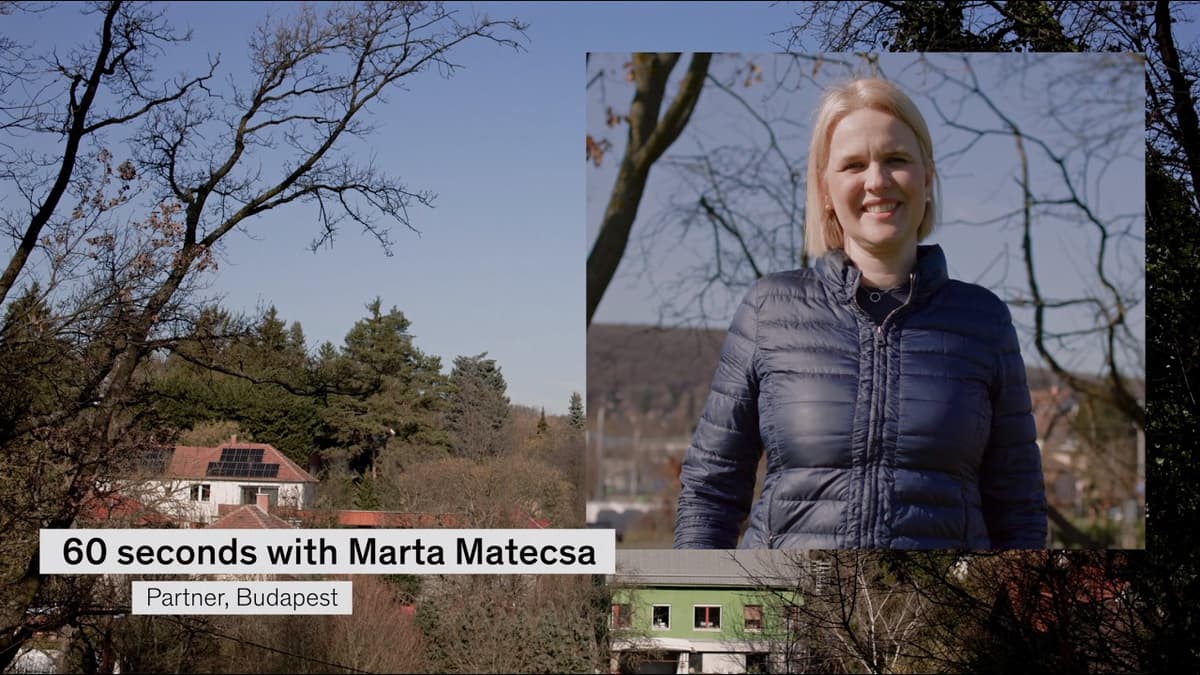
60 Seconds with Marta Matecsa From Hungary
Marta Matecsa, a Hungarian executive, uses a 60‑second video to articulate her guiding philosophy: transparency, authenticity, and a deliberate balance between family life and professional ambition. She stresses that honesty is the foundation of both personal relationships and client work, and she refuses to let motherhood eclipse her individual identity. The interview highlights several concrete practices. Marta involves her husband and daughters in travel planning, allowing the children to choose restaurants and routes, thereby teaching independent thinking. At work, she spearheads diversity and inclusion programs across Central Europe, emphasizing clear priorities and purposeful action. Her commitment to authenticity informs every decision, from client engagements to internal leadership. Key quotes underscore her stance: “Transparency and honesty is always the best approach,” and “I didn’t give up who I am to get to where I am.” These statements illustrate a leader who values integrity over performance metrics, while still delivering results. The broader implication is a model for modern executives—especially working mothers—who seek to integrate personal values with corporate responsibilities. Marta’s approach suggests that authentic leadership and inclusive initiatives can coexist with high‑performance expectations, offering a template for companies aiming to attract and retain diverse talent.
By McKinsey & Company

News•Mar 12, 2026
Are You Part of the ‘Distraction Economy’?
The piece redefines the modern "attention economy" as a "distraction economy," highlighting how constant stimuli not only waste time but also displace personal identity. Busyness serves as a coping mechanism, allowing individuals to avoid uncomfortable thoughts and self‑reflection. This erosion...
By Fast Company

News•Mar 12, 2026
‘Never Run Out of Hobbies’: Olympic Medalist Alex Hall on Knowing What to Do Next After Success
Olympic slopestyle champion Alex Hall, who captured gold in Beijing 2022 and silver at the Milan‑Cortina 2026 Games, says his post‑competition future will be shaped by the hobbies he pursues outside skiing. At 27, Hall remains a contender for the...
By Fast Company

Social•Mar 12, 2026
Fear of Ordinary Beats Fear of Failure
Admit it: You don’t fear failure. You fear being ordinary. And that fear is driving your pace more than failure ever did.
By Sarah (The Stress Resilient Leader)
:max_bytes(150000):strip_icc():format(jpeg)/GettyImages-1139011604-6f22210ef2094c76b2afca9276881ca0.jpg)
News•Mar 12, 2026
Understanding Enmeshment Trauma
Enmeshment trauma arises when families lack clear boundaries, causing members to merge roles and lose individual identity. The concept, rooted in Salvador Minuchin’s structural family therapy, varies across cultures, appearing pathological in individualistic societies but normative in collectivist contexts. Persistent...
By Verywell Mind

Social•Mar 12, 2026
Discipline vs Compulsion: Jim Collins Redefines Self‑Control
“I always thought of myself as an incredibly disciplined person. I finally came to the conclusion I’m really not very disciplined. I am somewhat, but if you just can’t stop yourself, that’s not discipline. It’s compulsion.” — Jim Collins Listen to my...
By Tim Ferriss

Social•Mar 11, 2026
Write Your Why Three Times to Defuse Anxiety
Whenever upset or anxious, ask “why” at least three times and put the answers down on paper. Describing these doubts in writing reduces their impact twofold. First, it’s often the ambiguous nature of self-doubt that hurts most. Defining and exploring...
By Tim Ferriss
Video•Mar 11, 2026
The Difference Between Stress and Trauma | Rachel Yehuda
Rachel Yehuda explains that stress and trauma, while often viewed on a continuum, differ fundamentally in severity and lasting impact. Stressful events are temporary challenges—such as work conflicts or illness—that subside once the stressor is removed, allowing individuals to move...
By Big Think

Social•Mar 11, 2026
Discover Your Hidden Potential, No Method Required
“The range of things that you’re encoded to potentially do is incredibly vast, and all you have to do is find one of them. And the way you find that can be really random. It doesn’t matter how it happens....
By Tim Ferriss

Social•Mar 11, 2026
Chronic Stress Blocks Prefrontal Blood Flow, Killing Clarity
Chronic stress reduces blood flow to your prefrontal cortex. That’s your strategic thinking center. So if you’ve felt foggy, reactive, less sharp in high-stakes conversations, this is why. It’s not age. It’s not you losing it. It’s your brain stuck in survival mode. You...
By Sarah (The Stress Resilient Leader)
Video•Mar 11, 2026
Do You Think that We Should, Formally End the Friendship or Should We Just Let Them Fade
The video explores the dilemma of whether to formally end a friendship or simply let it fade, emphasizing how long‑standing loyalty can sometimes clash with the need to prioritize oneself. The speaker argues that unwavering loyalty may come at the expense...
By The School of Life
:max_bytes(150000):strip_icc():format(jpeg)/GettyImages-1267497795-13698b82368a49bfb5f0f821011fd73d.jpg)
News•Mar 11, 2026
How to Live in the Moment
The article outlines practical methods for cultivating present‑moment awareness, from noticing one’s surroundings to deep‑breathing exercises. It emphasizes single‑tasking, gratitude journaling, and digital detox as ways to reduce stress, anxiety, and depression. Research citations link mindfulness to improved memory and...
By Verywell Mind
:max_bytes(150000):strip_icc():format(jpeg)/GettyImages-903772890-5b0fc6f98023b90036343271.jpg)
News•Mar 11, 2026
The Spotlight Effect and Social Anxiety
The spotlight effect is a cognitive bias that makes individuals overestimate how much others notice their actions or appearance, often intensifying social anxiety. Research shows people perceive attention at roughly double the actual rate, especially in evaluative settings. Cognitive‑behavioral therapy...
By Verywell Mind

News•Mar 11, 2026
He Maxed Out $50K in Credit Cards to Start His First Business. Now It’s Worth $1.8 Billion.
Henry Schuck launched DiscoverOrg in law school by maxing out $50,000 in credit cards and working double shifts. The bootstrapped firm grew to $30 million in revenue before taking its first venture capital in 2014. A 2019 merger with ZoomInfo combined...
By Entrepreneur » Sales

Blog•Mar 11, 2026
The Reboot Podcast
The Reboot Podcast episode 183 features Jerry Colonna and meditation teacher Sharon Salzberg discussing how to move beyond suffering. Drawing on Buddhist wisdom, they examine the paradox of feeling pain and joy simultaneously while avoiding self‑blame. Salzberg frames karma as...
By Sharon Salzberg – Blog