
How to Learn From Any Expert Without Paying Consulting Fees (Using NotebookLM)
Google’s free NotebookLM research tool now offers a Chrome extension that can import entire YouTube channels with a single click, turning hundreds of hours of video into a searchable notebook. Users can ask questions, generate summaries, mind maps, quizzes, and audio overviews across all imported content. The article cites a Lex Fridman channel import of roughly 600 hours and a client who expanded his creator monitoring from six to over twenty weekly after automating the workflow. The core lesson is that eliminating friction transforms passive watching into active knowledge extraction, rivaling paid consulting.

Expanding AI Literacy to Catholic-School Classrooms Nationwide.
Google has launched a dedicated AI Educator Group for Catholic‑school teachers in partnership with the National Catholic Educational Association. The program aims to provide AI literacy tools to 140,000 U.S. educators who serve about 1.6 million students. Six teachers will visit...

Introducing EGF: An Open File Format for Educational Games
An open file format called Educational Game Format (EGF) was released on Zenodo in November 2025 to simplify creation and distribution of educational video games, especially for Africa’s growing edtech market. Developed by the founder of ZakiGames, EGF packages content,...

I Reviewed the 10 Best eLearning Content Software for 2026
The article reviews the ten top eLearning content platforms for 2026, including Edureka, Docebo, Paycom, DataCamp, Uxcel, Udemy Business, Litmos, Pluralsight, LinkedIn Learning, and O’Reilly. Selections were based on G2’s Winter 2026 Grid, focusing on scores, satisfaction, market presence, and review...

Mastercam Bundles camInstructor 101 with Education Suite
Mastercam announced a partnership with camInstructor to bundle the camInstructor 101 curriculum with its Educational Suite at no additional cost. The bundle delivers step‑by‑step lesson plans, project files, practical tests and complete teacher resources for CNC mill and lathe programming. It...

GLADA Launches Online Learning Platform for Aircraft Brokers
GLADA, the Global Aircraft Dealers Association, has introduced a new learning management system to host its Broker Education Program, giving members on-demand access to structured courses. The LMS consolidates existing broker education content and will be expanded with additional modules...

Sustaining Education in the Middle East: Innovation and Adaptation Amid Regional Disruption
Regional tensions involving Iran, Israel and the United States are prompting Gulf nations, especially the UAE, to fast‑track digital education initiatives. The UAE’s national research and education network, Ankabut, is deploying cloud‑based platforms, secure hybrid learning environments, and advanced learning‑management...

'Our Teachers Use AI to Mark Mock Exams'
Yorkshire Dales’ Wensleydale School has begun a pilot using artificial intelligence to grade mock exam answers in subjects such as English and history. The AI service costs about £0.45 (≈ $0.56) per extended answer, with the school allocating roughly £600 (≈ $750)...

Keysight Introduces Hands-On Semiconductor Teaching Labs for Universities
Keysight Technologies unveiled three semiconductor teaching lab solutions—Basic Design and Measurement, Parametric Test and On‑Wafer Measurement, and Photonics IC Measurement—to give university students hands‑on experience with professional‑grade tools. The kits replicate real‑world test workflows, letting students set up equipment, perform...

European Chips Skills Academy Launches the ECSA Learning Platform
The European Chips Skills Academy (ECSA) has launched the ECSA Learning Platform, a free digital hub offering more than 60 introductory to intermediate semiconductor courses. Developed with industry and academic partners, the platform integrates a Knowledge Hub, community collaboration spaces,...

Grass Valley Launches Future Playmakers Program
Grass Valley has introduced the Future Playmakers Program, a global initiative aimed at cultivating the next generation of sports production and media technology professionals. The program offers up to ten annual scholarships, hands‑on training with industry‑standard equipment, and direct collaboration...

Ease the Teacher-Hiring Process with AI (Downloadable)
School districts face ongoing teacher‑hiring shortages, prompting leaders to explore AI solutions. Emerging AI agents can autonomously screen applications and generate interview questions. Golf School District 67 in Morton Grove, Illinois, created a library of highly structured prompts that work with...

New Research Reveals Trade-Off Behind AI Vibe Coding Tools: Speed Vs. Understanding | Exclusive
A new research report from the University of Macau and ETH Zurich finds that AI‑driven vibe‑coding tools let children build games much faster, but they also short‑circuit deeper learning about game development. The study, which surveyed school‑age users of visual...

Workday Named a Leader in 2026 Gartner® Magic Quadrant™ for Higher Education Student Information Systems
Workday has been positioned as a Leader in Gartner’s 2026 Magic Quadrant for Higher Education Student Information Systems. Gartner’s assessment highlights Workday’s cloud‑native platform, deep integration of finance, HR and student data, and strong market presence. The vendor now supports...
Workday Named a Leader in 2026 Gartner® Magic Quadrant™ for Higher Education Student Information Systems
Workday announced it has been positioned as a Leader in Gartner’s 2026 Magic Quadrant for Higher Education Student Information Systems. The rating highlights Workday’s cloud‑native architecture, extensive integration capabilities, and AI‑driven analytics that manage the full student lifecycle. Gartner praised...

Samsung Certifies 1,000 Maharashtra Students in AI and Coding
Samsung’s Innovation Campus certified 1,000 students from four Maharashtra institutions in artificial intelligence and coding, marking the company’s largest skilling drive in the state. The cohort, drawn from Savitribai Phule Pune University, Pimpri Chinchwad University, D.Y. Patil University’s Ramrao Adik...

End-of-Year Google Forms + Gemini Playbook for Instructional Coaches
Google has embedded its Gemini generative AI directly into Google Forms, letting instructional coaches build surveys in seconds. The article outlines five quick moves—PD feedback, coaching impact summary, student‑voice surveys, PD needs assessment, and coach self‑reflection—to capture end‑of‑year data before...
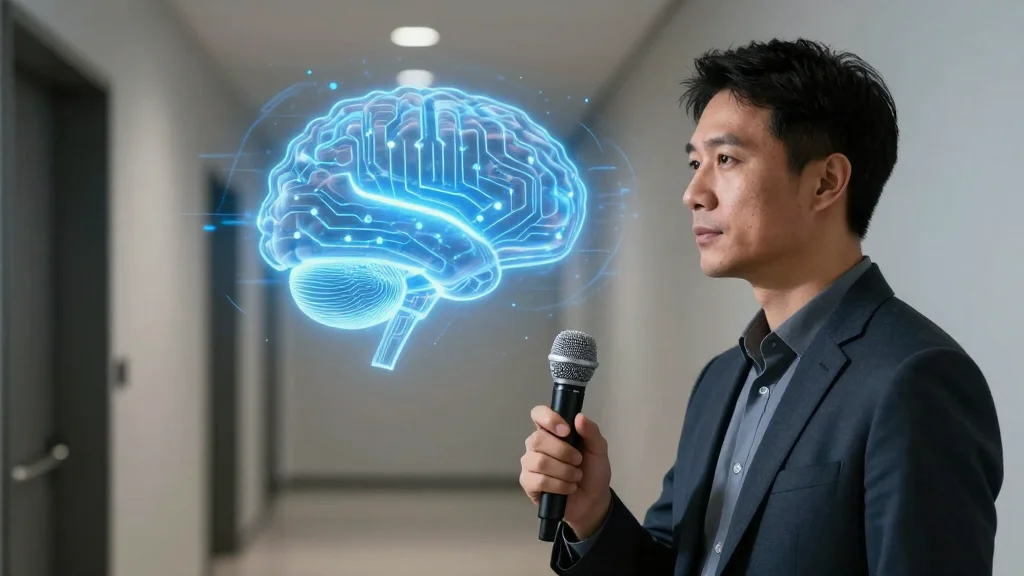
Training Employees to Talk Back to AI
Companies are rapidly deploying generative AI tools like ChatGPT, but the technology still makes mistakes and hallucinates. Experts advise treating AI like a junior employee that requires supervision, double‑checking, and iterative prompting. By training staff to give AI clear step‑by‑step...

Singapore: Balancing AI Innovation and Human-Centred Learning
Artificial intelligence is reshaping higher education, prompting Singapore Management University to host a forum of over 500 educators, students, and industry leaders. Attendees examined how AI can deliver personalized, adaptive instruction while preserving essential human capacities such as critical thinking...

Faraday Future Founder and Co-CEO YT Jia Shares Weekly Investor Update: FF to Establish the First Scaled EAI Education System...
Faraday Future (FFA) announced that its net equity turned positive after completing roughly $100 million of debt optimization, reversing a prior $130 million impairment charge. The company also reported its first‑quarter EAI robotics products achieving a positive gross margin, marking a key...

Show HN: Real-Time AI (Audio/Video in, Voice Out) on an M3 Pro with Gemma E2B
Parlor is an open‑source, on‑device AI system that combines Google’s Gemma 4 E2B multimodal model with the Kokoro text‑to‑speech engine, delivering real‑time speech and vision interaction on an Apple M3 Pro. The stack runs entirely in the browser via a FastAPI WebSocket server,...

Malaysia: Accelerating AI Integration Across Education Systems
Malaysia is fast‑tracking artificial intelligence integration across its education system through a partnership between Malaysia Digital Economy Corporation (MDEC) and the Department of Islamic Development (JAKIM). Pilot AI‑based learning facilities are being rolled out in six states, covering both universities...

Digital Promise, TNTP Partner to Develop AI Guidance for Schools
Digital Promise and TNTP have launched a three‑year, Salesforce‑funded partnership to develop evidence‑based AI guidance for U.S. school districts. The initiative aims to reach up to 15 million students by 2028, testing AI integration strategies that support teachers and align with...

The Connected Campus: A Secure, AI-Ready Digital Ecosystem for Higher Education
Higher education is moving beyond basic connectivity toward a fully integrated, AI‑ready digital ecosystem known as the connected campus. The model combines Wi‑Fi 7, cloud‑native microservices, zero‑trust and SASE security, and edge‑enabled IoT to deliver seamless learning, research, and operational experiences....

Simulators Poised to Play Key Role in Air Taxi Pilot Training
The air‑taxi sector is turning to advanced flight simulators to address the looming pilot shortage and high training costs. Joby Aviation’s Academy uses a $60,000 per‑pilot simulator program, targeting 250 new pilots annually, while CAE supplies similar units to Eve...

Case Western Reserve University Deploys Google Gemini
Case Western Reserve University rolled out Google Gemini across its campus in April 2025, offering a secure, no‑cost AI tool for faculty, staff, and students. The university paired the free Gemini for Education with paid Google AI Pro for Education...

An Interactive Approach Helps Librarians Protect Intellectual Freedom: Book Censorship News, April 3, 2026
Library Futures has released a free, web‑based game called “Imagine IF” that lets librarians role‑play common censorship confrontations and practice de‑escalation techniques. The American Library Association reported 2,452 book challenges in 2024, and more than 40 anti‑library bills were introduced...

Practical Examples of AI in Education With Caroline Haebig – Bonus Episode with Jotform
Jotform’s podcast hosted Dr. Monica Burns features ISTE author Caroline Haebig discussing practical, responsible AI applications in K‑12 classrooms. The conversation highlights concrete use cases such as retrieval practice, summarization, brainstorming, and creative projects, while stressing the need for clear...

5 Artificial Intelligence Programs for Professionals Selecting the Right Track Across GenAI, Machine Learning, and Data Science in 2026
In 2026 professionals must choose AI education based on desired outcomes, whether rapid workflow deployment, deep modeling expertise, or end‑to‑end analytics. The article highlights five top programs—two from MIT, Harvard Business School Online, UC Berkeley Executive Education, and Texas McCombs—each aligned...

How Schneider Electric Is Streamlining Onboarding with WalkMe
Schneider Electric has expanded its use of WalkMe, a digital adoption platform, from a pilot in North America to a global solution that embeds on‑screen guidance across its SaaS tools such as SAP S/4HANA and Salesforce. The rollout, backed by...

Learnovate Urges Organisations to Bridge Digital Skills Gap by Joining Work Ready Graduate Programme
Learnovate Centre at Trinity College Dublin is inviting employers to become host organisations for its Work Ready Graduate Programme, a 12‑month AI and data‑analytics placement co‑funded by Enterprise Ireland and IDA Ireland. The scheme offers graduates a stipend of up...

New Platform Fieldworks Wants to Fill the Digital Gap in Indian Arts Education
Fieldworks, founded by Indian musicians Sahej Bakshi and Krishna Jhaveri with maker Vaibhav Chhabra, has launched a digital arts education platform targeting the country’s creator‑driven musicians. Its flagship Creative Immersion program combines three months of online instruction in music production,...

Too Many Tools, Not Enough Impact: Districts Rethink Their Edtech Stacks
School districts, exemplified by Chicago’s District 15, are auditing their sprawling edtech stacks as budgets tighten and screen‑time concerns rise. Leaders are shifting from buying tools for novelty to proving instructional impact, using frameworks like SETDA’s EdTech Quality Action Toolkit....

AI Fear and Trust Gap Requires Focus on People and Education
Australia faces a pronounced AI confidence and trust gap, with 84 % of workers using AI tools but six‑in‑ten lacking formal training. EY’s Katherine Boiciuc stresses that AI success is 60 % people, 30 % data and only 10 % technology, urging a cultural...

Learning Beyond Paper to Offer Digital, Bilingual After-School Courses
Learning Beyond Paper has launched Learning Beyond the Bell, a fully online, bilingual after‑school curriculum for K‑6 students. The program delivers project‑based, play‑centered lessons across six domains, including STEAM, literacy, and social‑emotional learning. Developed with input from after‑school directors, teachers...

Kinder Ready Elizabeth Fraley Offers Inclusive Education Programs for Diverse Learning Needs.
Kinder Ready’s Elizabeth Fraley division is expanding its inclusive education portfolio, offering personalized early‑learning programs that adapt to visual, auditory and kinesthetic learners. The platform blends literacy, math and critical‑thinking curricula with social‑emotional development to ensure each child’s strengths are...

TikTok Shop Partners With Singapore Retail Groups to Build Social Commerce Workforce
TikTok Shop announced a memorandum of understanding with the Singapore Retailers Association and Workforce Singapore to launch social commerce training and supporting infrastructure. The initiative defines three core roles—Social Commerce Hosts, Leads, and Engineers—to reskill workers for live‑stream shopping. Singapore’s...

How to Embrace Lifelong Learning as a Non-Negotiable for Career Growth
The DeVry University study of 1,500 workers and 500 hiring leaders shows that 71% of employees and 81% of employers value investing in education, yet a gap persists in actual upskilling access. Only 45% of workers report employer‑provided reskilling, down...

Feds Launch Text-Based Training: “Make America AI-Ready”
The U.S. Department of Labor, partnered with edtech firm Arist, launched “Make America AI‑Ready,” a free, one‑week AI literacy course delivered entirely via text messaging. Learners receive 10‑minute daily lessons that require no laptop or broadband, making the program accessible...

EON Reality Launches Genesis 2.0 3D Asset Library
EON Reality and its venture arm EONAI have unveiled Genesis 2.0, a validated 3D asset library for immersive learning and training. The initial release offers 95 photorealistic environments and 475 interactive objects spanning 19 industry verticals. By shifting from bespoke content...

What Next for Junior Developers?
AI coding agents are turning software code into a fast, inexpensive commodity, challenging the traditional role of junior developers. The article argues that the value of fresh graduates now lies less in writing code and more in communicating requirements clearly...

What Generative AI Reveals About Staff Capability and Institutional Risk in Higher Education
Generative AI is exposing a deep split in higher‑education staff capability, with some educators confidently integrating AI into pedagogy while others remain uncertain. This unevenness creates disparate student experiences, risking inequitable skill development and inconsistent assessment standards. The sector’s focus...

Dentsu Lab, D.A.V. Public School and Classteacher Launch AI-Powered ‘Bullying Decoder’
Dentsu Lab, D.A.V. Public School and Classteacher have launched the AI‑powered Bullying Decoder, a system that taps unused audio feeds from existing CCTV cameras to detect verbal bullying patterns in classrooms. The solution aggregates sentiment, tone and repetition data into...

The Risks of AI Recording Devices and Note-Taking Assistants in the Classroom
U.S. universities are witnessing a surge in AI‑driven note‑taking apps and smart‑glass recorders, tools that capture audio, video, and biometric data without clear consent. Platforms such as Otter.ai operate with opaque data‑retention policies, while devices like Meta’s smart glasses embed...

AI Voice Agents for EdTech: Making Learning More Interactive and Accessible
AI voice agents are emerging as core components of modern EdTech platforms, delivering real‑time, conversational tutoring that mimics human interaction. By converting text to speech and interpreting spoken queries, these agents enable students to ask questions, receive explanations, and practice...
![[Industry News] Dave School of Digital Arts Named Unreal Engine Academic Partner by Epic Games](/cdn-cgi/image/width=1200,quality=75,format=auto,fit=cover/https://mcvuk.com/wp-content/uploads/daveschool.jpg)
[Industry News] Dave School of Digital Arts Named Unreal Engine Academic Partner by Epic Games
The Dave School of Digital Arts at Northbridge University has been named an Unreal Engine Academic Partner by Epic Games, recognizing its robust real‑time 3D curriculum and experienced faculty. The partnership grants the school enterprise‑grade Unreal Engine licenses, Marketplace credits,...

Is University Losing Its Edge? ELVTR Bets on Live, Industry-Led Learning
ELVTR, a spin‑out of the LABA Group, runs a live, instructor‑led platform that bridges traditional online courses and on‑the‑job training. It now offers more than 100 short, intensive programs across AI, product, design, data and creative fields, and has taught...

Move Over, Silicon Valley: Meet the Surprising Southwest Companies Reinventing the Classroom
The Southwest is emerging as a hotbed for education technology, driven by Texas' massive and growing student population—projected at 5.9 million elementary and secondary students in 2026—and a wave of public‑private partnerships. Texas recently approved $8.5 billion in new education funding plus...

Google SA, DHET Partnership Brings AI to Higher Education
Google South Africa and the Department of Higher Education and Training (DHET) have signed a two‑year memorandum of understanding to upskill students and staff across the country's public universities, TVET and community colleges with AI and digital capabilities. The deal...

Advancing AI Literacy: A Faculty Course Refresh Institute at Indiana Wesleyan University
Indiana Wesleyan University’s National & Global unit launched a twelve‑week AI‑Enhanced Course Refresh Institute to help faculty redesign courses with embedded AI literacy. The pilot, begun in summer 2025, guided participants through data‑informed analysis, custom GenAI bots, and multimodal video...