
News•Mar 10, 2026
How to Stay Consistent With Goals (When Motivation Keeps Failing You)
Most people know what they should do to reach goals, yet daily consistency fails because traditional approaches rely on willpower. Research shows willpower depletes and procrastination stems from emotion regulation, making motivation‑based systems ineffective. Behavioral science suggests redesigning habits as tiny, anchored actions with implementation intentions, turning consistency into a system output. Applying these principles—shrinking tasks, anchoring to existing routines, and tracking trends—enables automatic progress without heroic effort.
By Lifehack

News•Mar 10, 2026
Your Creativity Could Use a Good Stretch—And Riz Ahmed Wants to Help
Riz Ahmed, Oscar‑winning actor and musician, has been named guest curator for WePresent, joining a roster that includes Marina Abramović and Solange Knowles. His curatorial agenda is built around a manifesto that asks creators to "stretch themselves" and "stretch culture"...
By Fast Company

News•Mar 10, 2026
What’s Your Chronotype? How Brain Science Can Boost Performance
A joint study by the Wharton Neuroscience Initiative and Slalom examined how individual chronotypes—natural sleep‑wake rhythms—affect creative performance. Using the Morningness‑Eveningness Questionnaire and a divergent‑thinking task, researchers found that employees generated more ideas and higher‑quality concepts when work aligned with...
By Wharton Knowledge

News•Mar 10, 2026
Living Life on Your Own Terms: A Heartfelt Reflection on Choosing Your Own Path
The essay recounts Stephanie Roberts’s journey from a restrictive upbringing to embracing personal autonomy in Bombay’s bustling 1960s scene. She describes shedding the need for external validation and learning to trust her intuition, which led to greater confidence and inner...
By The Good Men Project

News•Mar 10, 2026
How to Study Effectively
Popular study habits like cramming, rereading, and highlighting often produce fleeting gains, according to cognitive research. Psychologists Elizabeth and Robert Bjork emphasize retrieval practice, spaced repetition, and interleaving as superior techniques for durable learning. A 2006 study of surgical residents...
By Psyche (by Aeon)

News•Mar 10, 2026
The Uses of Equanimity
The article explains that equanimity, while appearing as calm concentration, can conceal subtle attachment and delusion. It warns that staying absorbed in a state of equanimity without probing can prevent genuine insight. Practitioners are urged to use equanimity as a...
By Tricycle: The Buddhist Review

News•Mar 10, 2026
Distracted by Everything? The Bhagavad Gita Explains Why
The Bhagavad Gita teaches that a lack of commitment breeds distraction, a lesson that resonates in today’s hyper‑connected world. By urging single‑minded focus and detachment from outcomes, the text parallels modern research on multitasking’s productivity costs. The article argues that...
By YourStory

News•Mar 10, 2026
Mental Decluttering Relieves Stress and Improves Decision-Making
Therese Yeung, an accredited coach, explains that the brain fixates on unfinished tasks, creating mental clutter that drains leaders' energy. Practicing mental decluttering—whether of physical, digital, or thought spaces—provides immediate tension relief and a feeling of lightness. This clearing isn’t...
By HR Daily (Australia)

News•Mar 9, 2026
Why Waking up Early Is Not for Everyone, and What Sleep Experts Say About Rising Early
Early‑riser hype, like the "5 am club", suggests waking at dawn boosts success. Sleep scientists counter that chronotype determines optimal wake times, with only about 20 % of people naturally suited to early mornings. For most, maintaining seven to nine hours of...
By South China Morning Post — M&A

News•Mar 9, 2026
How Crises Teach Us to Live and Why Ignoring Them Costs Us
Author Aigerim Alpysbekova recounts a near‑fatal traffic incident that sparked a period of personal crisis, leading her to adopt daily meditation and deep self‑reflection. She describes how confronting abuse, health scares, and a pending divorce forced her to listen to...
By Psychology Today (site-wide)
News•Mar 9, 2026
7 Daily Habits that Quietly Build Lasting Confidence
Confidence is often seen as innate, but the article argues it’s a skill cultivated through daily habits. It outlines seven actionable practices—keeping small promises, positive self‑talk, modestly leaving comfort zones, focusing on progress, maintaining physical health, celebrating minor wins, and...
By YourStory

News•Mar 9, 2026
The Hidden Reason Life Feels Shorter Than It Is
Seneca the Younger observed that life feels short because we waste time, not because time itself is limited. The Roman Stoic argued that purposeful living, not sheer longevity, defines a life’s value. Today’s digital distractions and endless busyness echo his...
By YourStory

News•Mar 9, 2026
How 1 Leadership Advisory Firm Measures a Potential CEO’s Agility
In a climate where 70 percent of CEOs cite high disruption, boards are shifting focus from résumé credentials to executive agility. Russell Reynolds Associates (RRA) uses its 26‑year‑old Leadership Portrait to quantify traits such as curiosity, resilience, and social intelligence, adding...
By Inc.

News•Mar 9, 2026
Break Negative Thinking: 7 Habits that Build Resilience
The article outlines seven mental habits that can curb chronic negative thinking, ranging from self‑awareness to daily gratitude and mindfulness. It explains how each habit interrupts automatic pessimistic loops and replaces them with more balanced, controllable thought patterns. By practicing...
By YourStory
News•Mar 9, 2026
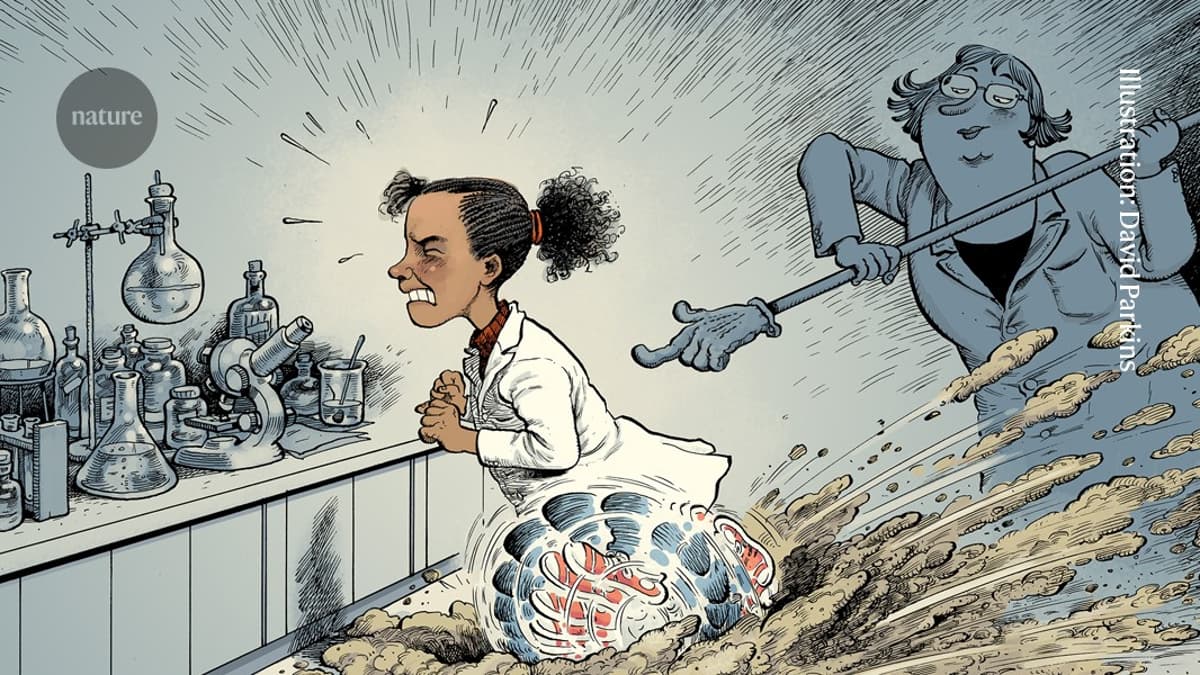
My PhD Student Is Stuck. How Do I Teach Them Perseverance and Problem Solving?
A new principal investigator seeks strategies to teach perseverance and problem‑solving to PhD students facing experimental setbacks. Experienced PIs recommend building collaborative lab cultures, pairing newcomers with senior members, normalizing failure, and setting realistic research goals. These practices aim to...
By Nature – Health Policy