Today's Legal Pulse
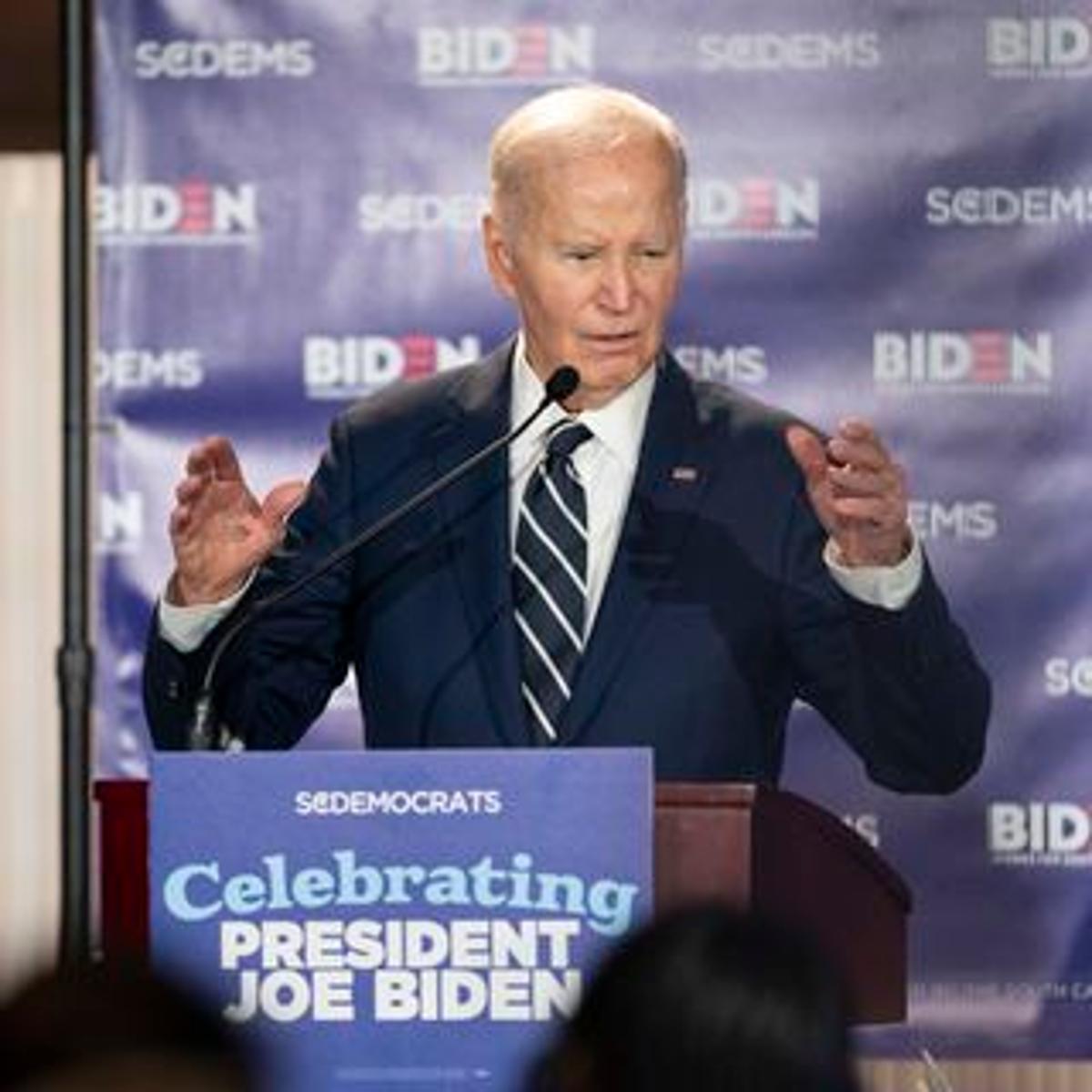
Biden sues DOJ to block release of interview audio
President Biden filed a lawsuit seeking to prevent the Department of Justice from publishing an audio interview, arguing the release would be improper. The action has sparked political commentary, including remarks from former President Trump.
Also developing:
By the numbers: Hogan Lovells and Cadwalader clear final merger hurdles

Coalition Urges California to Revoke Permits for Federal License Plate Reader Surveillance
A coalition led by the Electronic Frontier Foundation and Imperial Valley Equity & Justice has asked Governor Gavin Newsom and Caltrans to immediately revoke permits that allow federal agencies such as Customs and Border Patrol and the DEA to install automated license‑plate readers (ALPRs) on California border highways. The group cites a map showing more than 40 covert ALPRs disguised as traffic barrels in San Diego and Imperial counties, arguing they violate state law that prohibits sharing ALPR data with out‑of‑state agencies. The coalition’s letter urges the removal of existing devices and a halt to future permits. It includes dozens of civil‑rights, labor, and community organizations demanding action.

Hawley and Warren Introduce “Break Up Big Medicine Act” To Force Separation of Insurers, PBMs and Providers
Senators Josh Hawley and Elizabeth Warren introduced the Break Up Big Medicine Act, a "Glass‑Steagall"‑style bill that would prohibit common ownership of health‑care providers with insurers, PBMs, or drug/medical device wholesalers, forcing divestiture within a year. The legislation targets vertically...

Shareholder Engagement in Flux: Recent Developments and Practical Implications
The SEC’s recent clarification of Rule 14a‑8 reshapes how companies must handle shareholder proposals, while regulators intensify scrutiny of proxy advisors. Concurrently, vote‑no/withhold campaigns and new retail voting programs are gaining traction, adding complexity to the 2026 proxy season. Updated guidance...

Mergers, Monopoly Prices, and Accountability - Episode 676 of the Community Broadband Bits Podcast
In this episode, Chris Mitchell, Doug Dawson, and Sean Gonsalves dissect recent telecom mergers, examine Starlink’s attempts to influence the BEAD (Broadband Equity, Access, and Deployment) funding rules, and discuss new research linking reduced competition to higher consumer prices. They...

Clayton On FCPA Enforcement
Jay Clayton, former SEC chair and U.S. attorney, reiterated his long‑standing criticism of the Foreign Corrupt Practices Act (FCPA), arguing that aggressive U.S. enforcement can unintentionally boost corruption abroad. He cited the act’s high compliance costs as a driver for...

Dividend Distinctions and Proxy Descriptions
Several recent proxy statements claim that moving a corporation from Nevada to Delaware provides greater dividend‑distribution flexibility. A detailed comparison of Nevada’s NRS 78.288 and Delaware’s statutory and case‑law framework shows Nevada already allows broad dividend authority, especially when articles of...

Geoffrey Potter's Anticounterfeit Practice Has the Air of an International Detective Thriller
In this episode, hosts Patrick Smith and Cedra Mayfield sit down with Geoffrey Potter, the veteran head of Patterson Belknap Webb & Tyler’s anticounterfeit practice, to explore how his team conducts globe‑spanning investigations that resemble an international detective thriller. Potter...

Redefining Global Advisory: How Jeff Shapiro’s London Leadership Anchors HaystackID’s 2026 European Strategy
HaystackID announced on February 10, 2026 that Jeff Shapiro will serve as Managing Director for Europe, anchoring its Global Advisory practice in London. The appointment comes as the EU AI Act and Data Act enter critical enforcement phases, demanding localized...

Board of Director Compensation Practices in the Russell 3000 and S&P 500
Board director compensation across the Russell 3000 and S&P 500 showed modest growth in 2025, with total pay up 2% in the Russell 3000 and flat in the S&P 500, keeping median compensation near $250,000. Shareholder‑approved caps are now in...
Climate Disclosure and the Transformation of Gatekeeping
The SEC’s proposed 2024 Climate Rule would require large accelerated filers to disclose Scope 1 and Scope 2 greenhouse‑gas emissions and obtain third‑party assurance, mirroring EU sustainability mandates. Under Section 11, underwriters remain liable for non‑expertised portions of registration statements, shifting risk when...

More Reach, Less Power: Copyright in Digital Markets Today
Digital distribution has dramatically expanded creators' reach, but platform ecosystems now dominate visibility, pricing, audience data, and monetisation. This shift has eroded creators' bargaining power, even as publishers access larger audiences. Axel Springer’s new research frames copyright as an economic...

Tuesday Talk*: Will “Victim-Centric” Depoliticize Criminal Law?
Former judge Paul Cassell argues that shifting criminal law toward a victim‑centric model could curb the growing politicization of prosecutions. He contends that ordinary citizens—victims and families—should have greater input, reducing reliance on politically exposed prosecutors. Critics warn that empowering...

When Law Becomes Data: What Brazil’s LexML Reveals About Akoma Ntoso
Brazil’s LexML portal, built on the open‑source Akoma Ntoso XML standard, aggregates official texts, court decisions, and bills into a single searchable system. While the platform centralizes legislative documents, it fails to integrate political metadata such as bill sponsors or...

Q&A: How to Prepare for AI-Powered Investigations While Managing Your Own AI Risk
The Department of Justice (DOJ) is openly deploying AI tools—such as cryptocurrency tracing, financial anomaly detection, travel‑pattern analysis, and intake triage—to boost white‑collar investigations. At the same time, the DOJ’s enforcement agenda warns that companies must govern their own AI...

Equity Plan Proposals: Changes in ISS’ EPSC Evaluation
ISS added a negative overriding factor to its EPSC evaluation in December 2025. Plans that receive a Plan Features pillar score below seven points may now trigger a recommended vote against the equity plan proposal. ISS does not disclose how...

Upcoming Events: Luxembourg (LCEL, 26th February) and Brussels (European Commission, 5th March)
The Luxembourg Centre for European Law and the Association of European Competition Law Judges are hosting a self‑preferencing seminar in Luxembourg on 26 February, featuring Judge Octavia Spineanu‑Matei, Professor Walid Chaiehloudj and the author. A second event, the European Commission’s “Shaping...

Revisiting the Nature of Regulation
The article argues that regulator‑regulatee agreements are not merely a peripheral tool but the dominant paradigm shaping modern regulation. Across sectors—from automobile safety to artificial intelligence and data‑privacy settlements—agreements precede, accompany, or replace traditional command‑and‑control rules. This perspective blurs the...

Gibson Dunn Discusses SEC Corporate-Finance Division’s Helpful Updates to Guidance
On January 23, 2026 the SEC’s Division of Corporation Finance released a suite of updated Compliance and Disclosure Interpretations covering proxy filings, executive compensation in spin‑offs, tender‑offer mechanics, lock‑up agreements, and securities‑offering integration. The revisions eliminate voluntary PX14A6G filings for...

REFLECTIONS ON RECENT DEVELOPMENTS IN AFRICAN PRIVATE INTERNATIONAL LAW
The second African private international law symposium highlighted a surge in judicial engagement with cross‑border disputes across twenty‑six jurisdictions. Participants underscored the lingering influence of colonial legal frameworks and the need for reforms that reflect African economic realities. The symposium...

Enhancing Health Data Sharing: Sequoia Project Publishes Guides for Automated Consent & Privacy Alignment
The Sequoia Project released two practical guides on February 9, 2026 to accelerate automated, computable patient consent across the United States. One guide provides model legislative language to align state‑level sensitive health‑data laws with national technical standards, while the second offers...

💊 Hims & Hers: When the Growth Story Runs Into the Regulator
In this episode Edward Corona dissects the sudden 16% plunge of Hims & Hers Health (HIMS), linking it to a dual blow from GLP‑1 hype‑driven expectations and mounting legal and FDA scrutiny. He explains how lawsuits and regulatory pressure are...

FDA’s New Guidance on Consumer Wearables Makes the Medtech Market More Complex
The FDA’s new guidance clarifies, rather than rewrites, the line between general‑wellness wearables and regulated medical devices, emphasizing intended use as the decisive factor. By allowing sensor‑rich products to remain unregulated if they avoid medical claims, the agency reduces regulatory...

Updated Documentation Requirements in Medicare Could Add Burden on Healthcare Providers
The Centers for Medicare & Medicaid Services (CMS) issued a regulatory update effective April 13 that expands documentation, face‑to‑face (F2F) and prior‑authorization requirements for Medicare‑covered DMEPOS items. Eight new oxygen‑related codes join the F2F/WOPD list, while seven additional items—five orthoses and...
This Week in the “DMCA Eating Copyright Law”: Cordova V. Huneault (Guest Blog Post)
The Northern District of California allowed a DMCA §1201(a) claim to survive a motion to dismiss in Cordova v. Huneault, finding that YouTube’s rolling‑cipher encryption qualifies as an access‑control measure. The court emphasized that the public‑viewable nature of the videos does...

The New Wage Rule and the $100K Proclamation Will Shape the 2026 H‑1B Cap Season
USCIS opened the FY 2027 H‑1B cap registration window for March 4‑19, 2026, requiring online registration and a $215 fee per entry. The season will be dominated by a new wage‑weighted lottery that assigns multiple entries to higher wage levels (Level II‑IV) versus a...

Guest Post: Public Debt Confidentiality — Separating Fact From Fiction
The new brief co‑authored by NDI, OGP and Transparency International exposes how confidentiality clauses in sovereign loan contracts conceal billions of dollars of public debt. It cites cases such as Mozambique’s $2 billion hidden debt and Senegal’s recent audit, showing that...

Checking In On FEPA
The Foreign Extortion Prevention Act (FEPA), enacted in 2023, criminalizes foreign officials who demand bribes from U.S. companies, aiming to fill a perceived gap in the FCPA’s demand‑side coverage. Thirteen members of Congress recently sent a letter to Attorney General...

Guest Post: Low-Float IPOs and Pump-And-Dump Risk
Recent securities class actions against Charming Medical, PomDoctor, China Liberal Education Holdings, and Picard Medical illustrate a growing litigation focus on low‑float IPOs and social‑media‑driven pump‑and‑dump schemes. Plaintiffs allege that thin public floats, concentrated insider ownership, and inadequate IPO disclosures...

DISCO Launches Scaled Agentic AI Tool for Large Discovery and Fact Investigation Matters
DISCO unveiled a scaled agentic AI extension to its Cecilia Q&A platform, targeting massive e‑discovery projects with millions of documents and terabytes of data. The enhancement introduces an autonomous multi‑step reasoning engine that can independently break down complex legal queries...

M&A Earnouts for VC-Backed Companies
In this 30‑minute episode, the hosts break down how earnouts can bridge the valuation gap for VC‑backed companies during M&A transactions, emphasizing the need for solid legal structures rather than verbal promises. They walk listeners through the key clauses that...
Delaware Supreme Court’s Earnout Decision Reinforces Primacy of Contract and Illustrates the Limits of the Implied Covenant
The Delaware Supreme Court issued an en banc opinion in Johnson & Johnson v. Fortis Advisors, affirming and partially reversing a Chancery ruling that awarded former Auris Health shareholders over $1 billion in an earnout dispute. The decision is the first...
Regulating Big Weed
Legalization has driven daily marijuana use from about 6 million in 2012 to roughly 18 million today, now exceeding daily alcohol consumption. Health consequences—including cannabinoid hyperemesis syndrome, psychotic episodes, and impaired driving—have risen sharply alongside use. The New York Times editorial proposes...
New California Paid Sick Leave Settlement – Notices and Accruals Trigger $6.2M Hit
California’s Labor Commissioner secured a $6.2 million settlement with Alco Harvesting LLC to resolve paid‑sick‑leave and wage‑and‑hour violations affecting more than 10,000 farmworkers, including H‑2A laborers. The agreement allocates $4.2 million in back wages directly to workers and $1.5 million for sick‑leave and...
UFLPA Enforcement: When a “Red Light” Turns Yellow
The Uyghur Forced Labor Prevention Act, enacted in 2021, created a rebuttable presumption that Xinjiang‑origin goods are barred from the U.S. market. U.S. Customs data show a sharp drop in UFLPA‑related detentions, from roughly $1.58 billion in 2023 and $1.40 billion in...
Sixth Circuit Affirms Steep Sentence in FDC Act Counterfeiting Case
The Sixth Circuit Court of Appeals affirmed a 90‑month prison term for Omar Wala, who pleaded guilty to conspiring to manufacture and distribute counterfeit generic alprazolam pills on the dark web. The court upheld the district court’s fraud loss calculation,...

When Rules Change Quarterly: Regulatory Resilience as Competitive Advantage
A Southeast Asian fintech founder reported navigating seventeen regulatory changes in three years, illustrating that Asian fintech rules now shift roughly every quarter. The article argues that treating regulatory environments as stable has led to billions in remediation costs and...

FCPA Institute – Zoom (Feb. 23-25)
The FCPA Institute is returning to a virtual format on February 23‑25, offering a three‑day, nine‑hour intensive via Zoom. Led by Professor Koehler, the program covers anti‑bribery provisions, books‑and‑records rules, enforcement trends, and practical compliance tactics. Participants gain hands‑on skills...
This Week in Regulation for Broadcasters: February 2, 2026 to February 6, 2026
Congress reauthorized funding for the FCC and other agencies, preventing a shutdown and keeping regulatory operations running smoothly. The FCC implemented a new CORES database rule that forces broadcasters to update their FCC Registration Number and related contact details within...

When Speed Becomes Risk: Why India’s AI Compulsory License Debate Needs Facts, Not Shortcuts
India’s DPIIT released a Working Paper proposing a hybrid compulsory licence to streamline AI‑training data use, aiming to give developers legal certainty and speed up innovation. The Artist Rights Institute (ARI) submitted a public comment urging a measured approach, emphasizing...

Another Confusing Internet Jurisdiction Opinion (This Time, From the 1st Circuit)–Stokinger V. Armslist
The First Circuit affirmed a district court’s dismissal of a lawsuit against Armslist for lack of personal jurisdiction in New Hampshire, but crafted a nuanced analysis of purposeful availment. The court emphasized that thousands of New Hampshire listings, advertising revenue, and the...

I’ve Taken Steps To Protect My Client’s Documents: But What Happens Post-Production?
Law firms are increasingly worried that once discovery documents are produced, opposing counsel could feed sensitive client information into large language models like ChatGPT. Stephen Embry highlights the gap between traditional document‑protection measures and the emerging risk of AI‑driven data...
Where Have All The Lawyers Gone?
Career prosecutors are abandoning U.S. Attorney offices as the DOJ openly solicits candidates who support former President Trump, signaling a politicized hiring push. Simultaneously, Indiana has relaxed bar admission rules, allowing graduates of non‑ABA‑accredited online law schools to sit for...

On the Compass V. Zillow Preliminary Injunction Ruling
The episode dissects the court’s denial of Compass’s request for a preliminary injunction against Zillow over the Zillow Listing Access System (ZLAS). It explains that while the ruling is a legal victory for Zillow, it doesn’t spell immediate disaster for...

Next Step Properties Placed in Receivership, iCare Tasked With Interim Operations
Eleven of Next Step Healthcare's fourteen Massachusetts nursing homes have been placed in court‑appointed receivership after landlords reported nearly $15 million in unpaid rent and $3 million owed to lenders. Audits show chronic late payments and inspection failures that jeopardized resident safety....
Did Australia Just Set a Record for the Lowest Fine in a Foreign Bribery Case?
Former Leighton Holdings CEO David Savage pleaded guilty to concealing a $45 million bribe to Iraqi officials and was fined a symbolic AUD $1,000. The penalty is dramatically lower than sentences imposed on foreign intermediaries involved in the same scheme, who faced...

Voluntary Disclosure by Applicant of Criminal Conviction History Triggers Protections Under State Ban-the-Box Law (US)
A Pennsylvania truck driver voluntarily disclosed a 15‑year‑old armed‑robbery conviction during a job interview, prompting an immediate rejection. The employer argued the ban‑the‑box law didn’t apply because the information wasn’t obtained from a state agency. The Third Circuit reversed, holding...

What to Expect From the SAG-AFTRA 2026 Contract Negotiations: AI, Residuals, Health and Pension Plans, and When to Expect a...
SAG‑AFTRA will reopen contract talks with the AMPTP on February 9, 2026, a month ahead of the current agreement’s June 30 expiration. The negotiations, now led by new union president Sean Astin and AMPTP chief Greg Hessinger, will focus on three hot‑button...

Today’s Legaltech Week: The Claude-Pocalypse, AI Agents Gone Wild, and Much More – All Live at 3 ET
Anthropic’s Claude legal app debuted this week, sending legal‑tech stocks sharply lower and sparking industry debate. At the same time, AI agents have launched a dedicated social network, Moltbook, and a new marketplace that lets them contract human labor. These...

EEOC Rescinds Harassment Guidance
On Jan. 22, 2026, the EEOC voted 2‑to‑1 to rescind the 2024 harassment guidance that expanded protections for LGBTQ+ employees, especially transgender individuals. The rescission was submitted to the Office of Management and Budget without public notice, following a Texas...