Untitled
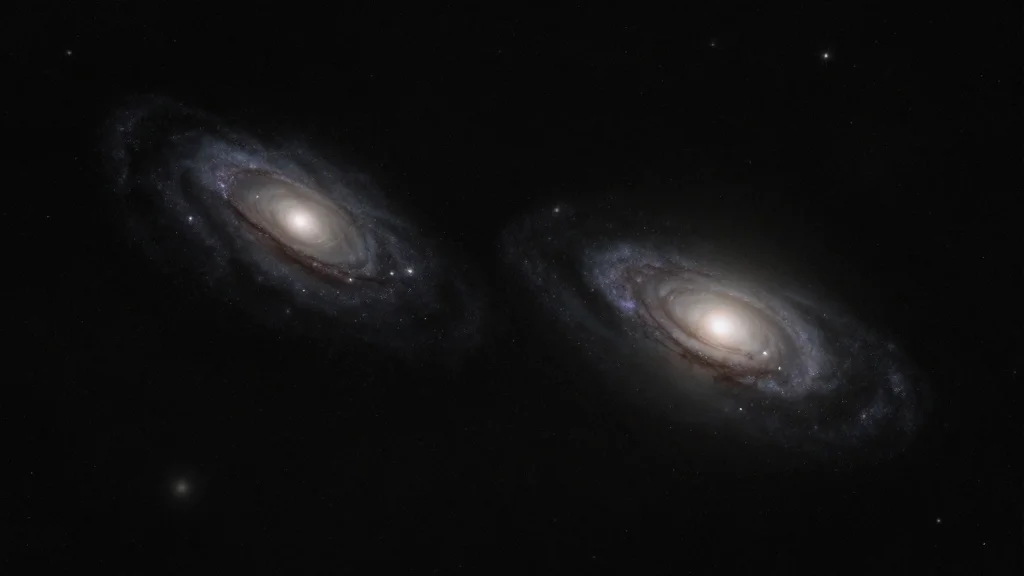
The Astronomy Picture of the Day for May 1, 2026 features Markarian’s Chain, a filament of galaxies in the Virgo Cluster anchored by M84 and M86 and highlighted by the interacting pair NGC 4438/NGC 4435, known as “Markarian’s Eyes.” Located about 50 million light‑years away, the chain illustrates how galaxies congregate in dense clusters. The image underscores the Virgo Cluster’s role as the nearest massive galaxy cluster, influencing the dynamics of our Local Group. Tomorrow’s APOD will showcase a view of Titan.

Untitled
NASA’s Astronomy Picture of the Day showcased a video that simulates waves on Earth and on Saturn’s moon Titan under identical breezes. Researchers explain that Titan’s low gravity, dense atmosphere and lakes of liquid hydrocarbons produce taller, slower‑moving waves compared...
Untitled
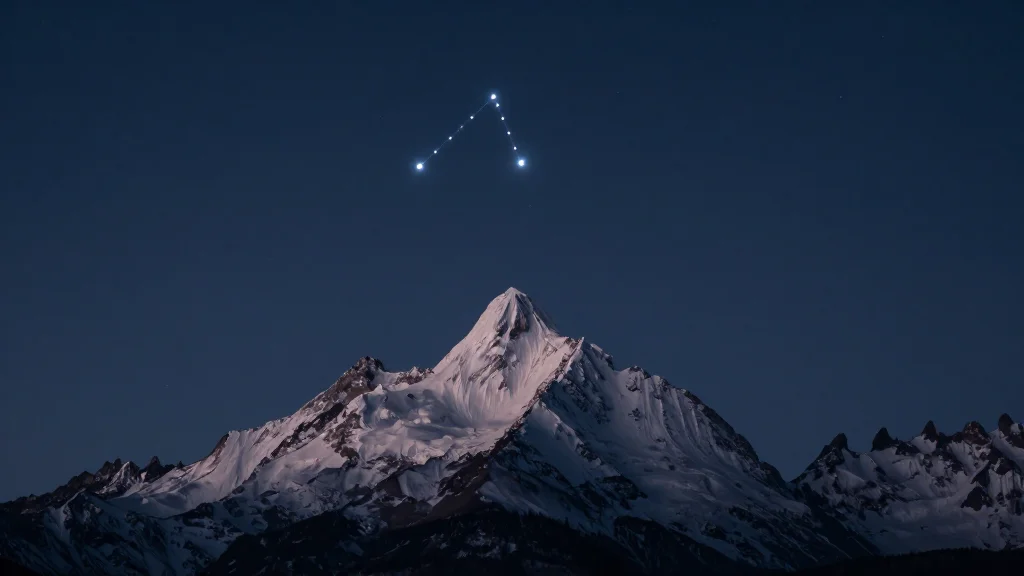
NASA’s Astronomy Picture of the Day highlights CG 30, a cluster of cometary globules about 1,300 light‑years distant in the Puppis‑Vela region. Ultraviolet radiation from nearby hot stars ionizes the bright rims, while the Vela supernova remnant appears to have sculpted...

Untitled
NASA’s Astronomy Picture of the Day showcases comet C/2025 R3 (PanSTARRS) concealed behind a dense network of satellite trails. The long‑exposure image was captured just before sunrise two weeks ago from Bavaria, Germany. The comet is currently close to the Sun, making...
Untitled
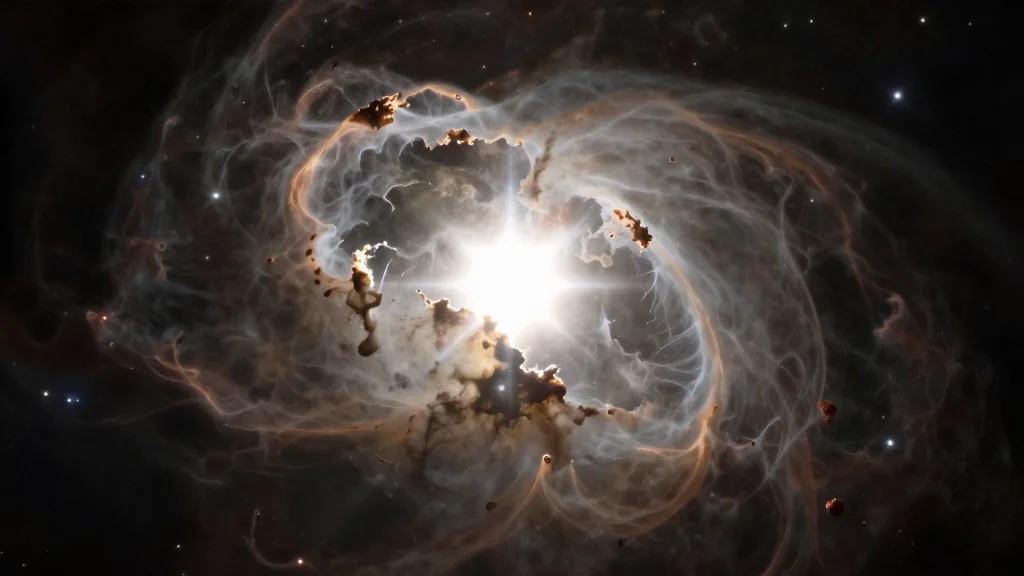
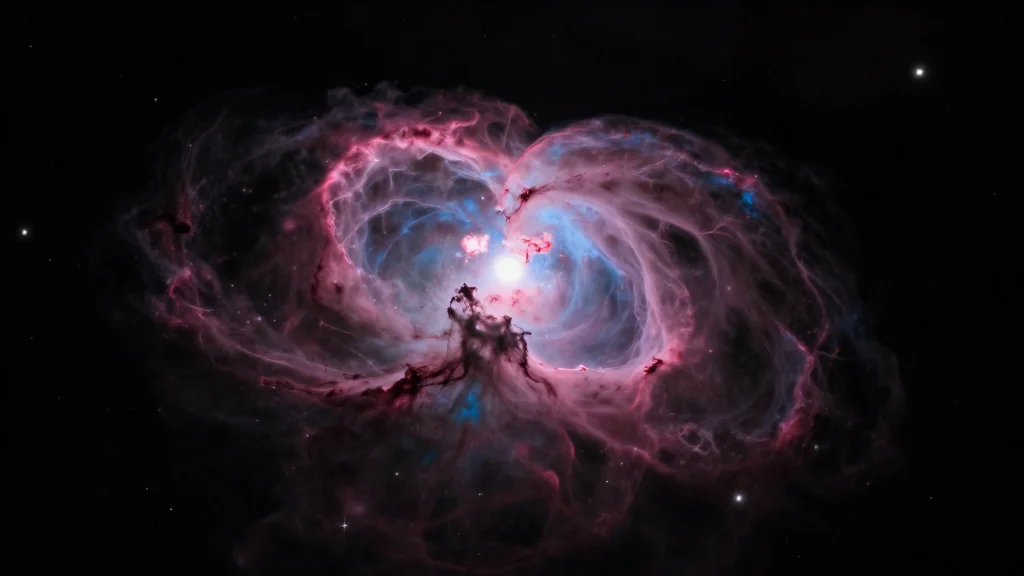
NASA’s Astronomy Picture of the Day features a striking Hubble image of the Carina Nebula’s “Mystic Mountain” pillar. The massive dust and gas column, extending several light‑years, hides a young star whose Herbig‑Haro jets are carving away the structure. Astronomers...

Untitled
NASA’s Dark Energy Spectroscopic Instrument (DESI) has completed its five‑year survey, cataloguing over 47 million galaxies and quasars to produce a three‑dimensional map of the universe extending 11 billion light‑years. The map, featured in today’s Astronomy Picture of the Day, shows the...
Untitled
Artemis II commander Reid Wiseman released a rare video of Earth setting behind the Moon, captured on an iPhone at 8× zoom during the mission’s lunar flyby. The clip, posted on NASA’s Astronomy Picture of the Day, illustrates how the spacecraft’s motion,...

Untitled
An astrophotographer stationed on a high Alpine peak captured an unprecedented triple‑arch sky panorama. The image combines the familiar inner and outer Milky Way arches with a faint zodiacal light arc, visible only under exceptionally dark conditions. After 40 hours of...
Untitled
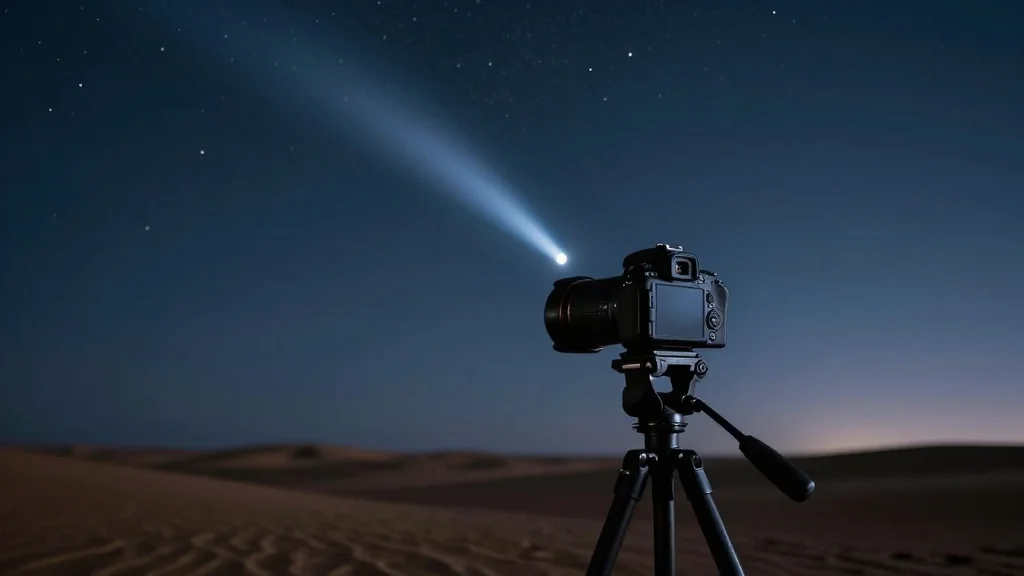
Comet C/2025 R3 (PanSTARRS) brightened dramatically this week, becoming visible in the pre‑dawn northern sky. Long‑exposure photography captured its multi‑degree ion tail over a Himalayan valley, highlighting Earth’s near‑sideways perspective. The comet reached perihelion yesterday, intensifying its tail, and a dust...
Untitled
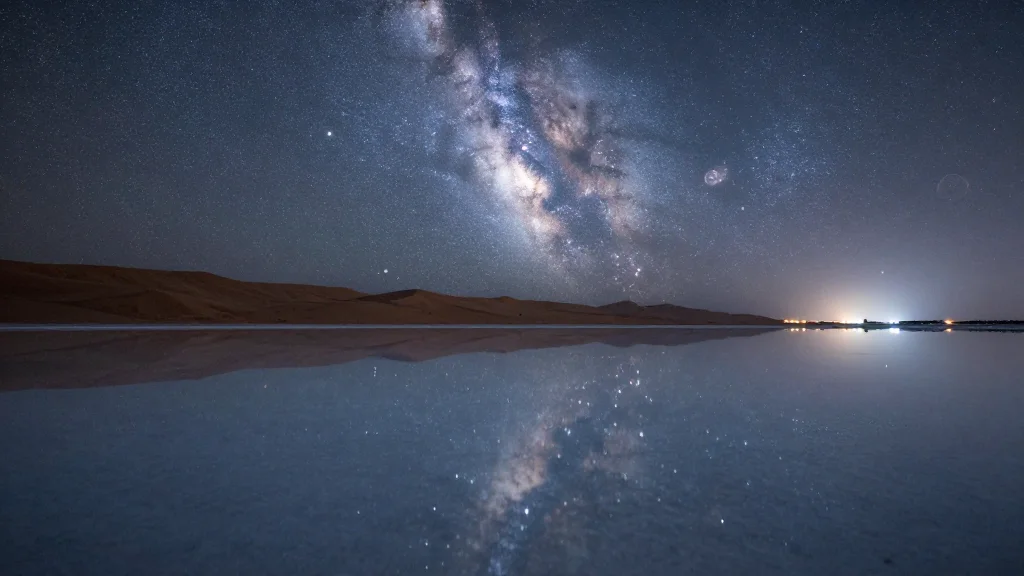
NASA’s Astronomy Picture of the Day for April 19 2026 showcases a 27‑frame mosaic taken in 2019 from the Atacama Desert’s Ojas de Salar lagoon. The still captures a reflective lake that resembles an eye gazing at the Milky Way’s star‑filled band,...
Untitled
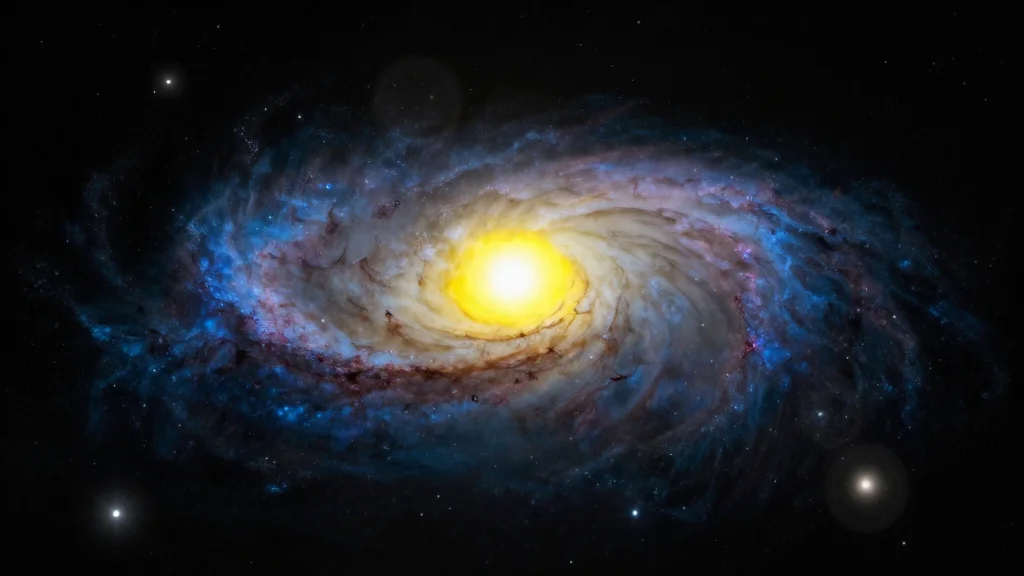
NASA’s Astronomy Picture of the Day showcases Messier 8 (M82), a nearby starburst galaxy known as the Cigar Galaxy. A composite image built from 33 hours of narrow‑band exposure highlights bright red filaments of atomic hydrogen driven by a powerful superwind. The...
Untitled
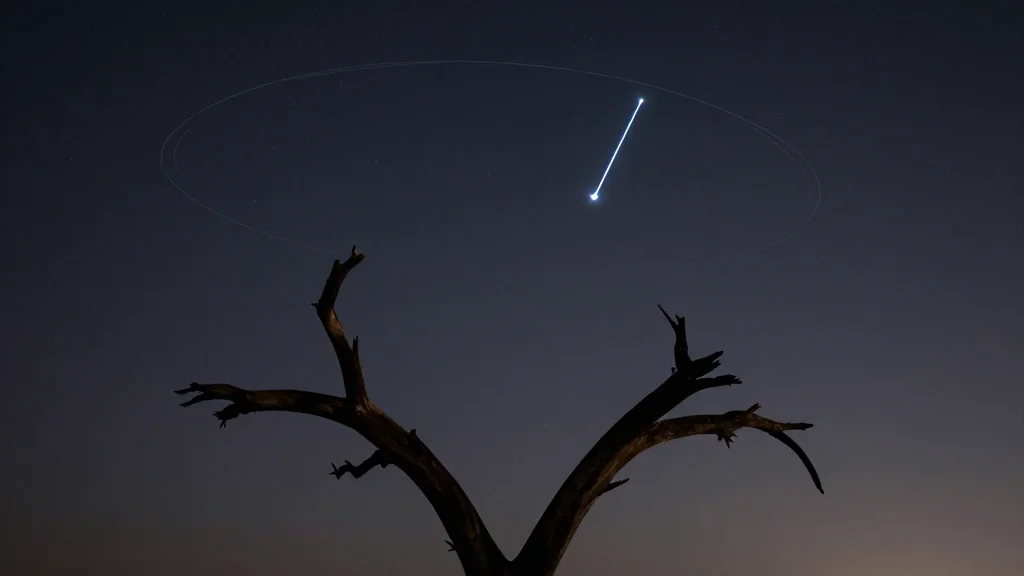
The NASA Astronomy Picture of the Day for April 16, 2026 showcases the "South Celestial Tree," a time‑lapse shot taken in Padre Bernardo, Brazil. The image captures stars tracing a 24‑hour circle around the empty southern celestial pole, illustrating how the Southern Cross...
Untitled
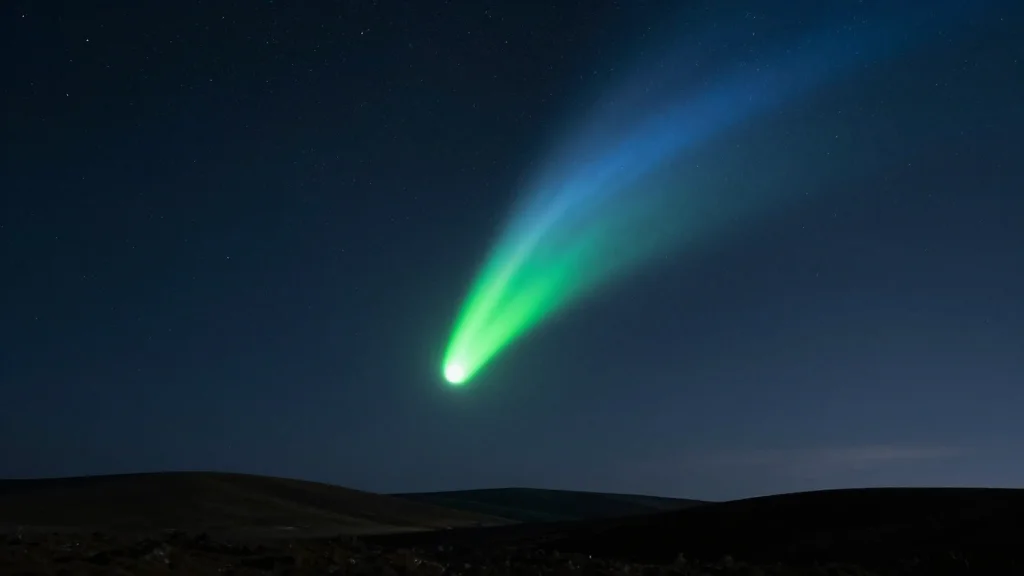
NASA’s Astronomy Picture of the Day highlighted comet C/2025 R3 (PanSTARRS), showcasing its bright green coma and long, wispy blue ion tail. The comet, a few‑kilometer‑wide icy nucleus, is currently shedding gas that is ionized by sunlight and swept into a...

Untitled
The Hubble Space Telescope captured a detailed view of NGC 602, a 5‑million‑year‑old star cluster on the outskirts of the Small Magellanic Cloud, located about 200,000 light‑years from Earth. The image spans roughly 200 light‑years and shows massive young stars eroding...
Untitled
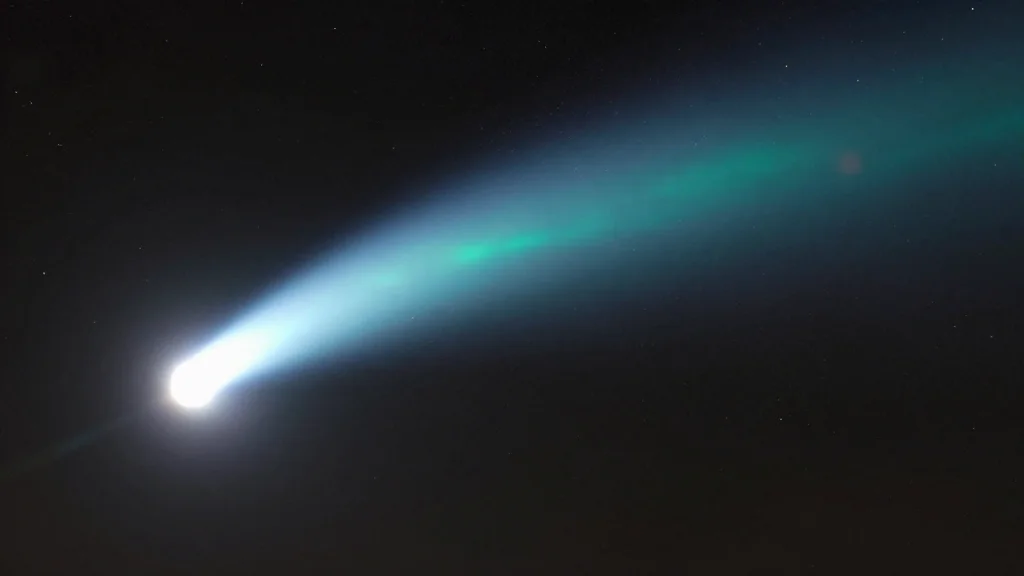
Comet C/2025 R3 (PanSTARRS) is brightening dramatically as it nears the Sun on April 19, 2026, and will make its closest approach to Earth on April 25. The comet now displays a tail extending more than 10 degrees across the sky, captured from Switzerland....
Untitled
On April 6, 2026, NASA’s Artemis II mission performed a historic lunar flyby, the first since Apollo 17 in 1972. The Orion spacecraft rounded the Moon’s far side, reaching a peak distance of roughly 407,000 km—making it the farthest humans have traveled from Earth...
Untitled
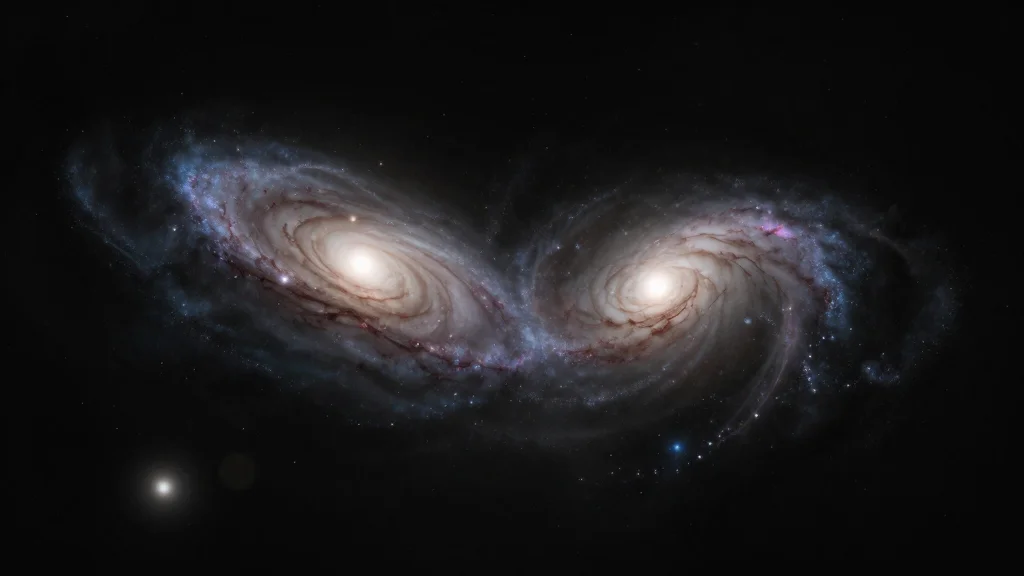
NASA’s Astronomy Picture of the Day showcases a high‑resolution view of the Antennae galaxies, NGC 4038 and NGC 4039, located about 60 million light‑years away in the constellation Corvus. The pair is in the midst of a violent merger, compressing molecular gas and...
Untitled
NASA’s Solar and Heliospheric Observatory and Solar Dynamics Observatory recorded the dramatic demise of comet C/2026 A1 (MAPS) as it plunged within half the Earth‑Moon distance of the Sun. The 40‑hour composite video shows the comet stretching, vanishing behind the coronagraph’s...

Untitled
NASA’s Astronomy Picture of the Day for April 7, 2026 features a deep‑field image of a nebular formation that resembles a horse’s head. The structure is the reflection nebula IC 4592, not the well‑known Horsehead Nebula in Orion, and its blue hue comes...
Untitled
On April 6, 2026, NASA’s Artemis II Orion spacecraft completed a seven‑hour lunar flyby, capturing the striking "Earthset" view as Earth dipped below the Moon’s horizon. The crew surveyed the Moon’s far side, documenting the well‑preserved Orientale basin and discovering two previously unknown...

Untitled
Artemis II, NASA’s first crewed deep‑space flight since Apollo, will loop around the Moon and return to Earth about ten days after launch. The mission is a test flight, not a landing, mirroring Apollo 8 and 10’s approach before Apollo 11’s historic touchdown. It...
Untitled
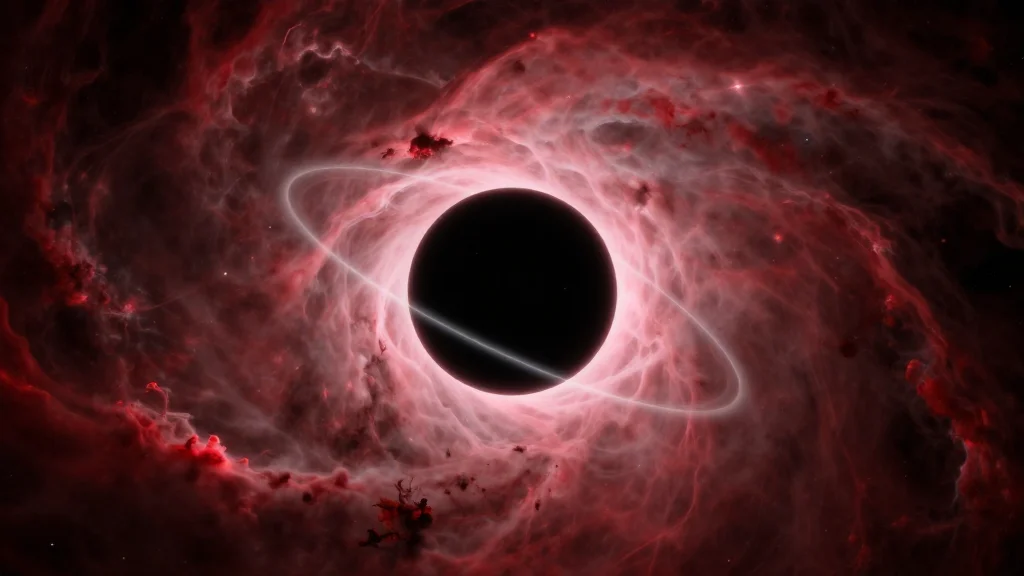
NASA’s Astronomy Picture of the Day released an illustration that merges a simulated black‑hole binary merger with a real photograph of the Tarantula Nebula. The nebula, located in the Large Magellanic Cloud about 160,000 light‑years from Earth, is more than...
Untitled
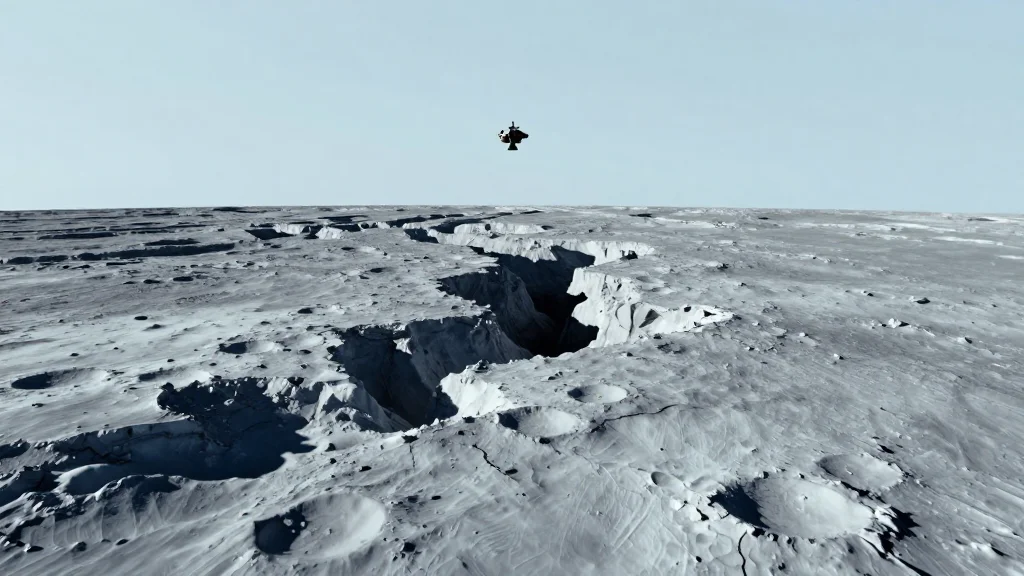
NASA’s Voyager 2 spacecraft flew past Uranus’s largest moon, Titania, in 1986, capturing detailed images of its rugged terrain. The moon’s surface features a mix of deep canyons, cliffs, and impact craters, suggesting a violent geological past possibly driven by water‑ice...
Untitled
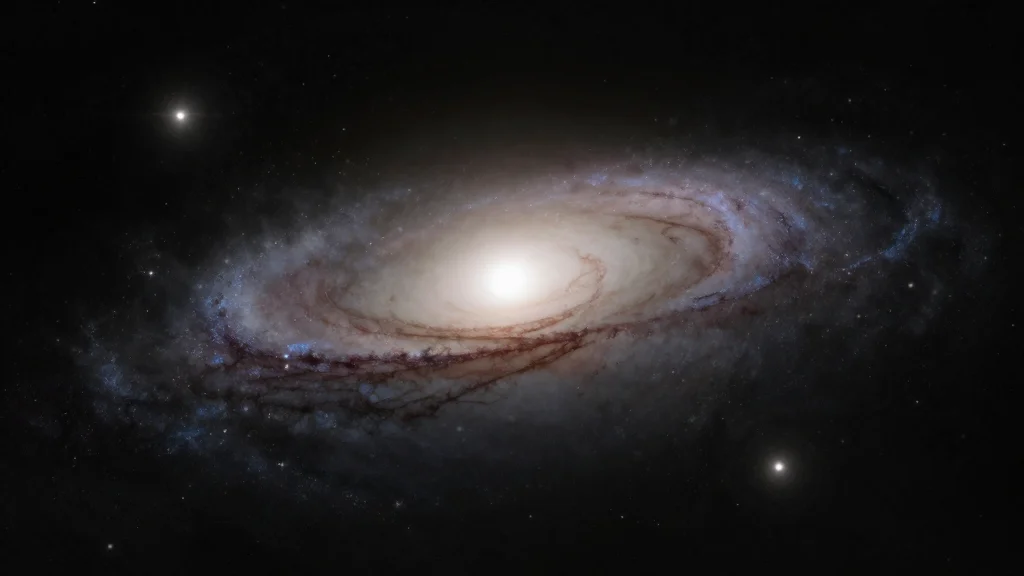
NASA’s Astronomy Picture of the Day highlights Centaurus A, an elliptical galaxy 13 million light‑years away. The image reveals thick dust lanes that obscure the galaxy’s core, a rare feature for an elliptical system. Researchers attribute the unusual structure to a past...
Untitled
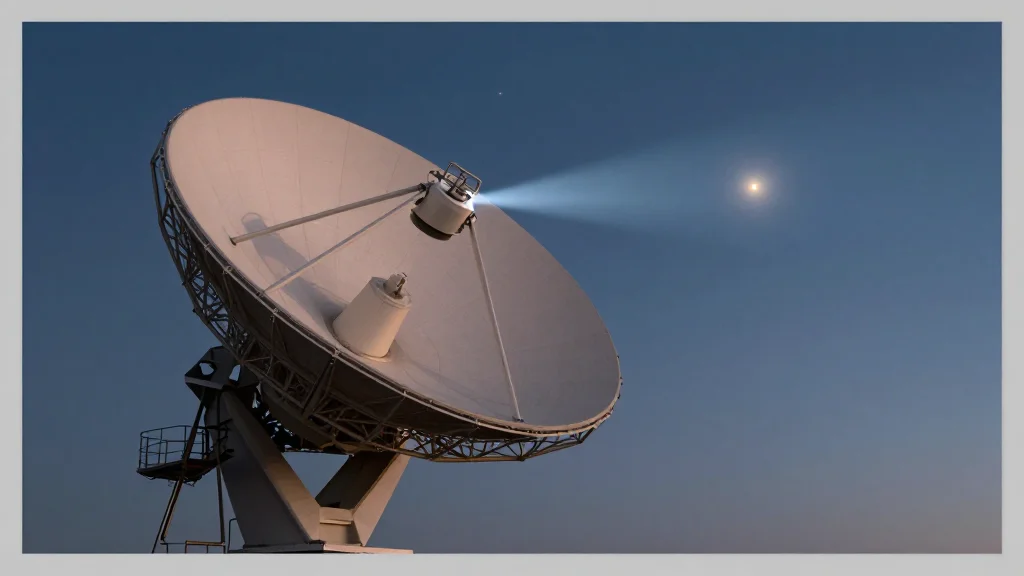
In 1974, the Arecibo Observatory transmitted a binary “Message from Earth” toward the globular cluster M13. The pictorial transmission encoded basic numbers, chemical elements, DNA structure, a human silhouette, and our solar system. Though primarily ceremonial, the signal would require...
Untitled
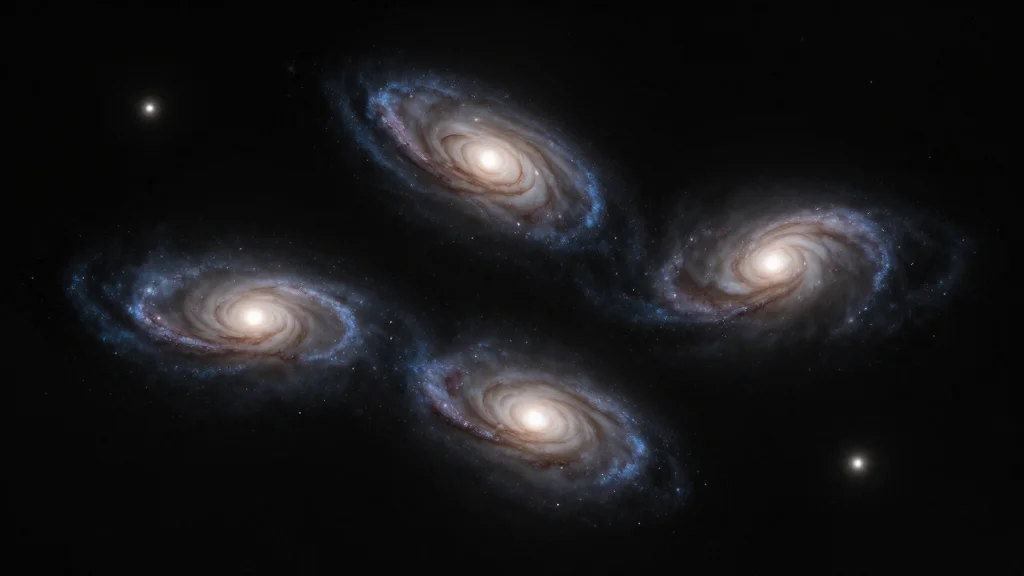
Canadian astronomer Paul Hickson’s survey identified the Hickson Compact Groups, a set of roughly 100 tightly bound galaxy clusters. One of these, Hickson 44 in Leo, lies about 100 million light‑years away and showcases four interacting members—NGC 3190, NGC 3187, NGC 3193 and NGC 3185. The...

Untitled
Robert H. Goddard, the father of modern rocketry, launched the world’s first liquid‑fuel rocket—named “Nell”—on March 16, 1926, achieving a 41‑foot altitude in a 2½‑second flight. The 10‑foot‑tall vehicle used a top‑mounted motor fed by liquid‑oxygen and gasoline, eliminating the need for stabilizing...

Untitled
NASA’s Astronomy Picture of the Day highlights that 218 gravitational‑wave events have been cataloged by the LIGO‑Virgo‑KAGRA collaboration as of March 2026. The grid image visualizes each detection, showing binary black‑hole mergers dominate the list despite black holes being less common...

Untitled
NASA’s Astronomy Picture of the Day showcases the towering moai of Ahu Tongariki on Easter Island silhouetted against a vivid Milky Way. The image highlights the island’s exceptionally dark skies, a rarity in today’s light‑polluted world. Historically, Rapa Nui’s inhabitants used...

Untitled
NASA’s GRACE twin‑satellite mission, operating from 2002 to 2017, produced a high‑resolution gravity map of Earth that reveals subtle variations in the planet’s pull. The visualization shows a relatively weak gravity zone off India’s coast and a stronger field over...

Untitled
NASA’s Astronomy Picture of the Day showcases a striking photograph of light pillars over Mohe, China’s northernmost city. The pillars arise from flat ice crystals near the ground that reflect artificial lights rather than sunlight. The image also captures the...

Untitled
In 2005 the MESSENGER spacecraft captured a time‑lapse of Earth as it drifted away on its trajectory toward Mercury. The video shows the planet’s bright, sun‑lit side dominating the frame, rendering background stars invisible. After the flyby, MESSENGER continued to...
Untitled
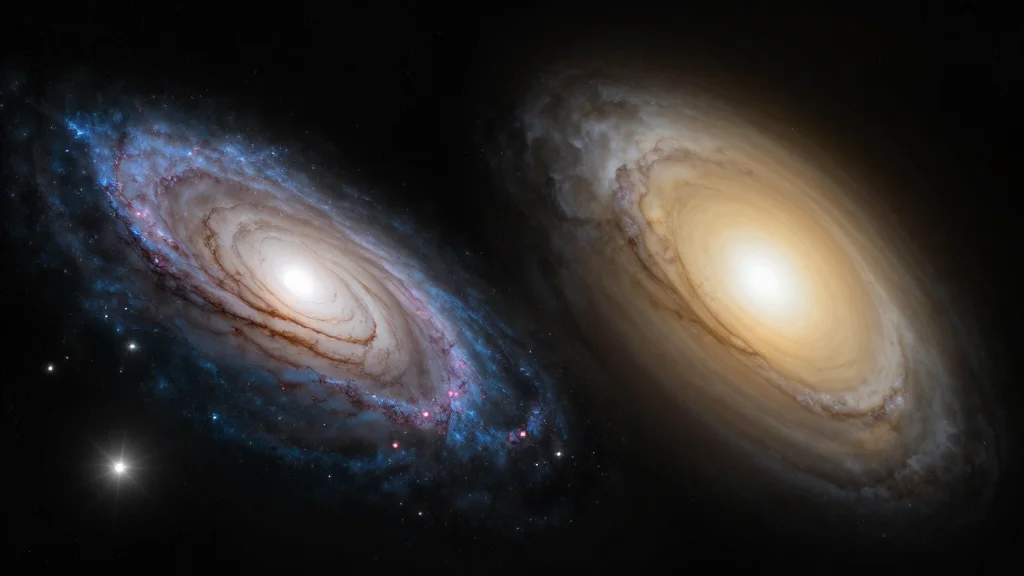
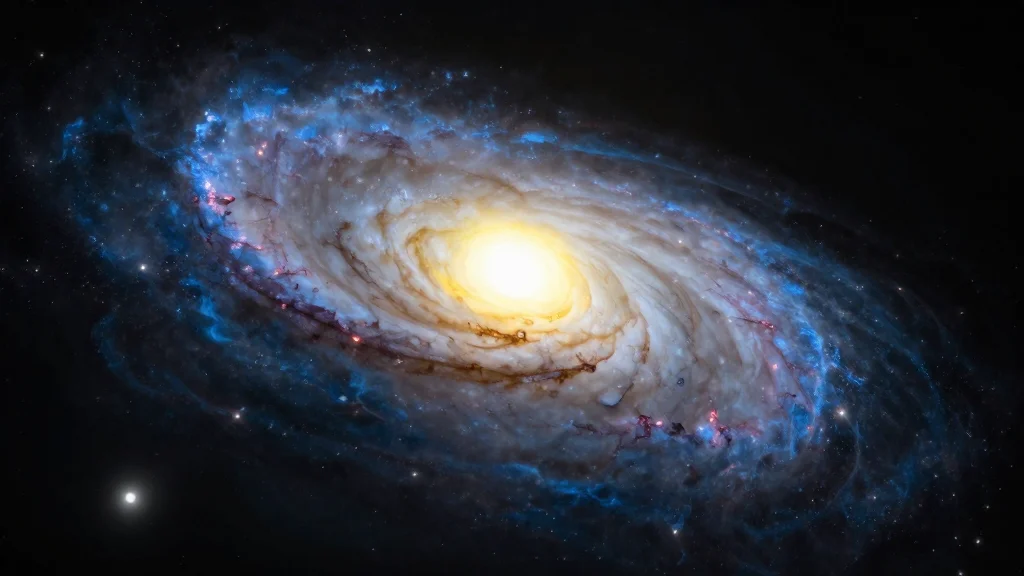
The Astronomy Picture of the Day highlights two galaxies in the Eridanus constellation: the face‑on barred spiral NGC 1300 and the nearby elliptical NGC 1297. Both lie roughly 70 million light‑years away in the Eridanus Galaxy Cluster and span about 100 000 light‑years across....
Untitled
NASA’s Astronomy Picture of the Day features a SpaceX Falcon 9 launch captured 52 minutes before sunrise on March 4, 2026. The second‑stage exhaust plume, illuminated by the rising sun, resembles a glowing jellyfish drifting against the twilight sky. The image highlights...

Untitled
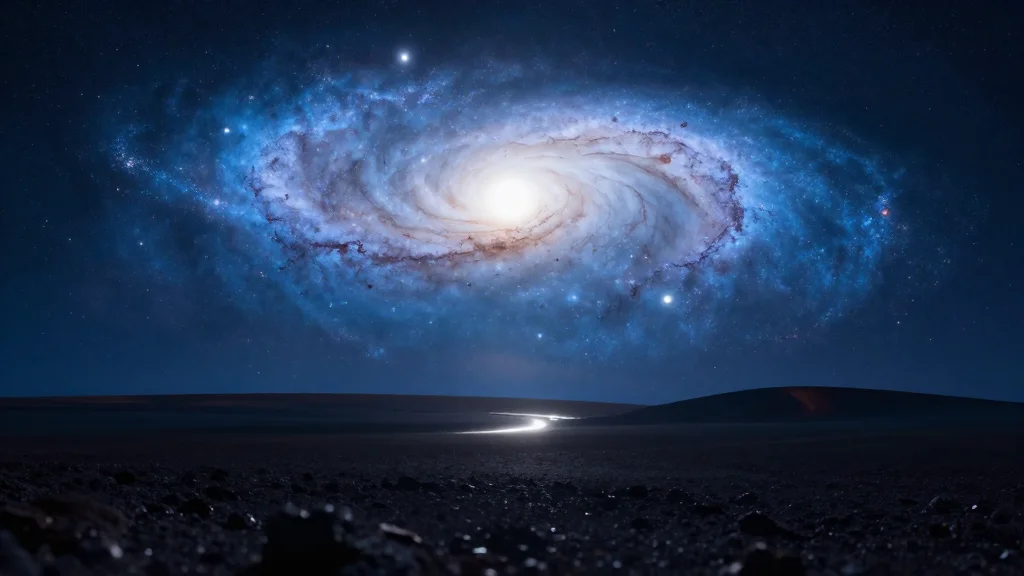
The Astronomy Picture of the Day highlights NGC 1566, nicknamed the Spanish Dancer Galaxy, a grand‑design spiral located roughly 40 million light‑years away in Dorado. The galaxy’s face‑on orientation showcases bright blue star clusters, red emission nebulae, and dark dust lanes along...
Untitled
The Astronomy Picture of the Day features the “Tadpoles of IC 410,” a composite image that merges visible, narrow‑band, and near‑infrared data to reveal intricate structures in a distant nebula. IC 410 lies about 10,000 light‑years away in Auriga and surrounds the...
Untitled
NASA’s Astronomy Picture of the Day highlights K2‑315b, an Earth‑sized exoplanet that circles its red dwarf star every 3.14 days—mirroring the mathematical constant π. Discovered from Kepler’s K2 mission data and announced in 2020, the planet lies roughly 185 light‑years...

Untitled
NASA’s Astronomy Picture of the Day showcases the equinox alignment at the Pyramid of the Feathered Serpent in Mexico’s Yucatán Peninsula. The ancient step‑pyramid, built between the 9th and 12th centuries, creates a shadow illusion of a descending serpent when...
Untitled
NASA’s James Webb Space Telescope recorded a near‑full 15‑hour rotation of Uranus using NIRSpec, assembling more than 1,000 spectra into a video that reveals the planet’s ionosphere, aurora, and cloud structures. The footage provides a three‑dimensional color map from low...

Untitled
NASA’s Astronomy Picture of the Day featured a composited night‑sky image titled “Toolondo Totality Trails,” captured over Lake Toolondo, Victoria, during the March 3, 2026 total lunar eclipse. The photograph blends hour‑long star‑trail exposures with a telephoto shot of the eclipsed Moon,...

Untitled
Astronomers using Chandra, Hubble and infrared telescopes have imaged the astrosphere of HD 61005, a Sun‑like star 120 light‑years away and only 100 million years old. The star’s powerful stellar wind has carved a bubble roughly 200 AU across, pushing aside surrounding dust...
Untitled
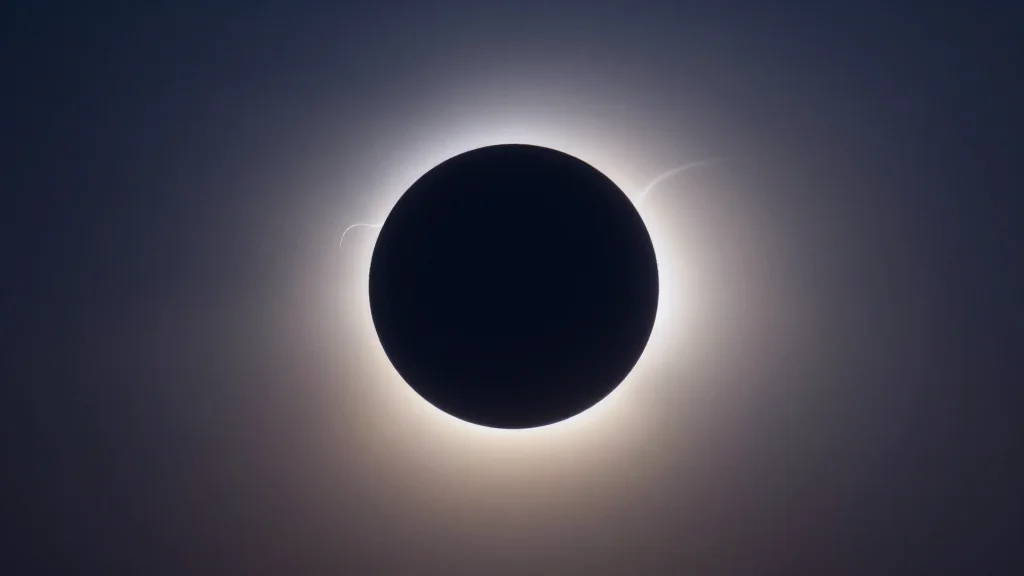
NASA’s Astronomy Picture of the Day posted March 7, 2026 features two total lunar eclipses from Saros 133, one captured in February 2008 and the other on March 3, 2026. The side‑by‑side comparison illustrates how eclipses separated by one Saros period (18 years, 11⅓ days) produce nearly identical geometry....
Untitled
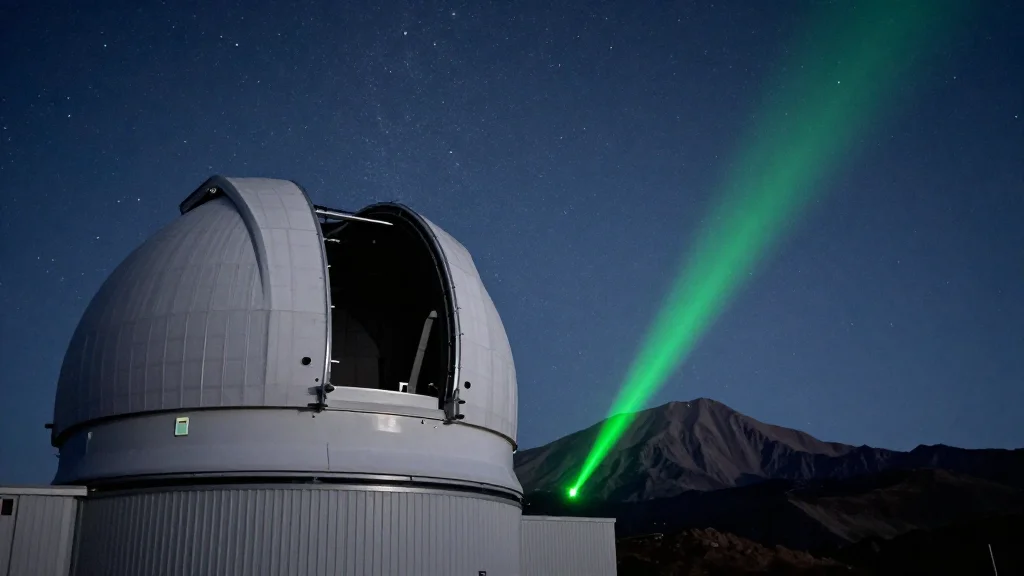
Astronomers at Chile’s Paranal Observatory are using powerful lasers to generate artificial guide stars, a cornerstone of modern adaptive‑optics systems. These laser‑created points of light allow telescopes to measure and correct atmospheric turbulence in real time, dramatically sharpening images of...
Untitled
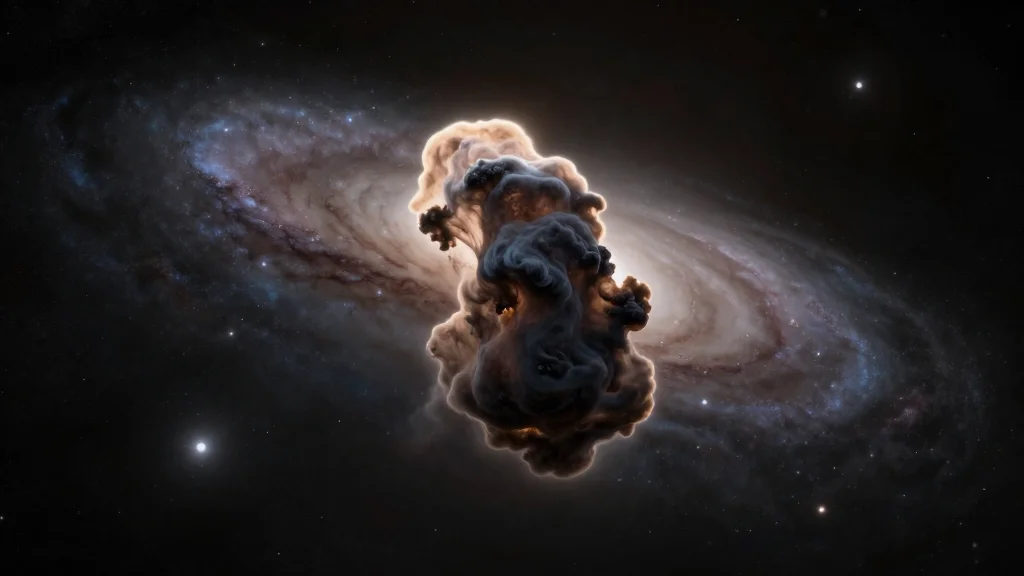
The James Webb Space Telescope captured a striking mid‑infrared image of the Cranium Nebula, whose brain‑like silhouette has sparked scientific intrigue. Astronomers are divided between classifying it as a planetary nebula surrounding a white dwarf or as a massive Wolf‑Rayet...
Untitled
NASA’s Astronomy Picture of the Day features cometary globule CG 4, a molecular cloud 1,300 light‑years away in Puppis. The globule’s head spans 1.5 light‑years while its tail stretches eight light‑years, resembling a comet’s shape. Researchers link its elongated tail to...
Untitled
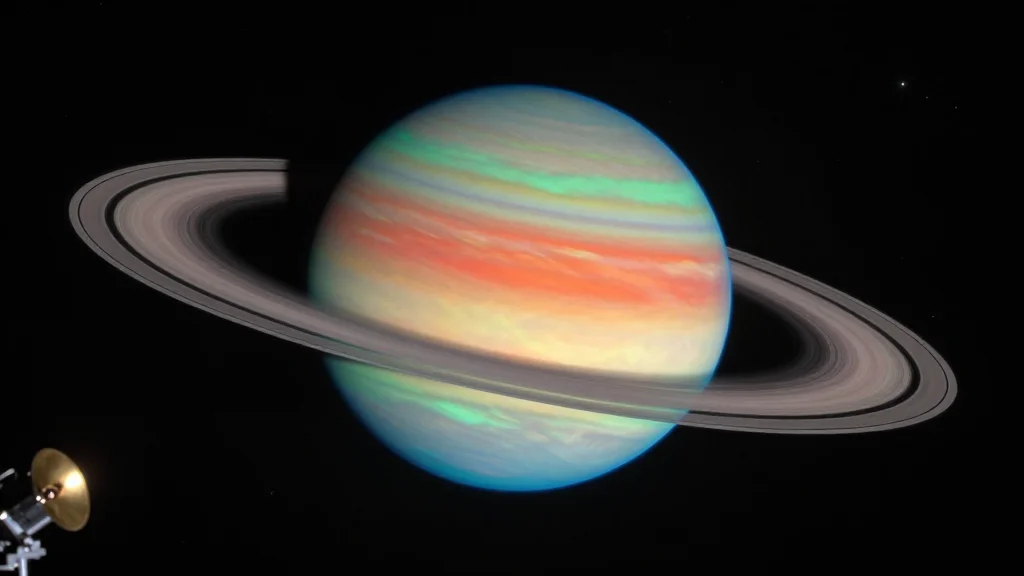
NASA's James Webb Space Telescope captured a near‑full rotation of Uranus using its NIRSpec instrument. Over 1,000 spectra were collected during a continuous 15‑hour observation, revealing the planet’s ionosphere, auroral emissions, and cloud dynamics. The video provides a three‑dimensional view,...