
The Next Chapter of Community Development Finance and Place-Based Investment
The Urban Institute unveiled its new Center for Local Finance and Growth, positioning it as a nonpartisan hub for research, tools, and dialogue on community development finance. The launch event, attended by over 1,200 online registrants and a slate of former Fed officials, framed the conversation around making more communities "investment ready" and leveraging place‑based policies to spur inclusive growth. Speakers highlighted stark disparities in capital distribution: a 21‑fold gap separates the most‑invested cities from the least, with rural and small‑town America suffering chronic under‑investment. Federal programs such as CDBG and HUD’s housing initiatives have contracted to a fraction of their inflation‑adjusted peaks, while the sector relies increasingly on market‑based incentives like the New Markets Tax Credit and Low‑Income Housing Tax Credit, now made permanent. Brett Theodos illustrated the divide with concrete data—Utah’s median income rose 80 % over five decades, whereas West Virginia saw no real growth for two generations. He also cited the Urban Institute’s new landscape review, which documents nine systemic challenges and calls for a "Tennessee Valley Authority‑scale" commitment: half‑billion to a billion dollars per census tract over 20‑30 years, reduced transaction costs, and sustained, geographically targeted investment. The implications are clear: without coordinated federal action, robust financing tools, and a long‑term capital commitment, the promise of place‑based development will remain fragmented. Scaling CDFIs and cementing permanent tax incentives could unlock private capital, but policymakers must align resources, streamline regulations, and embed community voices to ensure lasting economic revitalization.

Should I Invest in This Real Estate Deal
Gino outlines a disciplined approach to multifamily investing, stressing a clearly defined exit strategy, mastery of core investment metrics, and conservative underwriting. He adds that investors should evaluate the "return on effort," ensuring each deal aligns with personal risk tolerance...
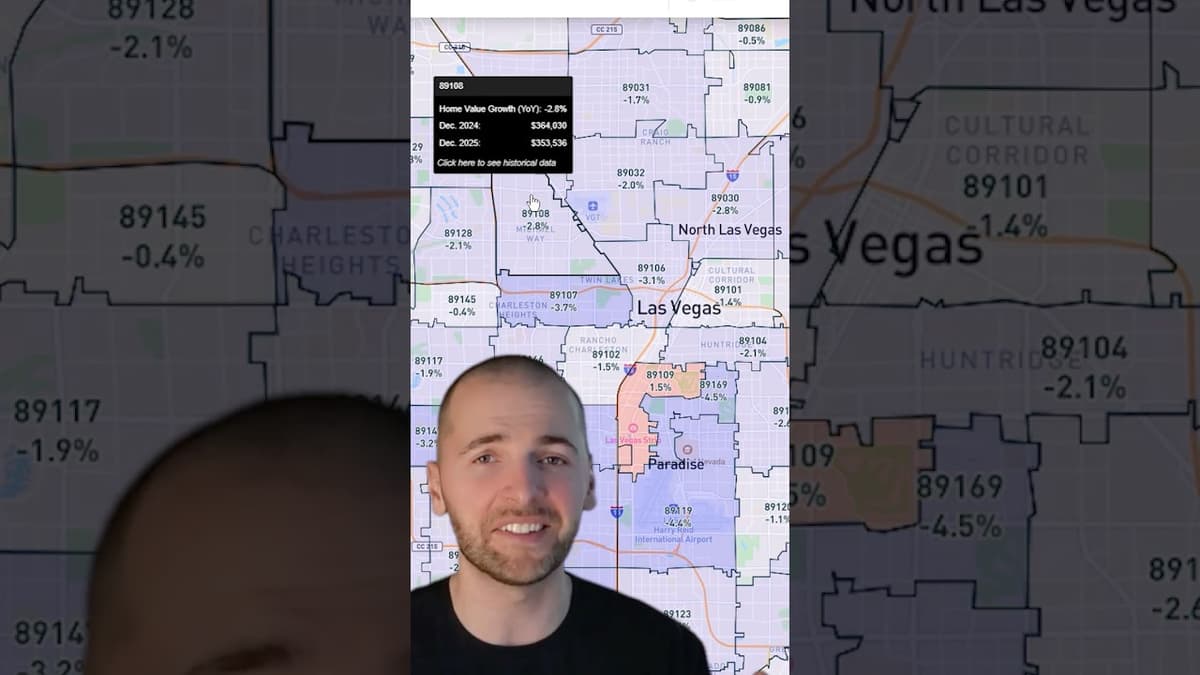
Las Vegas Lobs Major Warning to U.S. Housing Market
Las Vegas’ housing market has entered a sharp contraction, with sales falling to the lowest level since 2007 and transaction volume down 45% from its 2021 peak. Analysts label the city a "canary in the coal mine" because the previous...

A Deflation Vortex Is Underway. (2026 Wall Street Selloff)
The 2026 U.S. housing market is entering a deflationary vortex as inventory swells across the South and West Coast, pushing prices down. In Houston, a move‑in‑ready home is listed for $204,000, illustrating the broader price compression. Buyers remain scarce despite...

How to Get FILTHY RICH in Real Estate (This Scales Faster Than AirBnB Ever Could!)
Rich Somers explains why boutique hotels are outpacing Airbnb, highlighting faster scaling, higher average daily rates, and a brand‑centric guest experience. He details profit‑boosting tactics such as amenity fees and the superior long‑term appreciation versus cash‑flow returns in today’s market....

Energizing and Decarbonizing Logistics at Global Scale
In a MIT Center for Real Estate podcast, Prologis Chief Energy and Sustainability Officer Susan Utaykumar outlines how the world’s largest logistics‑real‑estate firm is tackling decarbonization at scale. Prologis controls roughly 1.3 billion square feet of warehouse space across 20 countries,...

3D Printed Homes in Austin TX (You Won't Believe This)
Home builders in Austin, Texas are rolling out 3D‑printed houses priced between $450,000 and $550,000. The structures feature integrated solar panels that cut electricity bills and boast superior insulation. While proponents claim the technology could ease the U.S. housing shortage,...

Vancouver & Toronto Real Estate Market Update February 2026
Vancouver and Toronto housing markets entered 2026 with a sharp slowdown, as home sales fell more than 20% year‑over‑year. Rising inventory and cautious buyers are pushing prices lower across multiple segments. The market’s direction now hinges on interest‑rate expectations, with...