
I Asked an Uber Tech Recruiter if CS Grads Are Cooked...
The video features an interview with Katie, a former senior technical recruiter at Uber, who provides a candid assessment of the U.S. tech hiring landscape as it heads into 2026. She notes that while the total number of openings has contracted, companies have raised the bar for candidates, demanding demonstrable impact and deeper technical chops. Katie explains that entry‑level positions remain available, especially in fast‑growing sectors like med‑tech, manufacturing, and even unexpected places such as Meta’s recent 200,000 entry‑level push. However, job seekers must be more strategic—tracking real‑time hiring trends, tailoring applications, and preparing for tougher interview rounds. AI is a double‑edged sword: it streamlines development and is now a screening criterion, yet firms are instituting policies to prevent misuse during coding assessments. Specific examples underscore the shift: Salesforce’s 5,000‑engineer layoff, Ford’s 6,000 unfilled manufacturing roles paying $120k, and Uber’s focus on security and infrastructure talent. Katie highlights that security, backend infrastructure, and cloud‑scale engineering are exploding niches, while front‑end and generic full‑stack roles are seeing relative decline. She stresses the importance of articulating project impact and business outcomes rather than merely listing code repositories. For candidates, the takeaway is clear: double down on high‑demand specialties, master AI‑assisted workflows responsibly, and frame experience in terms of measurable results. Companies, meanwhile, must adjust recruitment pipelines to balance efficiency gains from AI with the need for human judgment in product direction and team dynamics.

Why Most Data Science Projects Fail (And How to Fix the Structure)
The video highlights that most data‑science initiatives crumble because they start as ad‑hoc notebooks on a single laptop, lacking any disciplined project structure. It argues that a reproducible, collaborative, and scalable workflow is not optional but essential for delivering business...
Commonwealth Bank of Australia Builds AI Fluency at Scale
Commonwealth Bank of Australia announced a large‑scale rollout of ChatGPT Enterprise, extending the generative‑AI tool to roughly 50,000 employees across its operations. The move is part of a broader effort to modernise the bank’s digital front‑office and deliver a more...
BNY Sales Uses OpenAI
BNY Sales announced a company‑wide rollout of OpenAI‑powered tools, embedding artificial intelligence across its more than 50,000 employees. The initiative is framed as a way to run the business more efficiently while delivering innovative, data‑driven solutions for financial‑services clients. According to...
BNY Legal Uses OpenAI
BNY Legal announced the deployment of OpenAI‑driven tools to streamline its contract review process, positioning artificial intelligence as a core component of its legal operations. The bank emphasized that, as a highly regulated financial institution, it built the solution atop...
BNY Builds “AI for Everyone, Everywhere” With OpenAI
Bank of New York Mellon (BNY) announced a sweeping AI initiative built on a partnership with OpenAI, branding it as “AI for everyone, everywhere.” The effort centers on the Eliza platform, an innovation accelerator that integrates frontier generative‑AI capabilities into...
How To Explain A Concept Without Dumbing It Down | Joshua Starmer X Data Science Dojo
The video features Joshua Starmer discussing how to explain complex data‑science concepts without "dumbing them down." He emphasizes a constant self‑check: can the idea be presented more simply while staying true to the original algorithm and its intent? This mindset...
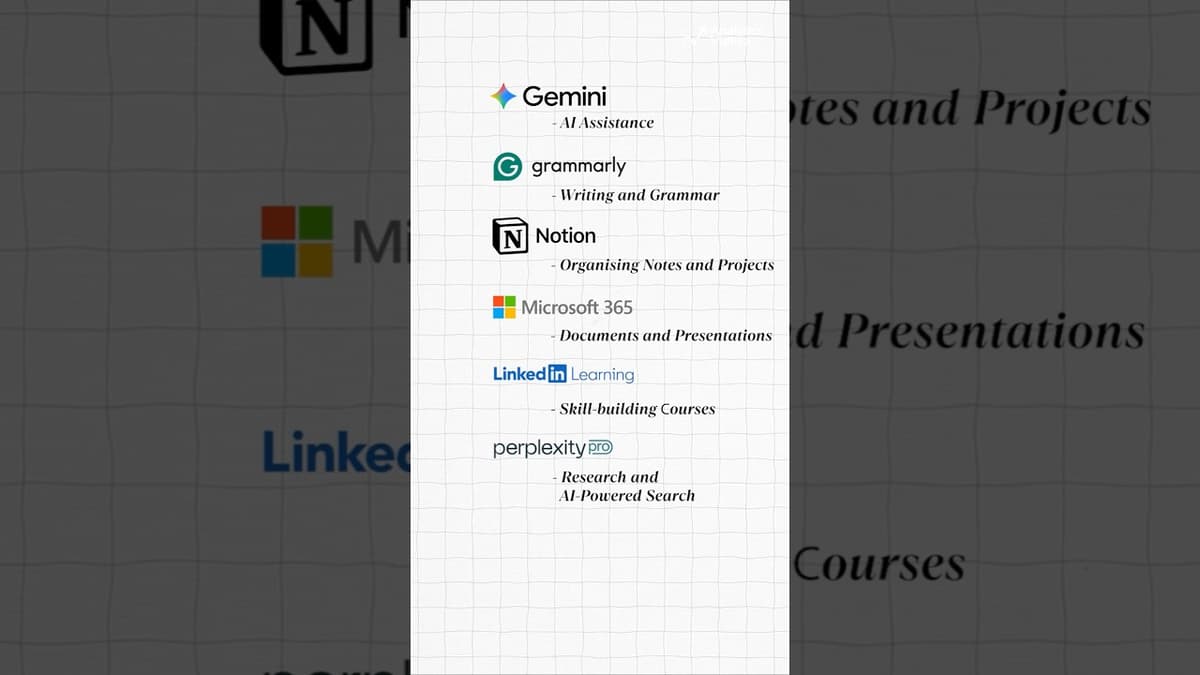
Get 15+ Premium Tools For Free or on Discount
The video spotlights how a student identification card can serve as a gateway to more than fifteen high‑value software services typically reserved for professionals. By treating the ID as a promotional credential, students can claim free or heavily discounted access...
How LLMs Think Step by Step & Why AI Reasoning Fails
The video explains how large language models (LLMs) often stumble on multi‑step questions because they attempt to jump straight to a final answer, leading to logical slips and hallucinations. To mitigate this, practitioners employ a prompt‑engineering technique called chain‑of‑thought (CoT),...

How I Became "Radicalized" About AI Disruption
The video chronicles the creator’s transformation from AI skeptic to a self‑described radical, driven by five observations that suggest an imminent, disruptive wave. He argues that insiders at companies like Meta, Nvidia, and OpenAI are privately terrified of AI’s speed,...
Zapier's CEO Shares His Personal AI Stack | Wade Foster
Wade Foster, co‑founder and CEO of Zapier, joins the How I AI podcast to walk through his personal AI stack and demonstrate how the company embeds artificial intelligence into everyday workflows. He argues that leadership must go beyond memos about...

Lee Cronin "Sam Altman Is Delusional, Hinton Needs Therapy, P(Doom) Is Nonsense"
Lee Cronin opens the discussion by dismissing popular AI‑doom narratives, arguing that artificial systems lack genuine agency and therefore cannot autonomously seize control of physical infrastructure. He frames the debate in terms of chemistry’s role in generating complexity, suggesting that...
The Easiest Way to Improve Prompts
The video explains two foundational prompting strategies—zero-shot and few-shot learning—used to shape large language model outputs. Zero-shot prompting presents a plain instruction without any exemplars, trusting the model’s pre‑trained knowledge to generate an answer, such as asking a general‑purpose assistant...
This Is How Much AI Can Remember
The video explains that a language model’s ability to remember is bounded by its context window – the maximum number of tokens it can see at once. The window comprises the system prompt, the full dialogue history, and any tokens the...

All About AI In 2026 - What Now?
The creator announces a strategic pivot for 2026, shifting the channel from general AI commentary to a hands‑on showcase of AI‑driven micro‑businesses, major model releases, and workflow tutorials. The new format promises weekly deep‑dive videos that break down revenue streams,...
Your Prompts Aren’t the Problem—Your Context Is
The video argues that the real bottleneck in AI assistants isn’t how you phrase a question but what information the model actually sees when it generates a reply. While traditional prompt engineering tweaks wording to coax better answers, "context engineering"...
Why Prompts Actually Work
The video breaks down why prompts work, defining a prompt as the full set of instructions and context sent to an LLM. It distinguishes two parts: a system prompt that establishes the model’s role and constraints, and a user prompt...

RLHF Explained Simply
RLHF, or reinforcement learning from human feedback, is the technique powering modern large‑language‑model alignment. Rather than relying solely on static text corpora, developers augment training with human‑generated preference data, teaching models what constitutes a helpful, safe response. The workflow begins with...
![The Algorithm That IS The Scientific Method [Dr. Jeff Beck]](/cdn-cgi/image/width=1200,quality=75,format=auto,fit=cover/https://i.ytimg.com/vi/9suqiofCiwM/maxresdefault.jpg)
The Algorithm That IS The Scientific Method [Dr. Jeff Beck]
Dr. Jeff Beck frames Bayesian inference as the algorithmic core of the scientific method, arguing that the brain implements this same normative approach when interpreting data. He traces his own journey from studying pattern formation in complex systems to embracing...
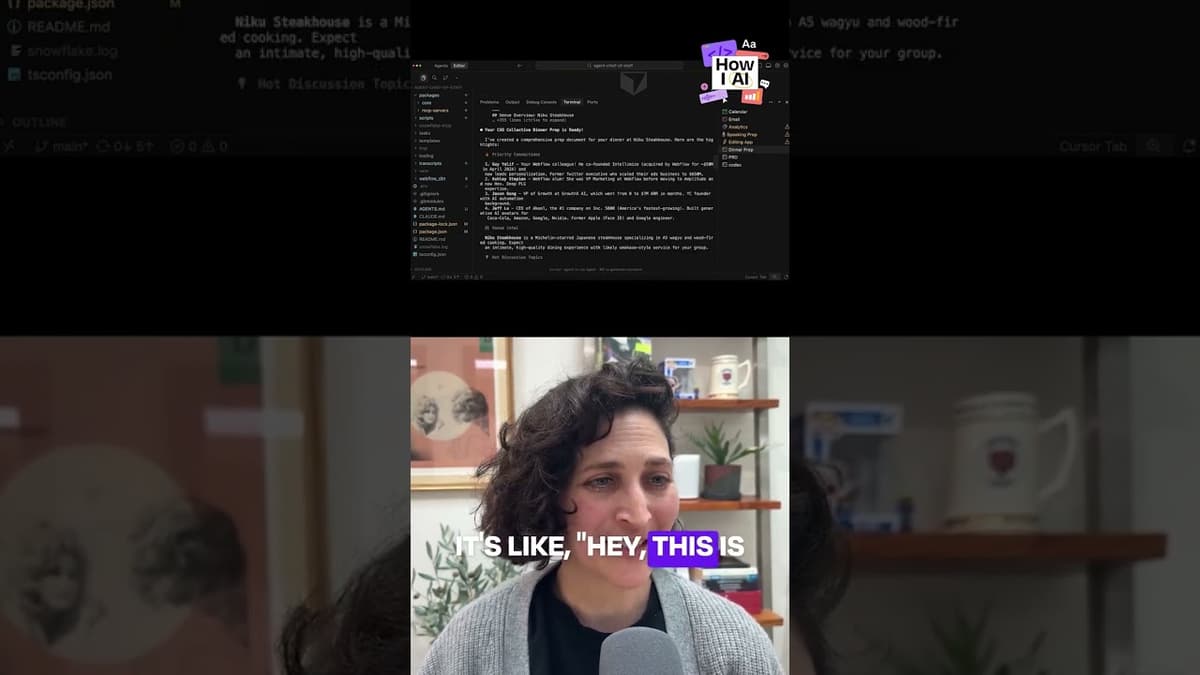
Preparing for a Business Dinner with the Help of AI
The video demonstrates how an executive used generative AI to prepare for a CXO Collective dinner. By taking a screenshot of the guest list and feeding it into an AI agent, the system automatically searched the web and LinkedIn for...
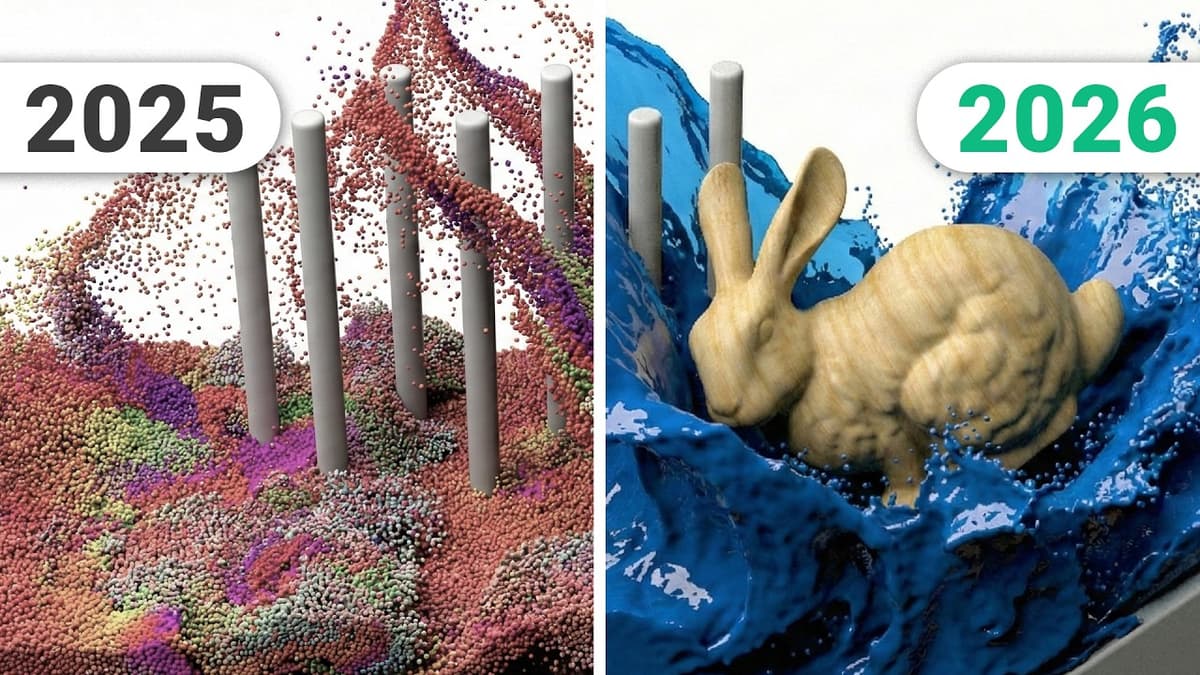
The Bug That Ruined Game Physics For Decades
The video spotlights a breakthrough fluid‑simulation algorithm that finally eliminates the long‑standing volume‑loss bug that has plagued game physics for decades. By formulating the problem in terms of a vector potential whose curl yields the velocity field, the method guarantees...

Meta Just Did the Thing
Meta's acquisition of Mattis AI signals a strategic push into autonomous AI agents that function as remote workers, highlighting a notable shift in Meta's AI roadmap away from pure open‑source commitments. Mattis built each agent on its own Ubuntu virtual machine,...
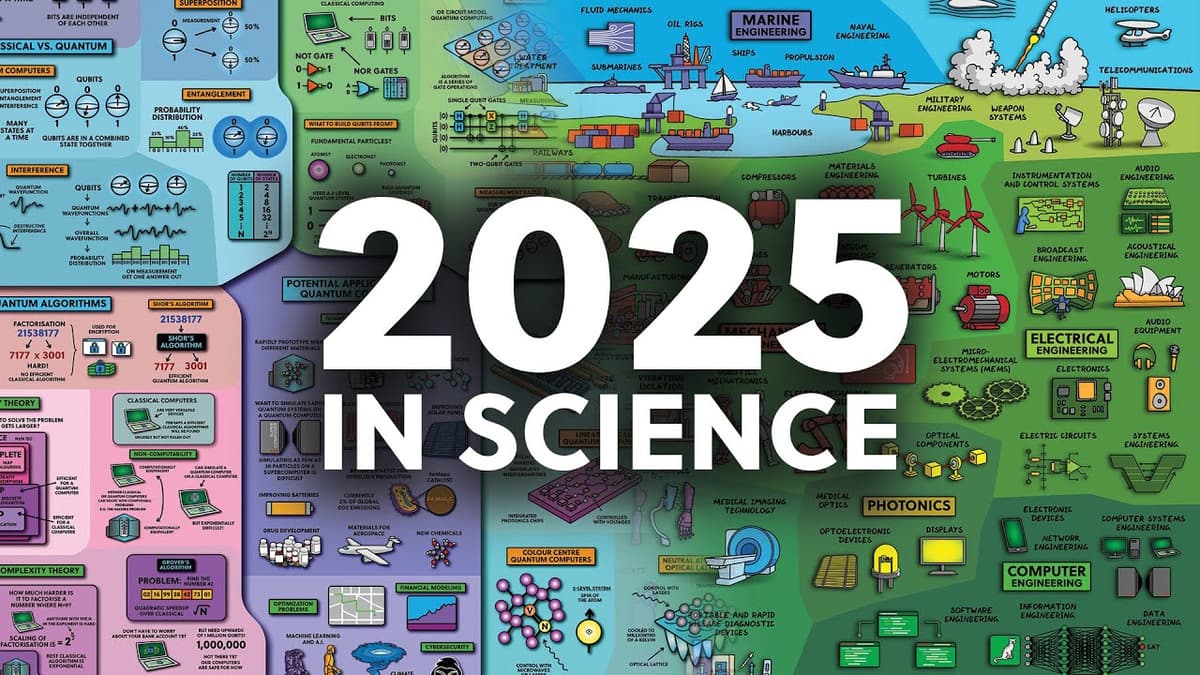
Top Science Advances of 2025 - Roundup Stream
The livestream serves as a rapid, Wikipedia‑sourced roundup of the year’s most notable scientific breakthroughs, spanning astronomy, physics, chemistry, and engineering. Hosted on New Year’s Eve, the presenter walks through dozens of discoveries, offering brief commentary where possible. Among the highlights,...
Most Realistic Data Science Roadmap for 2026!
The video outlines a pragmatic five‑phase roadmap for launching a data‑science career by 2026, emphasizing hands‑on project work over abstract theory. It begins with a foundational tier covering Python, SQL, statistics, exploratory data analysis, and prompt engineering using AI as...
How AI Gets Specialized (Fine-Tuning Explained)
The video demystifies fine‑tuning, the technique of taking a pre‑trained large language model and further training it on a narrow, high‑quality dataset to make it proficient at a specific task. Unlike the massive, generic corpus used for pre‑training, fine‑tuning relies on...
![Your Brain Doesn't Command Your Body. It Predicts It. [Max Bennett]](/cdn-cgi/image/width=1200,quality=75,format=auto,fit=cover/https://i.ytimg.com/vi/RvYSsi6rd4g/maxresdefault.jpg)
Your Brain Doesn't Command Your Body. It Predicts It. [Max Bennett]
The video centers on Max Bennett’s new book, which argues that the brain does not merely command the body but constantly predicts it. Bennett approaches the problem from an outsider’s stance, weaving together comparative psychology, evolutionary neuroscience, and artificial intelligence...

The Creator of Claude Code Just Revealed the Truth
The video surveys three seismic shifts in the AI ecosystem: NVIDIA’s strategic acquisition of Grok’s top engineers through a non‑exclusive licensing pact, a forecasted explosion in the robotics sector, and the rapid maturation of AI‑driven code generation tools like Claude...
Base vs Instruct Models Explained
The video explains the fundamental distinction between base models and instruct models in modern AI development. A base model is the product of large‑scale pre‑training; it stores vast factual information but is not optimized for following user instructions or sustaining...
This Is How GPT Gets Built
The video walks through the foundational phase that turns a random‑parameter network into a functional language model, known as pre‑training. It describes how the model is fed an enormous corpus of text and code from the internet and tasked with...
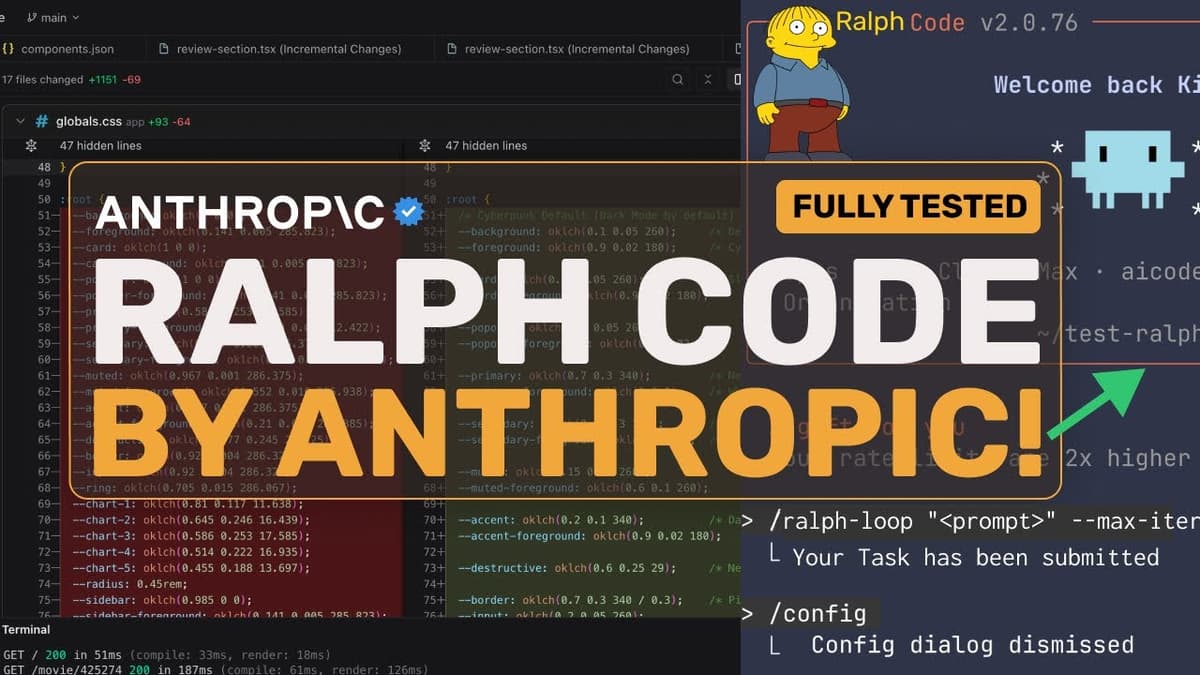
Anthropic's Ralph Loop + Claude Code: Anthropic's New FRAMEWORK Can Run CLAUDE CODE for 24/7!
The video introduces Ralph, a new plugin for Anthropic’s Claude Code that transforms the agent from a one‑shot tool into a persistent loop that won’t exit until a defined goal is met. By leveraging Claude Code’s hook system—specifically the stop...
5 Advanced AI Projects to Get Job-Ready in 2026
The video outlines five advanced, end‑to‑end AI projects designed to make candidates job‑ready for 2026. It walks through building a LlamaIndex rack system, a LangChain‑based document retriever, a fact‑grounded QA rack, a transformer model in PyTorch, and an LLM‑powered chatbot assistant,...
![Why Scientists Can't Rebuild a Polaroid Camera [César Hidalgo]](/cdn-cgi/image/width=1200,quality=75,format=auto,fit=cover/https://i.ytimg.com/vi/vzpFOJRteeI/maxresdefault.jpg)
Why Scientists Can't Rebuild a Polaroid Camera [César Hidalgo]
César Hidalgo’s new book, *The Infinite Alphabet and the Laws of Knowledge*, argues that knowledge can be studied scientifically through three robust laws governing its growth over time, its diffusion across space and activity, and its valuation. By treating knowledge...
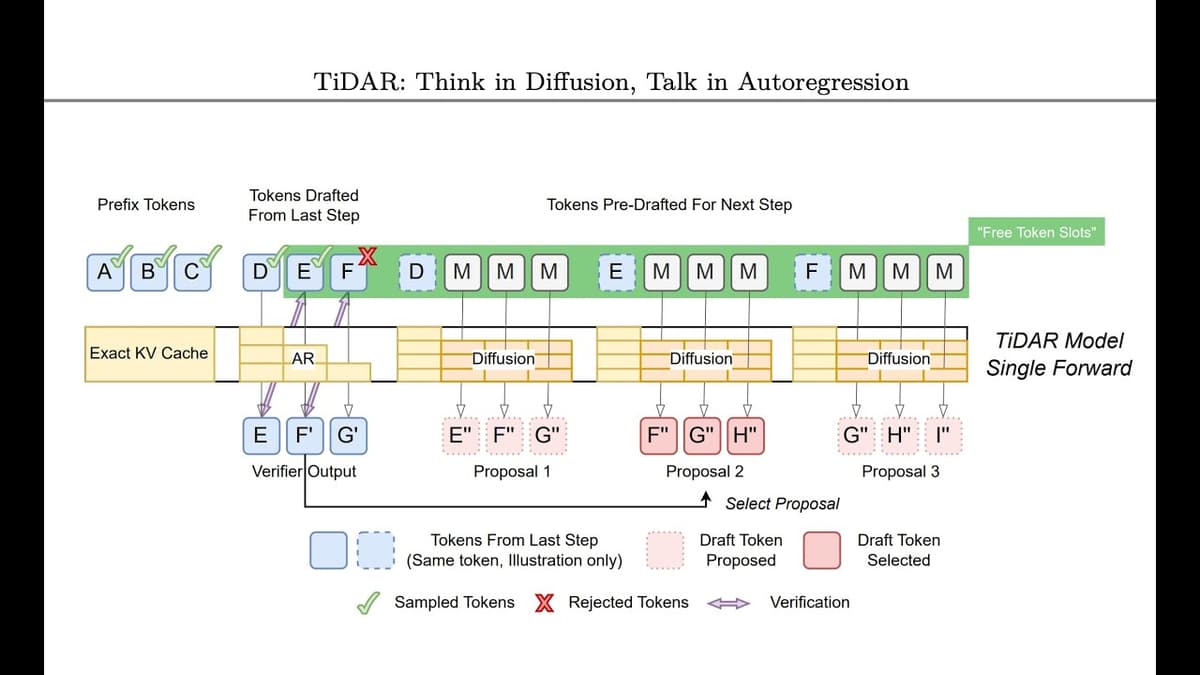
TiDAR: Think in Diffusion, Talk in Autoregression (Paper Analysis)
The Nvidia TiDAR paper introduces a hybrid autoregressive‑diffusion language model that exploits unused GPU capacity during large‑language‑model inference. By combining diffusion‑style parallel token prediction with traditional autoregressive sampling, TiDAR achieves higher throughput while preserving the exact output distribution of a...
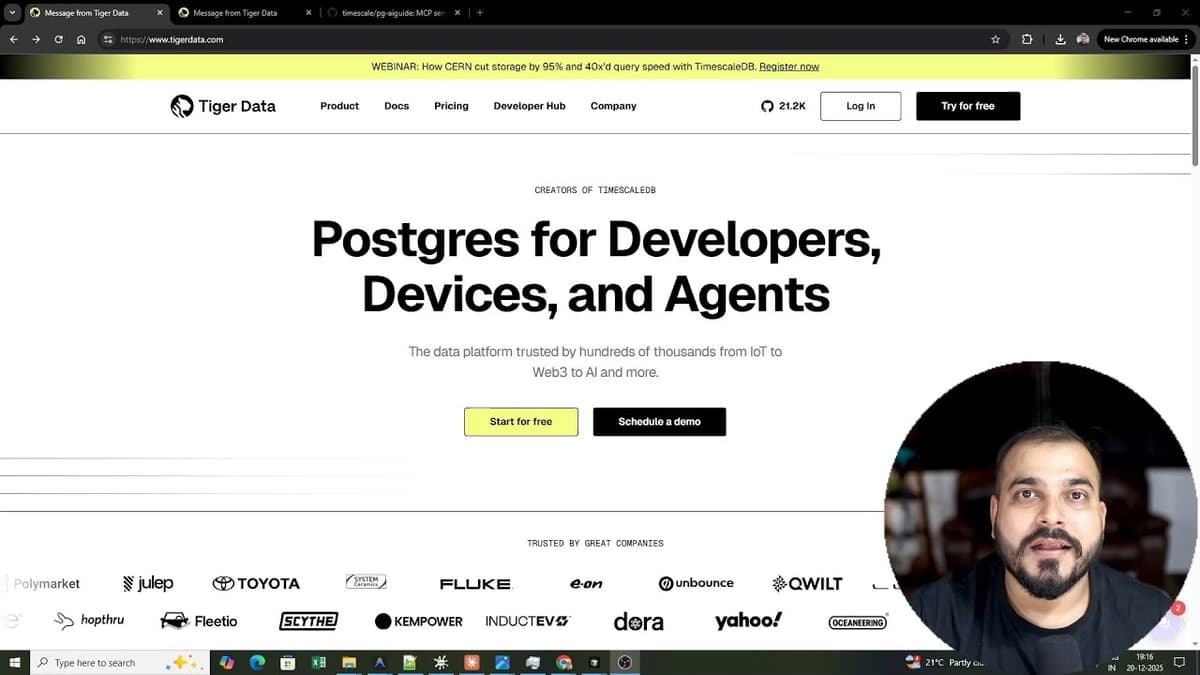
AI-Powered Database Schema Design
The video spotlights a persistent pain point for AI product teams: designing efficient PostgreSQL schemas from scratch. Krish Nayak explains that generic large‑language models often miss optimal data types, table relationships, and indexing strategies, leading to sub‑par implementations. To address...

This New Benchmark Is Next-Level Insane
Andon Labs introduced a next‑level benchmark that places large language model agents in charge of a physical vending machine, aiming to gauge how well AI can run a small business without human oversight. The VendingBench simulation, launched in February, tasks the...
Top 5 Agentic AI Projects You Must Build for 2026
The video outlines five high‑impact agentic AI projects that developers should prioritize in 2026, positioning them as core competencies for modern AI engineering teams. Each project emphasizes autonomy, orchestration, and real‑world execution, reflecting the shift from static language models to...
Day 4/42: How AI Understands Meaning
The video explains how modern language models move beyond simple token IDs toward semantic representations called embeddings. While tokenization converts user input into arbitrary numeric identifiers, those IDs carry no information about word meaning or relationships, preventing the model from...
The AI Awards 2025 - Best LLM? Biggest Moment in AI? Best Agentic Coder?
The video presents the creator’s “AI Awards 2025,” a rundown of twenty‑plus categories ranging from best vibe‑coding platform to AI person of the year, with the host naming a single winner for each based on personal usage and market impact. Among...

Prediction Isn’t Understanding and That Difference Matters
The video tackles a common misconception that large language models (LLMs) learn in the same way humans do, arguing that the similarity ends at a superficial level of pattern imitation. It breaks the discussion into three parts – pre‑training, fine‑tuning/reinforcement...

There Is No Leaderboard for Safety
The video highlights a glaring omission in the rapidly expanding field of large language models (LLMs): there is no standardized leaderboard or metric that evaluates safety. While performance, speed, and intelligence are routinely benchmarked, safety—especially when models are deployed for...
A2A Protocol Workshop: Build Interoperable Multi-Agent Systems
In a Data Science Dojo webinar, Zaid Ahmed led a workshop on the Agent-to-Agent (A2A) protocol, positioning it alongside Model Context Protocol (MCP) as a solution for building interoperable multi-agent systems. He recapped MCP’s role in wrapping APIs for LLM...
Build a Support Agent with Vercel AI SDK – Full Tutorial
The video walks viewers through a step‑by‑step tutorial on building a production‑grade customer‑support AI agent using the Vercel AI SDK, OpenAI’s models, and a Supabase vector store. It frames the project as a concrete example of the emerging class...

Interactive Sessions Beat Presentations Every Time
The video argues that interactive sessions consistently outperform traditional slide‑based presentations, using a live, hands‑on demo to illustrate the point. The presenter walks the audience through a simple exercise on bolt.new, asking everyone to copy‑paste a prompt that generates a...
ChatGPT Doesn’t “Know” Anything. This Is Why
The video demystifies large language models (LLMs) by framing them as sophisticated autocomplete engines. It explains that an LLM’s core task is to predict the most probable next token—whether a whole word, a sub‑word fragment, or punctuation—based on the preceding...
5 Data Science Projects to Supercharge Your Portfolio This Holiday
The video opens by positioning the holiday season as an opportune moment for data scientists to bolster their professional portfolios, introducing five fully‑solved projects designed to showcase a breadth of analytical and machine‑learning competencies. Each project is presented as a...
Day 1/42: What Is Generative AI?
The video introduces a new daily short‑form series aimed at demystifying generative AI for a broad audience. It opens by acknowledging the common frustration of receiving slow, vague, or inaccurate answers from tools like ChatGPT, Gemini, or Google Cloud, and...

Master Python Requests In 15 Minutes. Call Any API
In this concise tutorial, the presenter promises to teach viewers everything they need to know about Python’s requests library in just fifteen minutes, focusing on how to call APIs, the underlying HTTP concepts, and practical code examples. The video begins with...

Updated Langchain Version V1 Crash Course- Build Autonomous Agents
The video serves as a crash‑course on the newly released LangChain v1, walking viewers through the framework’s most significant updates and demonstrating how to build autonomous agents with the latest features. Krush Nair frames the tutorial as a one‑shot guide for...

Shipmas Day 16: How I Made $10K+ with Micro AI Businesses in 2025
The video centers on the creator’s strategy for building “micro AI businesses” that generated over $10,000 in 2025 and outlines a plan to double‑down on this model in 2026. He frames the approach as a fast‑paced, low‑risk, high‑reward side‑hustle that...
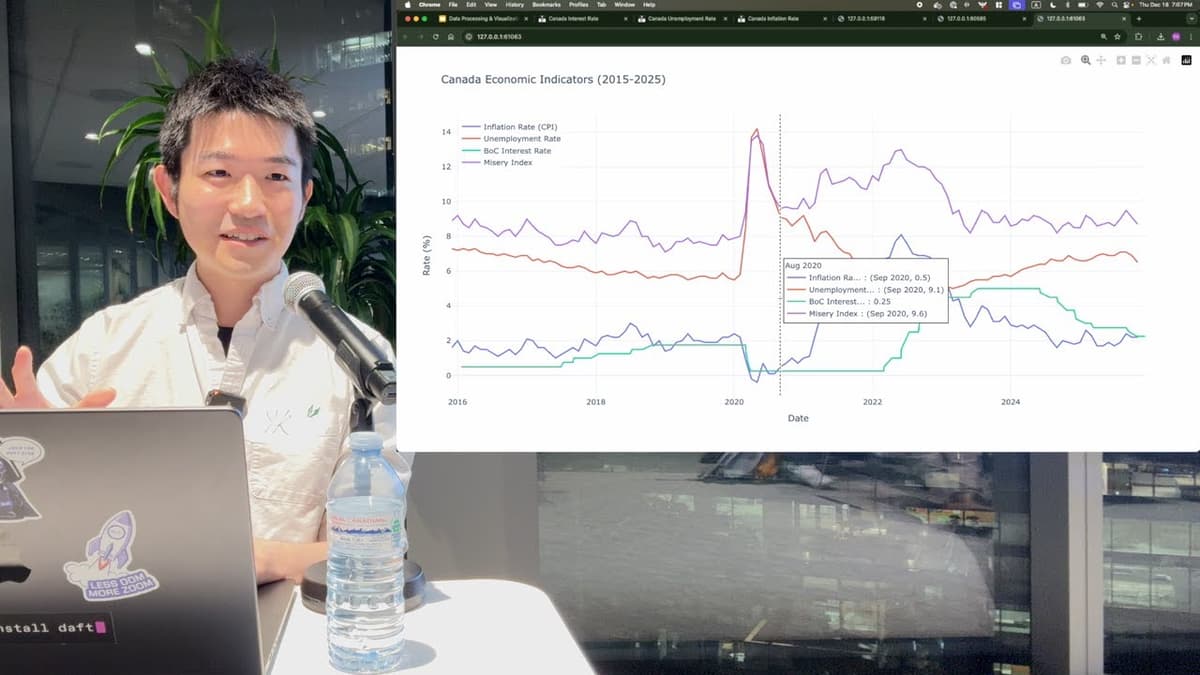
Data Visualization with Claude Code and Python in 10 Minutes
In a brisk ten‑minute demo, the presenter showcases how Claude Code, Anthropic’s multimodal coding assistant, can orchestrate an end‑to‑end data‑analysis workflow for a personal mortgage decision. Starting with a natural‑language query about fixed versus variable rates in Canada, Claude is prompted...