
BioAge Labs Provides Business Updates
BioAge Labs reported full‑year 2025 results, highlighting positive Phase 1 data for its oral NLRP3 inhibitor BGE‑102, which achieved up to 86% reduction in hsCRP and strong suppression of IL‑1β, IL‑6, and fibrinogen. The company announced a Phase 2a cardiovascular risk trial for early 2026 and an ophthalmology proof‑of‑concept study in diabetic macular edema slated for mid‑2026. It also advanced its APJ agonist program toward an IND filing by year‑end 2026. An upsized $132.3 million follow‑on offering extends BioAge’s cash runway through 2029.

How Pharma Supply Chains Can Brace for FDA’s 12-Digit NDC Standard
The FDA issued a final rule on March 5, 2026 establishing a uniform 12‑digit National Drug Code (NDC) that will replace the current variable 10‑digit format, with an effective date of March 7, 2033 and a seven‑year preparation window followed by a three‑year transition...

Alnylam Advances Future of ATTR-CM Care Through Strategic Collaboration with Viz.ai and Support for the American Heart Association
Alnylam Pharmaceuticals announced a strategic partnership with Viz.ai to develop an AI‑enabled care pathway for earlier detection of transthyretin amyloid cardiomyopathy (ATTR‑CM), launching the AWARE study in five health systems. The company also pledged support for the American Heart Association’s...

Amylyx Pharmaceuticals Announces Completion of Enrollment in Pivotal Phase 3 LUCIDITY Clinical Trial of Avexitide in Post-Bariatric Hypoglycemia
Amylyx Pharmaceuticals announced that the pivotal Phase 3 LUCIDITY trial of avexitide has completed enrollment, randomizing and dosing the final participant to bring the total to 78 patients across 21 U.S. sites. The double‑blind, placebo‑controlled study evaluates avexitide, a first‑in‑class GLP‑1...

The Journal at a Glance: Q1 2026 Highlights From Our Editor in Chief
BioTechniques’ Q1 2026 editorial roundup spotlights three impactful studies. An optimized Southern blot protocol from Merck enhances resolution of transgene insertions in high‑copy CHO cell lines, simplifying bioprocess validation. Researchers in Germany refined a DNA microarray to type 96 vancomycin‑resistant...

Mosaic Therapeutics to Present Poster Highlighting Preclinical Data for Lead Program MOS101 at the American Association for Cancer Research (AACR)...
Mosaic Therapeutics will present preclinical data on its lead program MOS101—a combination of the next‑generation MDM2 antagonist ASTX295 and the FDA‑approved PARP inhibitor olaparib—at the AACR 2026 Annual Meeting. The poster focuses on BRCA2‑mutant, TP53‑wild‑type solid tumours and highlights the...

Pharma Pulse: A Rare Disease Drug Approval and the Evolving Scope of Pharmacy Practice
The FDA has broadened approval for Imcivree (setmelanotide), creating the first targeted therapy for acquired hypothalamic obesity and reporting an 18.4% placebo‑adjusted BMI reduction in Phase III trials. Parallel research shows that deploying pharmacy technicians as vaccine injectors dramatically improves uptake...

Latest TechBio News
Evotec SE announced that its Seattle CDMO, Just‑Evotec Biologics, has been selected by BARDA’s BioMaP‑Consortium for a multi‑year, up‑to‑$10 million program to optimize manufacturing of a monoclonal‑antibody cocktail against Ebola and Sudan viruses. The same day, Evotec disclosed that partner Bristol...

Plastic Waste Transformed Into Parkinson’s Drug in Bioengineering First
Researchers at the University of Edinburgh have engineered bacteria to transform PET plastic waste into levodopa, a primary treatment for Parkinson’s disease. By inserting a seven‑gene, four‑step biosynthetic pathway into Escherichia coli, the team converted both industrial PET feedstock and...

Europa Biosite Introduces Rapid RNA Production Technologies
Europa Biosite has formed a strategic distribution partnership with Quantoom Biosciences to bring Quantoom’s Ntensify® mano and micro RNA production technologies to European researchers. The deal also anticipates future distribution of Quantoom’s Ncapsulate® LNP formulation kits. By adding rapid, high‑quality...

FDA Approves Expanded Indication for Imcivree as Treatment for Hypothalamic Obesity
Rhythm Pharmaceuticals' Imcivree (setmelanotide) received FDA approval as the first treatment for acquired hypothalamic obesity, expanding its indication to adults and children aged four and older. The Phase III TRANSCEND trial demonstrated a 15.8% mean BMI reduction at 52 weeks, an...

QPX7728
Xeruborbactam (QPX‑7728) is a broad‑spectrum β‑lactamase inhibitor designed to revive the activity of β‑lactam antibiotics against multidrug‑resistant Gram‑negative bacteria. Developed by Qpex Biopharma and Shionogi, the molecule targets both serine‑ and metallo‑β‑lactamases, addressing a key resistance mechanism. Preclinical data show...

Integrated DNA Technologies Expands Into Clinical Diagnostics with First In Vitro Diagnostic
Integrated DNA Technologies (IDT) announced the launch of two in‑vitro diagnostic kits, Archer FUSION Plex‑HT Dx and VARIANT Plex‑HT Dx, marking its entry into the next‑generation sequencing (NGS) IVD market. Built on IDT’s proprietary anchored multiplex PCR chemistry, the kits offer targeted DNA and RNA...

Oryon Cell Therapies Reports Phase 1b/2a Data Showing Sustained Motor Improvements in People with Parkinson’s Disease
Oryon Cell Therapies presented interim Phase 1b/2a data showing that its autologous dopaminergic neuron‑replacement therapy produced sustained motor improvements in Parkinson’s patients. Five participants experienced 29‑62% reductions in OFF‑state MDS‑UPDRS Part III scores over 6‑18 months, with continued gains beyond six months....

If Gene Therapies Are so Revolutionary, Why Does No One Want to Pay for Them?
Gene therapies promise one‑time cures for diseases like sickle‑cell and inherited blindness, but their price tags—often $1 million to $3 million per patient—clash with the U.S. insurance model. More than half of new cell and gene therapies face coverage restrictions because insurers...

Latent-Y: The Autonomous AI Agent for Drug Design at Scale
Latent Labs unveiled Latent‑Y, an autonomous AI agent that designs therapeutic antibodies from natural‑language prompts. Powered by the Latent‑X2 generative model, the platform compresses weeks of expert work into hours and can run multiple design campaigns in parallel. In three...

Optimus Protein
Researchers at Kyoto University and RIKEN identified the RNA‑binding protein DHX29 as the sensor that detects non‑optimal codons in human mRNA. Genome‑wide CRISPR screens, ribosome profiling, and cryo‑EM revealed that DHX29 binds ribosomes translating suboptimal codons and recruits the GIGYF2·4EHP...

Collagen Gene Expression and Aging in Nematode Worms
Researchers analyzed RNA‑seq data from Caenorhabditis elegans and identified a broad decline in collagen gene expression with age, pinpointing 16 collagens consistently downregulated across multiple studies. Meta‑analysis of 66 datasets revealed that collagen expression is up‑regulated in 84% of long‑lived...

How Do Recent Actions From FDA Provide Insight to the Agency's Enforcement Posture?
The FDA’s Rare Disease Evidence Principles (RDEP) introduce flexible trial designs, allowing sponsors to use natural‑history data and novel biomarkers as endpoints. These guidances aim to accelerate approvals for rare‑disease therapies while maintaining safety as a top priority. However, analysts...

Galderma Receives U.S. FDA Approval for Restylane® Contour™ for the Correction of Temple Hollowing
Galderma announced that the U.S. FDA has cleared Restylane Contour for the correction of temple hollowing in adults over 21, extending its existing cheek and mid‑face indications. Clinical studies demonstrated a 91% responder rate at three months, with efficacy persisting for...

Attend the 2026 Reproductive Frontiers Summit, June 16–18, Berkeley
The 2026 Reproductive Frontiers Summit will be held at Lighthaven in Berkeley from June 16‑18, following a successful 2025 event that attracted over 100 participants. Early‑bird tickets are on sale until the end of March. The agenda features leading experts...
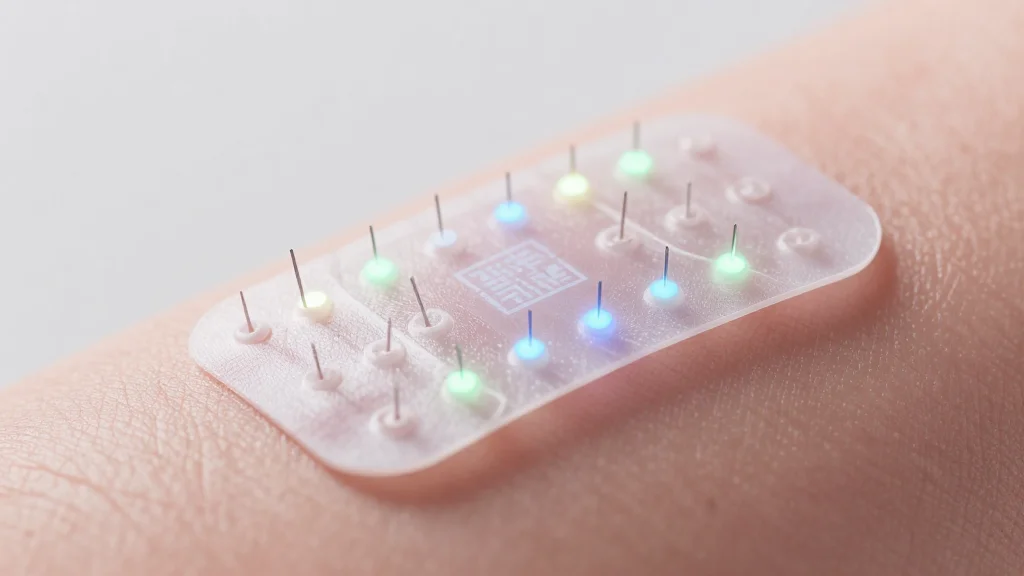
Fluorescent Microneedle Biosensors Turn Skin Biochemistry Into Scannable QR Codes
The article reports a new biodegradable microneedle patch that uses binary fluorescent probes to turn interstitial pH and glucose levels into a scannable QR code. Each of the 25 needles acts as an on/off switch at a predefined concentration, eliminating...

Prothena Partners Present Data Supporting Next Generation Treatments for Parkinson’s and Alzheimer’s Disease at AD/PD™ 2026
Prothena and its partners Roche and Bristol Myers Squibb presented late‑stage data on two neurodegenerative candidates at AD/PD™ 2026. Prasinezumab demonstrated a roughly two‑year delay in Parkinson’s disease progression, sustained motor benefits in the PADOVA open‑label extension, and favorable imaging and...

Dose as the Ultimate MPO Endpoint
Tristan Maurer’s Flash Talk framed dose as the definitive multiparametric optimization (MPO) endpoint for small‑molecule drug design. He argued that dose integrates exposure, pharmacology, and mechanism‑driven effects, making it the linchpin for balancing potency, ADME, and safety. The presentation highlighted...

DNA-Engineered Silver Nanoclusters Enable Precision Killing of Drug-Resistant Bacteria
A team led by Kirill Afonin at UNC Charlotte engineered programmable DNA scaffolds that organize silver nanoclusters into highly potent antimicrobial agents. The spatially arranged DNA‑AgNCs showed up to 78‑fold greater killing efficiency against ESKAPE pathogens and meningitis‑causing bacteria compared...

ImmunityBio Announces Approval in Macau SAR, China for ANKTIVA® in BCG-Unresponsive NMIBC with CIS ± Papillary Tumors
ImmunityBio secured its first Asian regulatory clearance as the Macau Special Administrative Region approved ANKTIVA® for BCG‑unresponsive non‑muscle invasive bladder cancer with carcinoma in situ, with or without papillary tumors. The decision leveraged prior FDA and EMA approvals, illustrating a...

Messenger RNA Quality Control in Aging and Age-Related Disease
Cellular health depends on rigorous quality control of messenger RNA, yet these surveillance pathways weaken with age. Research in C. elegans and yeast shows that impaired nonsense‑mediated decay, nonstop decay, and no‑go decay lead to ribosome stalling, protein aggregation, and...

Imatinib
Imatinib (Gleevec®/Glivec®) is an oral ATP‑competitive inhibitor of the BCR‑ABL fusion tyrosine kinase, approved by the FDA in 2001 for Philadelphia chromosome‑positive chronic myeloid leukemia and other malignancies. The drug emerged from high‑throughput screening, structure‑activity relationship optimization, and structure‑based drug...

Pharma M&A Roundup: Novartis to Acquire Pan-Mutant-Selective PI3Kα Inhibitor From Synnovation Therapeutics, Collegium to Acquire Azstarys From Corium Therapeutics
Novartis announced a deal worth up to $3 billion to acquire SNV4818, a pan‑mutant‑selective PI3Kα inhibitor aimed at hormone‑receptor‑positive, HER2‑negative breast cancer. The transaction includes $2 billion upfront and potential milestones exceeding $1 billion, with closing expected in early 2026. Collegium Pharmaceutical agreed...

Engineered Bioprocess Converts CO2 Into Amino Acids at 97 Percent Efficiency
Georgia Tech researchers have unveiled a cell‑free biocatalytic platform that converts carbon dioxide into the amino acids serine and glycine with a 97% yield, the highest efficiency reported for any synthetic‑biology system. By introducing heat‑tolerant enzymes from Moorella thermoacetica and...

Longevity Lifehacks Articles
The Longevity Lifehacks series compiles a dense timeline of cutting‑edge research from early 2024 through March 2026, spanning neurodegeneration, immune modulation, and metabolic interventions. Highlights include CAR‑T cell engineering for Alzheimer’s plaque clearance, photobiomodulation to boost T‑cell responses, and multiple...

A Proteomic Map of the Hallmarks of Aging
Researchers created a single‑cell, subcellular proteome atlas of replicative aging in yeast, revealing hundreds of previously unknown protein changes tied to the classic hallmarks of aging. Spatial analysis showed that hallmark phenotypes often manifest as compartment‑specific relocalization and aggregation. Over...

First-of-Its-Kind Implant Could Transform Tissue Loss Treatment
Researchers at Technion’s Levenberg Laboratory have created a first‑of‑its‑kind three‑dimensional implant that merges muscle, fat, a hierarchical blood vessel network and, uniquely, a lymphatic system. The construct is printed with a custom extracellular‑matrix bio‑ink and matured in a flow‑controlled bioreactor....

First Surrogate Endpoint in Osteoporosis Clinical Trials with FNIH’s Dr. Tania Kamphaus — Episode 247
On December 2025 the FDA officially qualified dual‑energy X‑ray absorptiometry (DXA) bone density scans as the first surrogate endpoint for fracture outcomes in osteoporosis trials involving post‑menopausal women. The qualification, achieved through a request from the Foundation for the National...

Thermal Stability Assays as Tools to De-Risk Discovery
Thermal stability assays, especially differential scanning fluorimetry, are gaining traction as early‑stage de‑risking tools in drug discovery. By measuring protein melting temperatures, these assays reveal ligand‑induced stabilization, enabling rapid hit validation and prioritization. The article outlines best‑practice workflows, data‑interpretation guidelines,...

Fauna Bio Announces Target Designation Milestone in Obesity Discovery Collaboration
Fauna Bio announced that its Convergence™ AI platform has achieved a target designation milestone in its obesity discovery partnership with Eli Lilly, triggering a contractual payment. The designated target stems from comparative genomics of over 450 mammal species, especially hibernators,...

Neutrophils Exhibit Senescence-Like Behavior in Older Individuals
Researchers discovered that neutrophils from older individuals adopt a senescence‑like phenotype, marked by elevated SASP factors and reduced antimicrobial metabolism. RNA‑seq of lung neutrophils after Streptococcus pneumoniae infection revealed diminished glycolysis and ROS production, impairing bacterial clearance. Aged neutrophils also...

FDA Approves BRAVECTO® QUANTUM (Fluralaner for Extended-Release Injectable Suspension) From Merck Animal Health to Treat and Control Asian Longhorned Tick...
Merck Animal Health announced that the FDA has approved an expanded label for its once‑yearly injectable parasite control, Bravecto Quantum, adding treatment and control of Asian longhorned tick (Haemaphysalis longicornis) and Gulf Coast tick (Amblyomma maculatum) for 12 months. The product...

FDA Investigating: US Patient Dies After Use of Placental Extract Laennec, Russian Med Student Also Died
The U.S. Food and Drug Administration has opened an investigation after a patient died following self‑injection of Laennec, an allogeneic placental extract imported from Japan. A similar fatality occurred in Russia involving health influencer Anna Kolyada, whose companion fell seriously...

Valbenazine
Valbenazine (Ingrezza®), an oral selective VMAT2 inhibitor from Neurocrine Biosciences, received FDA approval for treating tardive dyskinesia and Huntington’s disease‑associated chorea. In the Phase 3 KINECT‑3 trial, a once‑daily 80 mg dose produced a statistically significant reduction in AIMS dyskinesia scores after...

Zalsupindole
Delix Therapeutics announced the results of a Phase 1b study of zalsupindole, a selective 5‑HT2A receptor partial agonist, in patients with major depressive disorder. The trial, published in the January 2026 issue of ACS Chemical Neuroscience, demonstrated favorable safety, tolerability, and early...

Blood Test Detects Brain Tumours with 90% Accuracy
Scientists at the University of Manchester have developed a blood test that detects brain tumours with 90% accuracy by measuring a pair of proteins. The test, validated in glioblastoma patients, is being evaluated in a multi‑site clinical trial across six...

Designing Clinical Trials to Address Asthma and COPD Flare-Ups
Acute asthma and COPD exacerbations remain a costly, life‑threatening gap despite advances in chronic therapies. Connect Biopharma, led by Barry Quart, is the first biotech targeting these flare‑ups with a biologic that blocks IL‑4Rα, aiming to curb upstream inflammation. The...

Huntington’s Disease Gene Therapy: FDA Reversal Delays AMT-130
A Phase I/II trial of AMT‑130, an AAV‑delivered microRNA gene therapy, showed a 75% reduction in Huntington's disease progression over three years in 12 patients. The FDA initially supported using external control data from the Enroll‑HD database for the Biologics...

Evidence for Microglia to Actively Promote Amyloid Aggregation in the Aging Brain
Researchers have discovered that microglia, the brain’s innate immune cells, can actively remodel soluble amyloid‑β (Aβ42) into extracellular fibrils with strong seeding activity, contrary to the prevailing view that they only clear plaques. Cell‑based assays showed that microglia‑generated amyloid closely...

ION717 Trial Re-Opens with 3rd Dosing Regimen
Ionis Pharmaceuticals announced that its Phase 1/2a PrProfile trial of ION717, the first PrP‑lowering antisense oligonucleotide for symptomatic prion disease, has reopened with a third dosing regimen. The study, which enrolled 56 patients in 2024, will now recruit at three...

Interfering in Induction of Bystander Senescence as an Approach to Senotherapy
Researchers have mapped how senescence spreads between human brain cell types via the senescence‑associated secretory phenotype (SASP). Using DNA‑damage‑induced cultures and conditioned‑media assays, they identified cell‑type‑specific SASP signatures that drive secondary senescence in neighboring astrocytes, endothelial cells, microglia, oligodendrocytes and...

NeoGenomics’ PanTracer LBx Receives Medicare Coverage, Expanding Access to Comprehensive Liquid Biopsy Profiling
NeoGenomics announced that its PanTracer™ LBx liquid biopsy test has received Medicare coverage under CMS’s MolDX program. The CLIA‑certified assay profiles more than 500 genes, including MSI and blood‑tumor mutational burden, with a seven‑day turnaround. Coverage allows Medicare beneficiaries to...