
An Honest Reflection on the Integration of LLMs Into Open Data Portals
The Open Knowledge Foundation (OKFN) warns that large language models (LLMs) cannot be trusted for factual, data‑backed answers in open data portals, citing hallucinations and a roughly 50% success rate for AI‑generated SQL queries. It outlines five core challenges—trustworthiness, transparency, unreliable code generation, lack of true intelligence, and overly eager problem‑solving. To address these, OKFN proposes pilot projects that pair robust data‑engineering pipelines with LLMs used only for presentation, ensuring human oversight and controlled data sources. The initiative aims to create a trustworthy, collaborative framework for 2026 and beyond.

StatGPT and the Fourth Wave of Open Data
Decades of investment in statistical systems have yielded abundant official data, yet users still struggle to discover, interpret, and apply it. The IMF’s new StatGPT report argues that the core issue is not data availability but (re)usability, highlighting fragmented portals,...

Claudia Sheinbaum’s Blitzkrieg War on Cash
Mexican President Claudia Sheinbaum announced a nine‑month push to make digital payments mandatory at gas stations and toll booths, aiming to curb the country’s reliance on cash. The plan hinges on the Bank of Mexico’s CoDi platform, which now offers zero‑commission...

LawNext Podcast: Learned Hand’s Shlomo Klapper on Why Courts Are the Next Frontier for Legal AI
In a LawNext podcast, Shlomo Klapper, founder and CEO of Learned Hand, argues that courts represent the next major frontier for legal AI. Drawing on his experience as a litigator and appellate clerk, Klapper describes a new "reasoning engine" that...

Genesee County Jail Restricts Body Cameras After Inmate Privacy Breach
Genesee County Sheriff Christopher Swanson issued a March 23, 2026 memorandum prohibiting body‑worn cameras and other portable recording devices inside the county jail. The rule follows a September 2025 breach where an outside agency’s active camera captured another inmate’s medical...

Does AI Mean We Don’t Need Structured Procurement Data Anymore?
AI can now read and extract data from messy procurement documents, but it remains a tool for creating structured data rather than a substitute for it. In systems that already capture structured information, AI augments by pulling in details from...

A Cure Worse Than the Scroll
The App Store Accountability Act (ASAA) has cleared the House Energy and Commerce Committee and now heads to the full House. It would force Apple’s App Store and Google Play to verify every user’s age and block minors without parental...

Where the Pacing Problem Becomes Visible
The POPVOX Foundation’s "Democracy on Default Settings" report surveyed 650 UK MPs’ offices and uncovered a systemic "pacing problem" where rapid technological change outstrips the capacity of parliamentary staff. Findings include vague strategic direction, minimal onboarding, fragmented technology stacks, unused...

Peer Software and Carahsoft Partner to Bring Data Replication and Synchronization Solutions to the Public Sector
Peer Software and Carahsoft have formed a strategic partnership, naming Carahsoft as Peer’s Master Government Aggregator to sell the Peer Global File Service (PeerGFS) platform to public‑sector customers. PeerGFS delivers real‑time file replication, synchronization and multi‑protocol support across hybrid environments,...

Cirrascale Cloud Services Partners with Google Public Sector to Deliver Specialized Research Offerings and Launches New Government Services Division
Cirrascale Cloud Services has teamed up with Google Public Sector to deliver high‑performance AI infrastructure for research and education through the Google Public Sector Program for Accelerated Research (GPAR). The partnership introduces Cirrascale Government Services, a new division dedicated to...

AT&T’s $2 Billion FirstNet Expansion Signals a New Era for Infrastructure Investing:
AT&T announced a $2 billion expansion of the FirstNet public‑safety network in partnership with the U.S. Department of Commerce. The investment will upgrade 5G coverage, add edge computing and AI‑driven management, and extend service to underserved rural areas. By positioning FirstNet...

A Practical Guide for AI Use by Public Sector Leaders — and Why This Matters Now More Than Ever
Alan Shark’s new book offers a five‑part roadmap for public‑sector leaders to adopt artificial intelligence responsibly. It starts with foundational concepts and five critical questions administrators must ask before deployment. Subsequent sections address governance, auditing, AI fatigue, emerging Chief AI...

Police Highlight Role of Online Intelligence in Terror Work
UK police have spotlighted the growing importance of online intelligence in counter‑terrorism through a new episode of the Inside Counter Terrorism Policing podcast. The episode follows officer “Grace”, who leads the Counter Terrorism Internet Referral Unit that processes public reports...

UK PM Condemns Drone Attack on Kuwaiti Oil Refinery, Discusses Deployment of Rapid Sentry Counter-Drone System with Crown Prince of...
The UK Prime Minister condemned a reckless overnight drone strike on a Kuwaiti oil refinery and reaffirmed Britain’s support for Kuwait and Gulf allies. He and Crown Prince Sheikh Sabah discussed the rapid deployment of the RAF Regiment’s Rapid Sentry...

How Virginia, Texas, and Other States Are Starting to Regulate Data Centers
State lawmakers in Virginia, Pennsylvania, Georgia, Texas and Indiana are moving from ad‑hoc opposition to formal regulation of data centers. Virginia leads with bills on site permitting, water‑use disclosure and a review of its lucrative sales‑tax exemption. Pennsylvania is pushing...

A New Tool to Help Solve State Permitting Problems
RMI has launched the State Permitting Power Tool, an interactive web‑based decision tree that distills roughly 100 permitting reforms into a searchable matrix. The platform guides users through four challenge categories—complexity, delays, political hurdles, and financial burdens—to surface the most...

New Presidential Executive Order Targets Transnational Cybercrime
In March 2026 President Trump signed an Executive Order targeting transnational cybercrime, directing the State, Treasury, War, Homeland Security and Justice departments to produce a coordinated action plan by July. Fraud losses have surged 430% since 2020, with AI‑driven scams...

How Freight Fraud Stole the Show at MATS: Carriers Getting Smart, FMCSA Bringing Heat
The Federal Motor Carrier Safety Administration (FMCSA) used the Mid‑America Trucking Show to unveil a sweeping crackdown on freight‑fraud schemes, targeting “ghost offices” that list hundreds of carriers at a single address. Over half of owner‑operators say they’ve been victimized,...

Compliance or Capability: Washington Forces Police to Choose
Washington’s Driver Privacy Act, which took effect this week, bars law‑enforcement use of automated license‑plate readers (ALPR) near schools, courts, food banks, places of worship, and reproductive or gender‑affirming health facilities. Though marketed as an immigration‑protection measure, the law effectively...

EFF’s Submission to the UN OHCHR on Protection of Human Rights Defenders in the Digital Age
The Electronic Frontier Foundation submitted a detailed report to the UN Office of the High Commissioner for Human Rights warning that emerging online‑harm regulations are increasingly weaponized against human‑rights defenders. It cites the UK’s Online Safety Act as a template...
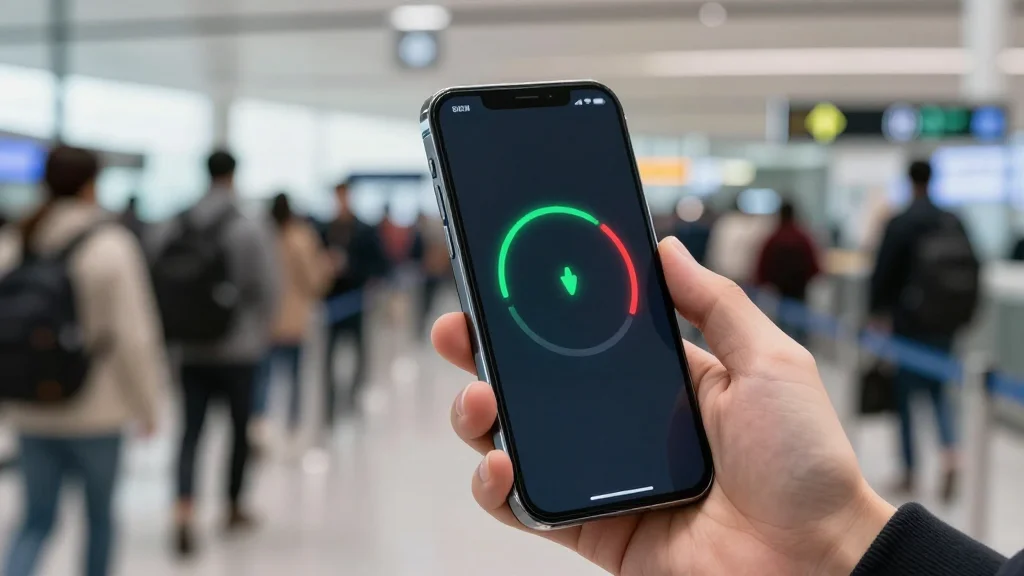
You Can Now View TSA Checkpoint Wait Times Directly in the United Airlines Mobile App At These Seven Airports
United Airlines has added estimated TSA checkpoint wait times to its mobile app for seven major hub airports, covering both standard security lanes and TSA PreCheck. The feature appears on the app’s ‘day of travel’ page, giving passengers a quick...

Nepal's Digital ID, Belgium's Sovereign Messaging Platform, and Tajikistan's AI Water Management
The Kathmandu Post reports that Nepal’s newly launched Nagarik ID app is struggling to replace paper documents, as banks, hospitals and many government offices still demand physical copies. Weak governance and a lack of legal authority for the Department of...

Is Your Government Ready to Buy AI?
Governments are rapidly increasing AI spending, with the United Kingdom allocating about $1.5 billion in 2025—double the previous year. U.S. federal agencies have committed $5.6 billion to AI projects between 2022 and 2024. The Open Contracting Partnership (OCP) launched a “Buying AI”...

Is “Hackback” Official US Cybersecurity Strategy?
The White House’s 2026 Cyber Strategy for America adopts a more aggressive tone, explicitly urging the private sector to identify and disrupt adversary networks. This language is interpreted as an endorsement of “hack‑back” – allowing companies to conduct offensive cyber...

PQShield Clears Path for ML-KEM Inclusion in Japan’s National Cryptographic Standard
PQShield has completed an external evaluation of the NIST‑approved ML‑KEM algorithm for Japan’s CRYPTREC body, clearing the way for its inclusion on the national Ciphers List. This milestone accelerates the adoption of quantum‑safe encryption across Japanese government, infrastructure, and technology...

Building Safety Regulator Reports Batching Scheme Progress
The Building Safety Regulator’s batching pilot, launched in September 2025, is delivering faster assessments, averaging four weeks across new‑build, remediation and refurbishment applications. In the latest 12‑week Gateway 2 update, 284 decisions were made with a 67% approval rate, covering 12,975...

Kenyan Parliamentary Committee Evaluates USF-Supported Connectivity in Garissa County
Kenya’s National Assembly ICT committee conducted on‑site visits in Garissa County to evaluate connectivity projects funded by the Universal Service Fund (USF). MPs met directly with residents to gauge how the initiatives are being rolled out. The USF‑backed deployments are...

Designing a New Digital Regulator
Academics, advocates, and policymakers have long advocated for a new digital regulator (NDR) to oversee AI and technology markets. On February 25, 2026, GWU’s Institute for Data, Democracy and Politics and Vanderbilt Policy Accelerator convened a summit of leading experts to examine...

A Simple Rule for Level 2++ Safety Accountability
The U.S. regulatory gap lets automakers market Level 2+ (or Level 2++) driver‑assistance systems without dedicated safety oversight, despite their robotaxi‑like capabilities. A proposed liability rule would presume any crash caused by non‑malicious driver inattention to be a product defect, shifting the...

How Thomson Reuters Powers ICE and Palantir
Thomson Reuters, a global information provider, has been identified as a key data source for U.S. Immigration and Customs Enforcement (ICE), supplying personal identifiers such as names, addresses, vehicle registrations, Social Security numbers, and ethnicity data through its CLEAR brand....

‘StravaLeaks’: How Le Monde Located 18,000 French Military Personnel with a Fitness App
Le Monde’s investigation, dubbed “StravaLeaks,” identified roughly 18,000 French military personnel who publicly shared workout data on the Strava app. The disclosed routes pinpointed high‑value assets, including the Charles de Gaulle carrier strike group, nuclear‑submarine base Île Longue, and even the movements of...

Could Retrieval-Augmented Generation with Large Language Models Help Make Local Zoning Codes Easier to Navigate?
Researchers at Urban tested retrieval‑augmented generation (RAG) with large language models on Minneapolis' 467‑page zoning code to see if AI can simplify permit queries. The benchmark showed that RAG‑enhanced models returned more accurate, context‑aware answers than baseline LLMs. City officials...

Flaws in Government Tool to ID Noncitizen Voters
Sen. Mike Lee warned that tens of thousands, possibly hundreds of thousands, of noncitizens are illegally registered to vote, citing a federal database used by nearly two dozen states. FactCheck.org found the tool frequently misclassifies lawful voters as noncitizens, producing...

JT/DL: AI-Fueled Lawsuits; Police & Self-Surveillance
Recent justice‑technology news highlights a surge of AI‑related legal mishaps, from an Oregon attorney fined for citing AI‑generated case law to a wave of AI‑driven lawsuits cluttering courts. The FBI’s admission of purchasing Americans’ location data and a 93 GB breach...

Rubrik and Rackspace Technology Launch UK Sovereign Cyber Recovery Cloud
Rackspace Technology and Rubrik have launched the UK Sovereign Cyber Recovery Cloud, a ransomware‑focused recovery service that keeps all data, hardware and management within UK borders. The offering provides an automated, isolated "clean‑room" environment that can restore public‑sector and regulated...

Welsh Government Selects Extending High-Speed Broadband Suppliers
The Welsh Government has appointed three suppliers—Airband, Fibrus and Openreach—for Lot 1 and Airband, Fibrus and Wifinity for Lot 2 of its Extending High‑Speed Broadband (EHSB) scheme. The program, funded with a reclaimed £70 m budget (approximately $90 m), targets roughly 29,000 hard‑to‑reach premises...

Chicago to St. Louis Is the High-Speed Rail Test America Can’t Afford to Fail
Illinois lawmakers are racing to pass House Bill 4442, which would extend the state’s High Speed Rail Commission through 2030 and keep the Chicago‑St. Louis corridor alive. The line, already upgraded to 110 mph on the Lincoln Service, is touted as...

Has GSA Adopted DOD’s CMMC Requirements?
On January 5 2026 the General Services Administration issued an IT Security Procedural Guide that instantly raises cybersecurity requirements for any contractor handling Controlled Unclassified Information. The guide forces compliance with NIST SP 800‑171 Rev 3, selected SP 800‑172 Rev 3 controls, and privacy controls from...

Why AI Sandboxes Matter for Responsible Innovation and Public Trust
AI regulatory sandboxes are emerging worldwide as structured testbeds for emerging technologies. Three primary models—regulatory, operational, and hybrid—offer varying degrees of oversight and infrastructure. These sandboxes intervene at different stages of policy development, often using waivers to permit experimentation before...

Improving Connecticut’s Public Health Through Cross-Sector Data-Sharing
Connecticut’s Prevention Data Portal, launched in 2018, showcases how cross‑sector data sharing can improve public‑health outcomes without massive new infrastructure investments. The portal aggregates local, state, and federal datasets, delivering free epidemiological profiles, data stories, and infographics on mental health,...

Orchestrating and Designing Data Collaboratives: What Governance Model Is Fit for Purpose?
Stefaan Verhulst’s paper surveys the surge of data‑governance models—data trusts, commons, cooperatives, intermediaries, unions, sandboxes and data spaces—and argues they are not competing solutions but purpose‑driven responses to distinct coordination challenges. He proposes a typology of seven governance archetypes, each...

Britain’s March Towards a Spy State
The blog warns that Britain is rapidly evolving into a surveillance‑heavy state as AI‑driven monitoring tools move from niche law‑enforcement use to nationwide deployment. Facial‑recognition cameras, predictive analytics and data‑sharing agreements are being rolled out under the banner of public...

Macra Declares Advances Towards Tower Deployment Through DMAP
The Malawi Communications Regulatory Authority (MACRA) announced that the Digital Malawi Acceleration Project (DMAP) is moving forward with plans to procure service providers for more than 90 new communication towers across the country. DMAP has pledged to deliver 100 towers,...

FDA Launches New AI-Powered System to Track Drug and Vaccine Side Effects
The FDA launched the AI‑powered Adverse Event Monitoring System (AEMS) on March 11, 2026, consolidating VAERS, FAERS and other databases into a single, real‑time platform. AI automates data entry and categorization, replacing quarterly updates with instant reporting. Early testing showed...

Episode 402: Paul Allen: The Promise of AI, Governance and Public Trust
In the latest episode of *Corruption, Crime and Compliance*, entrepreneur Paul Allen—founder of Ancestry.com and Soar.com—introduces CitizenPortal.ai, an AI‑driven civic intelligence platform designed to make government activity more transparent and accountable. Allen argues that artificial intelligence should augment, not replace,...

Artificial Intelligence in Federal Courts: A Random-Sample Survey of Judges
A new study surveyed 502 federal judges, receiving 112 responses, to gauge AI usage in the judiciary. While most respondents have tried AI tools, 38% admit they never use them, and daily or weekly use remains rare. Judges favor integrated...

The White House AI Framework: Growth Engine, Guardrails, and Contradictions
The White House released a National AI Framework that balances rapid innovation with targeted safeguards, avoiding a new centralized regulator. It emphasizes sector‑specific oversight, child protection, and treats AI as essential economic infrastructure, including data‑center expansion and small‑business grants. The...

The Economics of Openness: Funding Earth Observation as a Public Good
Earth observation (EO) data are now widely accessible through open archives, cloud platforms and shared tools, yet true public use remains limited. The article argues that openness is more than data availability; it requires institutional capacity, sustained funding, and clear...

WHO Moves to Launch Global Vaccine Passport System with Firm Linked to Pfizer, Bill Gates
The World Health Organization announced a partnership with Singapore’s state‑owned investment firm Temasek to develop interoperable digital health wallets, beginning with vaccine and prophylaxis certificates in the 11 ASEAN member states. The effort builds on recent International Health Regulations amendments...

ICAO’s Bans Recharging Power Banks Inflight & Limits Them Two Per Passenger
The International Civil Aviation Organization (ICAO) updated Doc 9284 to ban in‑flight recharging of power banks and cap each passenger at two devices. The amendment, endorsed by the ICAO Council’s 36 states, takes effect on 27 March 2026 and applies to all 193...