Flickstop
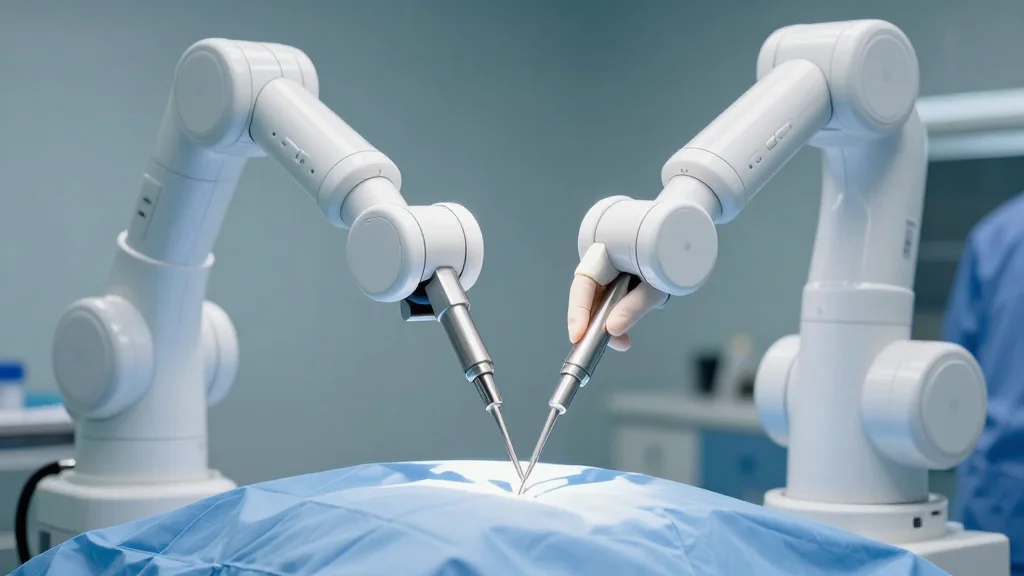
On February 15, 2026, a blog post announced the first deployment of the Toumai robotic surgery system at Orsi Academy. The post features an image of a surgeon in blue scrubs operating the robot from a console, underscoring the hands‑on training environment. Toumai’s introduction marks a milestone for the academy’s surgical curriculum, integrating advanced robotics into its teaching labs. The announcement signals broader acceptance of AI‑driven surgical platforms in medical education.
The $800B Open Secret: What the New Medicaid Spending Dataset Means for Health Tech Builders and Investors
The episode breaks down the release of the largest publicly available Medicaid claims dataset, detailing its composition, gaps, and immediate utility for health‑tech builders and investors. It quantifies the scale of Medicaid spending (~$849 B) and improper payments (over $30 B annually),...
OpenClaw in the Clinic: A Business Plan for HIPAA-Compliant Deployment of Agentic AI at Scale in Payer and Provider Organizations
The episode dissects OpenClaw, an open‑source, agentic AI platform that can autonomously interact with files, commands, and dozens of applications, and evaluates its viability for payer and provider health organizations. It explains why the default, unsecured version violates HIPAA, outlines...
The ACA’s 2027 Overhaul: What the NBPP Proposed Rule Actually Means for Health Tech Entrepreneurs
The episode breaks down the CMS‑9883‑P proposed rule for the 2027 ACA payment notice, highlighting transformative provisions such as State Exchange Enhanced Direct Enrollment (SBE‑EDE), the certification of non‑network Qualified Health Plans, the repeal of standardized plan options, a lower...

Iterative Mindset versus AI and GLP-1s: Why Shortcuts Weaken the Brain
The article warns that reliance on AI tools and GLP‑1 weight‑loss drugs creates shortcut mentalities that weaken the brain’s motivation circuits. Behavior‑change expert Kyra Bobinet argues that these “easy buttons” prevent the iterative learning process that builds lasting competence. She...

The “R” In CRO: How and Why CROs Should Harness Open-Source R Software
Open‑source R is reshaping statistical programming in clinical trials, offering CROs a cost‑effective, flexible alternative to traditional licensed tools. Its extensive package ecosystem, combined with RMarkdown and Shiny, enables rapid automation, interactive reporting, and reproducible workflows. While sponsors are increasingly...

Particle Accelerators: From Magnets to Medical Breakthroughs Brought to You by Rare Earths
Particle accelerators have become essential tools in science, industry, and medicine, and rare earth elements are the hidden enablers that make modern machines smaller, more efficient, and precise. High‑field permanent magnets built from neodymium, praseodymium and heavy REEs such as...

Strategic Insight: Carbon Health’s Boom, Bust, and Bankruptcy
Carbon Health surged during the pandemic, scaling from a few clinics to over 125 locations across 13 states by leveraging COVID‑19 testing sites and telehealth, and raising more than $600 million in venture capital, including a $350 million Series D at a $3.3 billion...

Beyond the AI Hype in Health Care Services
The episode cuts through the hype surrounding AI in health care, focusing on real‑world evidence from three recent studies of large language models (LLMs). It highlights that LLMs can improve structured tasks like medication safety when used as a co‑pilot...

Will Oracle Offload Cerner to Fund Datacenters?
A TD Cowen note suggests Oracle could sell its health‑tech unit, formerly Cerner, to finance massive AI datacenter spend. The company faces over $500 billion in capital commitments, including a $300 billion OpenAI contract that alone may require $156 billion in capex. To free...

More than an IT Review: How a Network Assessment Is Essential in Healthcare Settings
Pixel Health outlines essential network assessment steps for healthcare providers, emphasizing equipment mapping, security evaluation, documentation, and service‑provider review. Periodic assessments reduce risk, optimize scalability, and prevent costly deferred maintenance. They also improve incident response by testing backup resilience. As...