
7 Strategies to Smartly Set and Achieve Career Goals in Today’s Workplace
In today’s dynamic workplace, deliberate career planning is essential. A new guide outlines seven actionable strategies—from defining a personal vision to celebrating milestones—to help professionals set realistic, attainable goals. It emphasizes the SMART framework, breaking objectives into bite‑size tasks, and leveraging accountability partners. By integrating continuous learning and regular reflection, the approach aims to boost motivation, skill development, and promotion prospects.

DOL Poised to Move Faster than Congress on Retirement Reform
The U.S. Department of Labor is poised to issue regulations expanding 401(k) access to alternative investments, meeting a February 3 deadline set by a Trump‑era executive order. A final rule could be adopted by year‑end with implementation slated for 2027,...
Payroll Errors Keep Repeating: How HR Can Catch Issues Earlier
Payroll errors keep surfacing after payday because manual spot checks can’t keep up with frequent rule changes. The article proposes automated workforce management testing, which runs real‑world pay scenarios against current overtime, differential and accrual rules before payroll closes. By...
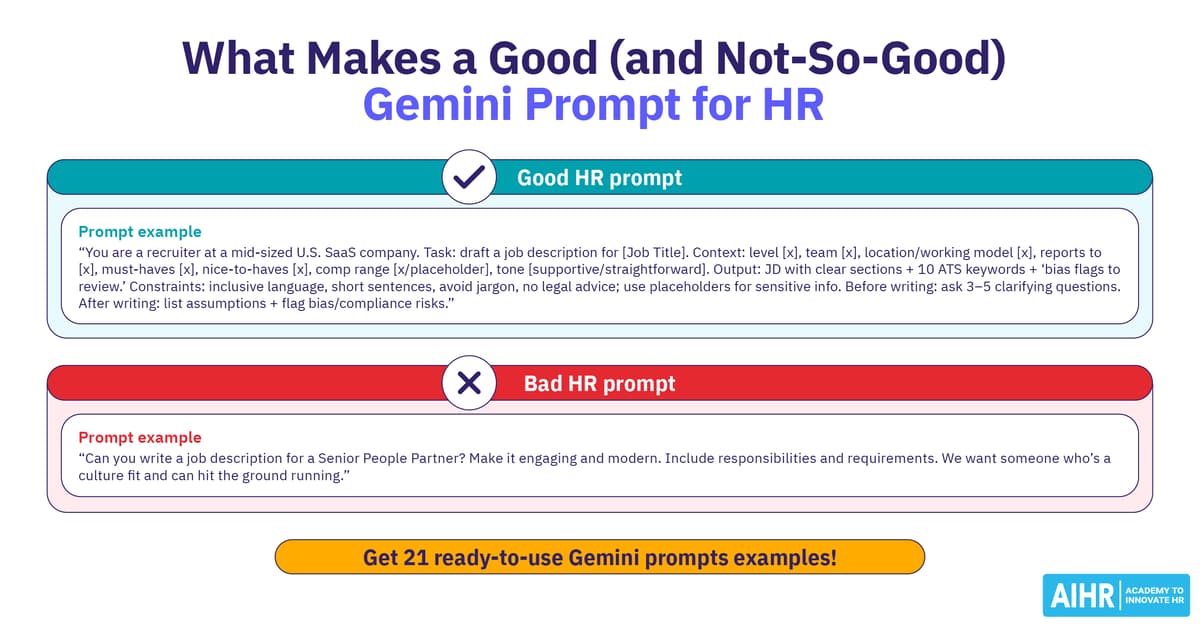
21 Gemini Prompts HR Can Copy and Paste (with Step-by-Step Prompts)
The article introduces 21 ready‑to‑use Gemini prompts designed to streamline repetitive HR tasks such as job postings, interview guides, onboarding docs, and policy updates. It outlines a seven‑step prompt framework—persona, task, context, format, constraints, clarifying questions, and quality check—to produce...

Included Health's New Plan Design Improves Employees' Access to Quality Care
Included Health unveiled an alternative health‑plan design that blends guided care, AI tools, and a copay‑first pricing model to give employees faster, more affordable access to primary care. The plan replaces traditional PPO/HMO choices with a hybrid that offers broader...

Bowl Games & Beyond: 6 Ways To Beat Distractions That Kill Productivity
The article highlights how pop‑culture events and everyday interruptions erode employee focus, citing a 45% spike in sick‑day requests after the Super Bowl and that 80% of workers can’t work an uninterrupted hour. It presents six practical tactics—identifying top distractions,...

Workplace Romance: 3 Keys to Handling Love in the Office
Workplace romances remain common, with Monster’s 2026 report showing 27% of employees have dated a coworker and 6% have been involved with a manager. California law prohibits employers from banning consensual off‑duty relationships, forcing HR to focus on risk mitigation...
New California Paid Sick Leave Settlement – Notices and Accruals Trigger $6.2M Hit
California’s Labor Commissioner secured a $6.2 million settlement with Alco Harvesting LLC to resolve paid‑sick‑leave and wage‑and‑hour violations affecting more than 10,000 farmworkers, including H‑2A laborers. The agreement allocates $4.2 million in back wages directly to workers and $1.5 million for sick‑leave and...

What HR Needs to Know About Pen Testing
Penetration testing is no longer an IT‑only exercise; HR departments must partner with security teams to expose human‑centric vulnerabilities. Ethical hackers simulate phishing, pretexting, and physical breaches, delivering reports that show how many employees were duped and which policies failed....
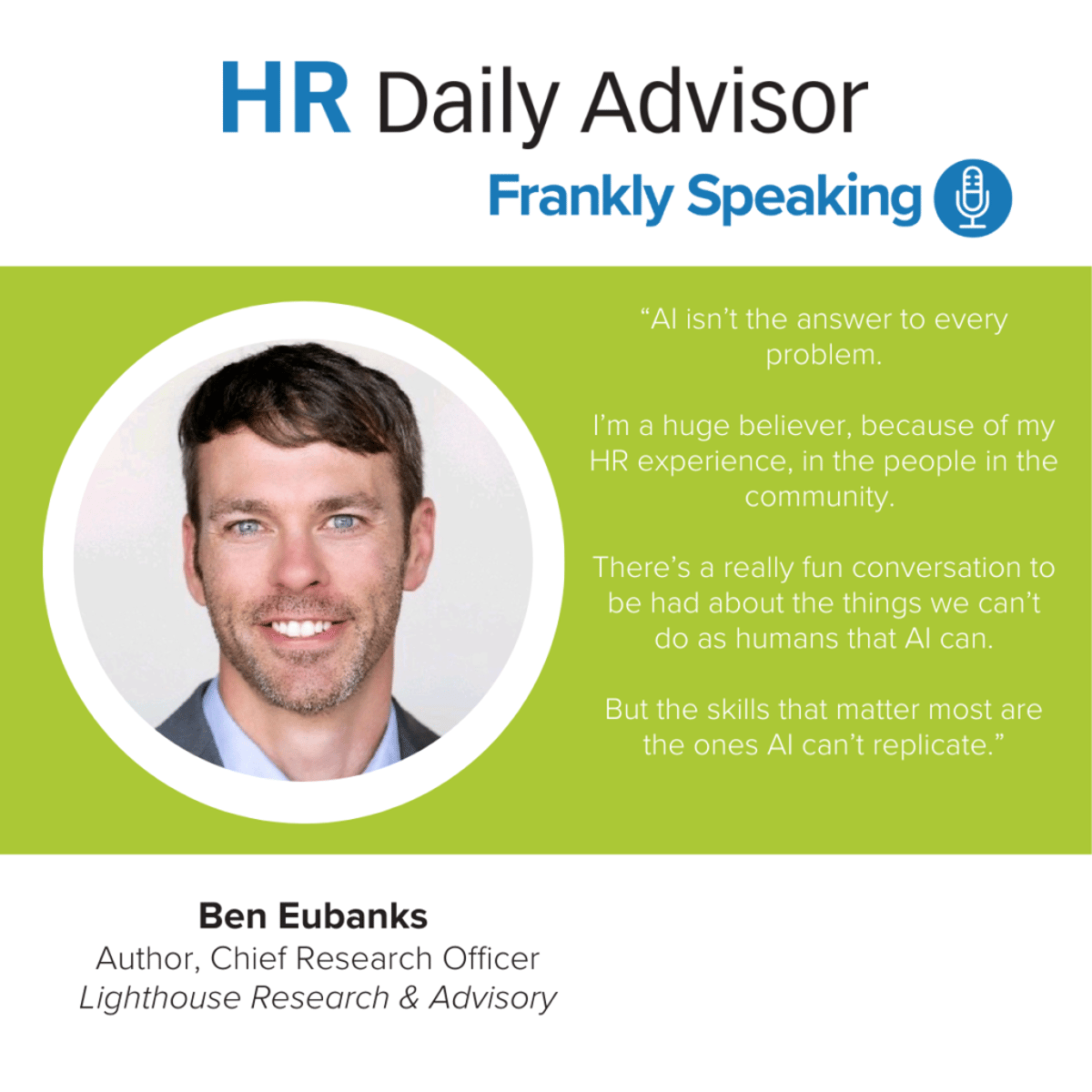
HRDA Frankly Speaking: ‘AI Isn’t the Answer to Every Problem’
Ben Eubanks, Chief Research Officer at Lighthouse Research & Advisory, told HR Daily Advisor that while AI is reshaping HR, it is not a universal solution. He emphasized distinguishing tasks where AI adds value—such as automating repetitive processes—from those that...

Employees in Singapore Still Believe in Workplace Happiness, but Burnout and Stalled Growth Persist
Jobstreet by SEEK’s Workplace Happiness Index surveyed 1,000 Singapore workers, finding that while eight‑in‑ten believe happiness at work is possible, only 56% actually feel happy, placing the city‑state near the bottom of the Asia‑Pacific rankings. Burnout is pervasive, with 45%...

Office Buzz: UK Employers Turn to Beehives to Boost Workplace Wellbeing
UK firms from Manchester to London are installing rooftop beehives as a wellbeing perk, partnering with specialist beekeepers to offer employees hands‑on nature experiences. Companies claim the hives reduce stress, foster teamwork and provide a tangible sustainability story beyond typical...

7 Steps for Selecting a Training Icebreaker
Training icebreakers are meant to ease participants into sessions, yet many designers misuse them, compromising learning goals. The article outlines seven critical questions to evaluate an icebreaker, covering time allocation, manageability, agenda fit, trust building, fun balance, participant comfort, and...

Fourth Circuit Allows Implementation of DEI Executive Orders to Proceed
The Fourth Circuit vacated a district court injunction, allowing President Trump’s Executive Orders 14151 and 14173 on DEI to remain in effect for federal contractors and grant recipients. The court held that plaintiffs lacked standing to challenge the Enforcement Threat Provision, but recognized...

California High Court Limits Use of Formatting and “Fine Print” Arguments to Defeat Arbitration
The California Supreme Court ruled that the visual presentation of an arbitration agreement—such as tiny, dense font—does not by itself render the clause substantively unconscionable. While procedural defects may raise a court's scrutiny, substantive unfairness must still be shown. The...
Policy Week in Review – February 6, 2026
The Department of Labor raised the minimum wage for federal contractors to $13.65 per hour, with tipped workers covered at $9.55, effective 90 days after publication. The DHS and DOL issued a temporary rule adding up to 64,716 supplemental H‑2B...

DOL Notice Indicates Federal Contractor Minimum Wage Does Not Apply to Contracts Entered Into or Renewed After January 29, 2022
The U.S. Department of Labor issued a notice raising the federal contractor minimum wage to $13.65 per hour (and $9.55 cash wage for tipped workers), effective 90 days after its Feb. 9, 2026 publication. Crucially, the notice states that Executive Order 13658...

Untangling the Varying Requirements of State and Local Fair Workweek Laws
Predictable‑scheduling (fair workweek) laws now cover major U.S. cities and states, mandating 14‑day advance posting, employee consent for changes, and premium pay for late‑notice shifts. Employers must provide good‑faith schedule estimates, offer open hours to current staff before hiring, and...

What to Expect From the SAG-AFTRA 2026 Contract Negotiations: AI, Residuals, Health and Pension Plans, and When to Expect a...
SAG‑AFTRA will reopen contract talks with the AMPTP on February 9, 2026, a month ahead of the current agreement’s June 30 expiration. The negotiations, now led by new union president Sean Astin and AMPTP chief Greg Hessinger, will focus on three hot‑button...

India’s New Labor Codes: What Global Leaders Managing Indian Teams Need to Know - Session 2
India has rolled out four unified labor codes that replace decades of fragmented employment legislation, fundamentally changing hiring, compensation, and workforce management. The codes aim to simplify compliance, boost ease of doing business, and align with international standards. A webinar...

Pay Is the Pressure Point as Clinical Labs Compete for Scarce Talent
Clinical laboratories are confronting a severe talent shortage, with salary now the single most influential factor for prospective hires, according to LinkedIn data. While pay remains critical, labs are increasingly forced to market flexibility, work‑life balance, and career‑growth pathways to...

EEOC Rescinds Harassment Guidance
On Jan. 22, 2026, the EEOC voted 2‑to‑1 to rescind the 2024 harassment guidance that expanded protections for LGBTQ+ employees, especially transgender individuals. The rescission was submitted to the Office of Management and Budget without public notice, following a Texas...

Ohio’s E-Verify Law for Nonresidential Construction Contractors Takes Effect Soon
Effective March 19, 2026, Ohio’s Workforce Integrity Act mandates that all non‑residential construction contractors, subcontractors and labor brokers verify employee eligibility through E‑Verify. The law defines non‑residential projects broadly, covering buildings, highways, bridges and utilities, while exempting residential and agricultural...

Prevailing Wage Compliance Workshop: NJ Edition - Short Hills
On April 2, 2026, Littler will host a full‑day Prevailing Wage Compliance Workshop for New Jersey public‑works contractors at the Hilton Short Hills. Led by leading practitioner Russell McEwan, the program covers registration, apprentice rules, certified payroll, audit procedures and subcontractor liability under recent...

Dear Littler: Are There Any Concerns About Letting Our Employees Post Videos About Our Products?
A retailer’s marketing manager asks if an employee‑influencer can post a product video on social media. The FTC mandates a clear disclosure of any material connection between the employee and the company, and violations can result in fines. The company...

Puerto Rico Supreme Court Enforces Private Employment Arbitration Clauses Under Act 100 Discrimination Claims
The Puerto Rico Supreme Court ruled that mandatory arbitration clauses in private employment contracts are enforceable for discrimination claims under Act 100, provided the agreement impacts interstate commerce and thus falls under the Federal Arbitration Act. The decision expressly limits its...

Milan–Cortina 2026: The Employment Law Behind the Winter Olympic and Paralympic Games
Italy will host the Milan‑Cortina 2026 Winter Olympic and Paralympic Games starting February 6, 2026, spotlighting the nation’s capacity for large‑scale event delivery. The Games emphasize gender balance, projecting the highest female athlete participation in Winter Olympic history and increased...

Your Organization’s Unwritten Rules and How to Fix Them
Organizations run invisible markets that decide who gets resources, visibility, and advancement. Professor Judd Kessler proposes redesigning these hidden rules using the Three Es—Efficiency, Equity, and Ease—to create transparent, merit‑based systems. Real‑world pilots such as Wharton’s Course Match, the National Resident...

California Workplace Know Your Rights Notice Requirement Is in Effect
California’s Workplace‑Know‑Your‑Rights Act (SB 294) takes effect on February 1, 2026, obligating every employer to deliver a standalone written notice to all current staff and new hires, then repeat it annually. The notice must outline workers’ compensation, immigration‑related protections, union rights, and Fourth...

Royal Mail-Owned Courier Faces Tribunal over Drivers’ Rights
Dozens of eCourier drivers delivering NHS samples are challenging their self‑employment status in an employment tribunal. The 46 workers argue that the company exerts significant control over job allocation, availability, and performance, which should qualify them as workers entitled to...

Employer Compliance Update: Qualified Overtime and Tip Reporting After the One, Big, Beautiful Bill Act
On July 4, 2025, the One, Big, Beautiful Bill Act (OBBBA) became law, imposing new employer tax reporting requirements for qualified overtime and tipped earnings. Employers must now report qualified overtime compensation and qualified tips separately on employees’ Form W‑2,...

Policy Week in Review – January 30, 2026
The NLRB Division of Advice issued memos recommending dismissal of three charges that stretched Biden‑era precedents, covering a union recognition claim, a Slack criticism case, and an overbroad non‑solicitation clause. The Department of Labor’s EBSA proposed a rule forcing PBM...

Travel Time or Working Time? What the Latest CJEU Decision Means for Employers in Germany
Recent CJEU ruling (Case C‑110/24) classifies travel that is tightly organised by the employer as working time for health‑and‑safety purposes. German courts have traditionally focused on the burden of travel, but the EU decision shifts emphasis to employer control, potentially...

New Jersey Dramatically Expands Job-Protected Family Leave and Benefits
Effective July 17, 2026, New Jersey will lower the New Jersey Family Leave Act (NJFLA) employer threshold from 30 to 15 employees and cut employee eligibility to three months of service and 250 hours worked. The amendment also requires up to 12...
NLRB Region 12 Reinforces Imminent Closure Standard in SolarMovil PR LLC Decision
The NLRB Region 12 regional director dismissed a union representation petition against SolarMovil PR LLC because the solar‑farm project was “imminently and definitely” ending. The decision hinged on concrete evidence such as a fixed‑date contract, 82 % project completion, and lack of future work...

Puerto Rico Governor Declares a State of Emergency Due to Influenza Epidemic, Activating Five-Day Paid Leave
Puerto Rico Governor Jenniffer González issued Executive Order 2026‑005 on Jan 27, 2026, declaring a state of emergency in response to an influenza epidemic. The order activates Act No. 37, which adds a special five‑day paid leave for non‑exempt employees who have exhausted vacation and...

What Happens to AI Hiring When the Uniform Guidelines Disappear?
The Uniform Guidelines on Employee Selection Procedures, a 50‑year standard for validating hiring tools, face possible rescission, creating uncertainty for AI‑driven recruitment. In January 2026, Eightfold AI was hit with a class‑action lawsuit alleging it compiles consumer‑report‑like dossiers without notice,...
California Employment News: Employee Benefits 101
In a recent episode of California Employment News, Weintraub Tobin partners Chris Horsley and Ryan Abernethy unpack employer obligations surrounding 401(k) retirement plans, the state‑mandated CalSavers program, and health benefit requirements. They explain fiduciary duties, contribution timelines, and the criteria...

New York Governor Proposes “No Tax on Tips” Legislation
New York Governor Kathy Hochul has proposed eliminating state income tax on up to $25,000 of tipped income for 2026, and Senate Bill S587‑A would codify the deduction. The measure mirrors the federal One Big Beautiful Bill Act’s qualified‑tip deduction but does not include...

Merz’s Party Vows to Clamp Down on Germany’s ‘Lifestyle Part-Time Work’
Germany’s Christian Democratic Union business wing is proposing to abolish the statutory right to part‑time work, replacing it with a permission‑based system. The current law guarantees every employee the ability to reduce hours, a provision heavily used by women for...

The Next Expansion Won’t Fix Hiring
Economic forecasts for 2026 show stronger growth, lower rates and rising AI investment, yet recruiters face a persistent talent shortage. Demand‑driven expansion is creating more job requisitions, but labor supply remains constrained by limited immigration, an aging workforce, and sector‑specific...

Why the Eightfold Lawsuit Matters and Doesn't
The episode breaks down the recent class‑action lawsuit against Eightfold AI, which alleges the firm collected job candidates' data without proper notice, consent, or correction rights, potentially violating the Fair Credit Reporting Act (FCRA) and California Consumer Privacy Act (CCPA)....
Act 55 Takes Effect: An “Express Lane” For UC Claimants Affected by Domestic Violence
Pennsylvania’s new Act 55, effective 2025, adds an “express lane” for unemployment compensation claimants impacted by domestic violence. The law shields claimants who quit or miss work due to safety concerns from disqualification, allowing expedited eligibility determinations. Verification may rely...

Gem Vs. Juicebox: AI Recruiting Platforms Compared (2026)
Gem positions itself as an AI‑first, all‑in‑one recruiting platform that merges ATS, CRM, sourcing, scheduling, and analytics, promising 30‑50% cost reductions through consolidation. Juicebox, by contrast, is a point‑solution focused on AI‑driven list building and outreach that layers onto existing...
California Employment News: SB 513 and Personnel File Requirements
California's SB 513, which took effect on January 1 2026, clarifies the mandatory contents of employee personnel files. The statute enumerates specific documents—such as hiring applications, performance evaluations, and disciplinary records—that must be retained. Employers are required to keep these files for...