
Jus Mundi's Head of Americas: Growing &Lsquo;Demand for Regional Relevance' In Legal Tech
Annie Lespérance, head of the Americas at Jus Mundi and recent Monica Bay Women of Legal Tech award winner, highlighted a surge in cross‑border legal‑tech adoption across Latin America. She emphasized that clients increasingly demand platforms that operate in multiple languages and respect distinct jurisdictional rules. Jus Mundi is expanding its data coverage and analytics to meet these regional requirements. The interview signals a broader shift toward localized solutions in the global legal‑tech market.
HaystackID VP: &Lsquo;Fragmentation and Confidence Gaps' Biggest Innovation Barriers
HaystackID vice president Laura Danielson identified fragmentation and confidence gaps as the primary obstacles to legal‑tech innovation. She explained that disparate tools and unclear data reliability discourage adoption among corporate legal departments. Danielson emphasized that modern legal users demand seamless...

Strategic Risk & Resilience Management
Enterprises can no longer rely on a stable operating environment; geopolitical shifts, regulatory expansion, rapid technology change, cyber threats, and climate events now create simultaneous, systemic disruptions. Michael Rasmussen argues that many firms still treat strategic decisions as if risk...
Webinar Replay: Modernising Case Management Systems – What Every Law Firm Needs to Know in 2026
Legal tech experts discussed modernising case management systems (CMS) as firms face performance bottlenecks, hybrid‑work demands, and AI ambitions. 2026 is seen as a turning point, with firms weighing optimisation, SaaS migration, or workflow redesign. Lima’s assessment combines technical diagnostics...
Legal Tech Latest: Husch Blackwell Rolls Out Legora; Big Name Hires for Harvey; Spellbook Partners with CBA; DeepIP Raises $25m
U.S. law firm Husch Blackwell has rolled out the Legora generative‑AI platform firm‑wide, adding AI‑driven document review, research and workflow automation. Legal‑tech startup Harvey bolstered its advisory team with three senior innovation partners from Ashurst, Marsh McLennan and Fasken to...

Risk Assessments: Why They Matter More Than Ever For Law Firms
Law firms face a perfect storm of compliance obstacles—policy gaps, tick‑box culture, and fragmented legacy technology—that make risk assessments cumbersome. The SRA’s systematic requirements clash with offline templates, leaving firms without clear digital processes. Modern tools such as biometrics, open‑banking...

Law Punx – Wordsmith’s Ross Says: Stay in Your Lane!
Ross McNairn, CEO of Wordsmith, argues that legal‑tech firms cannot simultaneously serve law firms and in‑house legal departments because of an inherent conflict of interest. He announces Wordsmith will focus exclusively on the in‑house market, positioning the company against competitors...

American Arbitration Association Launches Resolution Simulator, Expanding Its AI Arbitrator Tool
American Arbitration Association introduced the Resolution Simulator, an AI‑powered tool that generates simulated, non‑binding arbitration decisions for document‑only commercial and construction disputes. Building on its 2024 AI Arbitrator pilot, the platform analyzes uploaded pleadings, contracts, and evidence using large‑language models...

Vibe Coding and the Control Plane
Dennis Kennedy warns lawyers against adopting "vibe coding," a practice that relies on large language models to generate code without a robust control plane. He explains that AI systems can suffer from control drift, silently violating constraints such as data‑privacy...
Collaborating Through the Chaos: A Chat With Legalweek Speaker Elan Hersh
Elan Hersh, Akerman’s e‑discovery services chair, spoke at Legalweek about the hidden costs of miscommunication in complex litigation. He emphasized that fragmented communication between counsel, clients, and technology teams fuels delays, escalates expenses, and jeopardizes data security. Hersh advocated for...

Hate To Say I Told You So Again: Your Chats Ain’t Private
An SDNY federal judge in the Hepper case ruled that chats with publicly available generative AI tools are not covered by attorney‑client or work‑product privilege. The decision emphasizes that the lack of confidentiality in open‑access platforms makes such communications discoverable....
Quinn Emanuel's Lead Innovation Counsel: Different Generations Need Different AI Trainings
Quinn Emanuel’s lead innovation counsel, Jennifer Reeves, highlighted that AI training must be tailored to the distinct learning styles of different lawyer generations. She emphasized prioritizing user psychology over mere feature sets to drive adoption. Reeves, a Monica Bay Women...
Canadian Bar Association and AI-Powered Legal Tech Company Spellbook Form Partnership
The Canadian Bar Association (CBA) has entered a partnership with Spellbook, a Toronto‑based AI‑driven contract‑drafting platform. This marks Spellbook's first collaboration with a national bar association, giving it a formal endorsement within Canada’s legal community. The agreement will provide CBA...
DeepIP Closes on $25M Series B Funding Round
DeepIP announced the close of a $25 million Series B financing round. The capital will accelerate development of its generative AI assistant designed for patent work. Existing investors participated alongside new venture partners. The funding underscores growing investor confidence in...
Sidley Austin's Director of Client Intelligence: &Lsquo;Innovation Succeeds When Cultural Readiness Meets Operational Clarity'
Sidley Austin’s Director of Client Intelligence, Rachel Shields Williams, argues that innovation thrives when a firm’s culture is prepared for change and its operational processes are clearly defined. She highlights data fragmentation and resistance to cultural shift as major barriers...

Harvey Does 2nd Acquihire, This Time With Lume
Harvey announced its second acquihire, bringing Lume co‑founders Robert Ross and Nebyou Zewde into its product and engineering teams. Lume, a Y Combinator‑backed AI integration startup founded in 2023, will cease operations as only the two founders transition to Harvey. The...

Maximize Your Impact at Legal Tech Conferences Today
Legalweek and a packed calendar of eDiscovery and legal‑tech events underscore the enduring value of in‑person gatherings. The article argues that merely attending is insufficient; professionals must attend with clear intent aligned to their current challenges. Role‑specific guidance—from managers to...

JT/DL: Court Innovation Is Middleware
The article argues that court case management systems (CMS) are the bottleneck preventing courts from leveraging their massive data streams, citing an Oklahoma pilot where a simple middleware layer cut jail time for low‑level defendants. It explains that most CMS...
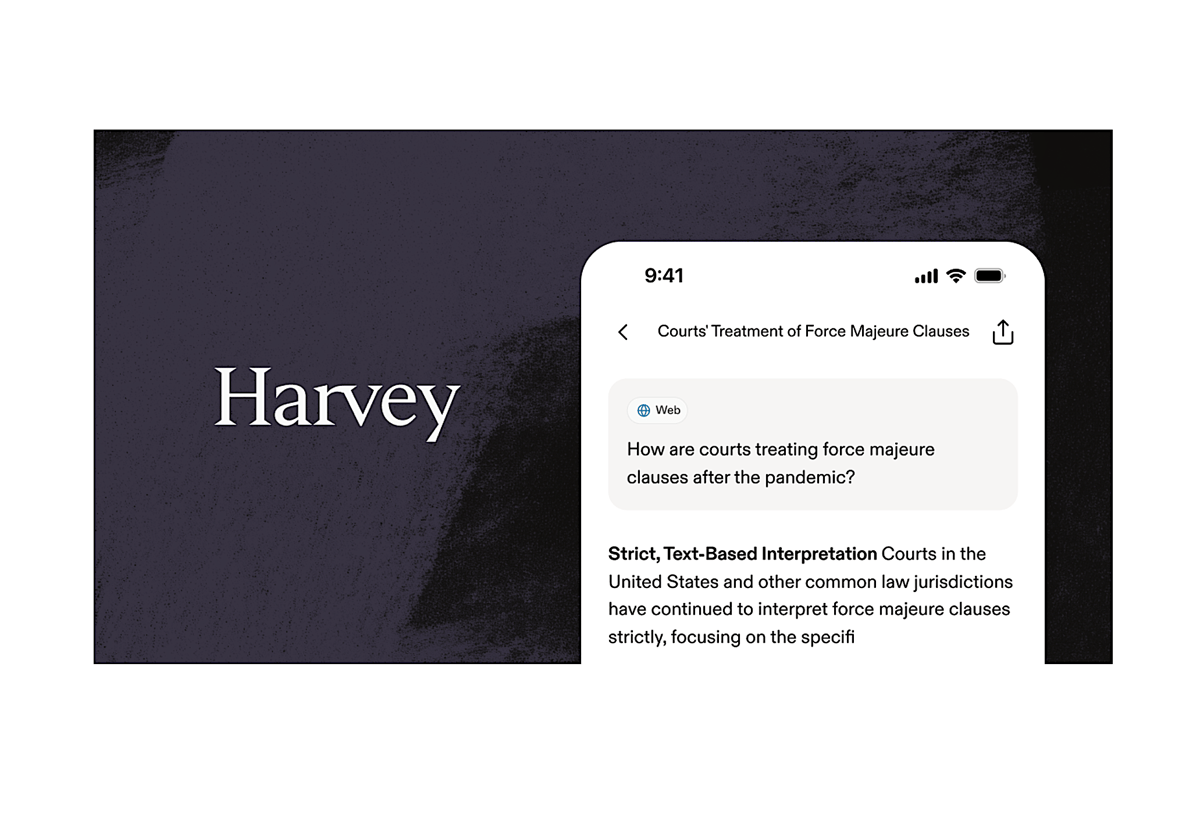
The Mobile-AI Gap: The Problem in Legal Tech No One Is Talking About
Law firms and in‑house teams are now using generative AI daily, yet most AI interactions still occur on laptops. A Harvey‑commissioned study of 200 lawyers shows 86% rely on smartphones or tablets away from the desk, while 75% access AI...

Cybersecurity Implications of the 2026 Middle East Escalation: When Cloud Infrastructure Becomes a Target
On March 1, 2026, an unidentified projectile struck an AWS data center in the UAE, igniting a fire that knocked out more than 60 services across the Middle East and forced customers to shift workloads to Europe. The physical attack coincided...
Call Recording Disclosure: A Guide for Law Firms
The article provides a step‑by‑step guide for law firms on call recording disclosure, outlining the legal landscape across U.S. states and the need for clear consent protocols. It highlights that over 40 states require two‑party or all‑party consent, making compliance...
From Access to Understanding: Making Legal Information Usable in the Age of AI
Lexum, a pioneer in online legal publishing, argues that the era of merely posting statutes and judgments online is over. The firm now focuses on turning raw legal texts into structured, searchable, and AI‑enhanced resources that let users quickly gauge...

Who’s Working for Whom?
The article argues that generative AI tools often hand users a polished draft that masks deeper errors, forcing professionals to spend more time correcting than they would have created the content themselves. This inversion turns the user into an administrative...
Two New Features Make LexBlog Content More Findable, Shareable and Citable
LexBlog launched two features aimed at making its legal commentary more discoverable and citable. The first adds automatic anchor links to every subheading and an optional table of contents, enabling deep‑linking to specific sections. The second upgrades JSON‑LD structured data,...
Ropes & Gray's Director of Practice Tech: Firms Struggle With Operationalizing &Lsquo;Good Ideas at Scale'
Theresa Spartichino, director of practice technology at Ropes & Gray, highlighted that many law firms struggle to turn promising legal tech concepts into operational reality at scale. She emphasized the need for robust orchestration platforms that can coordinate end‑to‑end workflows,...
Bailey & Glasser Partner: Biggest Innovation Barrier Is &Lsquo;Speed at Which the Legal Industry Changes'
Katherine Charonko, a partner at Bailey & Glasser and recipient of the Monica Bay Women of Legal Tech Award, says the greatest obstacle to legal innovation is the rapid pace of industry change. She argues that technology solutions often lag...
Streamline AI CEO: Barriers to Legal Innovation Are Cultural, Operational
Streamline AI CEO Kathy Zhu argues that cultural resistance and operational silos are the primary obstacles to legal innovation. She highlights how entrenched mindsets and fragmented processes impede AI adoption in corporate legal departments. Zhu also predicts a shift toward...

Anastasia Boyko on Advisor Mode, Training Lawyers for the Post-Pyramid Firm
Anastasia Boyko, a Yale‑trained tax lawyer and legal futurist, argues that law firms are stuck in precedent‑driven habits while AI reshapes market rules. She urges firms to abandon copy‑cat strategies and adopt intentional, outcome‑focused planning. Boyko warns that in‑house legal...
Untitled
Manish Srivastava proposes a minimal digital kernel that provides the essential shared capabilities for an unbundled state to function as a rule‑of‑law machine. The kernel focuses on legibility, reproducibility, and enforceability, allowing other applications, intermediaries, and fulfillment channels to remain...

Chamelio + UpLevel Ops Offer ‘Forward Deployed’ Model
Chamelio, an AI‑native legal intelligence platform, has teamed up with UpLevel Ops to launch a forward‑deployed service that embeds consulting experts directly within corporate legal departments. The partnership combines Chamelio’s contract‑lifecycle intelligence layer with UpLevel Ops’ workflow redesign, stakeholder alignment,...

August’s New Live Assist Lets Lawyers Be Active Listeners – and Active Fact Checkers
August unveiled Live Assist, an AI‑driven tool that operates in real time during depositions, client calls, and witness preparations. The platform listens to spoken dialogue, cross‑references statements against the case record, and surfaces contradictions or missing citations instantly. Lawyers can...

The Dead Law Theory: The Perils of Simulated Interpretation
Zachary Catanzaro argues that judges consulting ChatGPT for statutory meaning face a fundamental flaw, not merely a reliability issue. Large language models predict token sequences without true semantic comprehension, making computational legal interpretation a category error. He links this flaw to...
Vibe Coding Lawyers and the New Economics of Legal Tech
The legal‑tech sector is witnessing a surge of senior lawyers building bespoke internal software, a phenomenon dubbed “vibe coding.” This internal‑build wave is compressing the addressable market for external SaaS providers and driving a sharp re‑pricing of legal‑tech valuations from...

Lawyer Uses Claude Skills, Legal World Loses It
Lawyer Zack Shapiro showcased how he leverages Anthropic’s Claude “Skills” to automate contract review and formatting tasks at his boutique firm. By creating custom instruction files that embed his decade‑long analytical framework, Claude can edit Word documents at the XML...

The Pricing Pulse: Generative AI-Assisted Review Insights From the Winter 2026 eDiscovery Pricing Survey
The Winter 2026 eDiscovery Pricing Survey of 53 professionals reveals a fragmented market for generative AI‑assisted review pricing. Hybrid and per‑document models each account for 28.3% of responses, while per‑GB, per‑token, subscription and outcome‑based models remain niche. When per‑document rates...

The 2 ½ Minute Opening Statement: Why Aren’t You Using GenAI?
Trial lawyers can leverage generative AI to condense opening statements, improving juror engagement. A recent example shows ChatGPT rewriting the 15‑minute, 2,300‑word opening from the Derek Chauvin trial into a 360‑word, 2½‑minute version, which was then rehearsed using a realistic...
How Will Mass Gen AI Adoption Change Law Firms? A Chat With Legalweek Speaker Colleen Nihill
Morgan Lewis’s chief AI and knowledge officer, Colleen Nihill, explained how widespread generative AI adoption will overhaul law‑firm operations. She warned that routine document drafting, research, and due‑diligence tasks will shift from billable hours to AI‑driven efficiencies. Firms that merely...
ILTA Just-in-Time: Up-Skilling Lawyers in a Transforming Profession
The ILTA Just‑in‑Time initiative addresses the rapid digital transformation reshaping the legal profession. New lawyers now graduate into environments dominated by AI‑assisted drafting, cloud‑based research, and remote collaboration tools. ILTA’s on‑demand training modules aim to up‑skill attorneys quickly, bridging gaps...

US Litigation Firm Reports Sharp Rise in Settlement Outcomes Following EvenUp AI Agent Deployment
Houston-based personal injury firm John K. Zaid & Associates deployed EvenUp’s Proactive Personal Injury AI Platform. The AI rollout generated a 30% month‑over‑month increase in demand drafting and a 300% jump in settlement offers on low‑value claims. Automated medical chronology...

Building the Stochastic Sandpit for AI
The article proposes a "stochastic sandpit" as a thinking workspace where generative AI is used for exploration rather than as a vending‑machine answer engine. It contrasts two usage modes: insurance mode, which enforces tight guardrails for compliance and predictability, and...

Ironclad Hits $200m ARR Mark – We Interview CEO Dan Springer
Ironclad, the San Francisco‑based contract lifecycle management (CLM) platform, announced that its annual recurring revenue (ARR) has topped $200 million, up from $150 million a year earlier and reflecting nearly 40% year‑on‑year growth. The company, valued at $3.2 billion after its 2022 funding...

Four Categories of Documents Requested by Plaintiffs Denied by Court: EDiscovery Case Law
In Yotta Techs. Inc. v. Evolve Bank & Trust, a California magistrate denied all four of Yotta’s motions to compel production of documents. The court rejected Yotta’s request for unredacted personally identifying information, finding the effort disproportionate and untimely. It...

Data Readiness – Why, and How, Your Data Will Make or Break AI Success in 2026
Legal technology leaders are hosting a March 18 webinar to dissect "data readiness" as the decisive factor for AI success in the legal sector by 2026. They argue that fragmented repositories, inconsistent metadata, and weak governance are the primary obstacles...
AI for Legal Professionals: Insights From Our “Artificial Intelligence for the Rest of Us” Author Panel
The recent author panel titled “Artificial Intelligence for the Rest of Us” explored how AI tools are reshaping legal practice. Panelists highlighted practical use cases such as contract review automation, predictive litigation analytics, and e‑discovery optimization. They also addressed data...
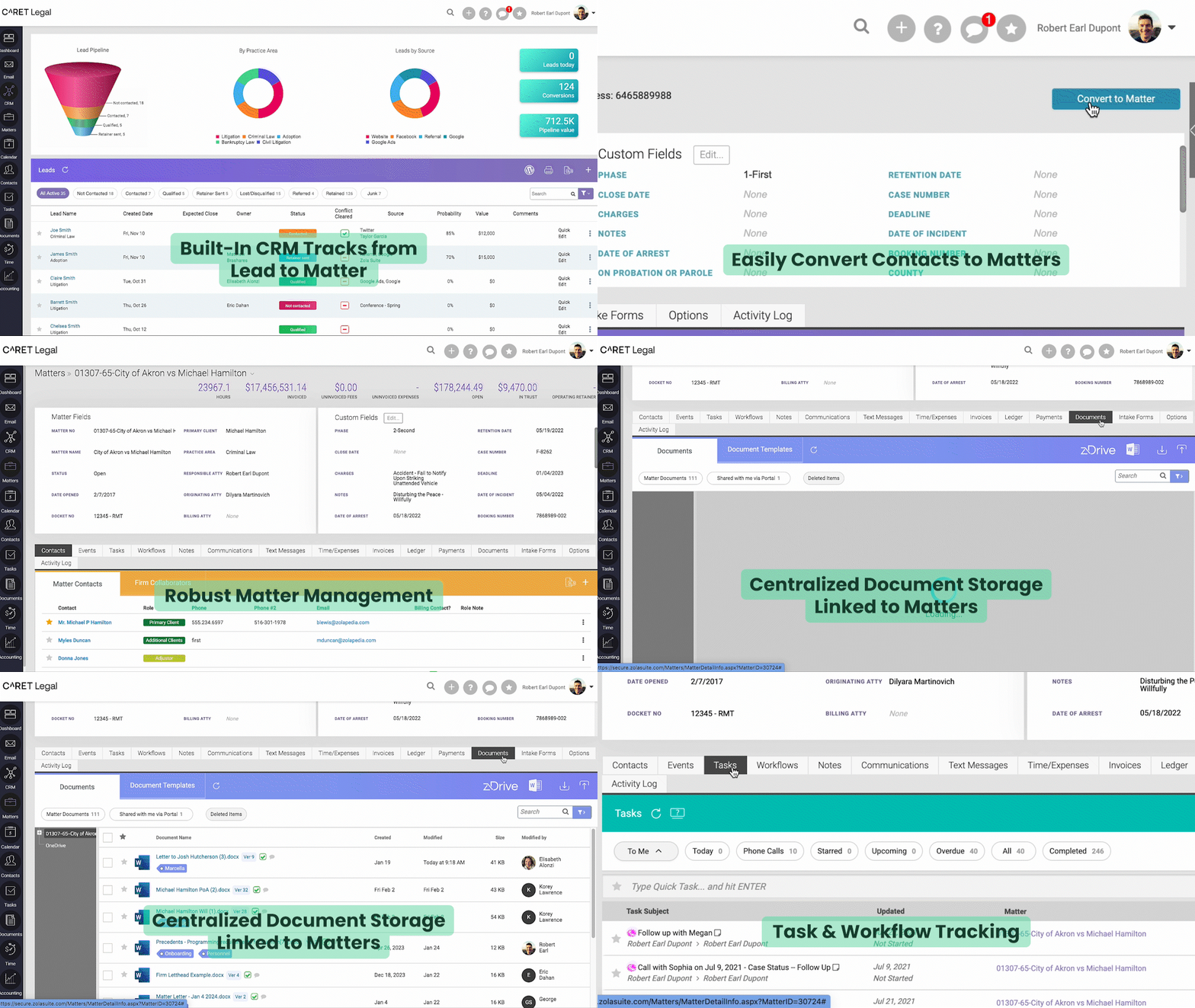
Why Scalable Case Management Software Is Essential for Growing Law Firms
Law firms that experience rapid growth quickly outgrow spreadsheets, email chains, and ad‑hoc filing systems. Scalable case management software provides a centralized platform that aligns tasks, documents, and deadlines across expanding teams. By standardizing workflows, the technology streamlines onboarding, delegation,...
Professional Probation Recommended for Attorney Whose Briefs Had AI-Generated Fake Quotes
A state bar has recommended professional probation for an attorney who inserted AI‑generated fabricated quotations into multiple court briefs. The misconduct was uncovered after a routine review revealed that the cited sources did not exist. The disciplinary recommendation follows the...

Can We Use AI for ICFR and SOX?
AI can be leveraged to automate and enhance internal controls over financial reporting (ICFR) and SOX compliance, especially through agentic AI that creates documentation, scans evidence, and tests controls. However, compliance officers must ensure that AI testing validates control design,...

ProcessUnity Research Finds Third-Party Risk Management Confidence Outpaces Breach Reality
ProcessUnity’s State of Third‑Party Risk Assessments 2026, conducted with the Ponemon Institute, surveyed 1,465 risk leaders and found a stark disconnect between confidence in TPRM programs and actual breach outcomes. Respondents report an average of 12 third‑party breaches per year...

Reimagining KYC
Capgemini released a whitepaper outlining perpetual KYC, a shift from periodic, manual reviews to near‑real‑time, event‑driven monitoring. Early adopters report 20‑40% fewer false positives, 40‑60% faster onboarding, and 50‑70% reduction in case backlogs. The proposed pKYC triad blends data modernization,...

Universal Migrator Releases Scripts to Migrate Tussman, CollectMax and LeadDocket to Clio, MyCase, Litify and Lawmatics
Universal Migrator announced a suite of new data‑migration scripts that move law‑firm data from Tussman, CollectMax and LeadDocket into leading platforms such as Clio, MyCase, Litify and Lawmatics. The addition expands the company’s script library to over 138 integrated applications...