
Boosting Productivity In Family Firms For Long-Term Benefit
Family businesses are leveraging clearer role definitions, stronger governance, and targeted technology to sharpen productivity amid rising costs and labour shortages. By formalising job descriptions and decision rights, firms reduce duplication and accelerate execution. Investment in employee development and adoption of cloud‑based, AI‑enhanced tools further trims administrative overhead. The combined focus on culture, transparent communication, and work‑life balance positions family firms for sustainable, long‑term growth.

Let Other People Witness Your Actions…
The essay “Let other people witness your actions” argues that when an act is truly right, it should be done openly despite potential criticism, echoing Marcus Aurelius’s stoic view that virtue supersedes public opinion. It separates moral certainty from fear of...

5 Minimalist Habits To Achieve Financial Freedom
Financial coach Amy Slenker‑Smith outlines five minimalist habits that helped her family eliminate $45,000 of debt, pay off their mortgage, and achieve financial freedom. The habits—stopping discretionary shopping, brewing coffee at home, meal planning, rigorous budgeting, and borrowing or repurposing...

Longform Links: Inverting Our Lives
The Longform Links roundup aggregates recent deep‑dive pieces spanning books, corporate case studies, Bitcoin developments, and long‑form journalism. Highlights include insights from "How to Disagree Better" and "Hard Feelings," analyses of Disney’s park strategy, Airbnb’s category creation, and Chipotle’s growth...

The Hidden Link Between Attachment and Consistency
The post argues that consistency stems more from emotional attachment than raw discipline. When a habit aligns with personal identity, values, or future aspirations, the brain treats it as low‑friction, reducing the need for constant willpower. By reframing consistency questions...

Late … Again? What Being Habitually Late Says About a Lawyer
Lawyers who habitually arrive late risk more than a strained schedule; clients notice and often excuse the behavior only because the attorney delivers results. The article argues that chronic lateness signals disorganization, a lack of respect for the client’s time,...

How I Work Through Performance Anxiety
Claire, a veteran speaker who has presented at NASA, Harvard Business School and the United Nations, admits she still feels intense nerves before each engagement. She reframes anxiety as untapped energy and applies two techniques: redirecting attention from worst‑case scenarios...

Stop Blaming Yourself — Your Productivity System Is the Problem
The blog reviews "Finally Focused," a new 178‑page guide released April 8, 2026 that tailors productivity systems to adult ADHD brains. Unlike generic planners, the book explains the neuroscience behind ADHD and delivers ready‑to‑use checklists, templates, and daily‑weekly planning tools that address...

Your Excuses Are Smarter Than You Think — 9 April
George argues that excuses are not mere laziness but persuasive rationalizations that masquerade as responsible decisions. By framing delays as logical choices, the mind avoids effort without triggering self‑criticism, allowing small postponements to accumulate unnoticed. Recognizing the pattern early transforms...

Why Meetings Are Often Less Productive Than They Could Be
Many corporate meetings waste time because participants arrive without having thought through the issues. Even with clear agendas, on‑the‑fly thinking leads to shallow discussion and weak decisions. Research shows that pre‑meeting preparation—such as briefs, data reviews, or surveys—moves heavy cognitive...

You Need 5 Routines
Neuroscience confirms that the brain thrives on predictable patterns, making routines essential for mental stability. The post argues that chaotic days often stem from a lack of anchor routines that regulate the nervous system, dopamine levels, and cortisol. Instead of...

Redefining Physician Leadership and Adversity After a Life-Changing Illness
Dr. Bertina Marie Hooks, an internal‑medicine physician, recounts how a right below‑knee amputation forced her to confront a shattered professional identity. The physical recovery revealed that true leadership extends beyond competence, demanding self‑reconstruction amid ongoing clinical responsibilities. She argues that...

How To Get Your Team To Care
Leaders who obsess over incentives often miss the root cause of disengagement: a lack of genuine care. The article argues that trust operates like a bank account—every act of integrity, recognition, or personal support makes a deposit, while opacity, credit‑stealing,...

Best of Both Worlds Podcast: Where Does the Time Go, with Prof. Christine Tulley
Professor Christine Tulley of Findley University explores how female tenure‑track academics with children allocate their time. Her recent time‑diary project shows that protecting dedicated writing blocks—and having backup slots for unexpected family demands—distinguishes successful scholars. The podcast episode breaks down...
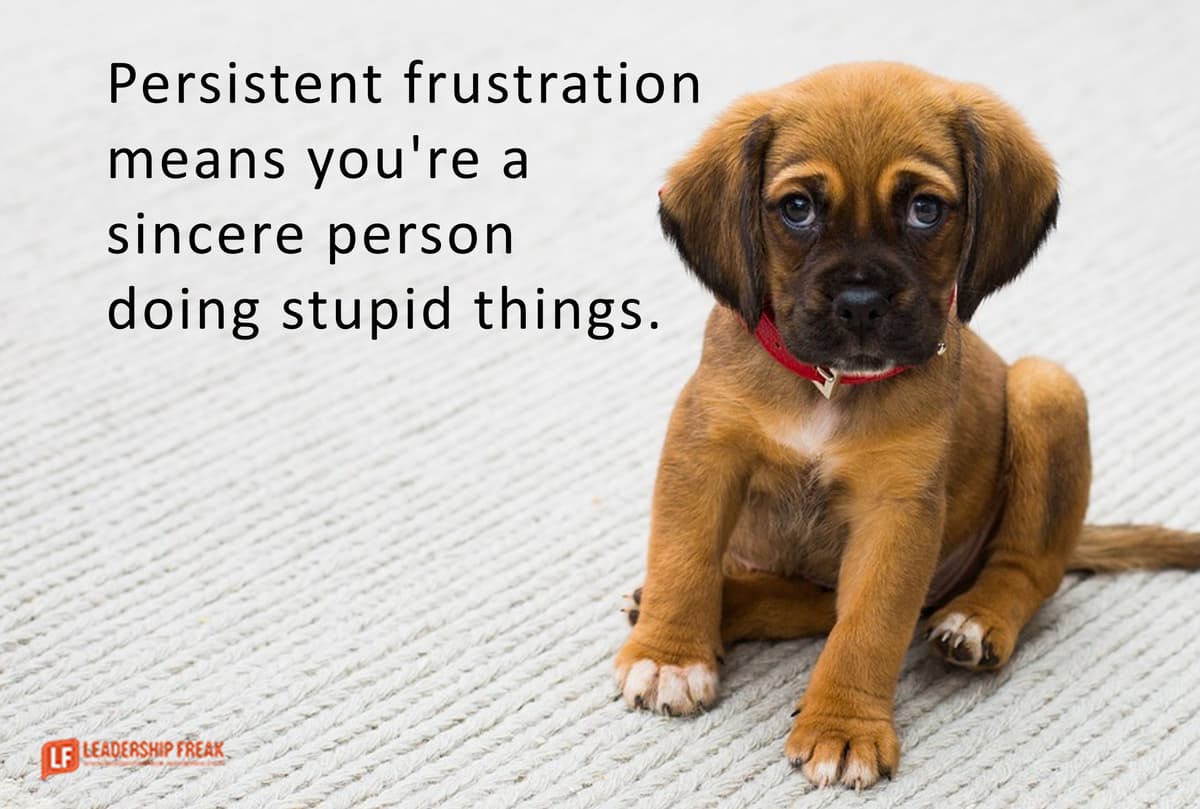
Comfort Makes You Stupid
Leadership Freak outlines four practical habits to counteract complacency and boost mental growth. It urges readers to step out of comfort zones, ask probing questions, reflect through journaling or coaching, and avoid the arrogance trap by staying open to diverse...

Charlie Munger: The Inversion Process Is The Quickest Way To Find Out What You Need To Succeed
Charlie Munger champions inversion—asking how you can fail before seeking success. By mapping consistent failure patterns, he creates a simple checklist of what to avoid, turning complex decisions into clear, actionable filters. The approach emphasizes avoiding stupidity over pursuing brilliance,...

Warren Buffett Warns: Stop Buying These 5 Things Immediately
Warren Buffett warns that five common habits erode wealth: carrying high‑interest debt, chasing hype‑driven stocks, investing in products you don’t understand, maintaining over‑diversified low‑conviction portfolios, and pursuing status‑driven purchases. He urges eliminating any debt above roughly 10% interest, buying only...

Mario Harik: Playing to Win
Mario Harik, who rose from employee #3 to CEO of XPO Logistics, now oversees roughly 40,000 staff using a disciplined engineering mindset. He relies on just ten daily metrics, real‑time data, and a “second‑derivative” decision framework to steer the $1 billion‑valued...

Leadership Lessons #3: What Racing Teaches About Coordination
The article uses the 2.5‑second Formula 1 pit stop as a metaphor for high‑velocity teamwork. It argues that clear, practiced roles, relentless rehearsal of routine tasks, and rapid recovery from errors are the keys to cutting coordination costs. Minimal, purpose‑driven communication...

The Hidden Cost of Comfort
The article argues that modern conveniences—especially disposable diapers—disrupt children’s interoceptive feedback, delaying potty training from an average of 18 months in the 1950s to about 37 months today. Research cited shows diapers mute the wet‑ness signal, preventing the brain‑bladder learning...

The Multifamily Operations Daily Huddle: Why Consistency Outweighs Intensity
Mike Brewer argues that in multifamily property management, consistent daily habits outweigh occasional bursts of intensity. He uses the example of a groundskeeper who arrives at the same time every day, regardless of weather, to illustrate how reliability shapes property...

The Discipline of Hope
In "The Discipline of Hope," Jenna Nicholas argues that hope is a deliberate practice rather than a fleeting feeling, essential for leaders navigating economic uncertainty and rapid change. She outlines how micro‑steps, imagination, gratitude, and intentional reframing can embed hope...

The Entrepreneur's Paradox: Why the Best Entrepreneurs Always Look Like They're Losing
The post argues that entrepreneurship is rarely a straight‑line ascent; most founders encounter prolonged “dips” that feel like failure. It blames early schooling for the expectation that effort always yields immediate results, then shows how the reality of building online...

The “Rawdogging” Trend: A New Term for an Ancient Practice
The term “rawdogging,” revived on TikTok, describes deliberately avoiding digital distractions while on a flight or similar confined setting. Videos show users simply looking out windows, people‑watching, or day‑dreaming, turning an old practice of quiet introspection into a social media...

Eight Thinking Habits of Geniuses, Champions, and Legacy-Leavers
The article outlines eight thinking habits that consistently appear among geniuses, champions, and legacy‑builders. It argues that mental models and perception shape behavior more than external factors. By identifying these habits, readers can adopt proven cognitive strategies to boost performance...

No Notifications, Meetings, or Mercy: How to Engineer Deep Work
The article argues that deep work is not a personal trait but an outcome of a deliberately engineered environment. It explains how constant notifications, meetings, and digital noise increase cognitive load, leading to stress and low‑value output. By removing these...

What My Body Taught Me: 13 Surgeries, One Coma, Countless Powerful Lessons
Jewel Jones, founder of Alkaline Academy, recounts living with spina bifida and VACTERL syndrome, undergoing thirteen surgeries and a coma before reclaiming mobility through disciplined physical therapy and holistic practices. Her ten‑year‑old self defied doctors’ prognosis, learning to walk again...
Why You Feel Lost Without Something to Push Against
The article explains how external challenges—problems, crises, or personal friction—provide a clear sense of direction and purpose. When those pressures dissolve, progress appears outwardly, but internally many experience a loss of clarity and motivation. The piece argues that without something...

Joy as a Strategy
The article advocates making joy a core strategy in classrooms, emphasizing that happiness is not a luxury but essential for learning. It outlines how growth‑mindset thinking, gamification, movement breaks, collaborative pairing, and specific praise can boost engagement, reduce anxiety, and...

I Haven’t Changed in 20 Years. That's Kinda the Point.
Peter Shankman reflects on discovering a 2018 profile that shows his routine unchanged after 20 years. He argues that a disciplined 3:45 a.m. wake‑up and workout system functions as an operating system for his ADHD brain, not merely comfort. While the...

You Don’t Need a Better Routine, You Need a Quieter One
The post argues that piling on new habits and tighter schedules rarely yields true rest; instead, a quieter routine is needed. It describes how even a perfectly organized day can leave the mind feeling busy and unfinished. By shifting focus...

Your Nervous System Is Not Seeking Peace
The article argues that the nervous system resists full relaxation even when life slows, pulling us back toward activity and tension. It explains that chronic stress establishes a physiological baseline where quiet feels uncomfortable. The author suggests that true peace...

The Psychological Friction of Living a Life That No Longer Matches Your Identity
The post describes a subtle psychological friction that emerges when a person’s self‑identity evolves faster than their external life circumstances. Outwardly, everything appears functional—work, routines, relationships—but an undercurrent of misalignment creates a feeling that interactions and decisions are slightly off....

The Cost of Delay: The Dangerous Lie Behind Procrastination
Procrastination is often framed as a harmless delay, but it systematically erodes productivity and future performance. The article argues that postponing tasks creates a hidden cost, as the anticipated “sharper future self” rarely materializes. By linking procrastination to stress, missed...

Day Fifty-Nine: Unity and Relationship
Day Fifty-Nine: Unity and Relationship continues Dr. Roger McFillin’s daily spiritual series, urging readers to move beyond classroom‑style learning toward lived connection. The post emphasizes that true unity arises when relationships are cultivated through practice, not just theory. It links...
Being Capable but Not Consistent Enough
The post argues that most people have the talent to succeed, but they falter because they lack daily consistency. It explains that occasional bursts of motivation feel good, yet only repeated, automatic actions produce lasting results. By removing decision friction...

Nothing Feels Finished Because Nothing Truly Ends Anymore
The post observes that modern workers rarely feel truly done with their day, as digital devices keep tasks and notifications alive long after work ends. It highlights how the constant flow of emails, messages, and alerts blurs the line between...

Navigating the Metacrisis: Finding Calm in the Storm Through Awareness and Meditation
The Great Simplification podcast episode explores how cultivating inner awareness through meditation can help individuals and societies navigate the "metacrisis" of overlapping global and personal challenges. Host Sam Harris argues that most suffering stems from unconscious identification with thought, which,...

I Studied 100 Millionaires. They All Did These 10 Things.
The post distills habits shared by 100 studied millionaires into ten actionable principles, emphasizing education, mentorship, and disciplined financial management. It stresses saving with the intent to invest, building multiple income streams, and protecting health as foundations for wealth. Generosity,...

Lead Human: Talentfoot's Camille Fetter on Finding Your Soul Fuel
Talentfoot founder Camille Fetter reframes career success around a single concept—finding your “soul fuel,” a purpose‑driven internal driver rather than external validation. She argues that early‑career professionals should prioritize rapid learning over brand prestige, and that the manager you work...
Leaders Who Confuse Being Liked With Being Respected
Leaders often mistake being liked for being respected, conflating friendly rapport with authority. While likeability offers quick, visible feedback, respect is earned through consistent competence, fairness and decisive action. The article argues that effective leaders should prioritize respect, using it...

The Consultant or Coaches's C.U.R.E. for Fear & Self-Doubt
Consultants and coaches often confront intense fear and self‑doubt when they transition from employee to business owner. Betsy Jordyn reframes fear as a natural signal of meaningful growth and introduces the C.U.R.E. framework—Characterize, Understand, Respond, Expand—to care for rather than...

5 Habits of Mentally Strong People, According to Warren Buffett
Warren Buffett attributes his success to mental strength, outlining five habits: independent thinking, emotional control, staying within one’s circle of competence, focusing on long‑term outcomes, and protecting an inner scorecard. These habits guide investors to act contrary to market hype,...

Leadership Strategies To Effectively Manage Five Generations In One Workplace
Today’s workplaces often host five distinct generations—from Traditionalists to Gen Z—each with unique values and communication styles. Leaders who first map these generational traits can tailor policies, mentorship models, and collaboration structures to harness the full talent pool. Strategies such as...

5-Minute Morning Habits That Set a Minimalist Tone for the Day
The article outlines a series of five‑minute morning habits designed to create a minimalist tone for the day. By inserting intentional pauses before reaching for a phone, sitting in silence, naming three priorities, making the bed, and hydrating, readers can...

Constant Entertainment Kills Original Thought
The essay argues that relentless digital entertainment has eliminated boredom, a mental state once essential for generating original ideas. By filling every idle moment with podcasts, videos, and scrolling, we have reduced the brain’s capacity for deep, generative thinking. The...

5 Keys to Leveraging Your Time: Applying Lean Thinking to Maximize Impact
Applying lean thinking to personal productivity helps professionals treat time like a value stream, cutting waste and boosting impact. The article outlines five actionable steps: audit and eliminate non‑value‑added tasks, focus on high‑value activities using the Pareto principle, standardize recurring...

The Case for Doing Nothing
The article challenges the pervasive belief that constant action equals value, arguing that intentional inaction can be a strategic advantage. It explains how our instinct to fix problems often disrupts natural resolution processes in ecosystems, relationships, and organizations. By framing...

🏋🏽Did You Grow?
Parin Mehta’s latest blog post introduces a quick, two‑point self‑assessment designed to quantify a leader’s evolution over a year. Readers score themselves on eight dimensions—Decisiveness, Delegation, Conflict, Vision, Focus, Energy, Hiring, and Truth—for April 2025 and April 2026, then compare the results...

The Cost of Giving Ourselves “Grace” To Fall
Samie D. examines the paradox of offering herself “grace” when skipping workouts, arguing that leniency often masks an avoidance of discomfort and reinforces old, unproductive habits. She recounts a decade of New Year’s fitness resolutions, the guilt that follows each...