
The 7-Day Self-Aware Leader Challenge
The 7‑Day Self‑Aware Leader Challenge condenses leadership development into seven essential skills that surface under pressure. Unlike traditional programs that pile on frameworks and tools, this challenge delivers concise, under‑20‑minute videos each day. The curriculum is designed to build incrementally, allowing leaders to practice and internalize each skill in real time. It promises a practical, hands‑on approach to becoming a more self‑aware leader when stakes are highest.

4 Steps to Move Forward When Life Doesn’t Go as Planned
The post outlines a four‑step framework for navigating unexpected setbacks: first, objectively identify what has actually changed; second, reframe the situation to uncover hidden opportunities; third, initiate small, concrete actions each day; and fourth, choose a direction and persist despite...

You're Defining Your Purpose the Wrong Way (and How to Fix It)
The article recounts Gabrielle "Coco" Chanel’s early struggle to define her purpose, showing how she chased external symbols of success before discovering that true purpose resides within. By swapping restrictive dresses for practical trousers, Chanel realized freedom and control were...

7 Days to Reclaiming Your Confidence
A new 7‑day confidence‑rebuilding plan targets job seekers who have lost self‑belief after multiple layoffs, exemplified by a 15‑year talent‑acquisition professional who applied to 175 positions without success. The plan, derived from a recent coaching session, offers daily micro‑actions designed...

The Guilt of Choosing Yourself
The post explores the quiet guilt that surfaces when people consider prioritising their own growth over familiar expectations. It illustrates how this emotional weight can stall decisions to relocate, change careers, or redefine personal identity. Raquel’s experience—leaving Spain for Tokyo,...

The Red Herring of Constant Change
The Substack post draws on Seneca’s Stoic letters to argue that swapping cities, jobs, or relationships rarely eases inner turmoil. It frames escapism as a superficial band‑aid that leaves unresolved pain trailing wherever one goes. The author stresses that true...

On Becoming a Leader Everyone Roots For
The piece argues that effective leaders gain lasting followership by consistently "going first"—trusting, respecting, showing vulnerability, and admitting mistakes before expecting the same from their teams. It outlines the myriad, often conflicting, demands placed on leaders and suggests that pre‑emptive...

🏋️ Remove The Handbreak
Leadership often confuses caution with progress, creating hidden "handbrakes" that stall growth. In a recent post, The Reluctant CEO outlines a seven‑question drill to surface personal bottlenecks, challenge self‑justifying narratives, and gather team insights. By confronting physical cues, worst‑case fears,...

The Standard That Governs You (And Why It Determines Everything)
The post argues that professional results stem not from effort or goals but from an internal standard that governs decisions and actions. It explains that undefined or inconsistent standards produce fragmented behavior and fluctuating outcomes, while a verified standard creates...

Does A Cluttered Desk Hurt Performance? What the Science Says
Recent cognitive‑psychology research confirms that a cluttered desk does more than look untidy—it adds competing visual signals that tax the brain’s limited attention. Studies link excess visual information to slower task completion, higher mental fatigue, and elevated stress hormones. By...

The Hidden Addiction Destroying Your Self-Worth
The article reveals how social‑media platforms use variable‑reward loops to create a hidden addiction that erodes self‑worth, especially for founders and executives who constantly chase likes and comments. Each notification triggers a dopamine hit, tying confidence to external metrics and...

Exploring Mindful Living with Mindful Solutions Houston
Mindful Solutions Houston delivers personalized counseling, workshops, and family programs that embed mindfulness into daily life for residents of the fast‑growing city. The provider blends therapeutic techniques with educational consulting to address anxiety, depression, relationship stress, and broader community well‑being....

Why You Understand Everything—And Then Have Nothing to Say
Many people experience a subtle cognitive fatigue when they can predict a conversation’s direction within seconds, leaving them feeling like passive observers. The author describes this as the brain instantly mapping the next logical steps, turning real‑time dialogue into a...

Don't Overdose Locally Beneficial Changes
The piece warns against extrapolating locally beneficial changes to extreme levels, arguing that utility is context‑dependent and exhibits diminishing returns. It illustrates the point with personal health, meditation, AI adoption, climate activism, and even post‑rationality movements, showing how initial gains...

My Review of “Mastery” By Robert Greene
Robert Greene’s “Mastery” dissects the lives of historic geniuses to reveal a repeatable path to elite performance, emphasizing apprenticeship, deep focus, and social intelligence over shortcuts. The review stresses that mastery is built on endurance, failure, and reinvention rather than...

“The Sirens’ Call” By Chris Hayes: The Attention Economy Explained
Chris Hayes’s new book “The Sirens’ Call” argues that attention has become an economic commodity, deliberately harvested by digital platforms and workplace norms. The author shows how algorithms prioritize speed, urgency, and emotion, turning distraction into a profit‑driving feature. Hayes...

Is Multitasking Killing Your Productivity? Attention Management Can Help
The article argues that multitasking involving two cognitive tasks is a myth; it is actually rapid task‑switching that harms performance. Research shows workers shift attention roughly every 47 seconds, which elongates work time, degrades quality, and can even lower IQ....

You Can Have It All—But You Won’t Keep It the Same Way You Got It
The article argues that the traits that propel individuals to the top—relentless hustle, speed, and control—become liabilities once success is achieved. It distinguishes between the “Climber” who thrives on overwork and the “Sustainer” who must adopt discipline, strategy, and leadership....

What The Godfather Teaches About Commanding Respect
The Godfather illustrates how Vito and Michael Corleone command respect through quiet authority, self‑control, and consistent behavior. Their presence relies on deliberate stillness, concise speech, and emotional discipline rather than overt aggression. The article translates these cinematic traits into actionable...

The Deep Code - 03: Nothing You Feel Is Random
The post argues that every emotional cue is a precise data point from the subconscious, not random turbulence. Ignoring these signals creates structural distortions that manifest as recurring personal and professional limits. By learning to decode the signals and trace...

Your Life Reflects Your Boundaries — 28 March
George from Interesting Daily Thoughts explains that personal boundaries are built through small, everyday choices rather than overt conflict. When these limits are vague, they gradually generate hidden resentment and overwhelm, affecting both personal well‑being and professional productivity. Consistent, calm...

The Nap Room Didn’t Love Me Back
Elizabeth Burns Dyer recounts her experience with a corporate nap room after leaving academia for a San Francisco tech firm in 2019. The office boasted a suite of wellness perks—catered lunches, ergonomic furniture, a lactation room, and a nap pod—yet the...
Curiosity Is How Long You Stay in Discovery Mode
Curiosity is framed as a competitive advantage that hinges on how long individuals remain in discovery mode rather than merely asking questions. The article argues that staying engaged with the “What makes you say that?” line of inquiry uncovers deeper...

10 Books That Can Raise Your IQ (If You Actually Apply Them)
The article argues that intelligence is malleable, citing neuroplasticity research that shows the brain rewires with sustained mental effort. It highlights ten books that provide concrete, practice‑oriented tools—ranging from Kahneman’s dual‑system thinking to Foer’s memory‑palace method—to boost fluid reasoning, working...

How to Keep Going, on Goals and Failures
The author reflects on why most New Year’s goals fail and shares a six‑point framework for sustaining long‑term objectives. Core advice emphasizes habit formation over fleeting motivation, adopting a long‑term mindset with clear milestones, enjoying the process, regularly experimenting, leveraging...

A High Tolerance for Fragility
The piece argues that true courage stems from recognizing life’s inherent fragility rather than assuming invincibility. It contrasts an over‑confident, risk‑ignoring mindset with a “high tolerance for fragility,” where individuals accept potential loss and still pursue meaningful experiences. By acknowledging...

Hacks, Heuristics and Frameworks
The essay distinguishes three tiers of personal optimization—hacks, heuristics, and frameworks—arguing that while hacks and heuristics offer tactical fixes, only a clear framework can prioritize competing life goals. It traces how modern secular values embed implicit frameworks derived from historical...

Shame Vs. Guilt. What 81,000 People Want From AI. Technical Leaders Make These 3 Common Storytelling Mistakes.
Anthropic released findings from 81,000 interviews that map what users truly want from generative AI, emphasizing safety, reliability, and transparent control. The research shows a strong preference for AI that can explain its reasoning and respect user intent, while also...

The Multifamily Operations Daily Huddle: Empathy
Empathy, reframed as situational awareness, is presented as a core leadership skill in multifamily operations. The article argues that leaders who gauge the emotional and practical impact of decisions can anticipate resistance, adjust pacing, and communicate clearly, turning directives into...
![Why Physicians Must Reclaim Their Right to Pause [PODCAST]](/cdn-cgi/image/width=1200,quality=75,format=auto,fit=cover/https://kevinmd.com/wp-content/uploads/Design-1-1-scaled.jpg)
Why Physicians Must Reclaim Their Right to Pause [PODCAST]
In a February 2026 KevinMD podcast, integrative pediatrician Mary Wilde argues that physicians at every career stage lack the habit of pausing, a deficit that fuels burnout and empathy loss. She describes her "Empathy Lab" curriculum, where medical students choose renewal...

The 10-Minute Sunday Habit That Makes Your Week Easier
The article introduces a simple 10‑minute Sunday routine designed to streamline the upcoming workweek. Readers are guided through a quick review of last week’s outcomes, a brief goal‑setting exercise, and a prioritization of top tasks for Monday. The habit leverages...
Sensitivity Will Be the Most Valuable Technology of the Next Decade—How to Be Ready
The article argues that human sensitivity is evolving into a high‑value technology for the coming decade. It frames sensitivity as an advanced pattern‑detection system capable of navigating the speed, volatility, and relational complexity of modern life. As the average nervous...

The Wrong Kind of Urgency
The author observed that many founders and investors in San Francisco operate with a frantic sense of urgency, yet they cannot define a clear strategic direction. This urgency is borrowed from external timelines—such as funding rounds, competitor moves, and LP...

Releasing Stored Emotions Safely and Compassionately
The article explains how unprocessed emotions linger in the body as tension, dysregulated nervous systems, and physical ailments. It advocates trauma‑informed, conscious breathwork as a safe, paced method to release these stored emotional energies. Unlike cathartic techniques, this approach prioritizes...

Where High Performing Coaches Get Stuck
Laura Wieck highlights a common trap for high‑performing professionals transitioning into coaching: relying on information delivery instead of fostering client autonomy. She argues that knowledge alone doesn’t create motivation, and clients often revert to dependence when instructed. The post advocates...

The Psychology of Emotions: How Recognizing Your Feelings Reduces Impulsive Reactions
The post explains how consciously labeling emotions interrupts the brain’s automatic alarm system, allowing the prefrontal cortex to moderate reactions. Neuroimaging shows that naming feelings can cut threat‑circuit activity by roughly 30%, creating a pause before impulsive action. Simple habits...

I Built a Dashboard That Shows My Entire Empire
The author spent roughly 30 minutes each morning juggling six browser tabs to verify automations, review Notion content, monitor publishing status, and troubleshoot errors. To eliminate this friction, they prompted an AI to build a single-page dashboard that aggregates all...

Do Not Start Week Blind. The Secret Cost You’re Paying
The post warns that beginning a week without a clear plan forces professionals into reactive mode, filling days with low‑priority tasks. This lack of direction creates hidden costs, such as wasted time, missed strategic opportunities, and reduced productivity. By Friday,...

The Habit of Mentally Negotiating With Yourself All Day
The article highlights a subtle but relentless habit: constantly negotiating with yourself over trivial choices from the moment you wake up. These micro‑decisions—whether to get out of bed, check a phone, or start a task—create a hidden stream of mental...

The Habit of Delaying Small Actions — Why It Builds Invisible Stress
The article explains how postponing tiny tasks creates mental “open loops” that drain attention and generate invisible stress. Each delayed action leaves a subconscious cue that competes for cognitive bandwidth, turning harmless minutes into hidden tension. Completing micro‑tasks instantly clears...

The Quiet Discomfort of Becoming More Honest With Yourself
The piece describes the unsettling yet essential phase when you start seeing yourself with greater honesty. This quiet discomfort arises as familiar mental shortcuts dissolve, revealing patterns and misaligned behaviors previously ignored. The author emphasizes that the clarity gained is...
Choose Fewer Opinions
The piece argues that constantly reacting to every headline drains mental bandwidth and blurs focus. It encourages selective engagement, reserving public commentary for issues that align with personal values and influence. By limiting opinions, individuals sharpen clarity, conserve attention, and...
Is This Your Best Work?
The article promotes asking “Is this your best work?” as a leadership prompt to spark self‑reflection and elevate quality standards. By framing feedback as a question rather than criticism, managers turn routine reviews into coaching conversations. The technique reveals gaps...

3 Ways to Ignite Commitment
The article argues that true employee commitment, unlike forced compliance, is generated through genuine relationships and mutual investment. It outlines three practical levers—demonstrating care, committing to people through development, and aligning personal benefits with organizational goals—to transform intent into action....
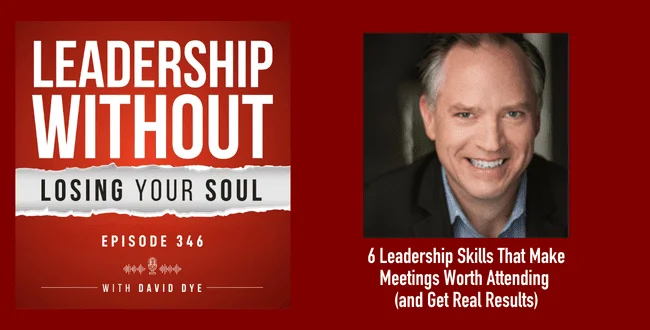
6 Leadership Skills That Make Meetings Worth Attending (and Get Real Results)
The latest Let’s Grow Leaders podcast episode outlines six advanced leadership techniques that transform ordinary meetings into results‑driven sessions. It emphasizes limiting attendees, clarifying meeting purpose, and establishing decision authority before the discussion starts. The episode also introduces a simple...

10 Books Billionaires LOVE
Researchers at MostRecommendedBooks.com compiled public recommendations from hundreds of billionaires and identified the ten titles they cite most often. The list is dominated by works on mental models, leadership, disruptive innovation and big‑picture history, with Ray Dalio’s *Principles* and Yuval...

Transforming Army Education: The Leadership Laboratory
Army University is overhauling military education with a “leadership laboratory” model. The new approach shifts from lecture‑based instruction to student‑centric, experiential learning that builds self‑awareness, critical thinking, team development, and change‑leadership skills. Facilitators act as guides, creating psychological safety and...
The Multifamily Operations Daily Huddle: Power of Listening in Leadership
The article argues that many leaders mistake waiting to speak for true listening, emphasizing that authentic listening requires presence and openness. In multifamily operations, leaders who listen deeply surface problems early, foster honest team dialogue, and gain richer context beyond...
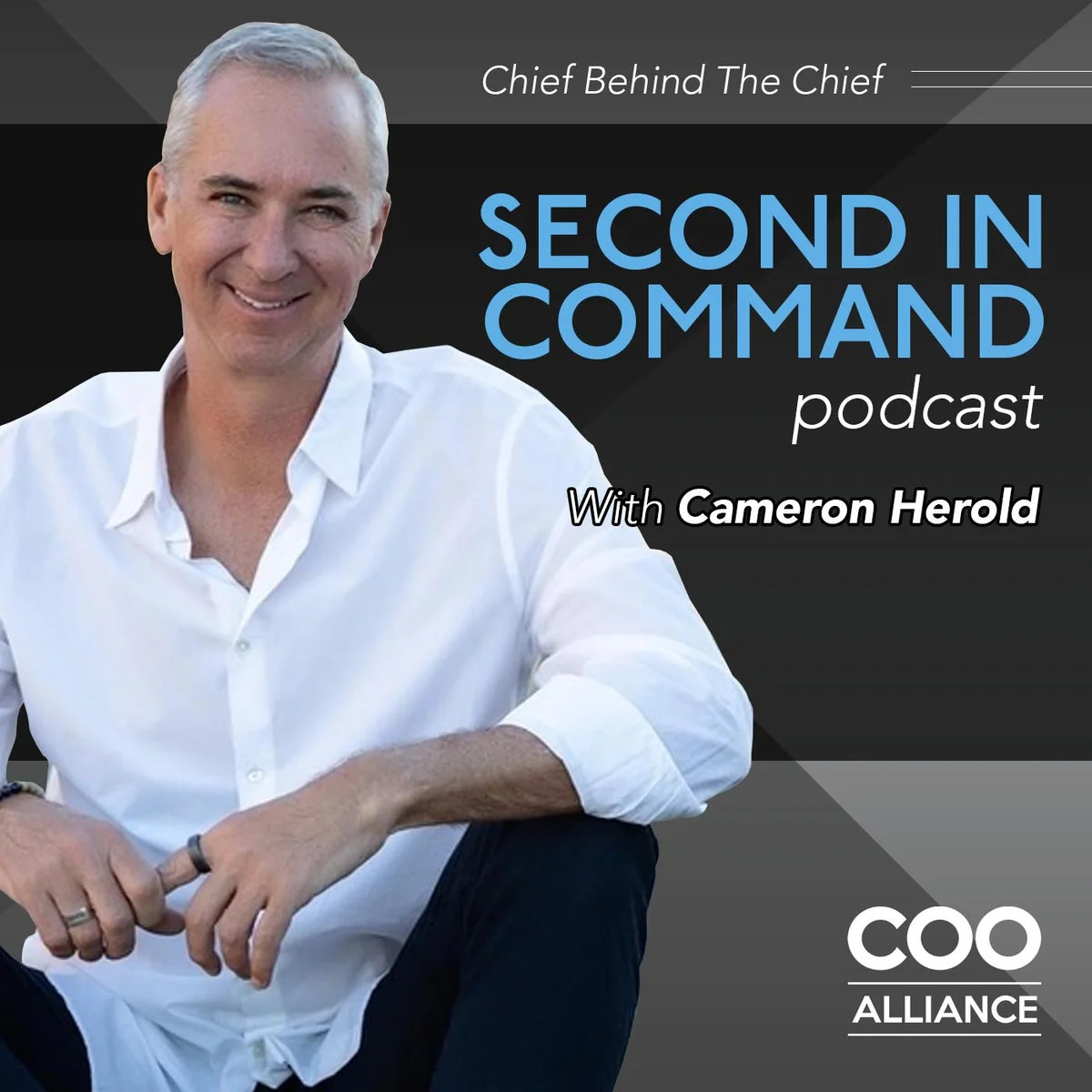
Why Real Experience Beats Impressive Credentials
The article argues that impressive academic credentials do not guarantee sound business judgment, which is forged through real‑world pressure and decision‑making. While degrees and certifications provide useful frameworks, they cannot replicate the pattern recognition, emotional control, and prioritization learned on...

Advice to Admitted Students on Ivy Decision Day
The post offers blunt advice to newly admitted Ivy League students on how to make the next four years worthwhile. It stresses attending every class, reading original texts, speaking one’s mind, seeking honest grading, gaining work experience early, and understanding...