
Your Standards Leak Through Small Moments
The piece argues that personal and professional standards are most visible in everyday, low‑stakes interactions rather than in grand gestures. Small behaviors—how we respond to interruptions, handle unnoticed tasks, or speak about absent colleagues—act as honest indicators of our true character. Over time, these micro‑choices accumulate, shaping reputation, self‑respect, and overall effectiveness. To raise standards, the author urges focusing on one ordinary moment and choosing a higher version of oneself.

The Science of Owning Mistakes: Supporting Students in Turning Errors Into Growth
Teach Like a Champion’s School Culture Curriculum introduces a lesson that helps middle and high school students own mistakes by addressing the psychological defenses that block sincere apologies. Drawing on research from Karina Schumann and Amy Ebesu Hubbard, the program...

Talk & Do Is the Best Thing You Can Be at Work
The post argues that reliability, not raw talent, is the key driver of career advancement. It recounts a founder’s restructuring where a high‑performing but erratic employee lost a promotion to a consistently dependable colleague. The author stresses that dependable workers...

The Deep Code - 01: You’re Working on the Wrong Layer
The Deep Code course argues that most wellness tools operate only on the mind’s surface, leaving the deeper subconscious architecture untouched. It claims lasting personal transformation requires reshaping that invisible structure, which is shaped long before conscious intent. Drawing on...
Stop Asking for Permission
The post argues that waiting for external validation stalls personal and professional momentum. It distinguishes advice, which informs judgment, from permission, which replaces it and erodes self‑authority. By embracing ownership and acting despite uncertainty, individuals can build confidence through execution...

The Older I Get, NO
The author reflects on a lifelong habit of saying yes to every request and how, with age, that habit has shifted to a deliberate practice of saying no. By rejecting obligations that don’t align with personal values, she creates space...

Friday Conversation with Jim Vance
Jim Vance, former professional Olympic‑distance and Ironman triathlete, now leads 80/20 Endurance and authors the training guide Run with Power. In a recent interview with Coach Matt, Vance reflects on his racing career, the transition to coaching, and the data‑driven...

The Silent Pressure of Having Too Many Open Loops
The article highlights the silent pressure created by numerous open loops—unfinished tasks, unanswered messages, and postponed decisions—that quietly tax mental bandwidth. It explains how these lingering items generate background tension, reducing focus and increasing cognitive load. By referencing the Zeigarnik...

The Neuroscience of Focus: How to Make Smarter Decisions?
Recent neuroscience research reveals that sustained focus, not just raw intelligence, is a critical driver of better decision‑making. When attention remains steady, the brain’s prefrontal circuits can weigh options more clearly and project outcomes farther into the future. Studies show...

Why Behavior Change Fails without Environmental Alignment
The article argues that behavior change often collapses because people focus on internal willpower while neglecting the surrounding environment. It explains how visual cues, friction, and contextual identity subtly steer actions, making the environment a more powerful driver than motivation....

Developing “High Performance Habits” With Brendon Burchard
Brendon Burchard, high‑performance expert, delivered a Vistage presentation on building habits that enable CEOs to thrive amid rapid change. He argues that top leaders shift from a strengths‑focused mindset to asking, “What must I do to serve?” expanding capabilities rather...
Choose One Truth Over Many Excuses
The post argues that excuses proliferate, obscuring responsibility and halting progress. It contends that embracing a single, uncomfortable truth simplifies decision‑making and restores focus. By stripping away layered rationalizations, individuals can identify concrete obstacles and take targeted actions. This mindset...

Respect: A Free Untapped Advantage
The article highlights how disrespect erodes employee commitment, with nearly 80% reducing engagement when they feel undervalued. It frames disrespect as a driver of learned helplessness and outlines seven concrete ways leaders can demonstrate respect, from actively describing others' viewpoints...
On Increasing Focus in My Career
The author, a test‑automation consultant, announced a strategic shift to concentrate almost exclusively on his training business, scaling back video production, additional consulting gigs, and proactive speaking engagements. He plans to finish his current video course but will no longer...

Five Practical Ideas From Socrates
Donald J. Robertson distills Socrates’ ancient philosophy into five actionable ideas for modern professionals. He highlights the power of relentless questioning, the necessity of admitting ignorance, and the centrality of self‑knowledge in decision‑making. The piece also frames dialogue as a...

Read to Help You Think
Julian argues that reading widely and casually sharpens thinking, writing, and creativity. He recommends picking up random books, reading a few pages, and allowing ideas to percolate while engaging in other activities. The essay cites Roland Barthes to illustrate how...

Your Critics Aren't Even in the Arena. Fuck Em.
The blog post highlights how creators, regardless of fame, are haunted by a few harsh comments that eclipse abundant positive feedback. It describes real‑world examples across Substack, Instagram, X, and podcasts where outlier criticism dominates mental focus. The author argues...

The 5 AI Prompts I Use to Cure Brain Fog & Overwhelm
The post outlines how an emergency‑management consultant overwhelmed by 400 unread emails and conflicting data used five targeted AI prompts to cut through the noise. By turning the inbox into a cognitive filter, the prompts automatically summarized updates, prioritized actions,...

The Beliefs Grief Didn't Create
The post argues that the painful behaviors men exhibit after a loss are driven more by long‑standing belief systems than by the grief itself. These entrenched assumptions—such as the need to appear strong or the fear of harming loved ones—are...

If Your Past Self Doesn't Embarrass You, You're Stuck
David Pereira turns 38 and reflects on a lifelong journey from a modest factory‑worker family to a global product‑leadership coach. He credits early exposure to curious minds, relentless self‑directed problem solving, and a habit of taking responsibility without waiting for...
Resentment Is a Contract You Didn’t Sign
The post frames resentment as an unwritten contract that forces the mind to replay past slights, masquerading as self‑defense but actually draining mental resources. It explains how continual rehearsal deepens emotional wounds, skews perception of new interactions, and erodes trust...

The Strategy of Clarity: How to Make Sure Your Habits Match Your Goals
Self‑help author Gretchen Rubin emphasizes the Strategy of Clarity as essential for aligning habits with goals. She argues that vague intentions cause paralysis, while precise, value‑driven actions boost consistency. Rubin outlines three steps: define specific goals, uncover the personal “why,”...

Best of Both Worlds Podcast: Understanding the Mattering Instinct with Philosopher Rebecca Goldstein
Best of Both Worlds podcast released its first philosopher interview, featuring Rebecca Newberger Goldstein. Goldstein discusses her research on the “mattering instinct,” explaining why humans instinctively seek significance in personal and professional realms. She references her book, *The Mattering Instinct*,...

Connor Teskey: Inside Brookfield’s Culture, Capital Allocation, and Competitive Edge
Connor Teskey has been named chief executive officer of Brookfield Asset Management, the trillion‑dollar alternative‑investment firm spanning infrastructure, power, real estate, private equity and credit. Teskey, a long‑time insider, succeeds founder‑CEO Bruce Flatt and promises continuity with a fresh strategic...

Rebooting
The author spends February in a quiet Amalfi Coast village to cope with recent family losses, using the trip as a mental reset. Past attempts at diet-focused travel proved unsustainable, leading to a shift toward movement and cultural immersion. Climbing...
The Reboot Podcast
The Reboot Podcast episode 183 features Jerry Colonna and meditation teacher Sharon Salzberg discussing how to move beyond suffering. Drawing on Buddhist wisdom, they examine the paradox of feeling pain and joy simultaneously while avoiding self‑blame. Salzberg frames karma as...

How Understanding Yourself Can Change Everything You Do
Self‑awareness, often mischaracterized as self‑consciousness, is presented as a powerful personal asset. The article explains that understanding one’s values, triggers, and emotional patterns enables better decision‑making, stronger relationships, and greater emotional resilience. It outlines practical steps such as daily check‑ins,...
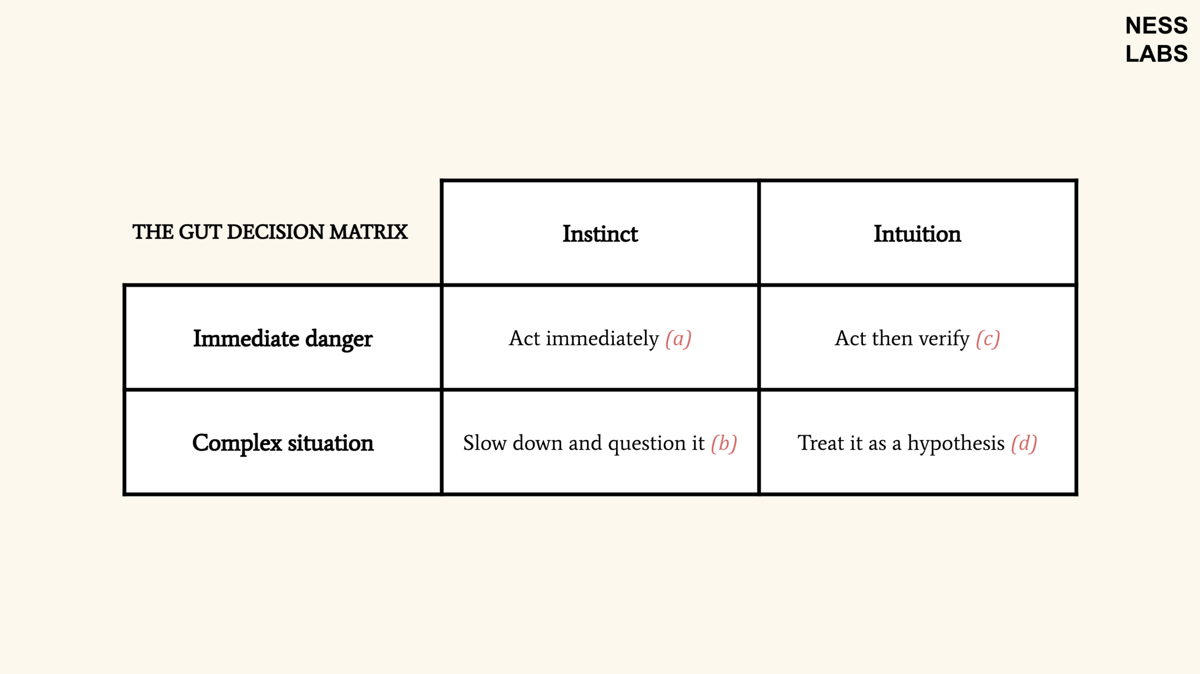
The Gut Decision Matrix: When to Trust Instinct and Intuition
The article distinguishes instinct and intuition as two separate sources of “gut feelings.” Instinct is an evolutionary, fast‑acting response to immediate threats, while intuition is learned pattern recognition honed by experience. The author proposes a Gut Decision Matrix that asks...
The Habit of Carrying Tomorrow Inside Today
The article describes a pervasive mental habit where people continuously project themselves into tomorrow while current tasks unfold. This forward‑looking focus creates a subtle, lingering tension in the nervous system, reducing present‑moment awareness. The author calls this pattern “the habit...
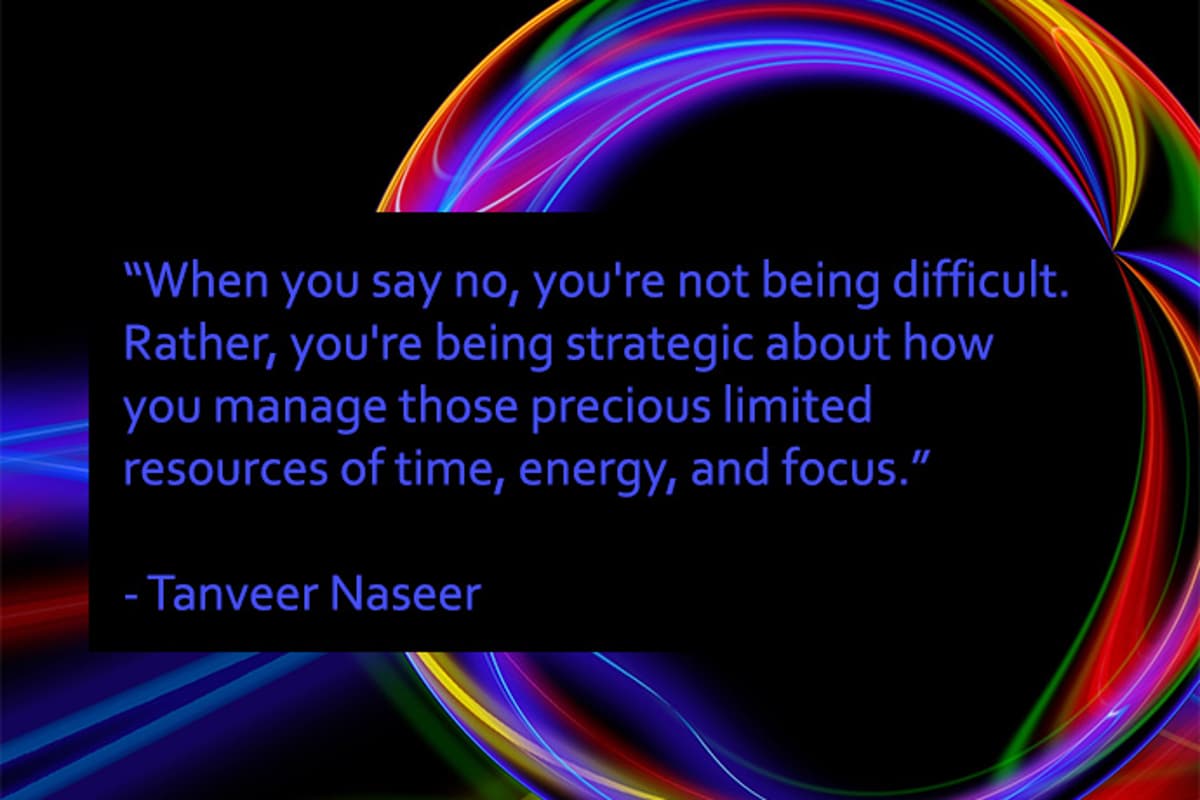
Why Saying No Is the Most Strategic Thing A Leader Can Do Right Now
The article argues that modern leaders must master the art of saying no to protect scarce resources of time, energy, and focus. It cites Warren Buffett’s disciplined refusal strategy and McKinsey research showing only 52% of executives spend most of...
The Ego Loves “Potential”
The article argues that the ego clings to untapped potential because it offers pride without requiring proof. It warns that lingering in possibility stalls performance, as effort exposes gaps and can turn promise into regret. The author urges readers to...

How to Deal with Disappointment: 12 Helpful Steps
The Positivity Blog outlines twelve practical steps for handling disappointment, beginning with accepting the feeling and recognizing that disappointment does not define personal worth. It encourages reframing setbacks as learning opportunities, adjusting perfectionist expectations, and leveraging gratitude and social support....

Practice Is the Work
The article argues that true work happens in the quiet, repetitive act of practice rather than in the pursuit of a final outcome. It contrasts cinematic, breakthrough‑focused narratives with the steady rhythm of showing up, trying again, and making small...

YouTube Exclusive: Jo and Zoe’s Interview with Fearne Cotton – Watch Now
Jo and Zoe host an exclusive YouTube interview with broadcaster and author Fearne Cotton, centered on her new book *Likeable*. Cotton opens up about personal burnout, people‑pleasing habits, and a pivotal therapy question on the value of being liked. The...

How to Know Yourself
The article argues that most people never truly know themselves despite constant self‑observation. It outlines five practical cues—behaviour when unobserved, disproportionate hurts, hidden envy, moments of aliveness, and recurring patterns—to spark deeper self‑awareness. By paying attention to these signals, readers...
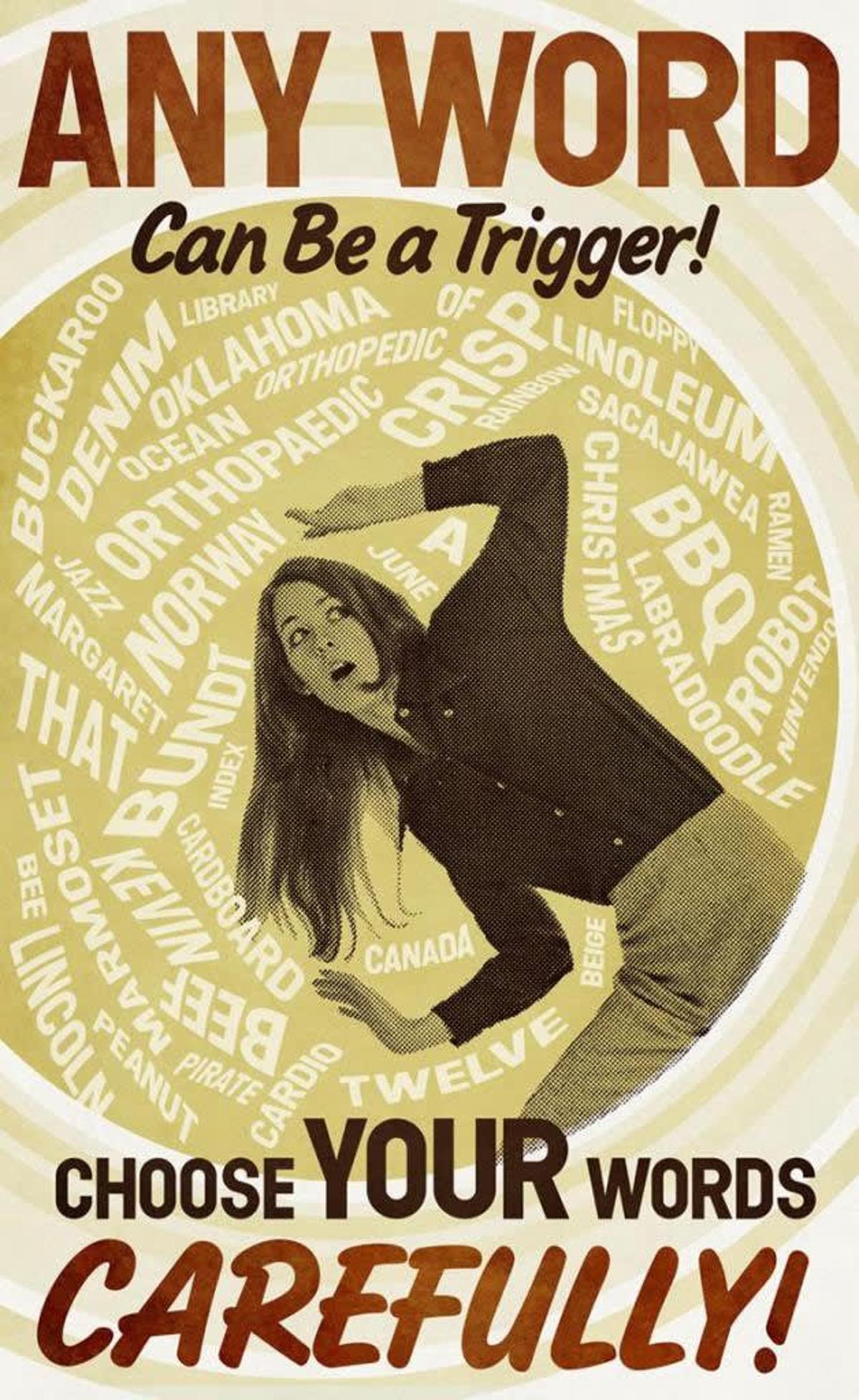
Stoicism, Insults, and Political Correctness
The article examines how Stoic philosophy addresses modern insults, microaggressions, and political correctness, drawing on William Irvine’s book and Eric O. Scott’s critique. It contrasts the Stoic recommendation to “shrug off” insults with contemporary therapeutic tools such as cognitive distancing...
The Psychology of Familiar Pain
The article explores why individuals often stay in painful relational or work patterns despite recognizing the harm. It argues that the mind protects the familiarity surrounding the pain rather than the pain itself. Familiarity creates a sense of safety, making...

Three Work Environments That Analysts Will Likely Find Draining
The article identifies three work‑environment mismatches that drain Analyst personalities—dismissive feedback cultures, noisy open‑plan offices, and micromanagement with rigid processes. It cites that 92% of Analysts crave freedom in how they work, while 63% struggle with authority and 93% of...

Five Conversation Habits That Command Respect
The article argues that a man's respect in conversation stems more from delivery than content. It highlights a cultural shift toward careless, confrontational dialogue on both personal and digital platforms. Drawing on timeless communication principles, the author outlines five disciplined...

Genius Is Messier Than You Think
The post juxtaposes Beethoven’s chaotic manuscript revisions with Jony Ive’s guarded, iterative iPhone development, arguing that what appears inevitable is actually the product of relentless drafting. Beethoven’s Fifth Symphony underwent dozens of rewrites, and his notebooks reveal frantic marginalia and...
Comfort Isn’t Rest
The article draws a clear line between rest and comfort, asserting that rest is an intentional, bounded activity that restores energy while comfort often masks avoidance and delays action. Rest prepares individuals for responsibility and sharpens mental clarity; comfort, when...

5 Positive Ways to Say No
The article outlines five positive techniques for declining requests, emphasizing that saying no protects time, credibility, and relationships. It frames boundaries as a strategic asset rather than a personal rejection. Each step—starting with gratitude, being direct, offering brief reasons, suggesting...

Why Failure Is the Ultimate Career Advantage (You Can Only Connect the Dots Backward)
Career setbacks often feel like failures, but they serve as training data that sharpens pattern recognition and judgment. Over time, repeated exposure to ambiguous situations builds intuition, allowing professionals to anticipate risks and opportunities more quickly. The article argues that...

Book Recommendation: Beyond Belief
Beyond Belief, Nir Eyal’s new book, explores the science of how our beliefs shape perception, emotion, and behavior. It distinguishes evidence‑based effects—like the placebo response—from unfounded optimism that claims belief alone can alter reality. The author links belief systems to...

New Event: How to Cope
Classical Wisdom is hosting a live event on March 25 at noon EST featuring Professor Philip Freeman, a classicist and author of *How to Cope: Ancient Philosophies for Enduring Hardship*. The talk will examine Boethius’s *Consolation of Philosophy* and draw...

The Cost of Being Too Kind.
The post argues that unchecked kindness can become self‑neglect, turning generosity into exhaustion and resentment. It highlights how constantly saying yes erodes personal boundaries, making others take kindness for granted. The author stresses that healthy kindness requires clear limits and...
You Can’t Heal in the Same Environment
Interesting Daily Thoughts argues that personal healing and growth cannot thrive in unchanged surroundings. The author stresses that psychological space—away from familiar habits, reinforcing voices, and limiting patterns—is essential for forming a new self. By highlighting how daily environments silently...

The Science of Oversharing: Why Revealing More Builds Trust
The post argues that the real risk isn’t oversharing but undersharing, and that thoughtful disclosure can strengthen trust, influence, and wellbeing. It cites research showing people default to silence, which limits connection in personal and professional relationships. By treating disclosure...

How Your Inner Child Controls Your Bank Account.
People’s spending habits are often governed by a subconscious ‘financial thermostat’ set in early childhood. Verbal messages, parental modeling, and pivotal financial events embed deep‑seated money scripts that dictate what feels normal versus threatening. This internal set point causes individuals...

The Original Attention Crisis
The essay on 17th‑century scholar Nicolaus Steno reveals that the printing press created an early information overload, prompting the development of note‑taking systems and disciplined attention‑management techniques. Steno’s method—focusing on a single theme, blocking mornings for deep reading, and avoiding...