
Discipline Creates Freedom, Not Restriction
The post reframes discipline from a perceived restriction to a catalyst for true freedom. It argues that without discipline, decisions hinge on fleeting emotions, leading to inconsistency and wasted time. By establishing routines, discipline eliminates constant choice fatigue, creating reliable progress regardless of mood. Over time, this structure expands options rather than limiting them, allowing individuals to depend on themselves.

The 10 Minute Habit That Builds Real Discipline Daily
The article argues that true discipline stems from a tiny, repeatable action rather than marathon work sessions. By committing just ten minutes each day to a focused habit, individuals can create a reliable momentum that survives ordinary distractions. The piece...

How To Come Back To Yourself During Busy Days
The article explains why professionals often feel disconnected during hectic workdays, linking the sensation to fragmented attention rather than external circumstances. It describes how constant outward focus creates a gap between actions and awareness, leading to a sense of detachment....

How to Actually Help Your Kid Build Grit
The Future of Education podcast with Alpha School guide Carrington explains that grit is a skill that can be trained, not an innate trait. By treating resilience like a muscle, parents are urged to start with micro‑tasks—such as a ten‑minute...

How To Become Your Own Trading Coach
Psychiatrist Brett Steenbarger, a longtime SUNY Upstate faculty member, outlines a self‑coaching framework for traders in a new series and two recent books. He explains that stress, anxiety, and overtrading often arise from recurring negative self‑talk and perfectionist urges. By keeping...

3 Leadership Lessons I Learned From My Worst Bosses
Former corporate employee Mita Mallick shares three leadership lessons drawn from her worst bosses. She warns against late‑night emails, highlights how silence enables workplace bullying, and urges leaders to intervene when disengagement spreads. Each lesson includes actionable steps such as...

7 Things You Must Sacrifice If You Want to Be Rich One Day, According to Charlie Munger
Charlie Munger argues that real wealth comes from disciplined sacrifices rather than luck or raw intelligence. He lists seven habits to abandon—envy, herd mentality, constant action, ego, self‑pity, convenience, and comfort—each of which silently erodes capital and focus. By eliminating...

11 Ways to Be Less Deferential
In a recent conversation with rationalist writer Joe Carlsmith, the author outlines eleven practical ways to curb intellectual deference. The core advice encourages embracing one’s inevitable ignorance, voicing high‑level hypotheses, and using status dynamics to gain confidence. Other tactics include...

How To Fail Masterclass: Part 4 - Vulnerability, Strength and What Failure Teaches You About Success
The final installment of the How To Navigate Failure Masterclass emphasizes that embracing vulnerability transforms failure into a source of strength. By openly acknowledging shame and imperfection, individuals forge authentic connections and build emotional resilience, likened to a muscle that...

Why the Most Successful People You Know Are Slightly Delusional
The article argues that the most successful founders are slightly delusional, betting on massive outcomes before any evidence exists. It cites a founder who raised $40 million while believing his startup would become a billion‑dollar company despite having no customers. The...

Why ADHD Is the Cheat Code of the AI Era
The post argues that ADHD, long labeled a deficit, is a strategic advantage in the AI era because artificial intelligence now handles linear, repetitive work, leaving pattern‑recognition and rapid idea synthesis as premium skills. Neurodivergent brains excel at juggling multiple...

Say This Before You Sleep Tonight. The Whole Universe Will Start Working For You.
The article argues that the thoughts you repeat before sleep can rewire your brain through neuroplasticity, leading to a more abundant mindset and better financial outcomes. It cites research showing self‑affirmation activates the ventromedial prefrontal cortex, the brain region linked...

When You Become the Stability Everyone Else Relies On
The post explains how high‑capacity leaders gradually assume the invisible role of maintaining emotional and operational stability for their teams. This "stability carrier" emerges through consistent reliability, not formal assignment, and becomes expected over time. While the organization benefits from...
What Actually Restores It
The Empath Evolution post argues that restoring focus and energy isn’t achieved by doing less, sleeping more, or tweaking schedules. Instead, the author highlights "presence"—fully attending to the current moment—as the key to mental restoration. This challenges the prevalent productivity‑hack...
Leadership Traits for Navigating Uncertainty
The NC State ERM Initiative released a thought‑leadership paper that reframes enterprise risk management as a leadership discipline rather than a purely technical function. Drawing on insights from senior risk executives at the 2026 ERM Roundtable, the report identifies four...

How Can Stoicism Help Kids?
Claudia Mills, emerita philosophy professor and prolific children’s author, discusses how Stoic ideas can be introduced to young readers in a new novel, *Calliope Callisto Clark and the Search for Wisdom*. The conversation explores the unique advantages children have when...

Lessons From Slowing Down: What My Body Needed to Feel Better
London‑trained surgeon Dr. Prarthana Venkatesh recounts how relentless long hours and chronic sleep deprivation left her chronically fatigued. A brief experiment with five‑minute morning breathing exercises revealed hidden stress signals, prompting a gradual shift toward eight‑hour sleep, daily walks, and...

Join Our 3-Day Challenge: Beneath Self-Sabotage
The 16Personalities blog is launching a free‑to‑subscribers 3‑day "Beneath Self‑Sabotage" challenge beginning May 5. Each day delivers a short essay that helps participants identify patterns, question the sabotage label, and integrate new insights. Free readers get only Day 1, while a 30%...

6 Questions I Ask Every Week to Keep My Life Genuinely Simple
During the 2020 pandemic, Jyoti Yadav’s husband lost his business, forcing the family to confront sudden financial scarcity. The crisis revealed how much of their lifestyle was built on non‑essential spending and relationships, prompting a shift toward intentional minimalism. Yadav...

Unlock Peak Productivity with These 40+ AI Power Tools 🚀
The post curates a cheat‑sheet of more than 40 AI‑powered productivity tools for 2026, organized into categories such as social media growth, workflow automation, low‑code app building, design, coding assistants, and health. It highlights flagship options like ViralSky for viral...

A Simple “Sit With It” Prompt
The post introduces a simple "Sit With It" prompt that asks readers to stay with an uncomfortable feeling for one more minute before reacting. It explains how avoidance interrupts emotional processing and how brief presence can shift emotions naturally. The...

A Short Perspective Shift
The post argues that shifting one’s mental perspective can dramatically alter emotional weight and behavior. It explains that unchallenged narratives become perceived truth, while a broader lens reduces stress and improves decision‑making. The author promotes the "Discipline: 14 Days to...

A Stanford Neuroscientist, on How and Why to Stop Stressing, and Save Your Health
Stanford neuroscientist Robert Sapolsky explains that while zebras experience brief, life‑saving stress, humans keep their nervous system on high alert for imagined threats over decades. This chronic activation drives blood‑pressure spikes that are not protective but harmful, elevating the risk...

Why Escaping Discomfort Weakens Consistency
The post explains how habitually escaping discomfort weakens consistency by reinforcing a relief‑first loop. It shows that early breaks and task switching prevent the momentum needed for real progress. The author argues that staying just a little longer—one more minute...

You Asked, I Answered
The author launched a new newsletter segment titled “You Asked, I Answered,” delivering direct, audio‑style responses to subscriber questions. The Q&A focuses on personal patterns, relationships, and decision‑making, offering listeners in‑depth, actionable insight. By framing the content as a mini‑podcast,...

The Tesla Playbook: How to Cut, Simplify, and Outgrow Every Competitor
The post distills a "Tesla Playbook" for hypergrowth, urging companies to aggressively cut, simplify, and outpace rivals. Drawing on Jon McNeill’s book and real‑world cases—from Tesla’s 100% foreign‑owned plant in China to its 64‑to‑10‑click car‑buying flow—it outlines five habits: questioning...
The 10-Minute Rule: How Small Windows Create Big Wins
The 10‑Minute Rule suggests tackling a task for just ten minutes when motivation wanes, turning a perceived barrier into a low‑friction start. By limiting the commitment, the brain perceives the effort as manageable, often leading to continued work beyond the...

Dealing with Career Anxiety
Career anxiety has shifted from predictable triggers like tough managers to systemic uncertainty driven by AI‑enabled layoffs and strategic headcount cuts. Over the past three years, more than 500,000 tech workers were let go, often regardless of performance, as companies...

The Visibility Gap Holding You Back
A senior technical leader driving a high‑impact, IPO‑linked initiative struggled to secure a promotion because his influence was invisible to senior leadership. Despite expanding scope and cross‑team responsibilities, he lacked formal authority and feared upsetting other leaders. Coaching revealed that...

Discipline Leaves Clues Everywhere — 30 April
The piece argues that discipline isn’t a dramatic moment but a pattern of small, everyday actions. It appears in how we handle routine tasks, manage time without pressure, and maintain standards without supervision. These quiet behaviors create a consistent trace...
Here’s My AI Time Management System — Copy and Paste This Into Claude
Productivity expert Chris Bailey shares a prompt that turns Claude, an AI assistant, into a real‑time time‑management engine linked to Todoist via the Model Context Protocol (MCP). The system reads tasks, cross‑references calendar events, energy levels, and business strategy, then...
The High Cost of Avoiding Hard Conversations
The article argues that dodging uncomfortable conversations erodes trust, lowers performance standards, and creates larger problems for leaders and teams. It identifies three psychological patterns—people‑pleasing, desire for control, and lack of practice—that drive avoidance. To counteract this, the author proposes...

The People Who Shape the Next Version of You
The essay argues that the people and environments shaping us evolve throughout life, and each "cast" leaves lasting fingerprints on our identity. As we transition from childhood to school, then to adulthood, old influences can become constraints that hinder new...
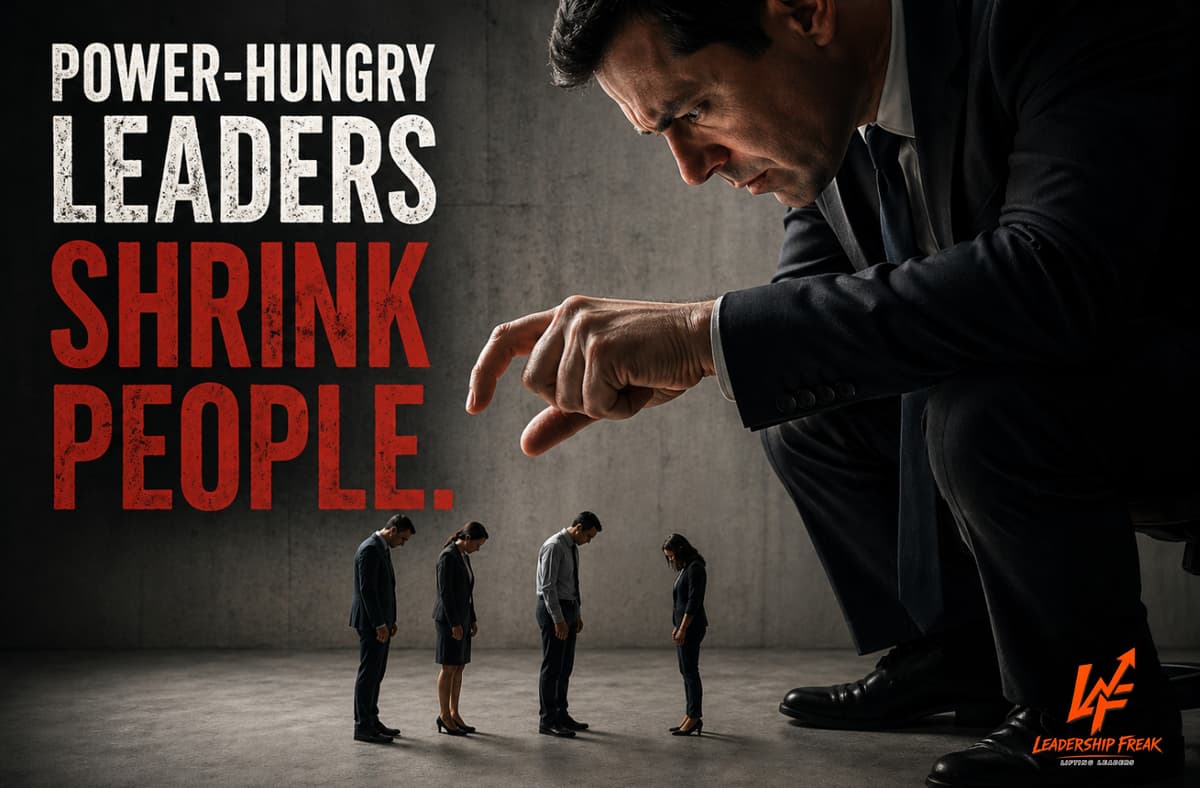
How Leaders Shrink People
The article argues that leaders who express gratitude build employee worth, power, and strength, while power‑hungry leaders shrink people through criticism and neglect. It outlines three pillars—building worth, expanding power, and increasing strength—showing how appreciation fuels confidence, initiative, and performance....

5 Psychology Tricks to Build Self-Discipline, According to Charlie Munger
Charlie Munger argues that self‑discipline stems from psychological systems, not raw willpower. He outlines five mental tricks—scrutinizing mistakes, engineering environments, earning outcomes, practicing tiny tasks, and mastering opposing arguments—to make disciplined choices feel natural. Each technique leverages innate brain mechanisms...

How Constraints Boost Creativity, Focus & Performance | David Epstein
In the Ready State podcast, author David Epstein argues that constraints are a catalyst for better outcomes, not a limitation. Drawing on insights from his upcoming book Inside the Box, he shows how too much freedom creates overwhelm, indecision, and...

Doing Nothing About Your Job Search Is Making You Sick
The article warns that failing to actively pursue new employment can deteriorate both mental and physical health. It links prolonged job‑search inertia to elevated stress hormones, disrupted routines, and a sense of hopelessness that can manifest as illness. By highlighting...

Why We’re Always Busy but Never Feel Productive
The post highlights a paradox of modern work life: people are constantly busy yet feel unproductive. It points to packed calendars, endless notifications, and rapid task‑switching as culprits that fragment focus. The author argues that without intentional prioritization, activity becomes...

Mother’s Day and Anxiety: When the Celebration Feels Heavy
Mother’s Day, often portrayed as a joyful celebration, can trigger intense anxiety for many mothers. The article explains how societal expectations, social‑media perfection, and disrupted routines amplify stress, leading to irritability, guilt, and a need for control. It advises mothers...

You Already Know What to Do—You Just Don’t Want the Consequences
The essay distinguishes genuine confusion from a subtler form of paralysis where the answer is known but the perceived cost of acting is too high. Readers are shown how they often label deliberate avoidance as “not knowing” to buy time...
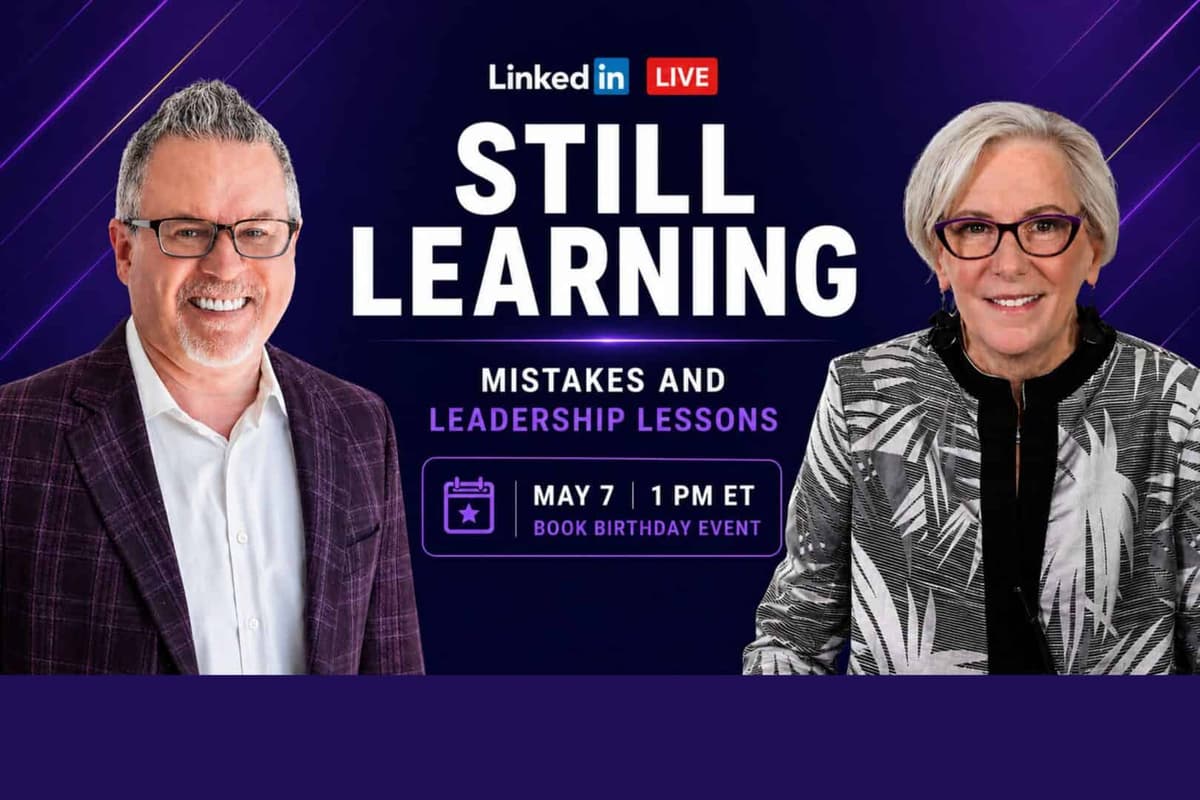
Still Learning: A Live Event with Elisabeth Swan on May 7
On May 7 at 1 PM ET, Mark Graban and author Elisabeth Swan will co‑host a live LinkedIn event titled “Still Learning: Mistakes and Leadership Lessons.” The session marks the third anniversary of Swan’s “Picture Yourself a Leader” and Graban’s “The Mistakes That...

Are You Building a Life or Just Maintaining One?
A physician describes feeling like he’s merely “keeping the machine running” despite solid income, family and career. The article argues that many high‑performing doctors hit a “maintenance trap” where routine work no longer stimulates them, often misread as burnout. It...

A Stoic Meditation on Perception
The post explores the Stoic view that perception—both sensory and intuitive—shapes our reality and moral character. Citing Marcus Aurelius, it argues that unchecked perceptions lead to agitation, while deliberate awareness turns events into material for personal growth. By distinguishing physical...

8 Most Powerful Frameworks for Life
The post outlines eight high‑impact mental frameworks that the author uses to structure thinking, solve problems, and boost personal performance. Each framework—ranging from First‑Principles analysis to the Eisenhower Matrix—comes with a brief description and a practical tip for daily application....

All Roads Lead Back to Myself
In "All Roads Lead Back to Myself," the author reflects on how attempts to escape personal chaos repeatedly bring her back to self‑reflection. She describes the shift from trying to control external noise to nurturing an inner‑child and using tiny,...

Your Manager Impacts Your Mental Health More Than Your Therapist—Here’s Why That Should Change How You Lead
Managers shape employee mental health more than any external support, as professionals spend roughly 90,000 work hours over a career. Gallup data shows managers account for 70% of engagement variance, and caring leaders make staff 3.2 times more engaged, driving...

How to Feel Safe When Panic Feels Dangerous
The article recounts a personal panic‑attack experience and reframes panic as a misfiring nervous‑system alarm rather than a bodily malfunction. It explains how chronic stress keeps the fight‑or‑flight response on overdrive, creating a feedback loop of sensations and fear. By...

TBL: 3 Things People Who Hit Their Goals All Do
The post argues that high achievers succeed by defining success on their own terms, aligning goals with core values, and measuring progress consistently. It warns that chasing external markers like titles or luxury goods leads to burnout and misaligned effort....

How To Turn Disruption Into Your Greatest Leadership Advantage
Tanveer Naseer’s Leadership Biz Cafe podcast features FranklinCovey senior advisor and WSJ bestselling author Dr. Patrick Leddin discussing his New York Times bestseller “Disrupt Everything – and Win,” co‑written with James Patterson. The conversation reframes disruption from a threat to a catalyst...
Discipline Is What You Do When Nothing Is Pushing You
The post argues that discipline spikes when external pressure creates clear deadlines, but true productivity requires a deeper, self‑generated version of discipline that operates without any push. When stakes are high, focus narrows and action feels automatic; when the pressure...