While You Were Watching Iran, The Next War Quietly Started
The video argues that while global attention fixates on the Iran conflict, a far more consequential financial battle is unfolding in Washington: former President Donald Trump has openly declared war on the banking industry over a pending stable‑coin regulatory framework. Using his True Social platform, Trump singled out major banks, accusing them of sabotaging the Genius and Clarity Acts—legislation that would legitimize stable‑coins and give Americans higher yields on their cash. The crux of the banks’ opposition lies in the $6.6 trillion of customer deposits they currently hold, earning near‑zero interest while the institutions reap billions from loan spreads. Section 404 of the Clarity Act would create a legal, low‑risk avenue for consumers to park funds in stable‑coins that earn 3‑6 % yields, threatening a mass exodus that could trigger a liquidity crisis. Simultaneously, crypto exchange Kraken secured a Fed master account, allowing it to move money directly through the Federal Reserve’s payment system—an unprecedented breach of the banks’ historic monopoly. The narrative is framed by historical parallels, quoting Thomas Jefferson’s warning that banks are “more dangerous to our liberties than standing armies.” Trump’s public rebuke echoes that sentiment, while banking lobby groups responded with alarmed statements about “risks to the banking system.” Kraken’s Fed access, described as the first of its kind, underscores the tangible shift from traditional intermediaries to decentralized finance platforms. If the Clarity Act passes and crypto firms gain unfettered payment infrastructure, the United States could witness its third major monetary overhaul since the Federal Reserve’s creation in 1913 and the end of the gold standard in 1971. Investors, savers, and policymakers must recognize that this restructuring could redistribute wealth toward early adopters of digital assets while forcing legacy banks to either compete on yields or risk obsolescence.

Should You Pay Off Your Student Loan? | The Economist
The Economist video examines whether UK graduates should rush to clear their student loans, outlining how the system works and why it feels like a punitive tax. Loans for those who started university between 2012‑2022 trigger repayments of 9 % of earnings...

'Don't Make Kneejerk Reaction on Any Type of Headline News': Headland
Kevin Headland, co‑chief investment strategist at Manulife Investments, told BNN Bloomberg that investors should resist knee‑jerk reactions to headline news, especially amid heightened geopolitical uncertainty. He emphasized a disciplined, long‑term portfolio approach rooted in fundamentals rather than short‑term market noise....

The Insane Math Behind Investing For Your Children (Use a Trump Account?)
The episode breaks down the quantitative logic of long‑term investing for minors, highlighting compounding power, tax‑advantaged accounts, and the impact of early contributions. It walks listeners through the math of a $5,000 initial deposit growing over 18‑25 years at various...

Managing the Soaring Costs of Private Education | the Advisory
The advisory segment tackles the accelerating cost of private education in Australia, where senior school fees now approach $50,000 a year and are climbing at roughly 7% annually. With household incomes lagging behind, families risk facing six‑figure expenses per child...

Best Ideas for 2026, and the Barbell Approach to Investing
The WealthBT podcast spotlights DBS’s chief investment officer Wayfolk’s outlook for 2026, centering on the barbell investment framework that pairs high‑growth secular themes with stable income assets. He outlines five headline ideas – artificial intelligence as the dominant growth engine,...
Behind the Ticker: Investing in Founders and the FFF ETF
In this episode of Behind the Ticker, Brad Roth interviews Michael, the founder of the Founders 100 ETF (ticker FFF), to unpack the fund’s origin, methodology, and market positioning. Michael traces his three‑act career—from Wall Street to a tech startup and finally...

The Capital Gains Tax Debate: What Property Investors Must Know, with Ken Raiss
The podcast examines Australia’s capital gains tax (CGT) discount debate, featuring tax specialist Ken Raiss, who explains that the government is considering halving the current 50% discount to 25% or removing it entirely. The discussion frames the proposal as a...

Family Office Challenges: Passing Wealth to the Next Generation
The video addresses a core family‑office dilemma: how to transfer multigenerational wealth while preserving the legacy of the founding business. It stresses that the ultimate aim is to become “the Rockefellers, not the Vanderbilts,” meaning enduring prosperity rather than rapid...

Morning Markets for Thursday, Mar. 5, 2026
Canadian equities showed mixed strength in early trading as Maple Leaf Foods jumped about 6% after fourth-quarter profit and revenue topped estimates, driven by its pork spinoff and stronger prepared foods and poultry sales. Canadian Natural Resources beat estimates on...

The Future of Investing? Prediction Market ETFs & The Business of Sports
The podcast explores a new frontier in finance: prediction‑market exchange‑traded funds that package binary event contracts—ranging from sports outcomes to election results—into tradable securities. Host Nathan Hirsch is joined by Gabelli’s Chris Moreni, who launched the live‑sports ETF GLS, and...

Buy Hold Sell: Where Should You Be Looking for Income (and 2 Top Picks)
The ASX’s average dividend yield has lingered under 4%, prompting a reassessment of income‑focused strategies. In a Buy Hold Sell podcast, Livewire’s Chris Conway talks with Peter Gardner of Plato Asset Management and Sean Roger of Perpetual about the forces...

Blythe Masters, CEO of FNZ, on the Future of Wealth and the Power of Resilience
The Innovators Exchange episode spotlights Blythe Masters, now CEO of FNZ Group, a global wealth‑technology platform that processes roughly $2.3 trillion for more than 30 million end‑customers. Masters recounts a circuitous 33‑year journey that began with a gap‑year temp job photocopying dense...
Warren Buffett's #1 Rule Gets Rewritten
The video revisits Warren Buffett’s famed “don’t lose money” maxim, arguing it should be reframed as a rule against “embarrassing loss.” The speaker contends that while every investment carries risk, investors must distinguish tolerable downside from catastrophic failure. He stresses that...

Adrian Day: 'Absolutely' Bullish on Gold & Why Oil Is 'Extremely Cheap'
Adrian Day, founder of Adrian Day Asset Management, reiterated his unwavering bullish stance on gold, arguing that the precious metal’s long‑term cycle remains in its early phase and that the current bull market has ample room to run. He highlighted...
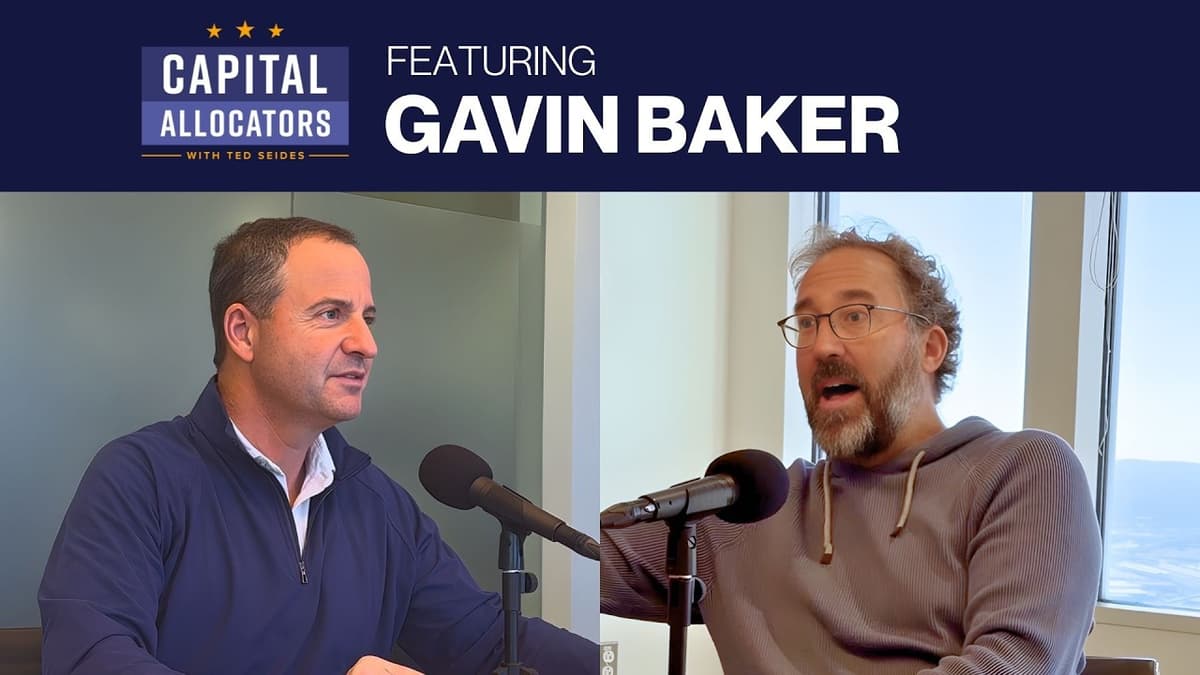
Gavin Baker – Truth-Seeking and Crossover Investing at Atreides (EP.489)
The Capital Allocators episode spotlights Gavin Baker, managing partner and CIO of Atreides Management, which oversees roughly $7 billion across public, private and crossover strategies focused on technology and consumer sectors. Baker recounts his unconventional path—from a book‑filled childhood and rock‑climbing...

High Volatility + Reversals: The Real Reason Leveraged ETFs Underperform
The video examines why leveraged exchange‑traded funds (ETFs) tend to underperform during turbulent markets, focusing on the empirical link between volatility and serial correlation rather than volatility alone. The presenter challenges the common narrative that volatility is inherently detrimental, showing...

Why the Wealthy Love Bitcoin Crashes
The video explains why Bitcoin’s price drops attract affluent investors, focusing on how they leverage tax‑advantaged retirement vehicles—especially Roth conversions and self‑directed crypto IRAs—to turn market volatility into a tax‑saving opportunity. Klein outlines the specific tools: SEP and SIMPLE IRAs, Solo...

US-Iran Tensions: What the Options Market Is Telling Investors
The video examines how the options market is reflecting investor expectations amid rising U.S.-Iran tensions, highlighting that traders are pricing in a more hostile scenario. Data points show the put‑call skew on the S&P 500 (Triple Q) is as wide as...

Bloomberg Surveillance 2/25/2026
Bloomberg Surveillance aired on February 25, 2026 centered on President Donald Trump’s State of the Union address and its implications for the U.S. economy and markets. The hosts highlighted a surprisingly resilient macro backdrop—low mortgage rates, a declining inflation headline,...
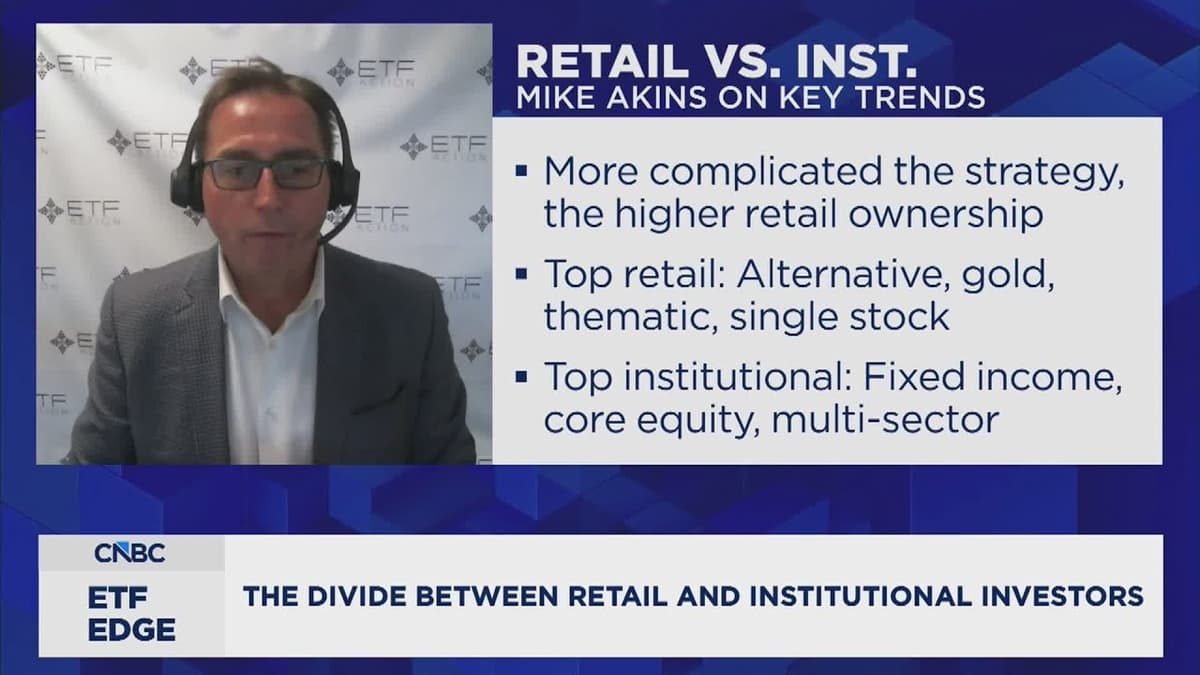
ETF Industry ‘Not Going to Run Out of Innovation’, Says ETF Action Founder
The discussion centers on the ETF industry’s evolving innovation landscape, highlighted by founder Mike of ETF Action. He explains how the market now hosts roughly 5,000 funds managing about $14 trillion, with a clear split between traditional passive products and a...
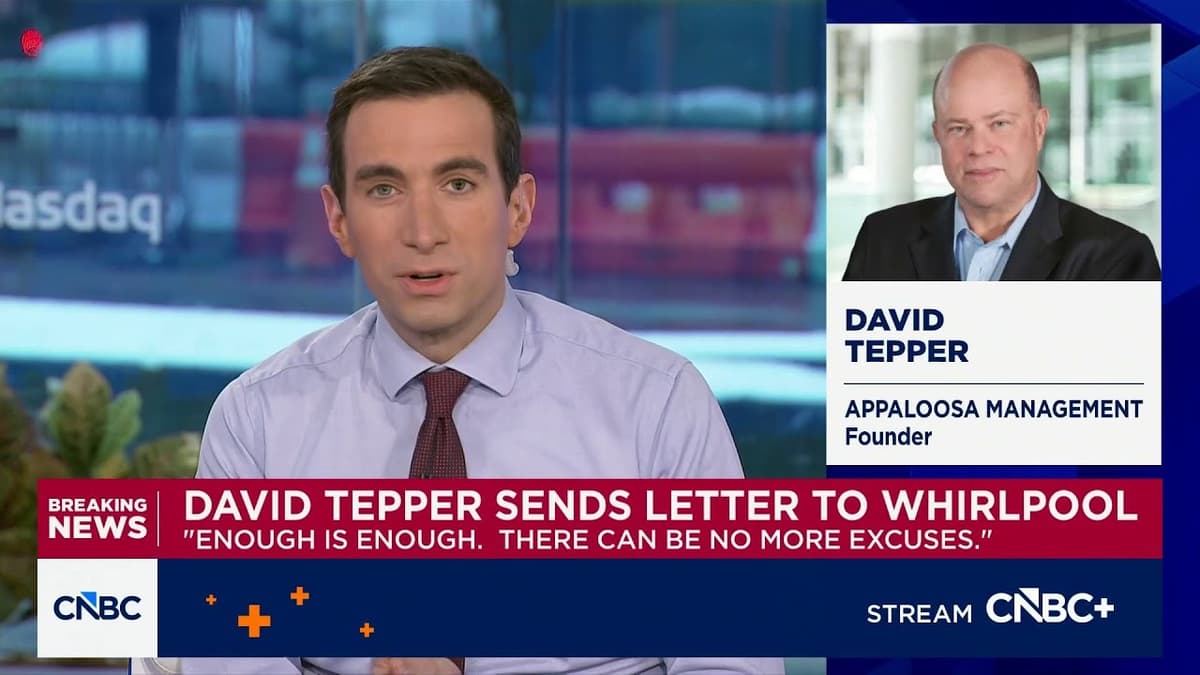
David Tepper Sends Scathing Letter to Whirlpool for Destroying Shareholder Value, Pushes for Changes
Activist billionaire David Tepper, founder of Appaloosa Management, sent a sharply worded letter to Whirlpool’s board accusing the appliance maker’s leadership of erasing hundreds of millions of dollars in shareholder value. Tepper singled out the recent equity raise, which he says...
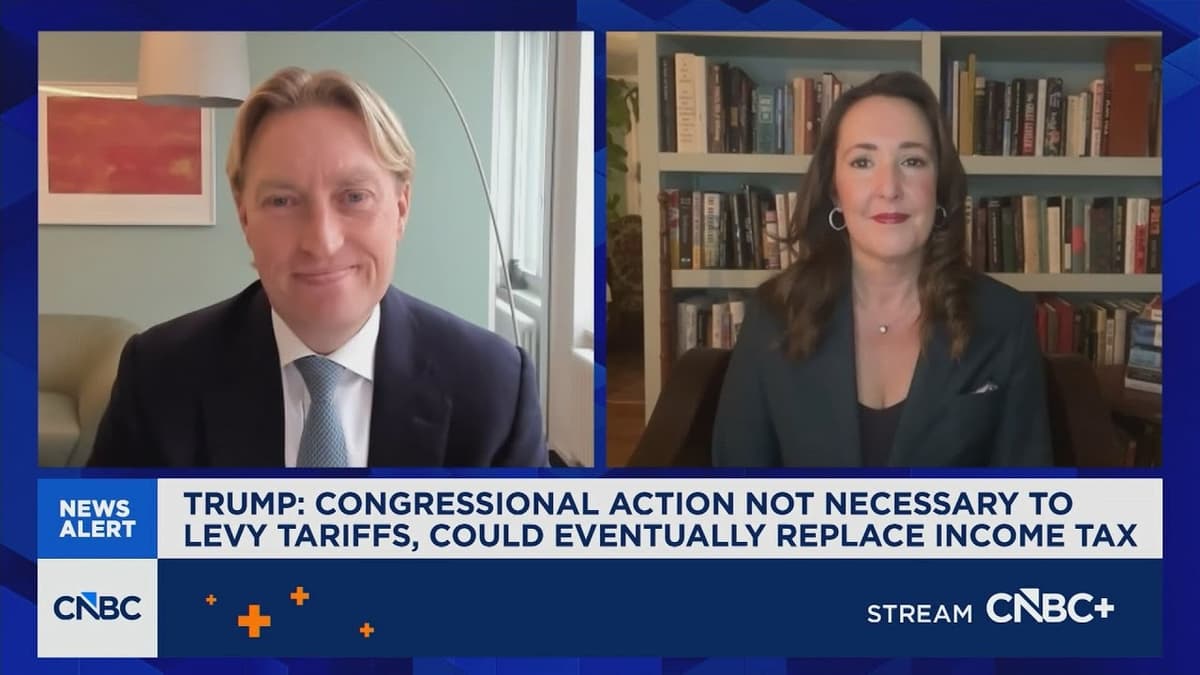
Tariffs, Taxes and AI Power Plans Dominate Outlook After the State of the Union
The recent State of the Union, though lengthy, offered few new policy announcements but highlighted three pillars—tariffs, health‑care subsidies, and a power‑infrastructure push for AI firms—that will shape market expectations. Both UBS’s Marc Anderson and Veda Partners’ Henrietta Treyz agreed that...
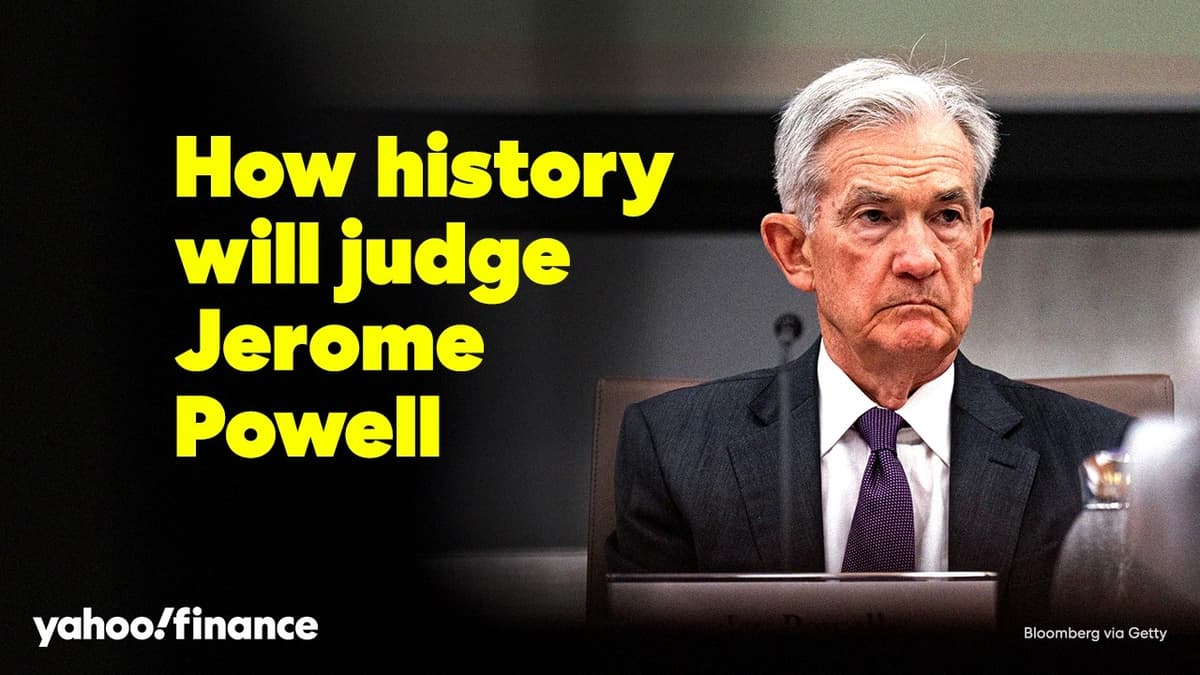
How History Will Judge Fed Chair Jerome Powell | Trader Talk
The Trader Talk episode centers on Jerome Powell’s legacy and the looming transition to new Fed Chair Worsh. Panelists dissect how Powell’s insistence that inflation was "transitory" clashed with reality, and they argue that his backward‑looking stance delayed the...