
Why Resisting Temptation Gets More Expensive With Age?
The article debunks the common belief that self‑control automatically eases with age, arguing that resisting temptation actually becomes more costly for many adults. It attributes the rising expense to three intertwined forces: biological changes that dampen reward circuitry, higher opportunity costs as earnings and responsibilities grow, and the cumulative impact of past decisions. Rather than framing discipline as pure willpower, the piece reframes it as an economic choice shaped by neurobiology and life‑stage economics. It urges readers to redesign habits and incentives to match the altered cost structure of self‑control in midlife and beyond.

Day 2: What If It Isn’t Self-Sabotage?
Day 2 of the Beneath Self‑Sabotage Challenge urges readers to pause the self‑sabotage label and consider alternative explanations for missed goals. The post outlines five possible underlying causes, starting with mental overload or burnout and moving to outdated protective strategies. It...

The High-Carb Diet That Prevents Heart Disease
Researchers conducted a 21‑day trial that returned modern Hawaiians to the traditional high‑carb diet of ancient Kauai. Participants ate until full, consuming tubers, fruits, fish and seaweed, and saw rapid weight loss, lower blood pressure, and improved cholesterol profiles. The...

The 10 Minute Habit That Makes Your Day Easier
The post argues that most days feel hard not because of task volume but because the mind races from the moment you wake. It identifies the rapid mental pace as the true source of stress and suggests a simple, ten‑minute...

Your System Is Used to Being Interrupted
The piece highlights how modern attention patterns have shifted from sustained focus to constant interruption. Frequent notifications, fleeting thoughts, and the urge to check devices fragment work and reduce depth of concentration. Over time, this habit rewires the brain, making...

Energy Management: Sleep, Nutrition & Exercise to Maintain Attention
The post frames attention as a finite biological resource that depletes when sleep, nutrition, or movement are insufficient. It argues that even minor deficits in any of these pillars erode mental output, shifting the conversation from generic "healthy habits" to...

The Problem With Never Finishing a Thought
Modern Wisdoms highlights a growing cognitive habit: thoughts start but never reach completion, leaving the mind in perpetual motion. The piece describes how fleeting ideas jump‑start, shift, and dissolve before any clear conclusion forms. This pattern, while subtle, creates a...

The Quiet Burnout That Comes From Always Thinking About Your Life
The article highlights a subtle form of burnout that stems from relentless mental rumination rather than physical overexertion. It describes how constant self‑analysis—questioning choices, direction, and emotions—can silently sap energy even when daily tasks appear manageable. Over time, this perpetual...

Retired Procrastination: Delaying Health, Calls, Decisions & Repairs
The article introduces a mature form of procrastination that masquerades as strategic timing rather than avoidance. As people age, the habit becomes quieter, prompting delays in health appointments, personal decisions, and routine repairs. The author argues that this invisible delay...

9 Behaviors That Make You Look Desperate And How To Snap Out Of It
The article outlines nine common behaviors that cause confident women to appear desperate, such as over‑messaging, constant validation seeking, and oversharing personal details. It explains why each cue undermines perceived confidence and offers practical alternatives to project self‑assurance. The piece...

Strengthen Long-Term Self-Control
The piece reframes self‑control as a muscle that strengthens through daily micro‑choices rather than a fixed trait. It emphasizes that consistent awareness, brief pauses, and environment design turn fleeting impulses into deliberate actions. Over time, these habits replace raw willpower,...

The Nervous System That Never Receives a Clear End Signal
The post explains that the nervous system relies on explicit signals to recognize the end of an activity, and without clear cues it stays in a heightened state. Throughout a workday the brain ramps up during focused tasks, which is...

The Psychological Cost of Living in Constant Anticipation
The post explains how the mind’s natural tendency to anticipate the future can become a hidden source of stress when it turns into a constant habit. While occasional forward‑thinking aids planning and control, perpetual anticipation pulls attention away from the...

How to Reset Your Mind When It Feels Overloaded
The blog explains how mental overload can make the mind feel crowded and impede focus. It describes common symptoms such as racing thoughts, scattered attention, and an inability to rest. The piece then offers practical reset techniques—including micro‑breaks, mindfulness breathing,...
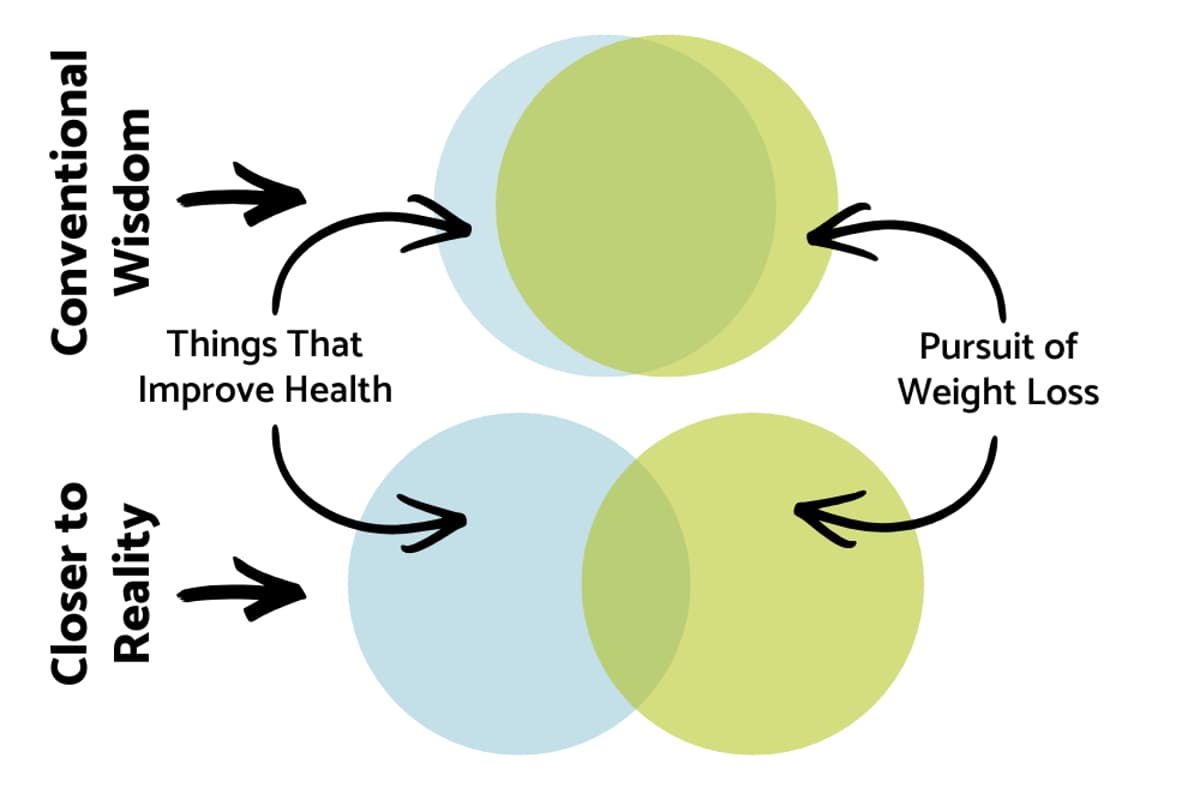
Why Weight Loss Isn’t the Key to Better Health (and What Is)
The article argues that losing weight is not synonymous with better health and highlights the shortcomings of a weight‑centric medical model. It lists health‑promoting behaviors—such as enjoyable exercise, balanced nutrition, adequate sleep, and stress management—that improve well‑being regardless of body...

Your Mind Never Gets a Real Break Anymore
The Balanced Wellness post argues that true mental rest is increasingly rare in today’s hyper‑connected world. Even when physical tasks are finished, the mind continues replaying past events, anticipating future duties, and clinging to unfinished details. This mental chatter prevents...

Parents Feel Most Lonely, Five Months After Having A Baby
A new Aldi‑commissioned study of 1,000 Scottish parents reveals that 53% experience loneliness after the birth of a baby, with the feeling peaking around five months when visits wane and partners return to work. More than half of mothers (56%)...

Charlie Munger On the Power Of Silence: 5 Things You Should Keep Private For A Happy Life
Charlie Munger argued that excessive talking erodes clear thinking and personal happiness. He urged people to keep five categories private: strong opinions, wealth details, internal resentments, unexecuted plans, and half‑baked ideas. By staying silent, individuals avoid cognitive traps such as...

You Didn't Inherit A Fate, You Inherited A Filter - The Emotions Diary #59
Karl Dunn recounts his first therapy session in a decade, discovering that a persistent feeling of being let down is an inherited emotional filter rather than destiny. He links this filter to setbacks in his career, marriage, and creative projects,...

What A Vacation Without Screens Taught Me About Burnout And The Purpose Of Time Off Work
A personal experiment of a two‑week screen‑free vacation revealed how constant digital connectivity erodes true rest. The author found that unchecked notifications keep the nervous system in low‑level alert, leading to superficial downtime and burnout. Experts cited explain that workplace...

The Difference Between a Full Life and a Crowded One
The article distinguishes a "crowded" life—filled by default commitments—from a "full" life built through intentional choices. It argues that busy schedules can feel hollow when they lack purpose, while purposeful busyness leaves a sense of satisfaction. The key difference lies...

Hello Birdie
The author revisits his fascination with a Birdfy limited‑edition birdcam, a smart feeder camera that streams live video of backyard birds and sends real‑time alerts. He describes how the device lets him observe feeding behavior, calls, and species interactions, even...

How to Stay in the Present Moment in Everyday Life: 5 Simple Habits
The article outlines five practical habits for cultivating present‑moment awareness in daily life, ranging from single‑tasking to using a simple mental cue like “Now I am ….” It emphasizes slowing down routine actions, limiting early‑day digital consumption, and employing a...

Promotion Burnout: Are Women Less Motivated to Pursue Promotions than Two Years Ago?
Robert Walters' survey reveals that 54% of professional women feel less motivated to seek promotion compared with two years ago, and 81% feel disadvantaged during promotion cycles. The dip in ambition reflects growing doubts about fairness and transparency rather than...

When Rest Fails: Part I
The post highlights a growing problem among knowledge workers: vacation time and traditional rest techniques no longer reset mental fatigue. It cites personal anecdotes of lingering exhaustion despite meditation, sleep, or digital detox. To address this, the author introduces a...

Breathwork – A Pathway to Nervous System Regulation
Breathwork leverages conscious, connected breathing to directly influence the autonomic nervous system, offering a bottom‑up method for nervous system regulation. By temporarily activating stress responses in a safe setting, it helps the nervous system reorganize from chronic hypervigilance or shutdown...

Cycling for Weight Loss: My Proven Plan That Works Fast
Cycling offers a low‑impact, calorie‑burning workout that can be scaled from casual rides to high‑intensity intervals, making it a versatile tool for weight loss. The author’s six‑week plan progresses from 30‑45 minute rides three times a week to longer sessions and...

30 Short Habits With a Massive Return On Life
Sifu Yik’s latest Substack post lists 30 micro‑habits that promise outsized life returns, ranging from simple morning routines to weekly digital detoxes. Each habit is paired with a brief rationale and a practical tip, encouraging readers to adopt a few...

Menstrual Health Continues to Be a Taboo Topic at Work. HR Can Help Change That.
Menstrual health remains a workplace taboo despite growing awareness, with 1.8 million people menstruating each month and 10% experiencing pain that can sideline them for days. A recent RM Compass report finds 63% of firms do not provide free period products and...
All or Nothing, All for Nothing? Why Dieting Fails in Lipedema — and What Actually Works
Women with lipedema often exhaust themselves on conventional diets that cut calories and increase exercise, yet see little change in the painful, disproportionate fat of their legs. Researchers and clinicians now recognize lipedema as a disorder of fat regulation, inflammation,...

Psychotropic Thunder
The post surveys a chaotic slate of U.S. policy moves and market trends. Health Secretary Robert F. Kennedy Jr. announced a push to curb SSRI prescriptions, targeting the roughly one‑in‑six Americans on these drugs. Meanwhile, prediction‑market platforms Kalshi and Polymarket are...

Takeaways From Taking a Medical Leave of Absence From College
A medical leave of absence (MLOA) is a formal, temporary break from all coursework that students can use when health issues—especially mental‑health challenges—impede academic performance. By withdrawing from courses, an MLOA protects the transcript, avoiding damaging grades and the need...

Reappraising Anxiety
Research published in the Journal of Experimental Psychology shows that reappraising pre‑performance anxiety as excitement can improve both feelings and performance. Instead of trying to calm down, individuals are encouraged to label their nervous energy as excitement, shifting from a...

Issue #245: When You Get the Message, Hang Up the Phone
The author recounts a recent two‑day Reiki training and a holotropic breathwork session in Ojai, describing the immersive rituals and personal breakthroughs experienced during the workshops. The narrative highlights the growing appeal of alternative wellness practices, noting the significant time...

Maingaining Is a Waste of Time (New Study)
A recent 10‑week study compared a maingaining protocol (≈0% prescribed deficit) with a 10% energy deficit in trained lifters. Both groups added roughly 1 kg of lean mass, but the deficit group shed 2.9 kg of fat versus 1.4 kg in the maingaining...

Magnus Expands Access to 5-Day SAINT® Depression Therapy as Leading Health Systems Scale Nationwide Adoption
Magnus Medical announced that its FDA‑cleared SAINT® rapid‑remission depression therapy is expanding to 14 states, adding partners such as Cleveland Clinic, UPMC and HCA Healthcare. Payer reimbursement now covers more than 80 million lives, including Medicare fee‑for‑service and several commercial plans....

Most Workers Say Menopause Shouldn’t Be Ignored at Work
A Harris Poll commissioned by Wondr Health surveyed 2,095 U.S. adults and found that 68% of employed respondents think women should not be expected to push through menopause symptoms at work. The sentiment is shared by 67% of men and 70%...

Anti-Aging Creams: The Perfect Trap (Scam?) Between Science and Marketing
The post argues that anti‑aging creams are largely a marketing trap, offering limited scientific proof despite a booming multi‑billion‑dollar market. The author, a seasoned health writer and Stanford‑affiliated longevity researcher, admits to occasional purchases but explains why the products fall...

Your Brain Isn’t Broken. Your System Is.
The post argues that conventional productivity hacks fail for adults with ADHD because they assume consistent motivation and linear task execution. It reviews Tanvir .I’s new book *Finally Focused*, which redesigns productivity around dopamine cycles, time blindness, and executive‑function deficits....

Access Plus Environment Plus Desire Still Equals Zero If You Don't Have Accountability
The author spent $10,000 on personal training despite a free Equinox membership provided by an American Express card. He discovered that the gym’s access alone didn’t move the needle on his physique; only the accountability from a trainer did. The...

Life in Activism: Humans—Including You—Might Be Naturally Drawn to Bad News
Recent research confirms a strong negativity bias in Western audiences: negative headlines attract more clicks, are shared more frequently, and dominate social feeds. Large‑scale analyses of millions of tweets and news clicks show bad news outperforms good news, a pattern...

The Call Is Coming From Inside the Pattern
In a Mental Health Awareness Month post, Holly explains that the nervous system communicates through raw sensations, not clear‑cut emotions, and that our brain quickly spins narratives around those signals. She outlines four common dating states—preoccupation, vague unease, calm ease,...

What Physicians and Dragonflies Share in Resilience and Agility
The article draws a vivid parallel between physicians and dragonflies, highlighting shared traits of agility, rapid decision‑making, and resilience. Dragonflies’ four independent wings enable hovering, 30 mph flight, and even flight with a broken wing, while their 360° vision mirrors physicians’...

The Art of Detachment
The Happiness Planner has launched "The Art of Detachment," a 30‑day journal designed to help users stop chasing, overthinking, and holding onto unhealthy emotional ties. Each day presents a prompt and brief reflection to surface hidden mental patterns that keep...

Routine as Cognitive Scaffolding — And What Happens When It’s Removed
The post reframes routine as a cognitive scaffold that offloads decision‑making and preserves mental bandwidth. When habitual structures disappear, people experience heightened cognitive load, slower choices, and fragmented focus. The author argues that recognizing this hidden function changes how we...

From Stress to Recovery: Why Magnesium Is the Ultimate Mineral
Dr. Sircus explains that chronic stress rapidly depletes the body’s magnesium stores, creating a feedback loop that fuels disease. He argues modern diets no longer provide adequate magnesium, making supplementation essential for cardiovascular, metabolic, and neurological health. The video links...

How GLP-1 Medications Shift Modern Weight-Loss Trends
GLP‑1 medications are rapidly becoming the dominant tool for weight loss, especially among young adults, as cultural preferences swing back toward a thinner, early‑2000s‑style ideal. The surge in prescriptions coincides with a social‑media‑driven “quick‑fix” narrative that often omits the need...

Managing Autoimmune Disease – the Evidence for a Whole Food Plant-Based Diet
A whole‑food plant‑based (WFPB) diet is presented as a evidence‑backed strategy to manage autoimmune diseases, which affect roughly 10% of the UK population (about 6.9 million people). The article explains how dysbiosis and a Western diet high in saturated fat and...

Who Is Therapy For?
The author, a seasoned therapist, argues that therapy is not limited to any single demographic. While many clients now attend voluntarily, mandated participants—such as those under court orders for child reunification, criminal consequences, substance‑abuse programs, or probation—can also derive value....

ASMBS: Moving Into a New World of Obesity Care
The 2026 ASMBS meeting in San Antonio signaled a shift in obesity treatment from a sole focus on bariatric surgery to a broader, metabolic‑health‑centric model. Surge in GLP‑1 pharmacotherapy is reshaping patient expectations and clinical pathways, positioning drugs as partners...