
OpenAI on OpenAI: Stacie Faggioli, Business Finance Officer Applications, OpenAI
Stacy Faggioli, OpenAI’s Business Finance Officer, outlined how the company is re‑engineering its finance function around artificial intelligence. She described three guiding principles—AI‑native design, headcount leverage, and rapid deployment—and detailed the three‑pillar structure of strategic finance, finance operations, and enterprise fintech, with engineers embedded directly within finance. The team’s AI‑first approach has shrunk its headcount to roughly 20% of comparable tech firms while maintaining performance. By treating AI tools as core workflow components rather than add‑ons, OpenAI has accelerated decision‑making and reduced reliance on external advisors. Real‑time iteration ensures the finance organization evolves alongside the technology. Concrete examples include an investor‑relations chatbot that answers diligence queries at CFO‑grade speed, a ChatGPT‑for‑Excel plugin that builds fully auditable LBO models in minutes, and Codeex‑driven dashboards that automate marketing spend analysis and sales‑insight extraction. Organizational agents now handle procurement, credit checks, and contract review, deflecting about 60% of routine requests. These innovations demonstrate a scalable, cost‑effective finance model that can be replicated across industries. By leveraging AI to amplify individual productivity and automate repetitive tasks, OpenAI is setting a new benchmark for finance teams seeking to do more with fewer resources while maintaining rigorous compliance and analytical depth.

Operationalizing AI in Workflows: Lee Spacagna, Solutions Engineer, OpenAI
OpenAI solutions engineer Lee Spacagna demonstrated new ChatGPT Workspace agents designed to fill the gap between individual AI assistants and large enterprise systems. The low-code agent builder auto-generates instructions and connects to common tools like Outlook, Teams, SharePoint and Salesforce...

Frontier Intelligence & Financial Services: Katy Elkin, GTM Lead, OpenAI
Katy Elkin, GTM Lead at OpenAI, outlined how generative AI is transforming financial services, unveiling new product offerings, security tools, and a European inference residency. She framed the discussion around three executive questions: workforce redesign, workflow impact, and product infusion. Elkin...
Here’s How Microsoft Managed to Burn Through Its AI Budget in 5 Months - NEW
Microsoft reportedly exhausted its annual AI budget within the first five months of the year, driven largely by expensive token consumption on Anthropic’s Claude, prompting senior leadership to clamp down on spending. The episode mirrors similar overruns at Uber, which...

The AI Cycle That Breaks the Economy #ai #automation #warning
Two economists from Wharton and Boston University warn of an "AI layoff trap" in which widespread automation boosts productivity but erodes consumer demand because displaced workers lose purchasing power. Their theoretical model shows a feedback loop: firms cut labor to...
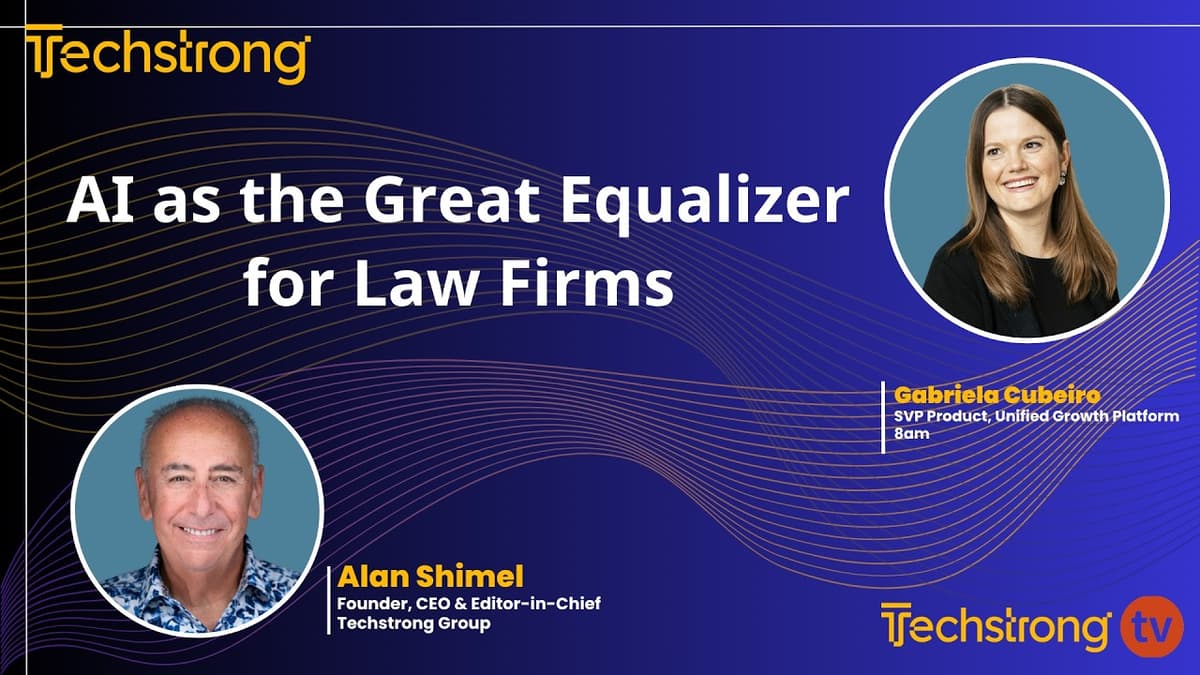
AI as the Great Equalizer for Law Firms
The interview with Gabby Kubiierro, SVP of Product at 8 a.m., frames artificial intelligence as a transformative equalizer for law firms. 8 a.m. offers a unified platform for attorneys and other professional service firms, aiming to streamline both client‑facing work and back‑office...
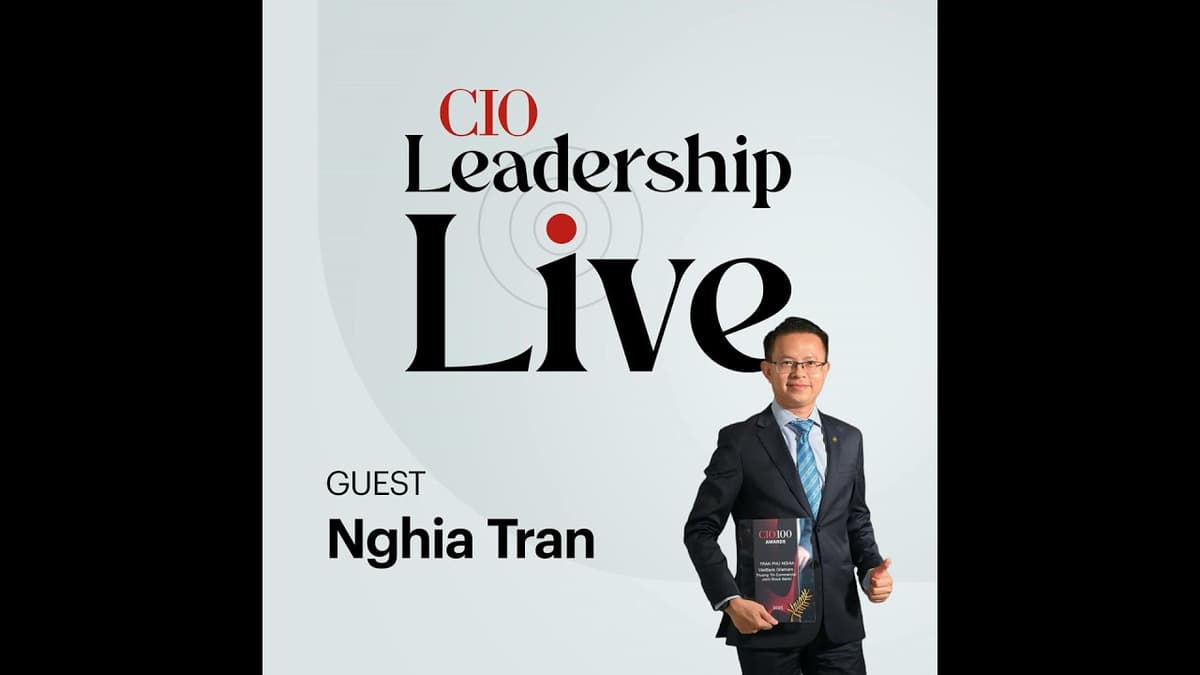
VietBank CIO on Agentic AI, Homegrown Innovation, and Why Vision Beats Scale
VietBank’s chief information officer, Nga Tran, outlined how the bank is using what he calls “Agentic AI” and home‑grown open‑source solutions to modernise its technology stack, strengthen cyber‑defence and create new revenue streams. Tran described the deployment of an internal Agentic...

Is RDW Stock Still A Buy? | Answering Your Questions
The video is a rapid‑fire Q&A covering several high‑growth tech stocks and emerging sectors, from Redwire and Qualcomm to compute‑cloud providers, cybersecurity firms, and autonomous‑vehicle players. Luke advises buying Redwire on a dip near $14‑$16, citing the 20‑day moving average...
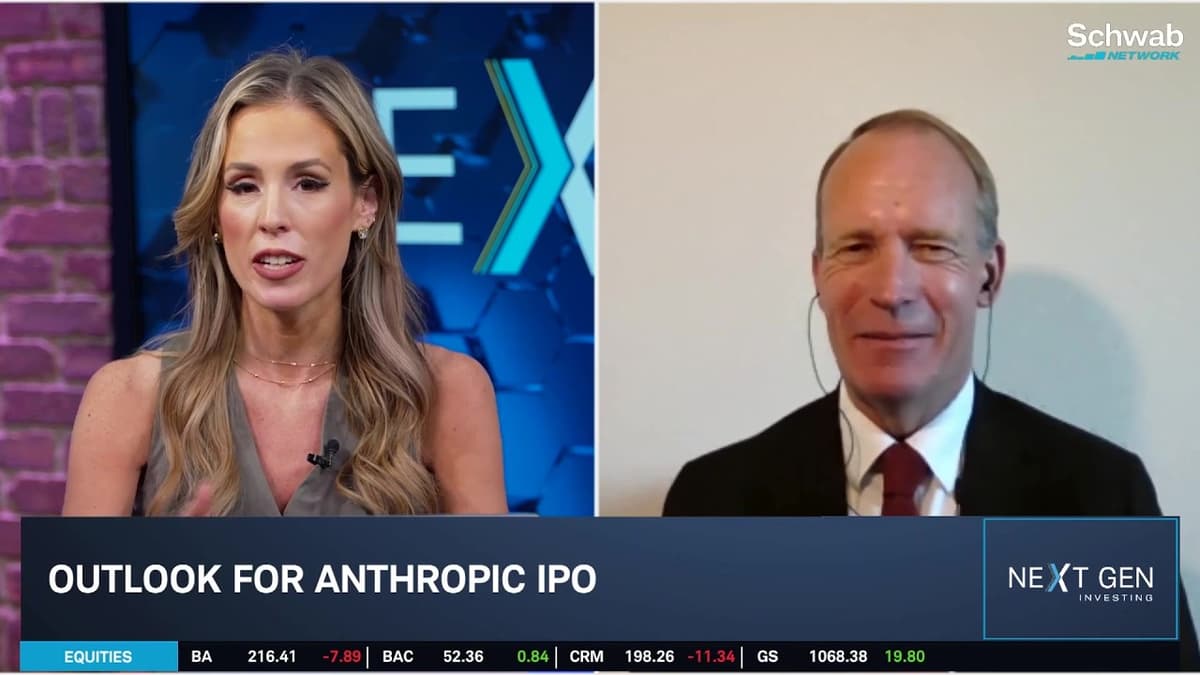
Anthropic During AI "Mania:" Market Able to Stomach Blockbuster IPO?
Anthropic’s upcoming IPO, touted as the largest ever, has investors eyeing a possible $1 trillion market cap and could serve as a litmus test for the broader AI trade amid the current hype. The company is being priced at roughly 25 times sales,...

Trump’s Voluntary AI Framework Sparks Tech-Security Clash | WION Podcast
The podcast examines Trump's newly issued executive order on advanced AI, which replaces an earlier hard‑line stance with a light‑touch, voluntary review regime. The order, titled “Promoting Advanced Artificial Intelligence Innovation and Security,” aims to coordinate federal vetting of high‑risk...

The Agent Asked Me, "Are Your Scoring Criteria Documented Somewhere I Can Reference?" It Made an Edi
A user recounts how an AI agent transformed their workflow by asking targeted, operational questions about inputs, output formats, automation level, and scheduling rather than following generic setup prompts. The agent went further, querying whether the scoring criteria were documented—a...

I Went to the Biggest AI Infrastructure Conference
The video recaps the three‑day Temporal Replay conference in San Francisco, where the spotlight was on making AI agents production‑ready. Organizers argued that most agents are simple Python loops that crumble under real‑world constraints—timeouts, rate limits, and state loss—unless developers...

Creating a Podcast Hype Video with Gemini Omni
The creator uses Gemini Omni's Flow suite to design a short hype video for the How I AI podcast, transforming a fisheye-lens avatar into a digital on-screen persona. They outline a seven-frame storyboard featuring extreme close-ups of typing, wide office...
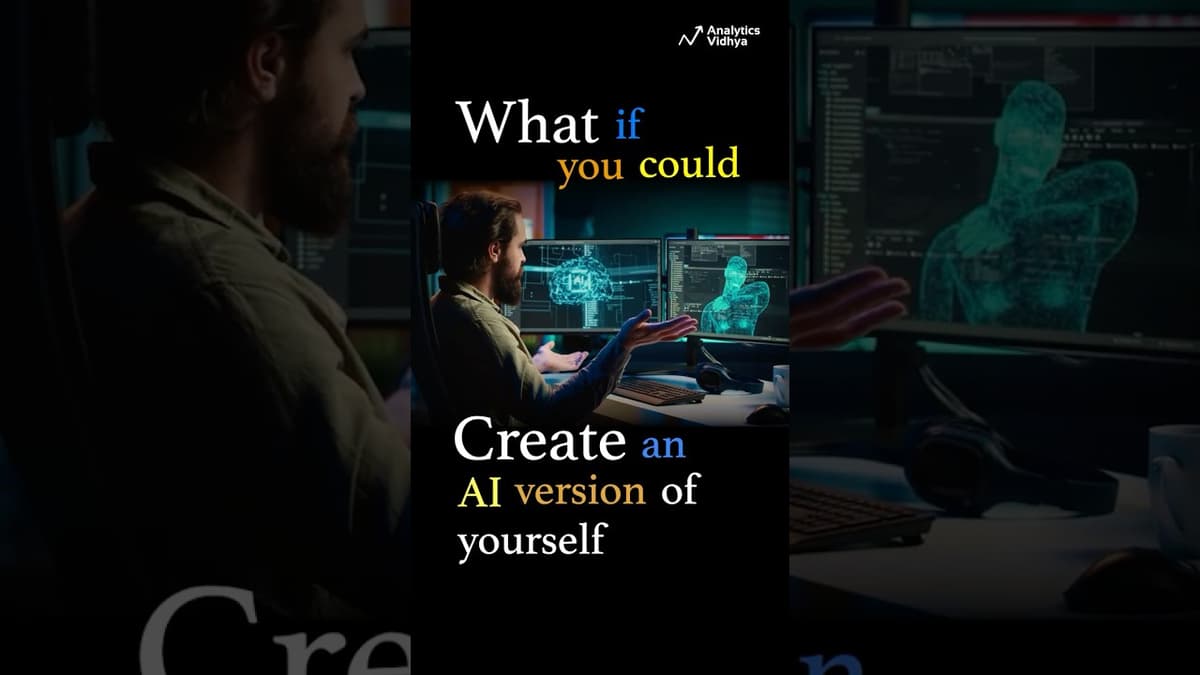
How to Clone Yourself with AI in 8 Steps
A presenter outlines an eight-step process to build a personalized AI “clone” that emulates an individual’s voice and responses. The workflow starts with exporting and cleaning years of Telegram chat, converting conversations into instruction–response pairs, selecting a powerful base LLM,...
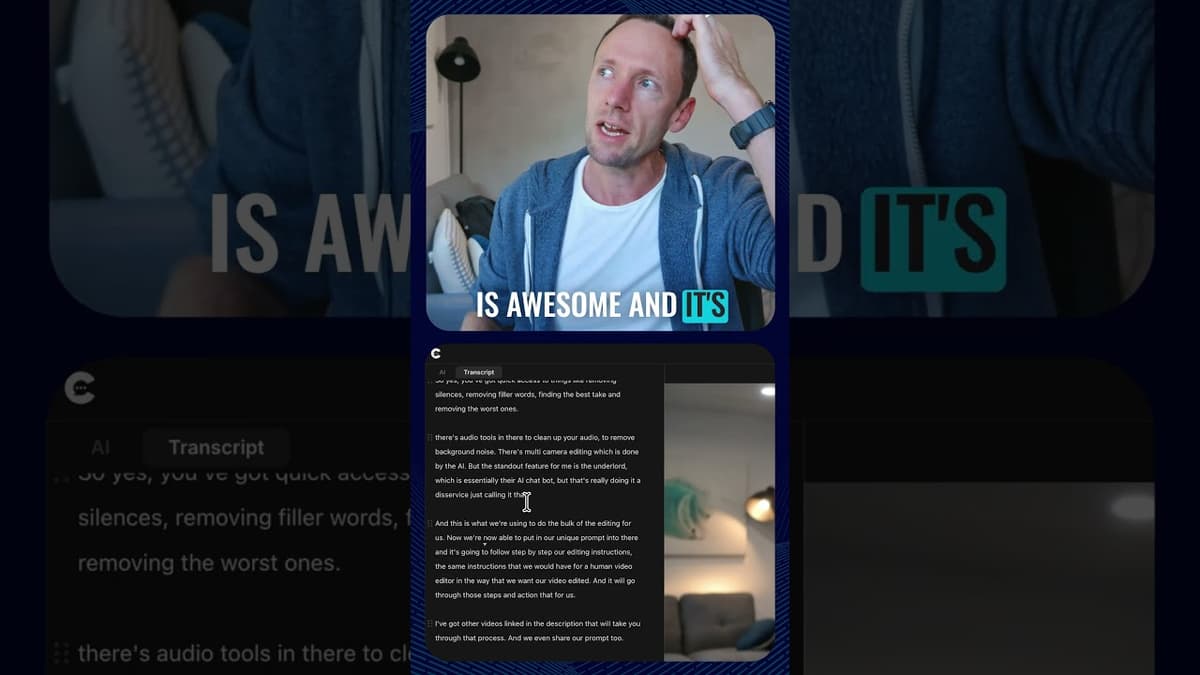
Finally an AI That Understands Editing #AI #videoediting
An emerging AI video‑editing platform promises to understand editing decisions the way a human would. The tool automatically cycles through a review loop—checking transcript alignment, removing filler, selecting the best take, and preserving sentence integrity—without requiring explicit prompts. In a test, the...
Why Everyone Is Wrong About AI's Water Usage
Former physics teacher and climate communicator Andy Maisley argues that headlines claiming AI is an environmental disaster overstate the direct energy and water footprint of running models. He shows that per‑prompt costs are tiny — roughly hundreds to a thousand...
OpenAI Investor Innovation Day
OpenAI’s Investor Innovation Day highlighted the company’s push to embed generative AI deep within enterprise operations. The session showcased Codeex, a tool that integrates deal‑folder data with real‑time AI queries, and announced that 2,700 employees now hold enterprise ChatGPT licenses,...

Perplexity Just Built an AI That Does Everything
Perplexity Computer is a fully hosted AI-agent platform that replicates and simplifies the capabilities of DIY systems like OpenClaw, providing threaded tasks, a code-executable environment, built-in skills, and support for frontier models such as Opus 46, GPT54 and Sonnet 46....

Grindr Growing From Dating App to Politics, AI
Grindr is repositioning itself from a hookup app into a broader "global gay neighborhood," expanding into live events, higher‑margin products and AI features the CEO dubs "gay AI." The company reported 38% revenue growth last year and claims improving profitability—citing...
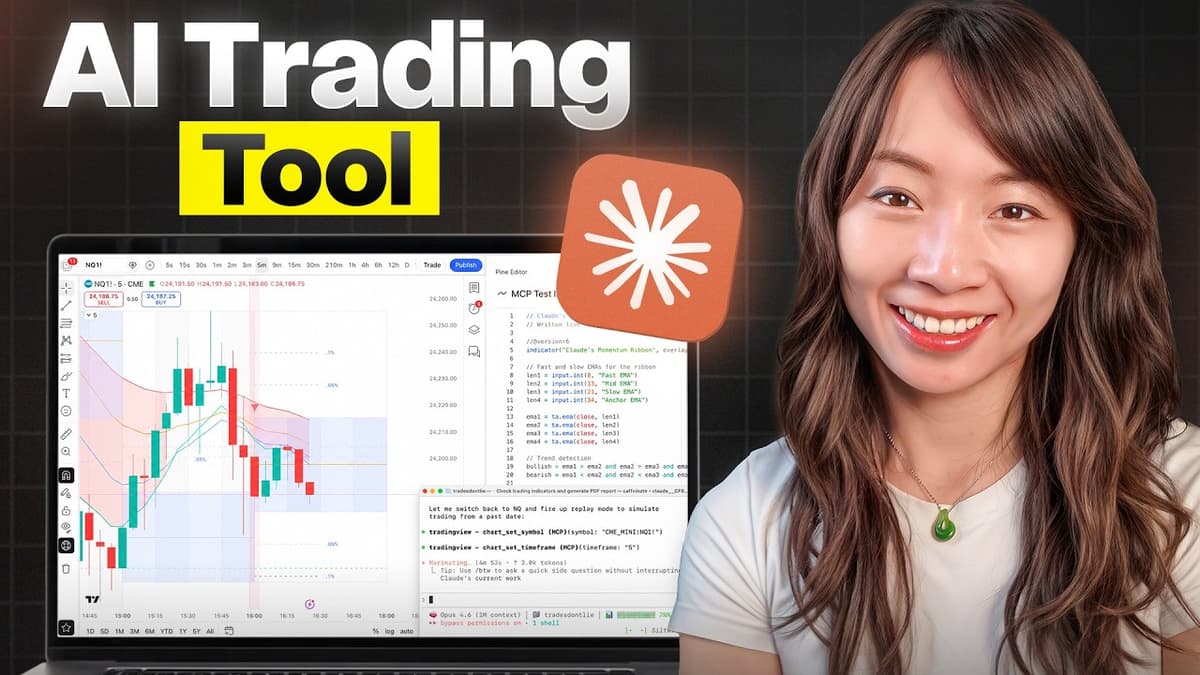
Create Your Premarket Trading Assistant with Claude + Tradingview AI
A veteran full-time trader demos how to build a pre-market trading assistant by linking Claude (via Cloud Code) to the TradingView desktop app, explaining required subscriptions, installation steps, and a Mac-only workaround. He walks through creating a two-stage pipeline—a preliminary...

Why Token Maxing Is Failing Enterprise Startups | Legora CTO
The interview with Legora CTO Jacob Lorettson centers on why traditional token‑maxing models are breaking down for enterprise startups and how AI‑driven tooling is redefining software development. Lorettson explains that the company’s rapid growth to $100 million ARR in 18 months...

The AI Chip Bubble: Why South Korea & Taiwan Are In the Danger Zone
The podcast examines whether the AI‑driven surge in memory‑chip equities in South Korea and Taiwan constitutes a bubble. Host Maxy interviews analyst Michael Fritzell, who points to soaring index returns—Korea’s EWIs up roughly 255% versus Taiwan’s 112%—and profit forecasts that...

Emergent: How Six Months of Tinkering Led To A $100M ARR Company
Emergent is an AI‑native platform that lets anyone create, host and monetize software simply by chatting with a coding agent. Founded by a former Google engineer and the creator of India’s quick‑commerce giant Dunzo, the company launched its current product...

How to Build Your First AI Agent in 10 Minutes (No Code)
The video walks viewers through building their first AI agent using Nexos.ai, a no‑code platform that eliminates the need for programming skills or server management. It positions the service as the simplest entry point for non‑technical users who want to...
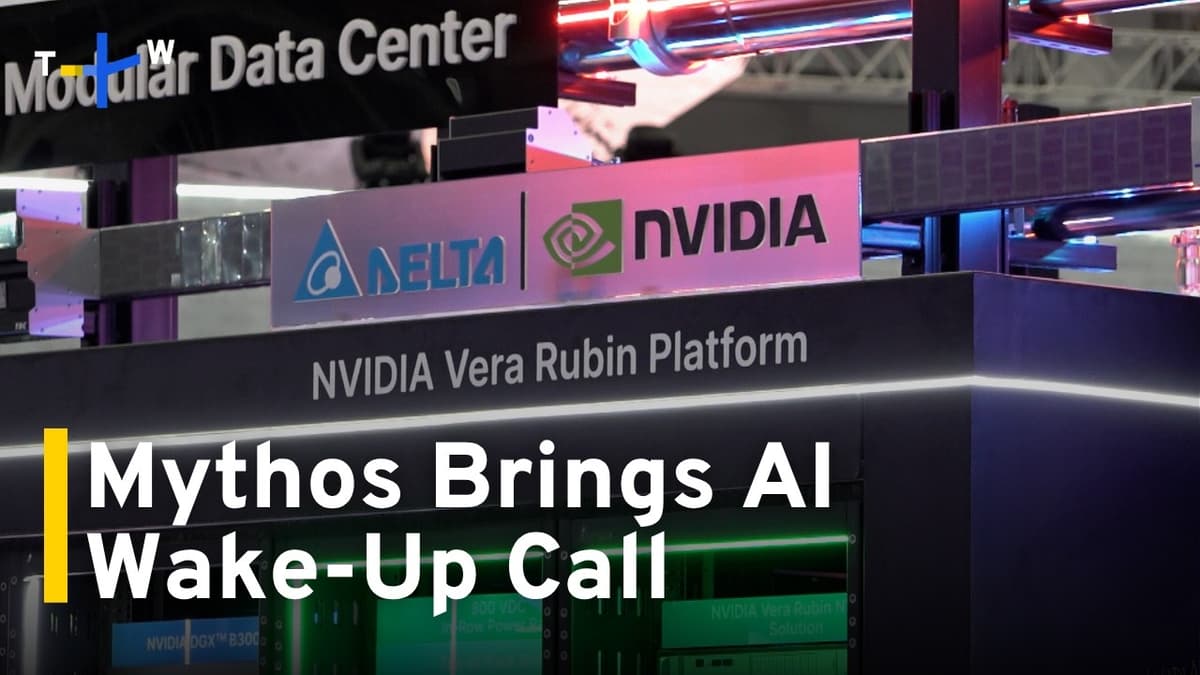
Analysis: How Is Anthropic's Mythos Changing How Policymakers Think About AI? | TaiwanPlus News
A former National Security Council official said the current U.S. administration has rolled back key technology export controls, complicating efforts to limit advanced AI and semiconductor transfers to China and spurring smuggling and remote-access workarounds. He credited Anthropic’s decision to...
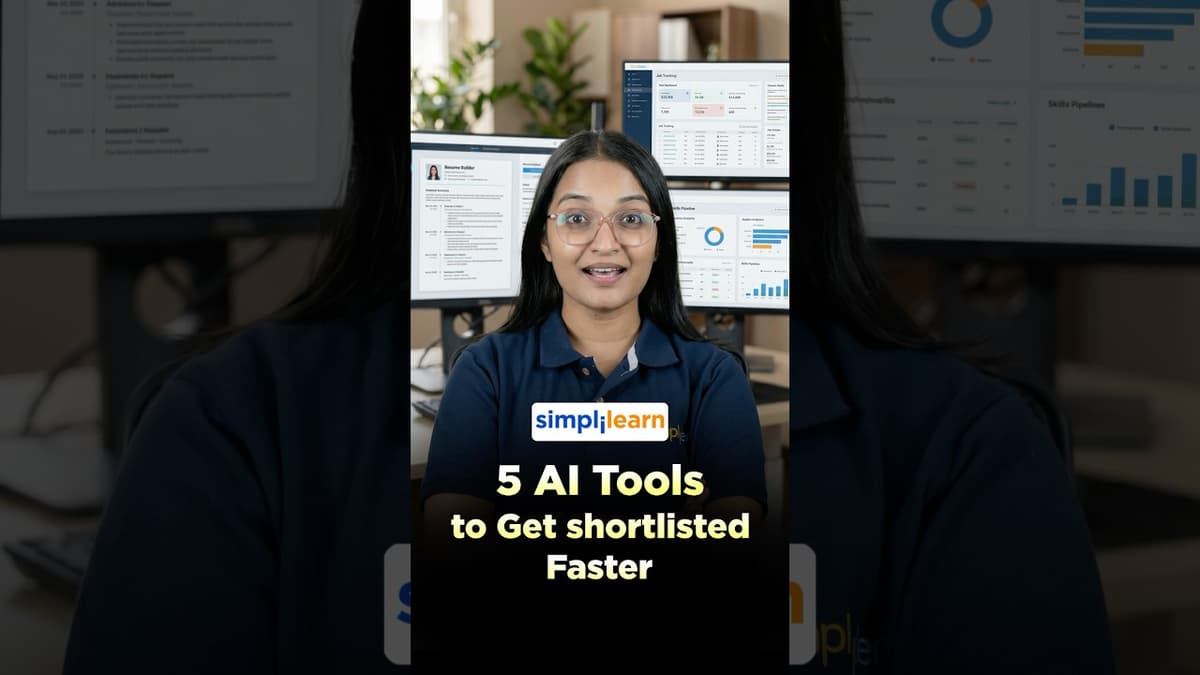
5 AI Tools to Get Shortlisted Faster | Resume Hacks | Job Search Tips 2026 #shorts #simplilearn
A short video outlines five AI tools job seekers can use in 2026 to increase their chances of getting shortlisted: an ATS-focused resume scanner to match job descriptions, a tracking tool to organize applications, a feedback tool for resumes and...
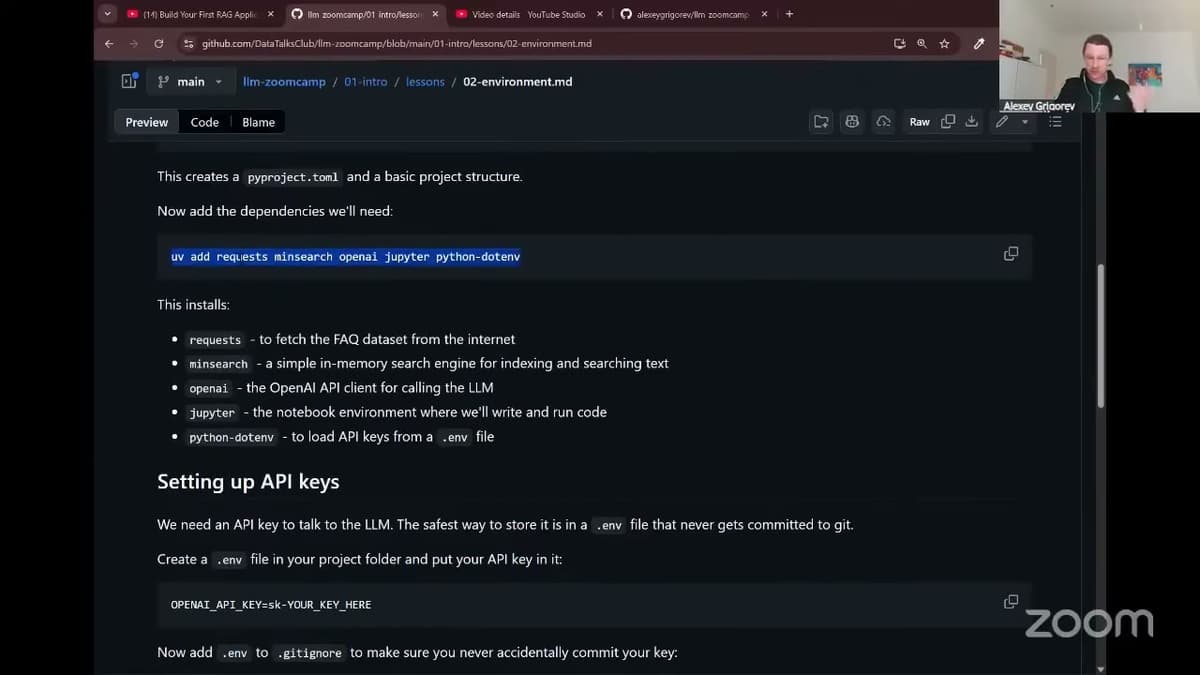
LLM Zoomcamp 1.2 — Environment
The instructor walks through preparing a reproducible Python environment for the LLM Zoomcamp using GitHub Codespaces and VS Code, creating a new repo and initializing the project with UV to produce a pyproject.toml. They install key dependencies (requests, a vector-search...
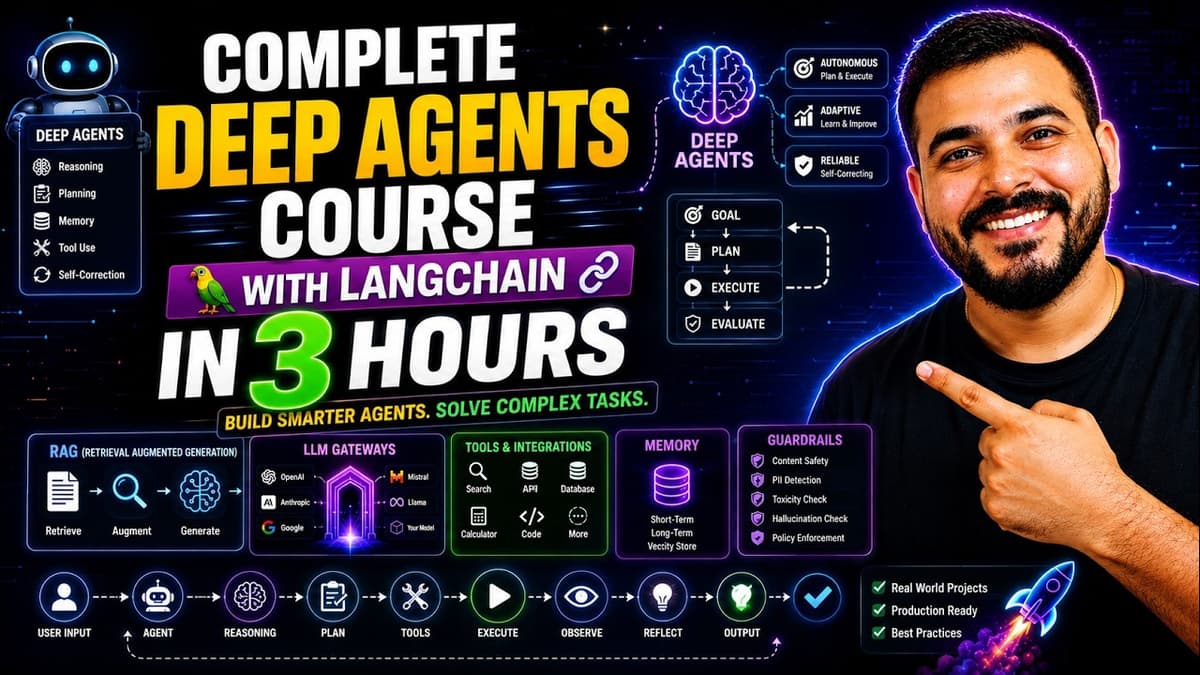
Complete Deep Agents Course With Langchain In 3 Hours
The video introduces "deep agents," a next‑generation AI architecture that moves beyond the simple LLM‑tool loops of traditional agents. Krishna contrasts shallow agents—single‑step LLM calls to external tools—with more advanced React agents that can iterate tool calls but still lack...

Frontier Brief: How Google Is Reimagining Creativity with AI
Google’s Creative Lab showcased how the company is fusing artificial intelligence with human imagination, unveiling the Gemini app and the new “Flow” suite aimed at professional creators. The team emphasized tiny, autonomous labs—typically five to seven people—that iterate quickly, and they...

Ads Experts React to AI Brief
The video features ad‑tech experts reacting to Google’s new AI Brief, a tool that lets advertisers feed detailed messaging guidelines directly into generative ad models. They describe the feature as a “game‑changer” that simplifies the prompt‑engineering process from day one. By...

How AI Could Change the Way Campaigns Are Run
Speakers say AI is poised to reshape political campaign operations by automating many entry-level tasks now performed by low-paid young staff, enabling campaigns to achieve scale with fewer people. For underfunded primary campaigns, that could mean cutting roles like large...
Stanford MS&E435 Economics of the AI Supercycle | Spring 2026 | Applications, Applied AI
Tuhin, co-founder and CEO of Base10, recounted his path from finance and early ML research to launching Base10 in 2019 to build production inference infrastructure. Base10 now powers latency- and reliability-sensitive AI apps—examples include WhisperFlow (speech-to-text keyboard) and Abridge (ambient...

Stanford CS336 Language Modeling From Scratch | Spring 2026 | Guest Lecture: Dan Fu
Dan Fu, guest lecturing for Stanford CS336, outlined the engineering and research challenges of serving large language models, focusing on the end-to-end “lifetime of a token” from request to GPU-backed inference. He argued that scale and GPU capacity have driven...
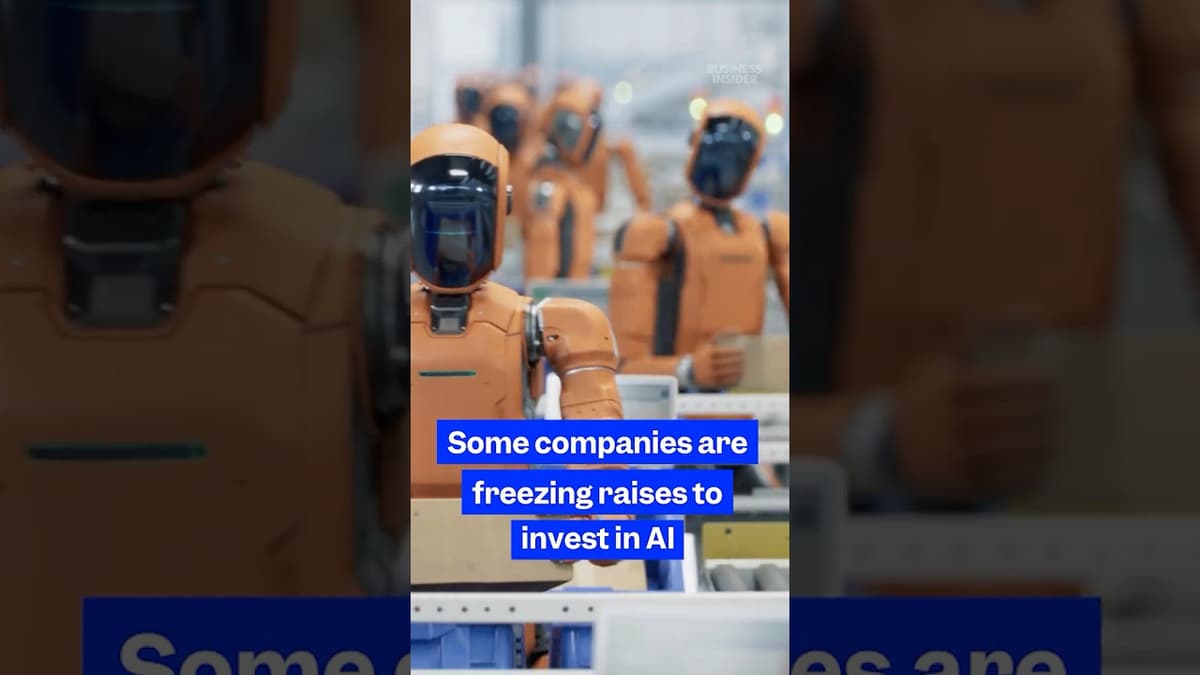
Here's Why some Companies Are Choosing #AI Spending over Employee Raises. #Teradata
Teradata told employees in an internal memo that it will divert the budget normally used for annual salary increases to boost AI spending in 2026, a move confirmed to Business Insider. The company joins other firms, like T-Mobile, that have...
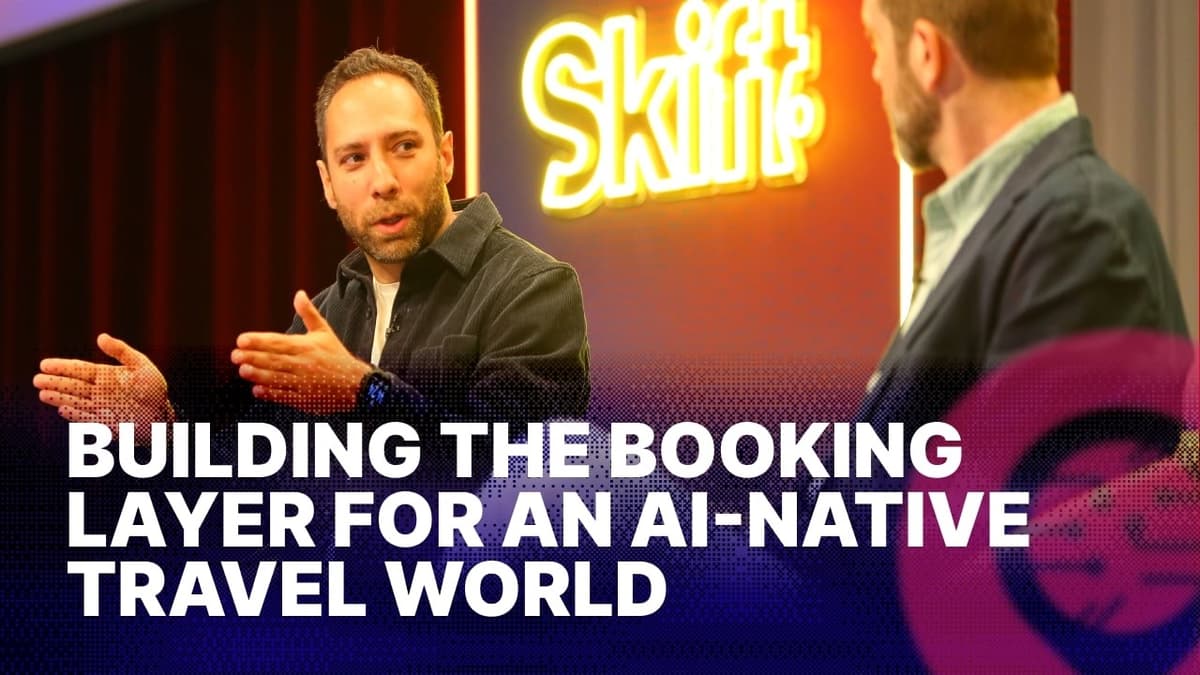
AI Can Plan the Trip, But Can It Book It? Travelport’s “Booking Layer” Play
Travelport unveiled its revamped Trip Services platform, a cloud‑native API suite designed to bridge the gap between AI‑driven travel inspiration and the actual booking transaction. The company says the new APIs shift search from deterministic A‑to‑B queries to attribute‑based requests—e.g., “warm...
The Technology that Powers the AI Revolution at AI Infrastructure Field Day 5 #AIIFD5 #TFDLive
The AI Infrastructure Field Day 5 event, taking place June 10‑11, will be streamed live on LinkedIn, YouTube and the Tech Field Day sites. It brings together vendors and experts to showcase the technologies powering today’s AI boom. Key sessions include...
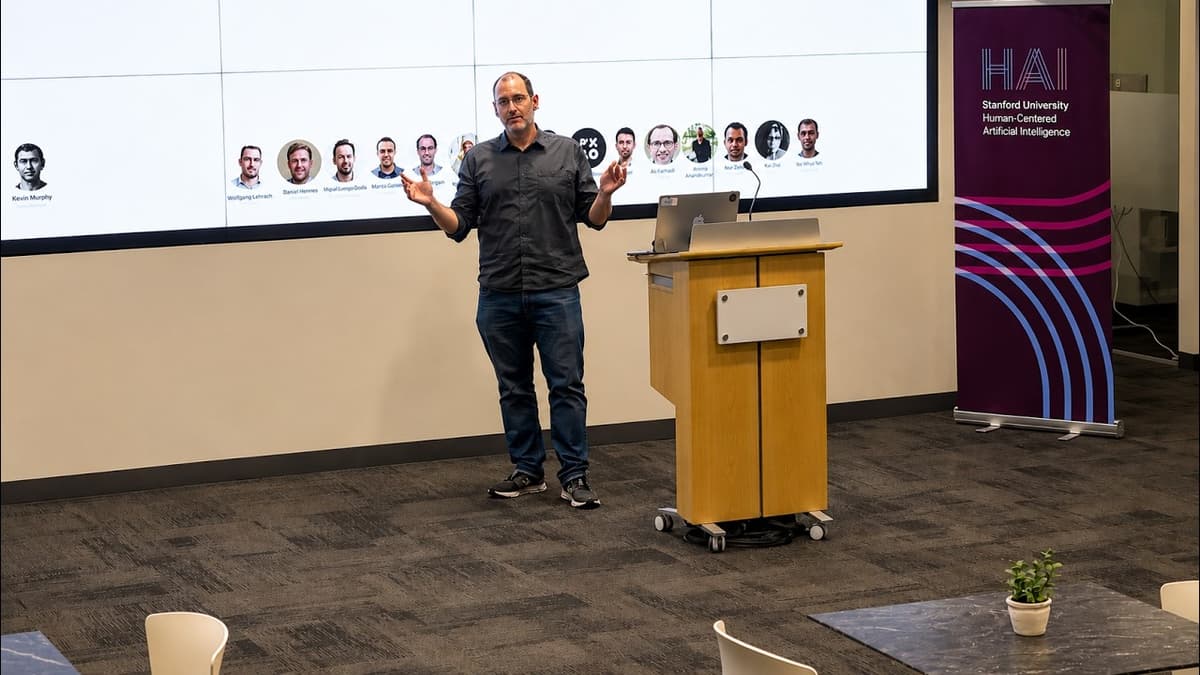
HAI Seminar: Code World Models for General Game Playing
DeepMind researchers presented two approaches for general game playing that use LLMs to synthesize executable game models from natural-language rules and play trajectories. In the “code world model” method, an LLM generates a faithful game implementation (with unit-test-like trajectories) which...

Can Hospitality Coexist with AI Ordering Technology?
Restaurant Business’s latest podcast examines McDonald’s rollout of AI‑driven drive‑thru ordering as part of its “McDonald’s Next” initiative, questioning how the technology aligns with a hospitality‑focused brand. The show also highlights Logan’s Roadhouse testing a THC‑infused cocktail in Texas, and...
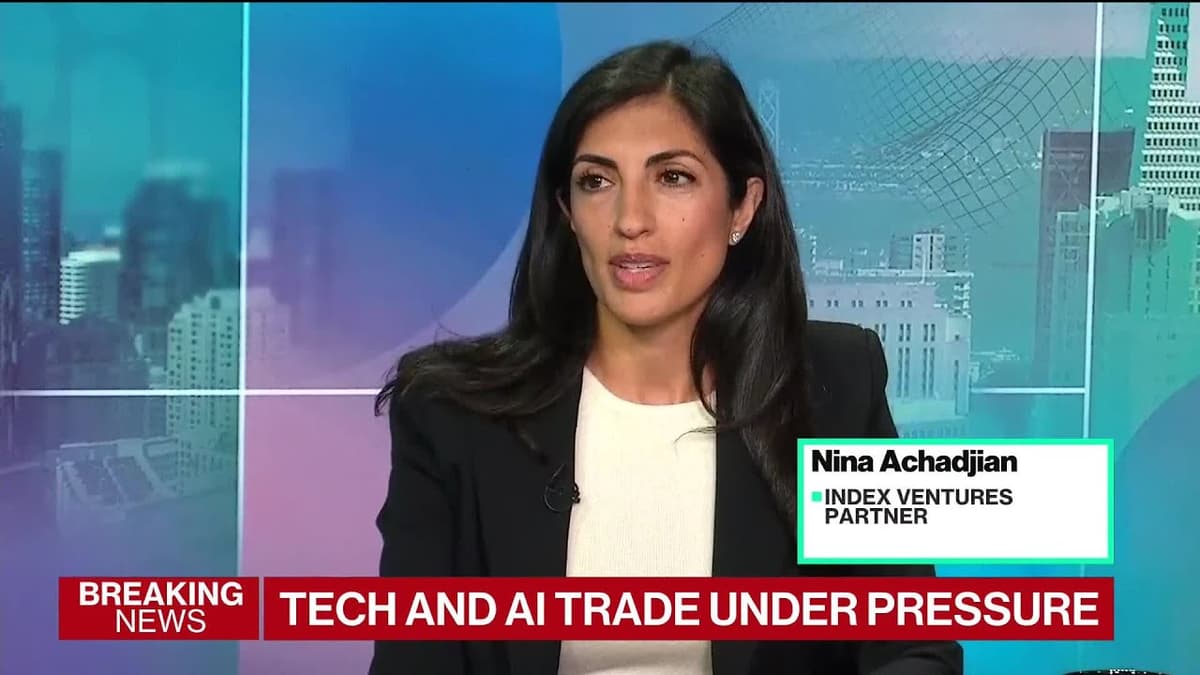
Index Ventures' Achadjian on Backing Ex-SpaceX Workers
Index Ventures partner Achadjian outlined the firm’s emerging thesis that the next wave of artificial intelligence will move from pure software to the physical world. While public markets remain volatile, private capital is pouring into "physical AI" – applications that...

How AI and Data Integration Are Transforming Grocery Loyalty and Sales
The interview with David Buckingham, CEO of KBO, at Grocery Tech 2026 focused on how artificial intelligence and data integration are reshaping grocery loyalty programs and sales growth. Buckingham described KBO’s platform that delivers real‑time, behavior‑based communications to help retailers...
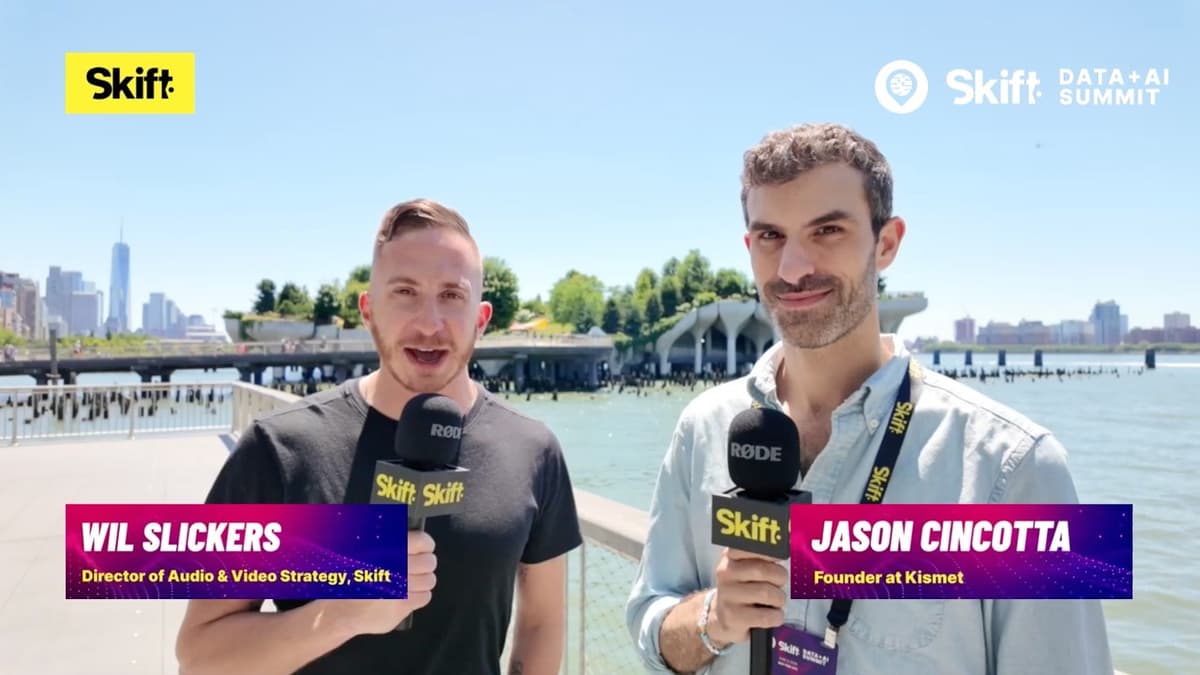
Is AI Creating a New Middleman in Hospitality or Killing the Old One?
At the Skift Data and AI Summit, Jason Cincotta of Kismet argued that AI‑driven data orchestration is reshaping hospitality tech. New vendors act as a middleman, aggregating data from fragmented legacy systems and the flattened booking funnel. While these platforms...
27% of Businesses Say Roles Accurately Reflect AI Involvement: Report
A NTUC Learning Hub survey of 200 business leaders found only 27% say job scopes accurately reflect how agentic generative AI is involved in daily work, revealing a gap between rapid AI adoption and role redesign. Firms report productivity gains...
Why AI Chipmaker Stocks Are Taking a Dip
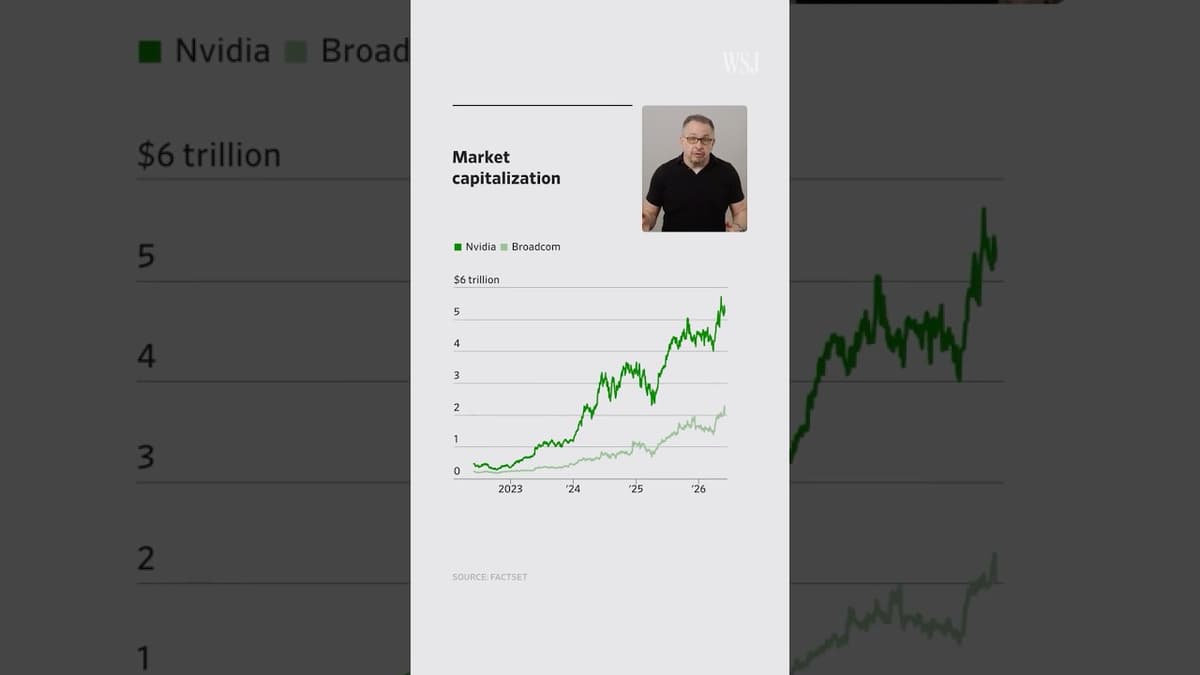
The video examines why shares of AI‑chip leaders Broadcom and Nvidia are slipping even as they project record‑high revenues. Broadcom reiterated a $100 billion AI‑chip sales target for the next fiscal year, yet its stock dropped after earnings. Nvidia enjoyed a brief...
DeepMind’s New AI Found A Strange New Way To Think
DeepMind’s new system, AlphaProof Nexus, attempted about 350 formalized Erdős problems and produced nine verified proofs, a 95.7% failure rate, at a cost of a few hundred dollars per solved problem. The team used Lean for formal verification and a...
Lio CEO Vladimir Keil Explains How Its AI Offerings Solve Procurement Challenges
At New York Tech Week, LEO’s founder and CEO Vladimir Keil highlighted the company’s AI‑powered platform that automates end‑to‑end procurement for Fortune 500 and Global 2000 enterprises. The solution combines autonomous negotiations, supplier onboarding, and voice‑enabled invoice matching to streamline traditionally manual...

Why AI Shopping Agents Are Changing Your Amazon Strategy
The podcast explores how AI‑powered shopping agents are reshaping the Amazon experience and broader e‑commerce landscape. Hosts Noah Wickham and guest Trevor Sumner argue that agents can anticipate what a consumer will buy before the shopper even realizes a need,...

How Legora Went From YC to $100M ARR in 18 Months
The video chronicles Lora’s meteoric rise from a Y Combinator (YC) cohort to $100 million in annual recurring revenue (ARR) within just 18 months, highlighting a blend of bold branding, relentless sales, and product breadth that reshaped the legal‑tech landscape. Key moves included...

Cyberattacks Are Going Physical and the Government Wants Early Access to #AI #cybersecurity #shorts
The federal government is seeking early voluntary access to frontier AI models under a new executive order that would let developers share systems for review up to 30 days before public release to spot national security and cybersecurity risks. Officials...
AI Boosts Productivity, but Not in Production with Nathen Harvey
A 2025 study finds that developers report higher individual productivity as they adopt AI tools, and teams are pushing more software changes into delivery pipelines. However, the surge in throughput has been accompanied by increased delivery instability—more rollbacks and hot...

I Didn’t Know AI Could Do THIS
Creators are now feeding AI screenshots of Google Maps, drawing a route, and receiving photorealistic video that follows the exact path. The technique leverages generative video models to turn static map data into moving footage that looks like a drone...