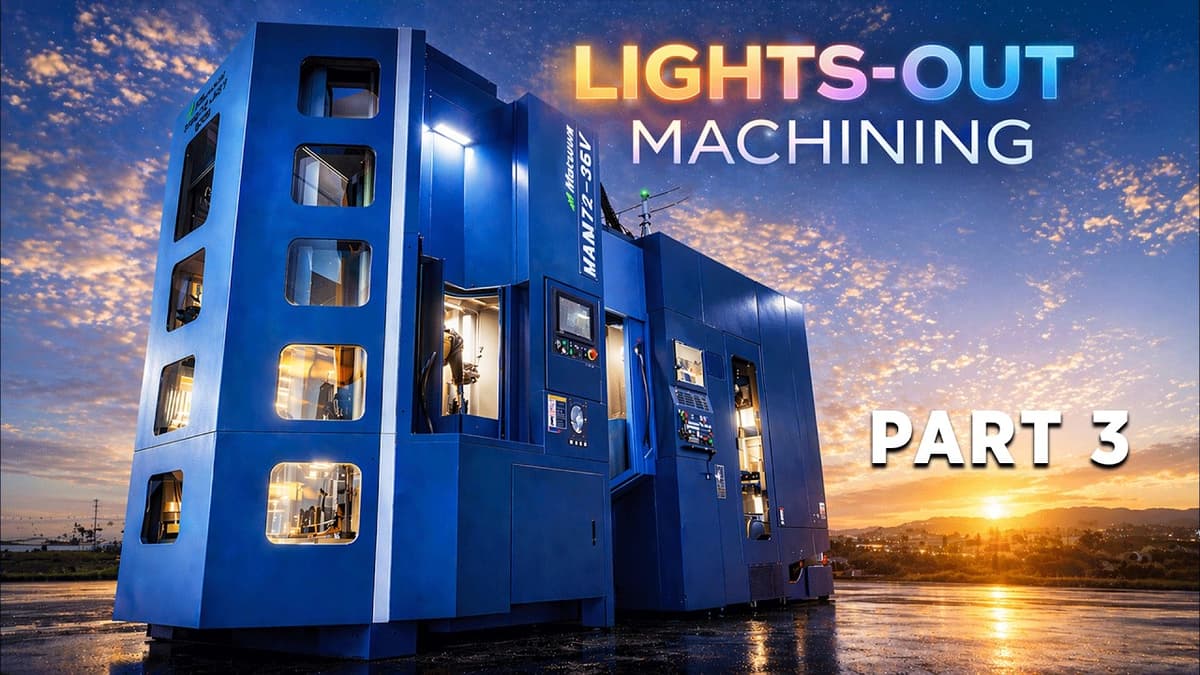
How Smart Shops Make More Money by Scaling Output
The video concludes a three‑part series that shows how to program the MAM 7235V 40‑pallet, five‑axis CNC so shops can run lights‑out automation and keep production domestic. It walks viewers through assigning projects in the machine’s Project Manager, linking each pallet to a specific part program, and using the Pallet Monitor and Schedule Setting screens to queue multiple pallets for continuous overnight runs. Features such as tool‑breakage detection, in‑process probing and automatic start‑up are highlighted as essential for unattended quality control. Barry emphasizes that the system “turns the machine into a vending machine,” noting that once the auto button is engaged the machine cycles pallets without any operator. He also points out that work‑holding can be swapped on‑the‑fly, allowing different parts to share the same machine. By extracting every hour of machine time, manufacturers can avoid costly overseas labor, defer capital purchases, and improve margins, making domestic CNC shops financially competitive.

Your Façade Is Your Biggest Blind Spot. This Robot Uncovers It, with Verobotics CEO & Co-Founder...
In this Tangent episode, Ido Genosar, CEO and co‑founder of Verobotics, explains how his company is building the first operating system for building facades. The robot traverses a structure’s exterior, performing cleaning, inspection, and predictive‑maintenance while streaming high‑resolution data to...
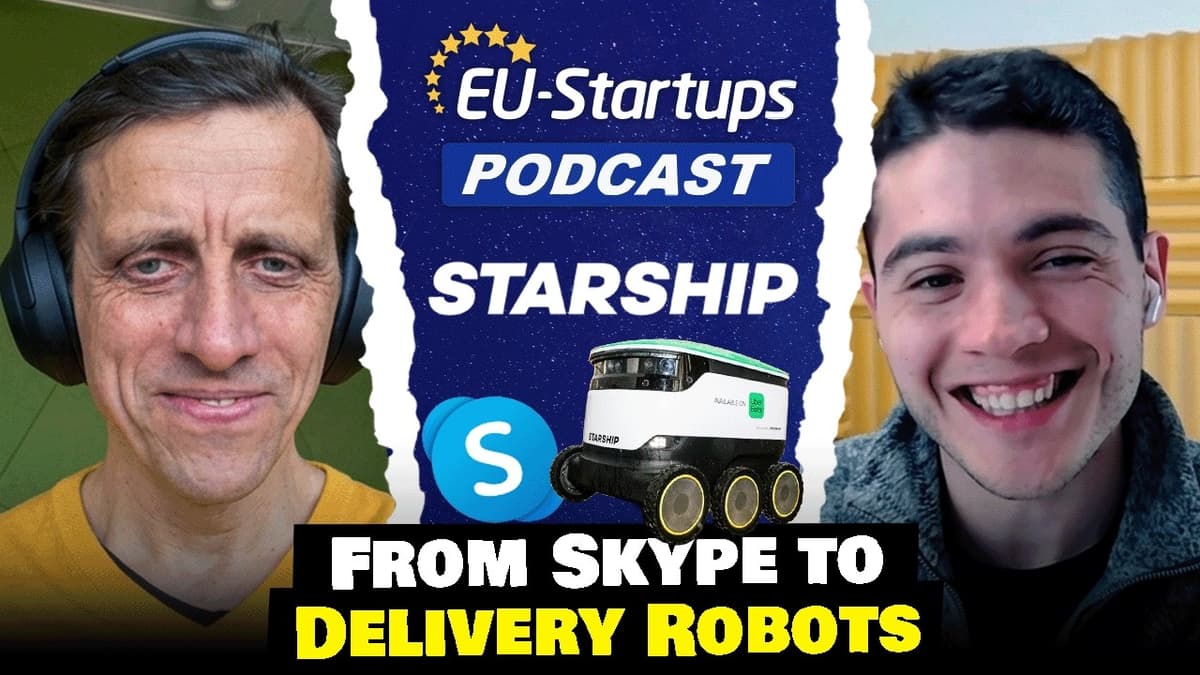
From Skype to Delivery Robots - Interview with Co-Founder of Starship Technologiesm Athi Heinla
The EU Startups Podcast sat down with Ahti Heinla, co‑founder of Skype and CEO of Starship Technologies, to discuss the company’s autonomous delivery robots that have been roaming streets in Europe and the United States since 2014. Heinla highlighted that Starship...
Stanford Robotics Seminar ENGR319 | Spring 2026 | Mechanical Intelligence in Locomotion
The seminar introduced recent work on mechanical—or morphological—intelligence for locomotion, emphasizing the largely unexplored mesoscale robot class (≈1 kg) that bridges micro‑robots (10 kg). The speaker argued that at this scale robots interact with about ten terrain elements simultaneously, creating a noise‑dominated regime...

Are Humanoid Robots Ready for the Real World?
The video examines whether humanoid robots are ready for real‑world deployment, emphasizing a shift toward devices that can be operated by anyone, not just engineers. It argues that the next wave of robotics must be intuitive, leveraging cognitive interfaces so...
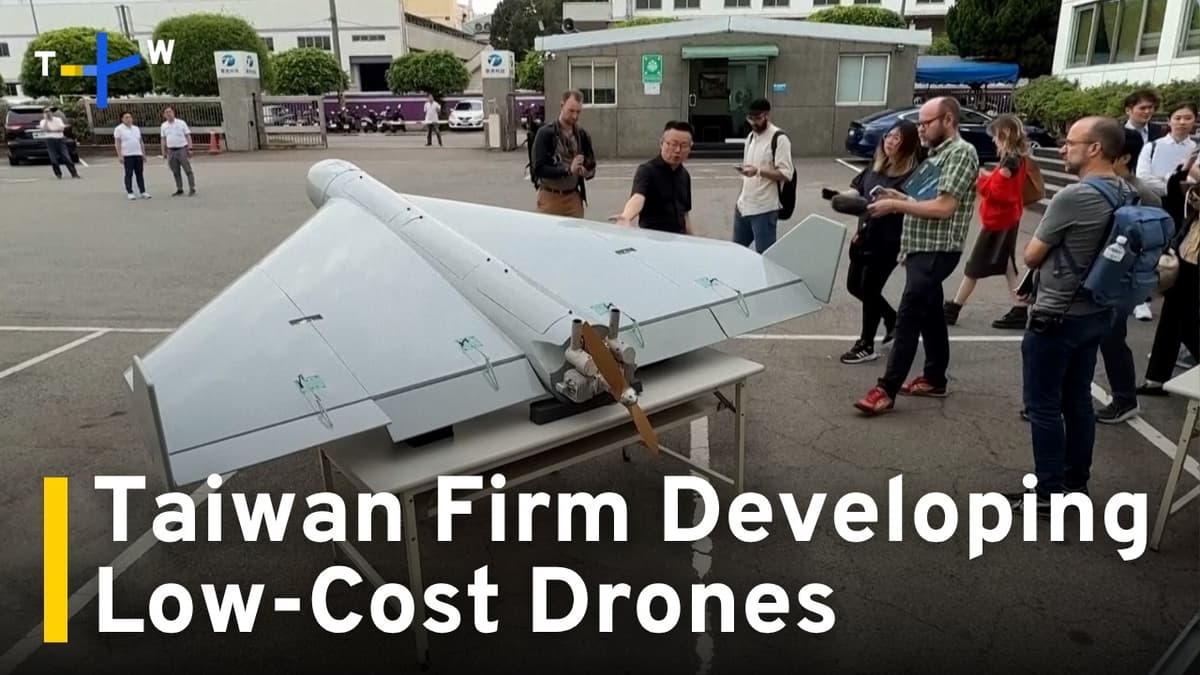
Local Firm Developing Low-Cost Attack Drones, Drawing Lessons From Iran War|TaiwanPlus News
A Taiwan‑based company is engineering a low‑cost attack drone to strengthen the island’s defenses as cross‑strait tensions rise. The project draws tactical lessons from the Iran‑Iraq war, emphasizing swarm and loitering capabilities. Development costs are modest, but full deployment hinges...
Spring Robotics Colloquium: Chuchu Chen (George Washington University)
In this colloquium, Assistant Professor Chuchu Chen of George Washington University outlines her visual‑inertial navigation research, arguing that any AI‑enabled device with a physical body— from AR glasses to drones— qualifies as a robot. She stresses that robots must be...
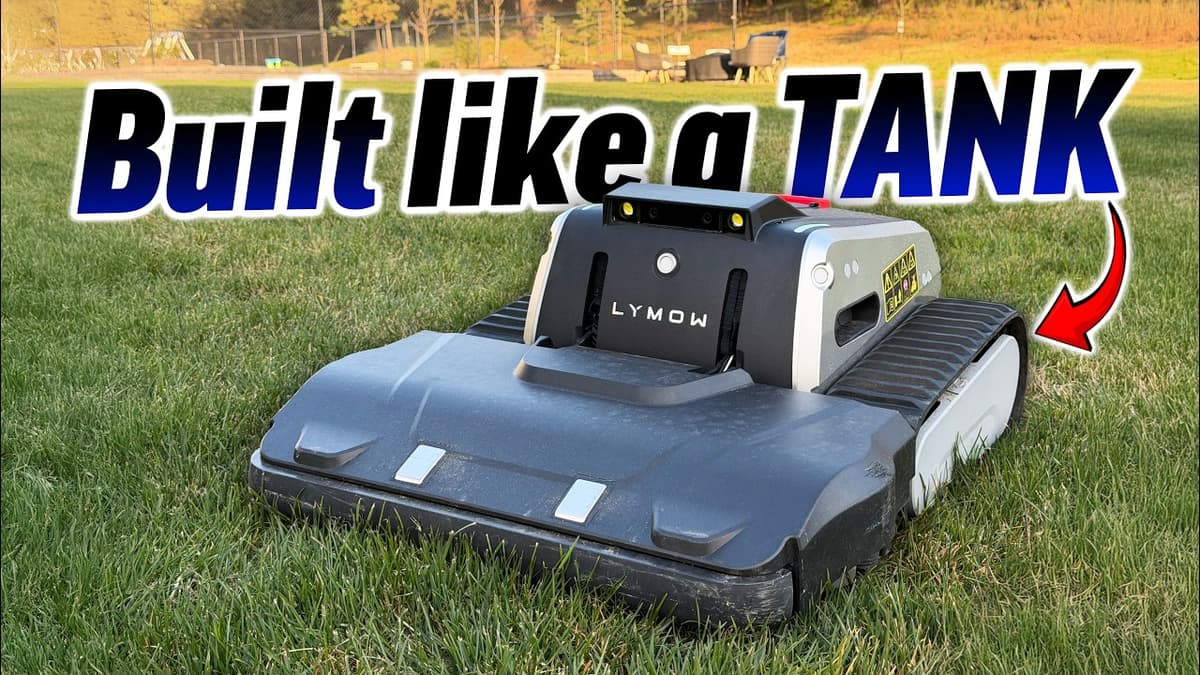
World's FIRST Robotic Lawn Mower W/ REAL Blades!
The video showcases the Limo OnePlus, the world’s first robotic lawn mower equipped with real steel blades, positioning it as a premium, heavy‑duty alternative to conventional robotic mowers. Sponsored by Limo, the presenter walks through unboxing, quick setup with an...
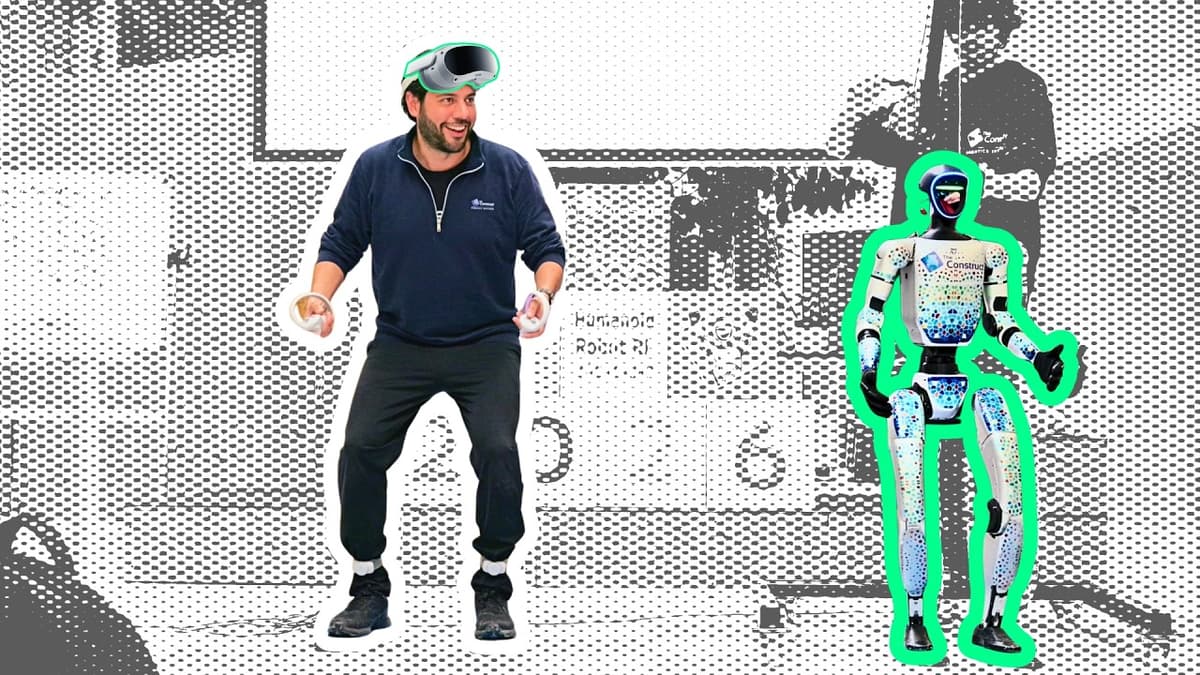
From Simulation to Real Humanoid Robot in 3 Days
The Humanoid Robot Reinforcement Learning Bootcamp offers engineers a three‑day, hands‑on program to develop, validate, and deploy humanoid control policies. Participants start by training policies in simulation, then test them across multiple simulators before transferring the algorithms to real‑world humanoid...
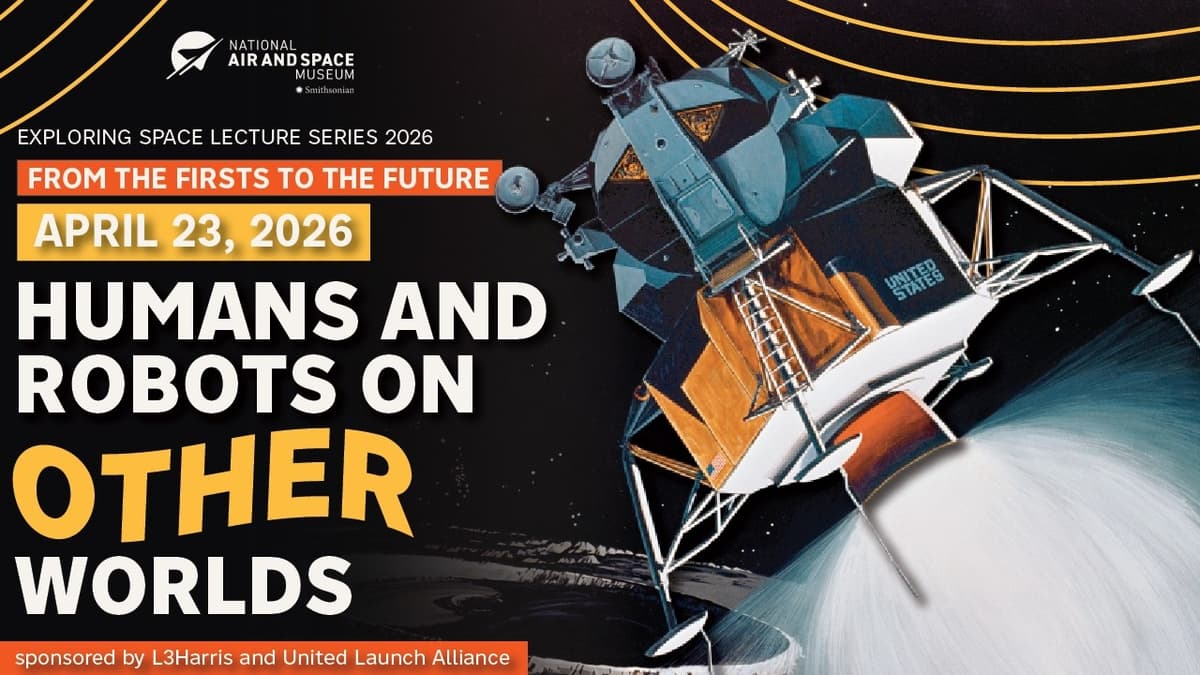
Humans and Robots on Other Worlds (Exploring Space Lecture)
The lecture series explores how humans and robots collaborate to explore the Moon and other planetary bodies, using the 1960s Lunar Orbiter images and Apollo landings as historic milestones. Featuring shuttle astronaut Robert Curbeam, cybernetics engineer Håvard Grip, and space historian...

The Pentagon’s AI War Machine
The video examines the Pentagon’s Project Maven, launched in 2017 to embed artificial‑intelligence computer‑vision into drone‑derived video streams for counter‑terrorism operations. Initiated by Deputy Defense Secretary Bob Work and driven by Marine Colonel Drew Kukor, the program aimed to...

This AI Agent Hired a Human, Built Apps, and Started Making Money
The video introduces Kelly, an autonomous AI agent that has evolved from a personal email assistant into a company‑level entity capable of hiring staff and generating revenue. Kelly’s creators built a suite of orchestration tools, allowing the AI to ideate,...
2026 Predictions: Robotics & Physical AI | Robotics Day | Bessemer Venture Partners
Bessemer Venture Partners used its Robotics Day forum to outline a bold vision for the industry by 2026, likening the current moment to a "GPT‑2.5" phase for physical AI. The firm highlighted three converging forces—an unprecedented talent surge, rapid technical...

The Little Flying Robot Rewriting Space Exploration 🚀 #shorts
Icarus Robotics announced that its free‑flying robot, Joy, is slated for launch to the International Space Station, marking the first deployment of a self‑propelled, surface‑free robot in orbit. Joy moves by emitting short bursts of compressed air, allowing it to glide,...
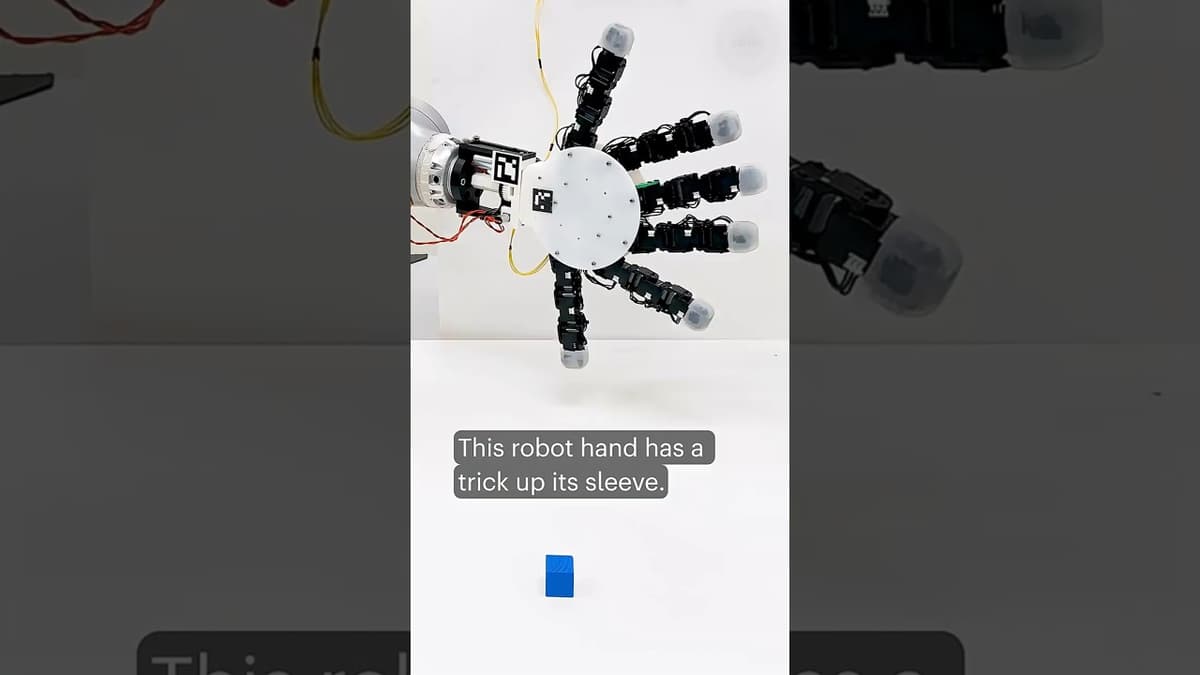
This Robot Hand Detaches and Walks by Itself
The video showcases a novel robotic gripper that can detach from its arm and locomote autonomously, resembling a spider‑like appendage. The device features a symmetrical six‑finger architecture capable of reproducing 33 distinct human grasps, lifting up to 2 kg, and holding four...

ByteCast Ep84: Peter Stone
In this ACM Bitecast episode, Peter Stone—professor at UT Austin, chief scientist at Sony AI, and a leading figure in RoboCup—discusses his lifelong quest to understand intelligence by building autonomous agents that can operate in messy, physical environments. He traces his...

This Is Where Things Go Wrong
The second episode of the "lights‑out machining" series dives into programming a rear differential carrier on a Matsura MAM 7235V five‑axis, 40‑pallet machine. Barry demonstrates how to turn a simple, tall‑slender part into a fully automated, 24/7 production job, emphasizing the...
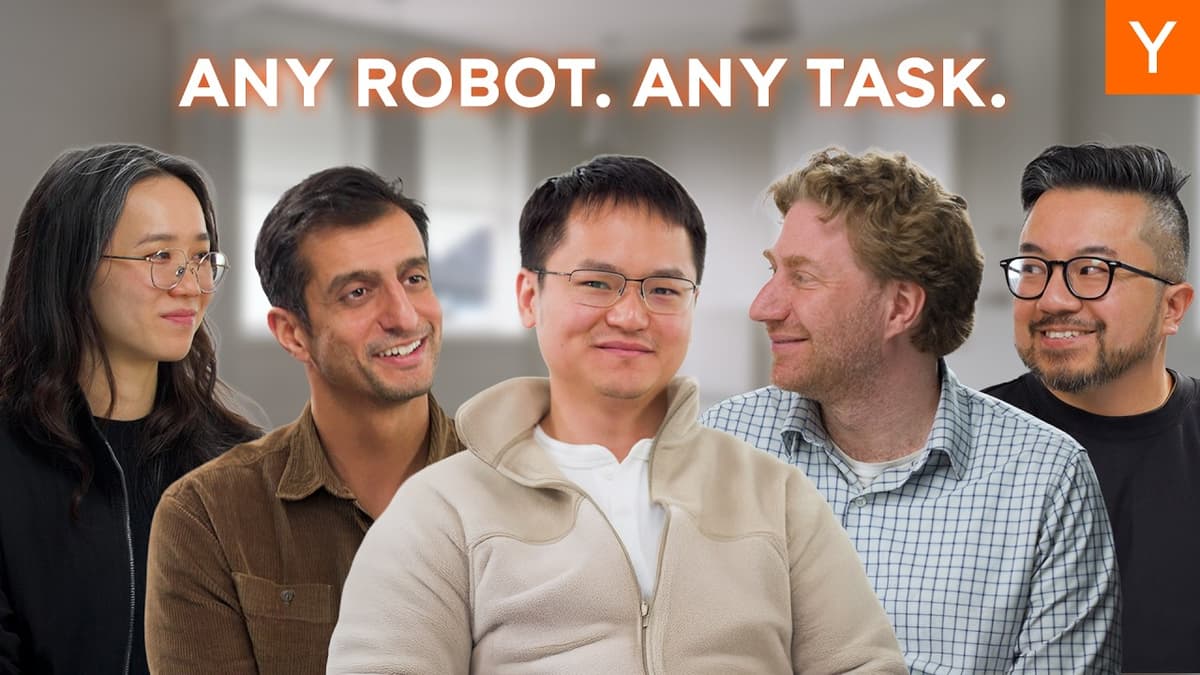
The GPT Moment for Robotics Is Here
The Light Cone episode spotlights Physical Intelligence’s claim that robotics is entering its “GPT-1 moment.” Co‑founder Quan Vang explains the company’s mission to build a single model that can understand language, plan actions and control any robot, dramatically lowering the...

Enhancing Planning and Decision Making for Robotic Autonomy - John Lathrop
John Lathrop’s Everheart lecture tackled the pressing challenge of planning and decision‑making for robotic autonomy when data are scarce. He illustrated the problem with three real‑world projects—a custom tilt‑jet VTOL aircraft, an autonomous racing car, and a simulated spacecraft‑capture mission—each...

Tutorial: Google ADK & Cloud Run: AI Agents at Scale | Future of Data and AI | Agentic AI Conference
The session walks participants through building a distributed, multi‑agent AI system on Google Cloud using the ADK and Cloud Run. Attendees first claim a $5 credit, create a new project, attach billing, and enable required APIs before cloning a starter...

Cybertruck FSD v14.3 First Impressions Drive
The video is a first‑impression drive of the Tesla Cybertruck running Full Self‑Driving version 14.3, highlighting how the new software behaves on a typical Sunday morning route. The narrator notes a larger driver‑monitoring window that triggers an “attention required” alert when...

Our Top 5 Robots of @NationalRoboticsWeek 🤖 #shorts
National Robotics Week showcased five standout cobots, each excelling in distinct environments—from warehouses to operating rooms. The video ranks Locus bots, Animal, Spot, Abby, and Hugo, illustrating how autonomous machines are reshaping daily workflows. Locus bots lifted heavy pallets, cutting injury...

Stanford Robotics Seminar ENGR319 | Winter 2026 | Gen Control, Action Chunking, Moravec’s Paradox
The Stanford Robotics Seminar examined why learning from demonstration remains harder for physical robots than for symbolic AI, coining an "algorithmic Moravec's paradox" that highlights fundamental instability in continuous control. The speaker traced the recent surge in narrow manipulation capabilities...

Inside the Hidden #workforce Behind Waymo's #driverless Cars. #Waymo #robotaxi #cars
The video takes viewers inside Waymo’s San Francisco depot, revealing the sizable human workforce that keeps the company’s driverless robotaxis operational. Around 60‑100 employees in yellow vests perform a range of tasks—from charging and vacuuming to detailed interior cleaning. Colored indicator...

Tesla FSD 14.3 Update - Worth The Hype?
The video reviews Tesla’s Full Self‑Driving (FSD) software version 14.3, highlighting the latest feature set, performance metrics, and real‑world testing results. It walks viewers through upgraded city navigation, enhanced lane‑change logic, and new stop‑sign and yield‑sign handling. The host compares...

From DARPA to Robotaxis to Warehouses — The Full Arc of Autonomy
The MIT Mobility Forum featured Karl Iagnemma, a rare figure who has traversed the entire autonomy spectrum—from MIT research labs and DARPA challenges to founding Nutonomy, steering the Aptiv‑Hyundai joint venture Motional, and now leading Vecna Robotics. Iagnemma recounted the...

A Dexterous Detachable Crawling Robotic Hand
Researchers have unveiled a detachable, reversible robotic hand that can grasp objects from either side of its fingers. The design distributes finger roles to meet both manipulation and crawling constraints, allowing the hand to function as a locomotion module and...

Here's Why some #experts Think Tesla's Full Self-Driving Isn't Safe. #Tesla #FSD #selfdriving #cars
The video examines Tesla’s Full Self‑Driving (FSD) strategy, which relies exclusively on eight discreet cameras and eschews lidar, radar and other sensors that competitors employ. Proponents highlight the cost savings of a camera‑only stack, noting Musk’s claim that lidar is a...

5 Robots Doing The Spring Cleaning So You Don’t Have To 🤖🌸
The video spotlights five autonomous cleaning robots that tackle household chores—from floors to air—promising hands‑free spring cleaning. It details how robot vacuums and mops rely on lidar or camera vision to identify floor types and modulate suction and water flow, while...

Learn Agentic AI in 2026 With These 7 Steps
The video presents a seven‑step roadmap for mastering agentic AI by 2026, targeting beginners through senior developers. It begins with a solid foundation—understanding large language model (LLM) fundamentals, prompt engineering, and basic input‑output interactions—before moving into core components such as...

Reg Austin Memorial Lecture 2026: Perspectives on UAS From the University of Bristol
The Reg Austin Memorial Lecture 2026, hosted by the Royal Aeronautical Society, honored the late Reg Austin, a pioneer of unmanned air systems whose career spanned Bristol Aircraft, Westland, and academia, and set the stage for a showcase of current...

Learn Drone Programming with Python – Tutorial
The video introduces a Python‑based drone programming course built around the Pyimverse simulator, allowing learners to write and test AI‑driven flight code without purchasing expensive hardware. It frames 2026’s drone light shows as a glimpse of broader industry adoption, from...

At Least 10,000 Students to Be Trained in Physical AI over Next 5 Years
Singapore is launching an ambitious talent‑building effort to equip at least 10,000 students with physical AI skills over the next five years, leveraging the National Robotics Program. The initiative spans primary schools to universities, offering hackathons, outreach, and hands‑on robot projects....

A Dialog with Daniel Ramot, CEO of Via Transportation
In a MIT Mobility Forum session, Via Transportation CEO Daniel Ramot outlined how his company is reshaping public‑transit perception from a technology laggard to a high‑growth, investor‑friendly sector. He traced Via’s 14‑year journey from a Stanford‑spun‑out to a publicly listed...

The Roborock F25 Ultra Does It All!
The video showcases the Roborock F25 Ultra, a robot that combines vacuuming, mopping and steam cleaning in a single unit, positioning itself as a hybrid solution for everyday floor care. The presenter demonstrates that the device can vacuum and mop at...

Rivian Electric Bike Spinoff Signs Deal with DoorDash
Rivian’s recently spun‑out electric‑bike unit announced a partnership with DoorDash to deploy its TMB e‑bike platform for last‑mile delivery. The collaboration marks the first major commercial rollout of the company’s vertically integrated, software‑defined EV solution for small‑form‑factor logistics. The TMB starts...

3.5-tonne Chinese Drone Completes Maiden Flight
China’s Changying‑8, the world’s largest cargo drone at 3.5 tonnes, completed its maiden flight on March 31, 2026. The unmanned aircraft can lift a payload equal to its own weight, marking a breakthrough in heavy‑lift UAV capability. The test flight demonstrated stable take‑off,...

5 Robots Transforming How We Work
Video highlights five cutting‑edge robots reshaping manufacturing, healthcare, agriculture, research and energy sectors. At BMW’s South Carolina plant, a collaborative robot has logged 10‑hour days for six months, contributing to over 30,000 vehicles. Hospitals employ UV‑light sterilization units that eradicate...

Ericsson Shows How Enterprises Are Scaling Private 5G
Ericsson showcased how enterprises are scaling private 5G networks, demonstrating integrated robotics, edge compute and network slicing across multiple verticals. The demo paired a drone with an autonomous mobile robot (AMR) for up to eight hours of continuous inventory scanning, while...

Are Lethal Autonomous Weapons Systems Compatible with International Law?
The Council on Foreign Relations hosted a discussion on whether lethal autonomous weapon systems (LAWS) can meet the international law principle of distinction, which requires separating civilians from combatants. Experts questioned if machines operating without human control can reliably make...

Automate Your Lawn With Mammotion Luba 2 Mini in Home Assistant
The video reviews Mammotion’s LUBA mini 2 AWD robotic mower, highlighting its readiness for real‑world lawns with slopes, edges and obstacles, and its deep integration with Home Assistant for DIY automation. The presenter unboxes the unit, walks through the charging base, and...

Humanoids Are the Next Frontier in AI and Robotics
Stanford professor Karen Liu argues that humanoid robots constitute the next frontier in artificial intelligence and robotics, offering a physical embodiment designed for human environments. At the university’s Movement Lab, researchers fuse computer graphics, robotics, and biomechanics to uncover principles of...

Robotic Swarms
The Mechanical Engineering Research Exhibition (MERE) 2026 featured 58 research posters, highlighting the department’s breadth of work. Among the showcases, Pascal Spino presented a functional robotic swarm prototype that demonstrated coordinated autonomous behavior. Attendees used the event to exchange feedback,...

Black Hat USA 2025 | Evaluating Autonomous Vehicle Resilience
The Black Hat USA 2025 presentation from Zuks engineers focused on the resilience of autonomous‑driving vehicles through a human‑in‑the‑loop teleoperation model. Jan Hu and Shane Gupta explained how a remote operator can intervene when the AI’s confidence drops, sending waypoint...

Sidh Sikka | Scalable Orbiital Construction with Robotic Swarms @ Vision Weekend Puerto Rico 2026
Sidh Sikka opened his Vision Weekend Puerto Rico 2026 talk by declaring that today’s launch architecture—single‑piece rockets and occasional astronaut‑built modules—cannot support the mass‑intensive, repeatable construction needed for a thriving orbital economy. He framed the “tyranny of the rocket equation”...

NASA’s SkyFall Mars Helicopters
The short video titled “NASA’s SkyFall Mars Helicopters” offers a cinematic preview of NASA’s next‑generation rotorcraft designed to fly in the thin Martian atmosphere. Through a blend of music, mechanical whirring, and the iconic NASA logo, the clip sets a...
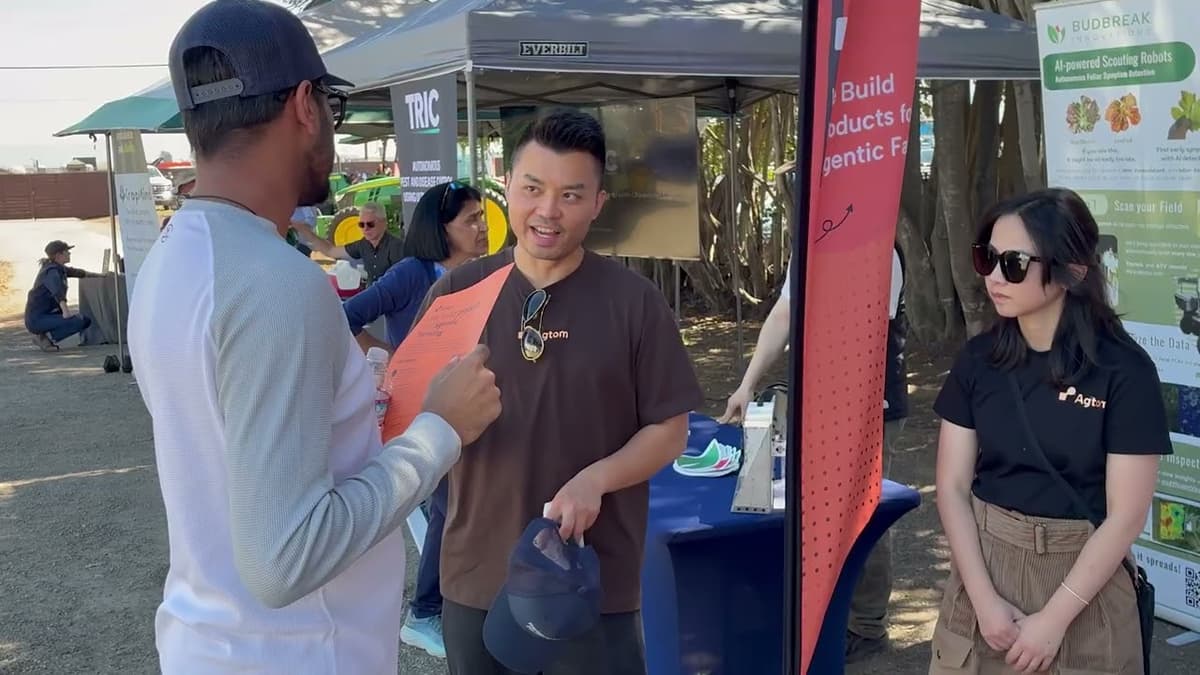
New Test Farm Will Speed Ag Robot Commercialization
The video introduces a new agricultural test farm that functions as a robotics incubator, designed to accelerate the commercialization of AI‑driven farm equipment. By structuring participation into tiered residency levels—membership, development, and deployment—the program gives startups real‑world field access, mentorship,...

Autonomous Ukraine: One Woman's Path From a U.S. College to the Battlefield | Why It Matters
Catarina Buchatskiy left a U.S. college weeks after Russia’s invasion to join Ukraine’s frontline, embodying the diaspora’s rapid mobilization. She co‑founded the Snake Island Institute, which translates battlefield intelligence into policy advice for Western allies. Ukraine’s drone sector has exploded...

Venezuela: The Robot Dogs Policing the Streets of Caracas • FRANCE 24 English
France 24 reports that Caracas has introduced robot police dogs to patrol streets and public squares, marking the first large‑scale deployment of autonomous canine units in Venezuela. Authorities say the four‑legged machines are equipped with cameras, speakers and AI‑driven threat detection,...

Ulys Sorok | On Engineering Independence
Ulys Sorok, founder and CEO of the AI‑robotics firm Graham, used the Foresight Space Group forum to introduce “closure,” a systems‑level metric that gauges how much a technology can maintain and replicate itself without external support. He framed the discussion...