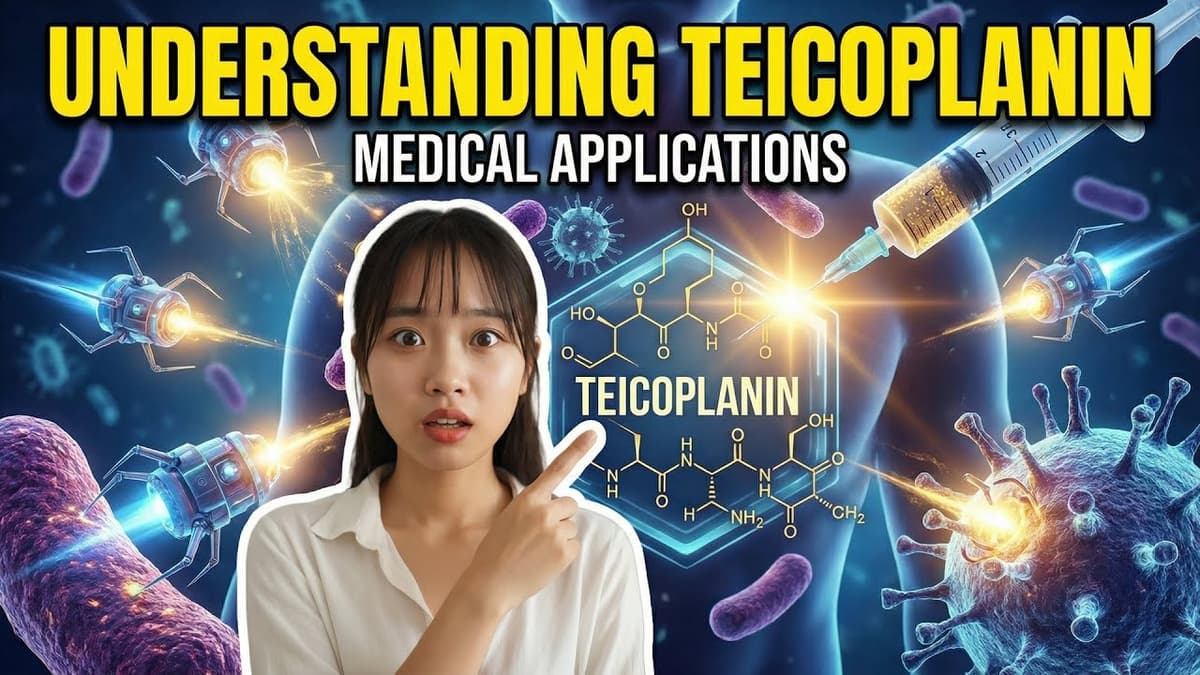
Understanding Teicoplanin and Its Medical Applications (4 Minutes)
Understanding teicoplanin’s role in modern antimicrobial therapy is the focus of this four‑minute briefing. The lecture outlines the drug’s unique lipid‑tail structure that anchors it to the bacterial cell wall, amplifying local concentration and delivering rapid, concentration‑dependent killing with a prolonged post‑antibiotic effect. Its spectrum covers MRSA, coagulase‑negative staphylococci, enterococci and key streptococci, while it remains ineffective against VanB‑type VRE and most gram‑negatives. Key pharmacokinetic advantages include a long half‑life, high protein binding, and once‑daily dosing, allowing shorter infusions and facilitating outpatient parenteral antimicrobial therapy. Compared with vancomycin, teicoplanin shows similar clinical cure rates for MRSA infections but with lower nephrotoxicity, earlier discharge, and fewer infusion‑related reactions. Oral administration for severe Clostridioides difficile infection yields higher cure rates and reduced recurrence, attributed to high fecal concentrations and spore binding. Clinical examples highlighted a loading dose followed by daily maintenance for MRSA, a single 400 mg pre‑incision dose that can halve surgical site infections in cardiac and orthopedic procedures, and the drug’s bone and lung tissue penetration supporting deep‑site infections. Safety monitoring emphasizes renal function, weekly blood counts, and avoidance of rapid bolus to mitigate flushing and rare ototoxicity. The implications are clear: teicoplanin offers a stewardship‑friendly alternative to vancomycin, especially for outpatient pathways, targeted surgical prophylaxis, and selected C. difficile cases. Proper patient selection, dosing adjustments in renal impairment, and vigilant monitoring can maximize therapeutic benefit while limiting resistance development.
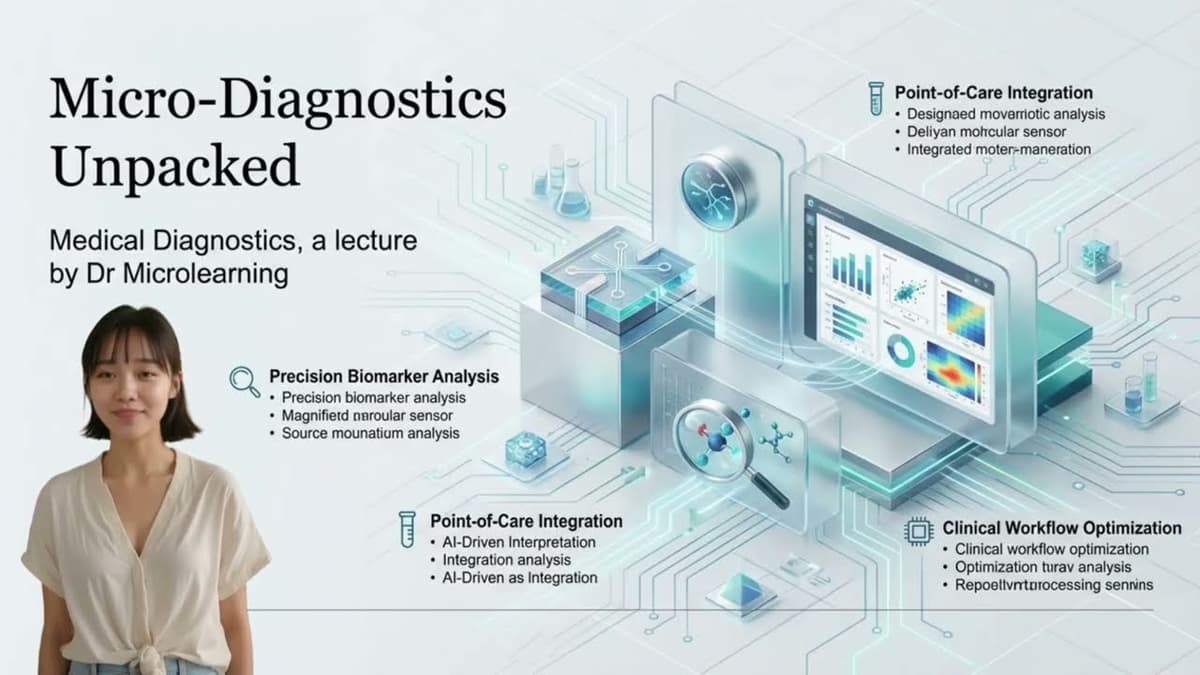
Micro Diagnostics and How It Works (4 Minutes)
Micro Diagnostics Unpacked outlines a new paradigm where precision biomarker analysis, point‑of‑care integration, and AI‑driven interpretation converge into a seamless workflow. The video demonstrates how connected devices feed real‑time readouts into dashboards that clinicians can consult during routine care, cutting...
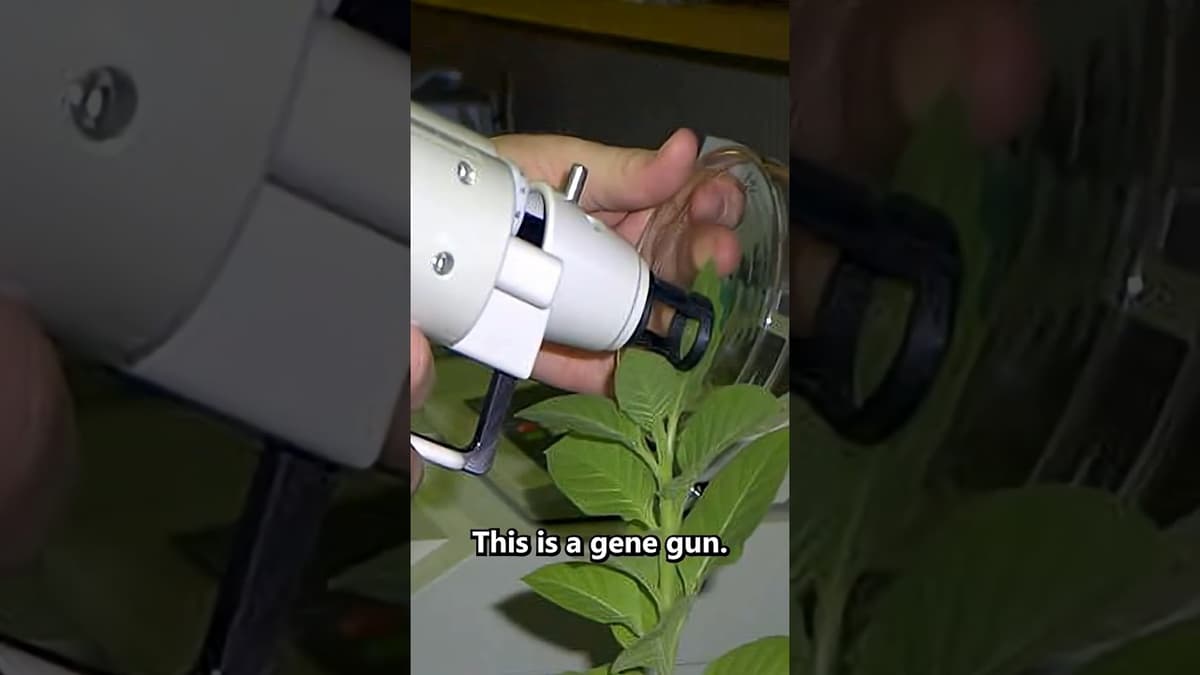
Gene Guns Let You Shoot DNA Into Things
Gene guns, also called biolistic devices, fire nanometer‑scale gold particles coated with DNA directly into living cells. The method bypasses traditional vectors such as Agrobacterium, offering a physical route to introduce genetic material into a wide range of organisms, especially...
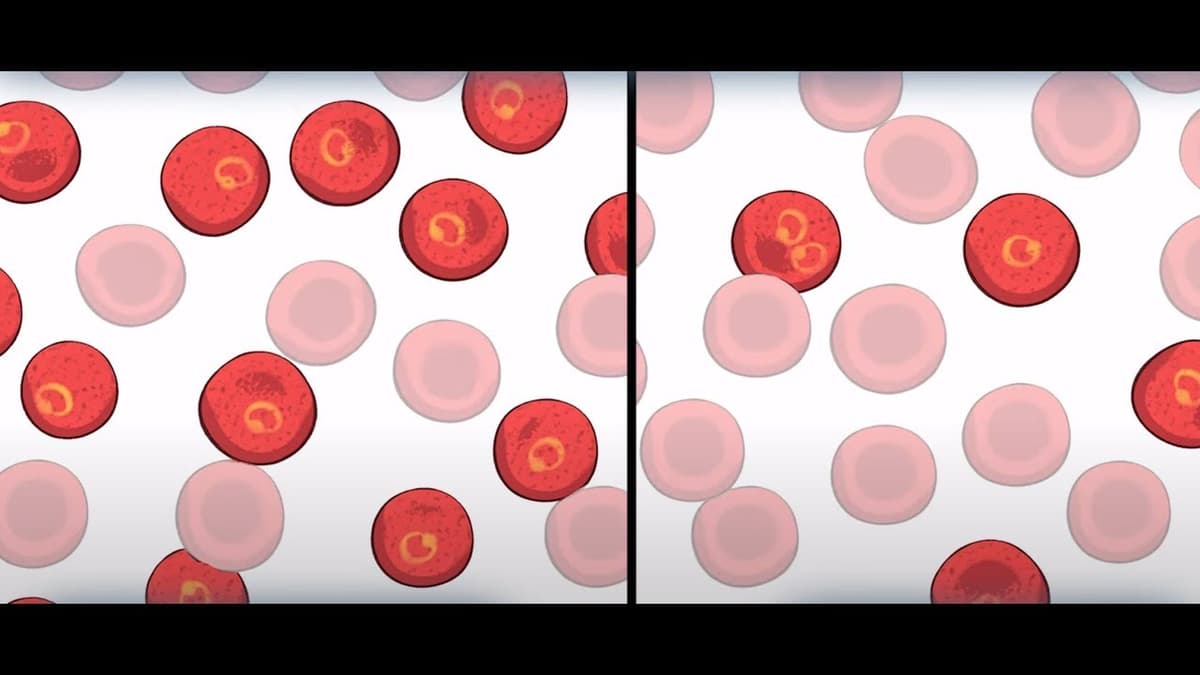
Sickle Cell: Natural Selection in Humans | HHMI BioInteractive Video
The HHMI BioInteractive video uses Morgan Grace’s personal story to illustrate why a seemingly harmful genetic mutation—sickle cell disease—remains common in certain human populations. It explains the molecular basis of the disorder, how a single‑base change in the hemoglobin gene...
Drug Discovery Made Simple (12 Minutes)
The video offers a concise roadmap of modern drug discovery, tracing the journey from target identification through pre‑clinical work to clinical trials. It emphasizes the multidisciplinary nature of the field—biology, chemistry, pharmacology, and computation—and highlights how recent technologies such as...
Google’s MedGemma 1.5 & MedASR: Open AI for Medical Imaging and Dictation
Google unveiled two new open‑source AI models aimed at accelerating medical imaging analysis and clinical documentation, expanding its MedGemma family with version 1.5 and launching MedASR for speech‑to‑text conversion. MedGemma 1.5 is a 4‑billion‑parameter multimodal model trained on the MedMA dataset....
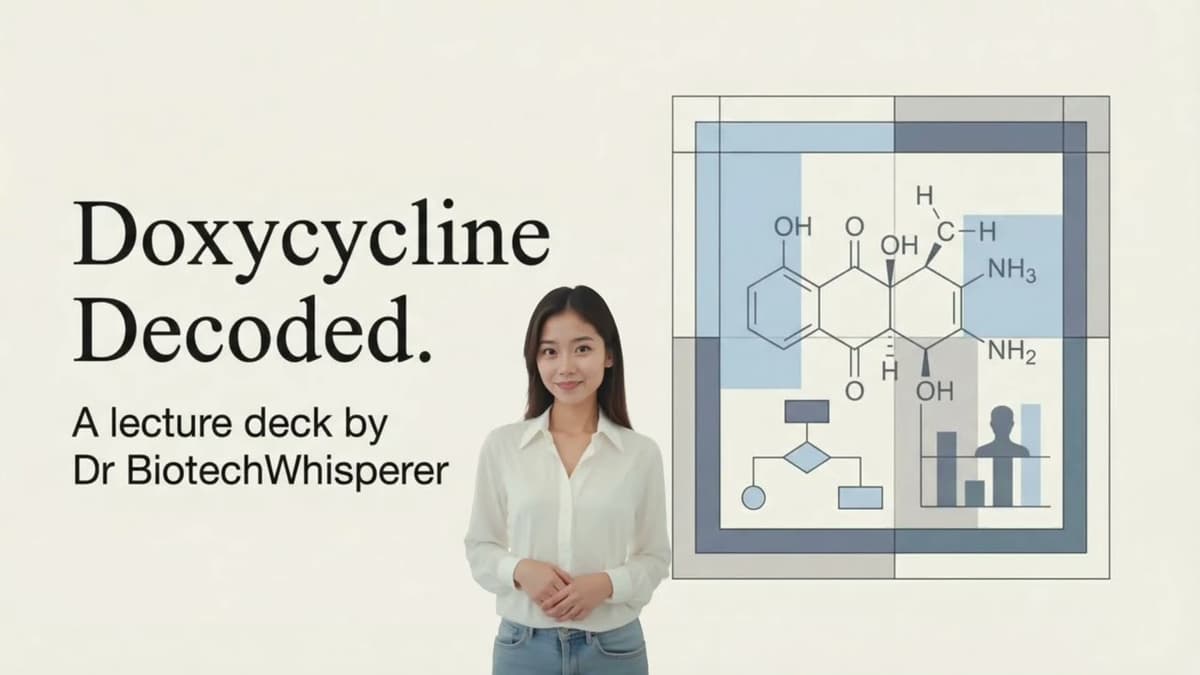
Understanding Doxycycline and Its Medical Applications (5 Minutes)
The video provides a concise clinical primer on doxycycline, detailing its mechanism—binding the 30S ribosomal subunit to block tRNA entry—and highlighting its role as a versatile oral agent in both community and travel medicine. It emphasizes doxycycline’s broad‑spectrum activity against gram‑negative,...
Decoding Genomes Faster and More Accurately (5 Minutes)
The video provides a concise overview of next‑generation sequencing (NGS) and its rapid adoption in diagnostics and research. It contrasts classic Sanger sequencing—single‑fragment, high‑cost reads—with modern NGS that processes millions of fragments in parallel, delivering lower per‑base costs, higher throughput,...
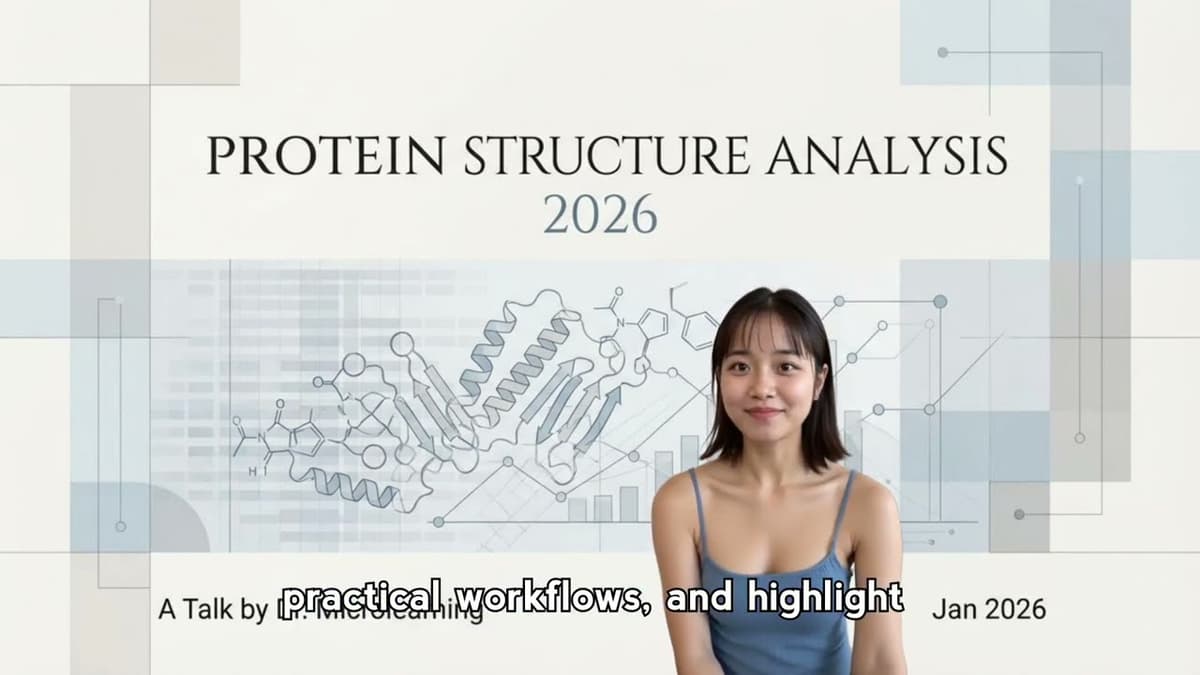
Protein Structure Analysis Made Simple (4 Minutes)
Protein structure analysis is undergoing a rapid transformation as experimental advances such as cryo‑EM and synchrotron X‑ray combine with AI‑driven prediction tools. The talk outlines how the energy‑funnel model explains protein folding speed and underpins modern algorithms, while highlighting the...
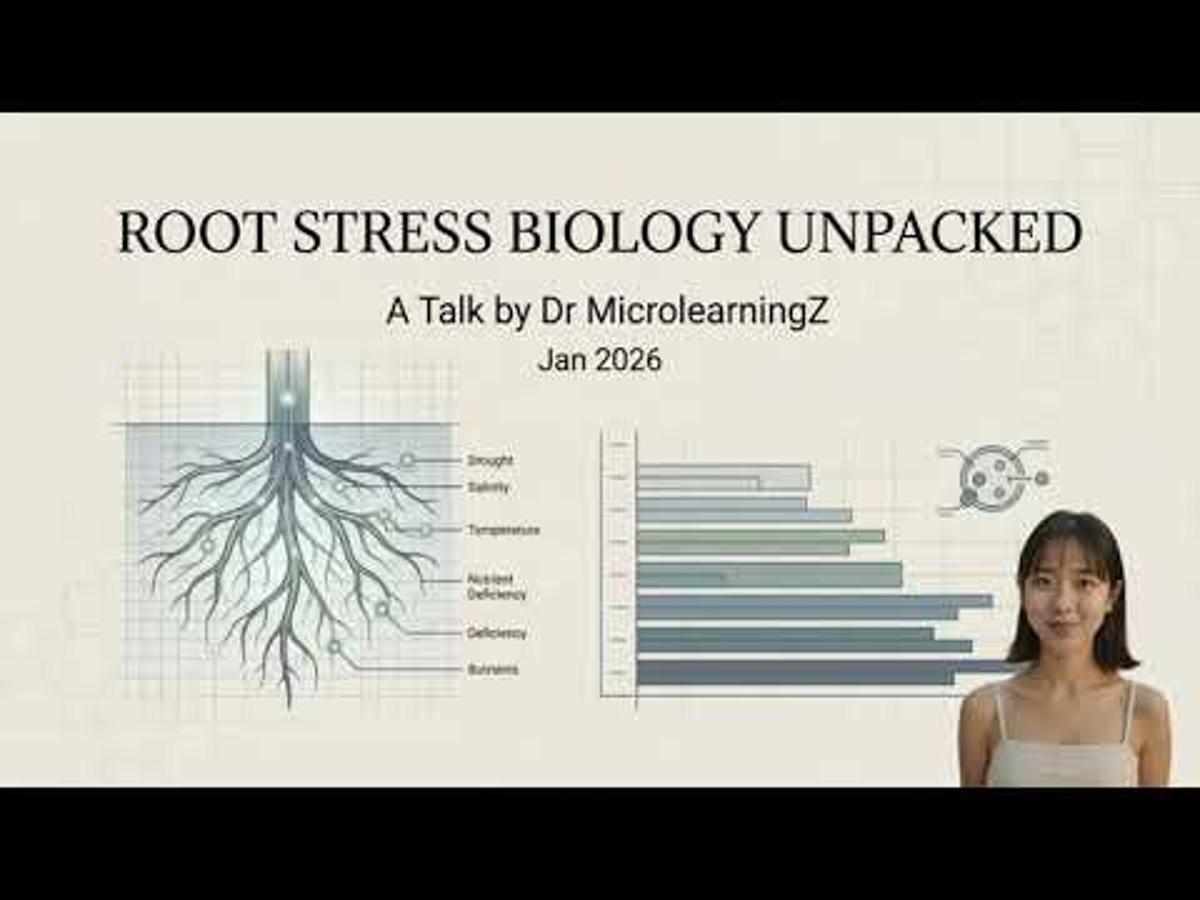
Understanding Plant Root Stress Biology (5 Minutes)
The video introduces root stress biology, describing how roots detect drought, salinity, temperature shifts, and nutrient deficits, then coordinate whole‑plant responses.\n\nIt explains rapid signaling via calcium and reactive‑oxygen species waves transmitted through the xylem, DNA‑damage response involving ATM/ATR kinases and...
Web Tools for Bioinformatics Made Simple (4 Minutes)
The video introduces a suite of modern web‑based tools that simplify bioinformatics analysis, from data preprocessing to advanced genomic workflows, by leveraging browser‑native interfaces and cloud resources. It emphasizes how these platforms make reproducible science accessible to researchers without complex...
Working with Self-Check Models
In this tutorial, educator Emit walks viewers through the self‑check functionality of Model Builder, a web‑based platform that lets students construct causal, conceptual, or stock‑and‑flow models. The feature works like a jigsaw puzzle: a pre‑designed model is disassembled into component...
Comparing Model Types
In this instructional video, Casey, an educator who leverages the BioInteractive Model Builder, walks viewers through the three distinct model types the platform can generate—conceptual, causal, and stock‑and‑flow—and explains when each is most appropriate for higher‑education biology courses. The tutorial defines...