
China Is Beating the U.S. in Space?!
In this episode of China Decode, hosts Alice Han and James King examine China's rapid advancements in space, highlighting milestones such as a Mars rover, a lunar far‑side sample return, a new space station, over 90 launches in 2025, a giant robotic servicing arm, a wide‑field space telescope, reusable rockets, and water‑based launch platforms. They argue that China's space program is less about exploration and more about leveraging space to dominate Earth, emphasizing the dual‑use nature of many technologies and citing a Chinese military textbook that frames control of space as a means to control the planet. The discussion also touches on the broader geopolitical implications of this strategy, contrasting it with U.S. efforts like SpaceX, and briefly notes China's strong economic backdrop, including a booming stock market and a looming $2 trillion generational wealth transfer.
STRESS, SLEEP, AND STRATEGIC STRENGTH
In this episode of A Better Peace, Colonel Kurt Brooker discusses the critical role of sleep, stress, and recovery for warfighters, highlighting how chronic sleep deprivation undermines health and readiness. He explains the physiological differences between deep and REM sleep,...

Hostility Fears Escalate in the Persian Gulf
The episode examines the escalating tensions in the Persian Gulf, focusing on recent missile exchanges between the US and Iran, the partial reopening of the Strait of Hormuz, and the plight of roughly 2,000 stranded merchant vessels and their crews....

TGS Live: Is the Era of U.S. Military Dominance Over?
In this episode, host Danny and his guest debate the trajectory of U.S. military dominance, contrasting the diplomatic approach of the Obama administration with the more confrontational style of Trump, especially regarding Iran and the Joint Comprehensive Plan of Action...

Zero Trust for Operations Podcast: Securing OT with Trout Access Gate
In this episode, Scoop Cyber hosts Steve Krupperman speak with Trout Software’s Mark Hoover and Florian about securing operational technology (OT) using Trout’s purpose‑built Zero Trust Access Gate. They explain how traditional IT‑focused Zero Trust models fall short for industrial...

The New World Disorder: America’s Imperial Retreat and the Rise of Global Chaos
In this episode, host and Ahmed Baba (editor‑in‑chief of Ahmed Baba News) dissect a CNN investigation revealing that Iran’s missile and drone barrage has devastated the majority of U.S. military installations in the Middle East, destroying 16 bases across eight...

Army Moving SBIR to Focus on the Whole Vs. The Parts
In this episode of Ask the CIO, Army SBIR/STTR Program Manager Zeke Topolowski explains how the recent reauthorization of the SBIR program has reignited the Army’s innovation pipeline, with 98 new topics released DOD‑wide and five Army‑specific solicitations, including a...

Arctic Security in the Hypersonic Age: Golden Dome, Greenland and Transatlantic Arctic Relations with Dr. Troy Bouffard
In this episode, Dr. Troy Bouffard—retired U.S. Army NCO, director of the U Alaska Fairbanks Center for Arctic Security, and former Arctic advisor to Sen. Lisa Murkowski—explains how U.S. Arctic strategy is evolving amid heightened Russian and Chinese activity, the...
Key Drivers of the DRC-Rwanda Conflict
In this episode of The Decision Advantage, RAINN’s Sub‑Saharan Africa analyst Remy Dodd explains the historical roots of the DRC‑Rwanda conflict, tracing it back to the 1994 Rwandan genocide and the subsequent presence of Hutu militias like the FDLR in...

How Academics Shaped the CIA
In this episode of What Happens Next, host Larry Bernstein talks with New Zealand‑based scholar Peter Grace about his new book, *The Intelligence Intellectuals*, which chronicles how American academics were recruited into the CIA’s Research and Analysis Division after World...

Donald Trump Wants $1.5T of Your Money for Pete Hegseth’s Pentagon, and They Don’t Want to Tell You Why.
In this episode of the Midas Defense Podcast, award‑winning national‑security reporter Nancy Youssef explains how the Pentagon’s recent eviction of the press corps has crippled journalists’ ability to cover the department’s massive $1.5 trillion war‑fighting budget and ongoing operations, especially the...

Episode 17: Dark Web Intelligence and Gathering OSINT From Live Traffic
In Episode 17 of the OSINT podcast, host Jake Kreps walks listeners through two newsletter issues: a beginner‑focused overview of dark‑web intelligence (Issue 103) and techniques for gathering OSINT from live traffic, datasets, and cameras (Issue 104). He explains the distinctions between...
Trump Wins the Battle for Attention, Loses the War in Iran
In this episode of Raging Moderates, Scott Galloway and Jessica Charloff dissect the ongoing U.S. conflict with Iran, highlighting President Trump's push for a broader diplomatic deal despite lacking congressional approval and the 60‑day War Powers deadline. They critique Defense...
The Iran War Has No Exit — Ft. Ian Bremmer
In this episode, host Scott interviews geopolitical analyst Ian Bremmer about the escalating Iran war and its ripple effects on global politics and energy markets. Bremmer explains how the United Arab Emirates' sudden exit from OPEC deepens the split between...
The Iran Conflict: Outlook for Negotiations
In this episode, RAINN analyst Kristen Ronzi outlines the current stalemate in U.S.-Iran negotiations, highlighting the fragile cease‑fire, the U.S. port blockade, and Iran’s intermittent attacks on the Strait of Hormuz. She explains that the core negotiating hurdles are Iran’s...
Bastille Presents: The Wireless Threat Series Podcast, Flipper Zeros
In this episode of the Wireless Threat Series, Adrian Sanabria and John Bundy dissect the Flipper Zero, a compact, open‑source device that bundles sub‑gigahertz radio, RFID/NFC, BLE, infrared and USB "bad‑USB" capabilities. They demonstrate how the Flipper easily captures and...

The Ethics of Autonomous Weapons Systems
In this episode, law professor Yuval Shani discusses the rapid integration of AI into warfare, highlighting how autonomous weapon systems—ranging from fully autonomous drones to AI-driven decision‑support tools—are already in use by militaries such as Israel, the United States, and...

What Does It Mean to Be a Crow? (Part 2)
In this episode, host Ken Miller talks with Senior Master Sergeant Brandon Smith of the Washington Air National Guard about how the traits of crows mirror the role of electromagnetic spectrum operations (EMSO) warfighters. Smith explains that EMSO units, like...

Is Your Crypto Safe From Hackers? - Dyma Budorin | ATC #609
In this episode, Dima Budarin, CEO of Core3 and co‑founder of Hacken, discusses the evolving landscape of Web3 security, emphasizing that while smart‑contract audits have improved, operational and supply‑chain security remain weak points. He explains Core3’s mission to provide Moody’s‑style...

King Trump Welcomes King Charles
In this episode of Pod Save the World, hosts Tommy Vitor and Ben Ritz dissect the chaotic aftermath of the recent White House Correspondents' Dinner, highlighting a security breach that resulted in gunfire and questioning the event’s safety protocols. They...
JOHN BOYD AND THE “OODA” LOOP (GREAT STRATEGISTS)(RE-RELEASE)
In this episode of the War Room podcast, Jacqueline Witt and Dr. Clay Chun explore Colonel John Boyd’s legacy, focusing on his famed OODA (Observe‑Orient‑Decide‑Act) loop and its evolution from a fighter‑pilot decision‑making tool to a broader strategic model. They...
Iran, Russia, and the Future of Cyber Warfare
In this episode, RAINN cyber analyst Haley Benedict breaks down the cyber dimension of the Iran‑Israel conflict, noting that Iranian cyber activity has been surprisingly muted—likely due to pre‑emptive defenses, leadership losses, and an internet blackout. She highlights hacktivist attacks,...

Our Space Future Depends on What We Teach Kids Today
In this episode, Colonel Eric Zaribinski of the U.S. Space Force and STEAM teacher Dr. Emily Zaribinski discuss how K‑12 education fuels America’s future space power. They share personal stories—from watching Artemis launches as a family to Emily’s selection as...

Exposing Canary Mission, and Israel’s 50-Year War on Lebanon
In this DropSite News episode, host Ryan Grimm and guests discuss three major topics: the UAE’s unexpected exit from OPEC and its geopolitical and economic implications; an investigative report by reporter Jackie Sweet exposing the secretive, Israel‑linked doxing operation known...

The High Stakes of a Major UN Meeting on Nuclear Weapons
In this episode, Kelsey Davenport of the Arms Control Association explains the three pillars of the Nuclear Non‑Proliferation Treaty (NPT) and assesses its mixed record: it has largely prevented new nuclear states but is now under strain as nuclear‑armed powers...

Claude, War, and the State of the Republic (with Dean Ball)
In this EconTalk episode, Dean Ball discusses the escalating dispute between Anthropic, creator of the Claude large‑language model, and the U.S. Department of War over contractual usage restrictions. The conflict centers on Anthropic’s refusal to allow domestic mass surveillance and...
THE FUTURE IS EXPEDITIONARY: JOINT WARFIGHTING HQ (RE-RELEASE)
In this episode, Dr. Tom Braschino and Professor Lou Younger argue that the U.S. military’s reliance on ad‑hoc Joint Task Forces (JTFs) hampers rapid, effective response to emerging threats. They propose establishing permanent, numbered, regionally aligned expeditionary headquarters—modeled after historic...

Bob Odenkirk Would Like to Remind You That Life Is a Meaningless Farce
In this candid interview, Bob Odenkirk reflects on his near‑fatal heart incident, the way it reshaped his perception of time, and his ongoing search for purpose beyond his celebrated roles in Breaking Bad, Better Call Saul, and recent action films...
Space Power: Space Force "Budget's Like A Protein Shake"
The Downlink episode breaks down the Pentagon’s FY2027 budget request, highlighting a proposed 124% jump for the Space Force—from $31.6 billion to $71.1 billion—driven by a mix of reconciliation funding and new “protein‑rich” line items that promise lasting growth. Guests Todd Harrison...
Mission Impossible? What It Would Really Take to Secure Iran’s Nuclear Material with Expert Andy Weber
In this episode, host Joe Plumsler talks with nuclear security veteran Andy Weber about the daunting challenges of securing Iran’s 440 kg of 60% enriched uranium hidden in Isfahan tunnels. Weber explains that extracting the material would require a large, sustained...
LESSONS OF AFGHANISTAN: A CONVERSATION WITH MG BRIAN MENNES (RE-RELEASE)
In this 41‑minute conversation, Major General Brian Menes reflects on the two‑decade U.S. involvement in Afghanistan, explaining why the rapid collapse of the Afghan security forces and the Taliban’s takeover was not surprising given limited government legitimacy and weak rural...

Xi Wants the Strait of Hormuz Reopened; Cakes and An E-Commerce Crackdown; The Next Stage of Decoupling; The MATCH Act...
In this episode of Sharp China, Andrew Sharp and Bill Bishop dissect a recent call between Xi Jinping and Saudi Crown Prince Mohammed bin Salman, focusing on China's call for the Strait of Hormuz to remain open amid ongoing Iranian...

How to Close the Machine-Speed Gap in Cyber Defense with Nik Seetharaman of Wraithwatch
In this episode, Nick Seetharaman, founder and CEO of Wraithwatch, discusses how AI can close the speed gap between machine‑driven attackers and human‑limited defenders. He explains Wraithwatch’s AI‑native platform that unifies existing security tools into an intelligent command‑and‑control layer, enabling...

The Most Heavily Armed Tree Trimming in History
The episode recounts the 1976 incident in the Korean Demilitarized Zone where two U.S. officers were killed by North Korean soldiers wielding axes during a routine tree‑trimming mission, prompting the United States to launch Operation Paul Bunyan. That operation deployed infantry, engineers,...
MILITARY MIGHT AND THE DEFENSE MARKETPLACE (RE-RELEASE)
In this episode of A Better Peace, host Jacqueline Witt and historian Dr. Jennifer Middlestott explore the evolving relationship between the U.S. military and the private market, from Revolutionary-era reliance on civilian suppliers to the massive in‑house production of World...

NARATIV LIVE: IRAN LATEST & JARED KUSHNER UNDER INVESTIGATION
In this episode of Narrative Live, host Kate Justice discusses the escalating Iran‑U.S. tensions, including a recent U.S. seizure of an Iranian vessel allegedly carrying Chinese‑supplied missile components, and the precarious positioning of two U.S. destroyers in the Strait of...
The Escalation Trap: Why the Middle East Ceasefire Is a Calculated Mirage
In this episode, host Danielle Moody dissects Donald Trump’s sudden extension of a cease‑fire with Iran, arguing it’s a strategic façade rather than a genuine peace effort. She critiques Trump’s foreign‑policy missteps, the role of Israeli Prime Minister Netanyahu, and...
How Trump’s Iran War Could Break the GOP — with Ben Shapiro
In this episode of Raging Moderates, hosts Scott Galloway and Jessica Tarlov discuss the unfolding Iran‑Israel conflict and its potential to fracture the GOP, with Ben Shapiro—host of The Ben Shapiro Show and co‑founder of The Daily Wire—arguing that President...

President Trump Says the U.S. Will Extend the Iran Cease-Fire
The episode covers three main stories: President Trump announced a U.S. extension of the Iran cease‑fire and continued port blockades, while Senate hearings scrutinized Kevin Warsh’s nomination to replace Fed Chair Jerome Powell; and rising oil prices are driving steep...

Inside the Future of Drones: Policy, Security, and What XPONENTIAL 2026 Reveals – with Michael Robbins, AUVSI
In this episode of the Drone Radio Show, host Randy Goers talks with Michael Robbins, President and CEO of AUVSI, about the rapid evolution of the drone industry toward secure, scalable operations. Robbins highlights the shift from experimental prototypes to...
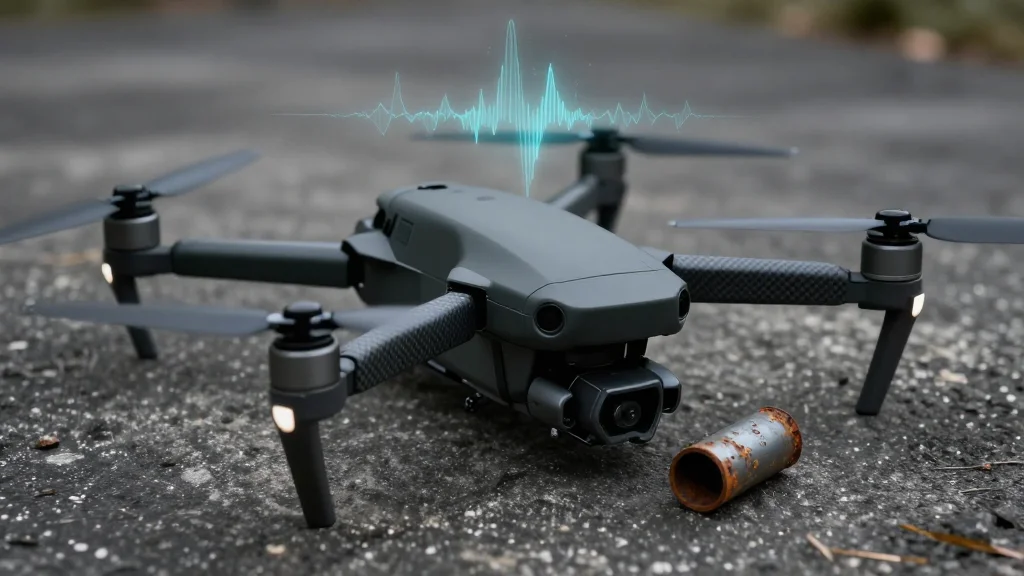
The New Battleground: Grey Zone and Hybrid Warfare Explained
In this episode, Elizabeth Braw, a senior fellow at the Atlantic Council, explains the distinction between hybrid warfare—combining kinetic and non‑kinetic tools such as cyber attacks, disinformation, and sabotage—and grey‑zone aggression, which operates below NATO’s Article 5 threshold and often relies...
TIADS AND TARGETING THE ADVERSARY’S WILL
In this episode of A Better Peace, Colonel Sean Heidegger, commander of the first Theater Information Advantage Detachment (TIAD) in U.S. Army Pacific, explains how the Army is institutionalizing information operations to shape adversary will across the competition continuum. He...

Bill Kristol: The Tough Guy Really, Really Means It This Time
In this episode, host Tim Miller chats with editor‑at‑large Bill Kristol about three main topics: the upcoming Virginia redistricting referendum and its implications for fair representation, the escalating diplomatic crisis between the United States and Iran amid the ongoing conflict,...

Tom Wetzel, AI for Insurance Agents and Cyber Crime Expert - PIR Ep. 806
In this episode, Tom Wetzel, president of Thomas H. Wetzel & Associates, discusses the rapid rise of AI‑driven cybercrime targeting insurance agents and their supply‑chain vendors. He explains how generative AI tools like WormGPT enable even low‑skill criminals to launch...

Project Glasswing: When AI Becomes the Ultimate Hacker—And Defender
The episode dives into Anthropic's secretive Project Glasswing, built around the unreleased Claude Mythos model that can autonomously discover zero‑day vulnerabilities and chain exploits. Hosts Kevin Tackett and Scott Wright debate the hype versus reality, arguing that while the AI...
Space Power: The Space Force Reveals What's In Its Crystal Ball
The episode examines the U.S. Space Force’s newly released "Future Operating Environment 2040" and "Objective Force 2040" documents, which outline anticipated threats—particularly from China—and the resources needed to maintain space superiority through 2040 and beyond. Guests Joel Mosier, the Space...
The “Strait of Iran” Illusion: How a 7-Week War Broke the American Empire
In this episode of Democracy‑ish, hosts Danielle Moody and Wajah Tali dissect the recent seven‑week conflict sparked by the U.S. and Israel’s strikes on Iran and Lebanon, which they label the "Strait of Iran" illusion. They argue the war caused...

MTN TRUMP PANICS OVER THE FINAL ULTIMATUM / IRAN DOES ULTIMATUM ABOUT THE RED SEA
The episode details escalating tensions between the United States under Donald Trump and Iran, focusing on Iran's threat to close the Bab al‑Mandab Strait in the Red Sea if the U.S. does not accept a 10‑point framework and lifts its...

US Nuke Scientists Are Mysteriously Disappearing! - New World Next Week
In this episode of New World Next Week, hosts James Corbett and James Palato discuss Anthropic’s AI model Mythos, a zero‑day vulnerability generator that’s being quietly tested by major tech firms under “Project Glass Wing,” and the unsettling pattern of...
#545: OWASP Top 10 (2025 List) for Python Devs
In episode 545, Michael Kennedy and security expert Tanya Janka unpack the newly released OWASP Top 10 (2025) with a focus on Python developers. They walk through each of the ten categories—highlighting fresh additions like supply‑chain attacks and exceptional condition...