Today's Enterprise Pulse

ServiceNow pivots to AI‑driven security and governance
At Knowledge 2026, ServiceNow rebranded from a workflow platform to the governance and action layer for enterprise AI agents, identities and connected assets. It launched Autonomous Security and Risk, merging Armis asset intelligence with Veza identity governance, and expanded its AI Control Tower with real‑time enforcement, cost tracking and NIST‑aligned risk frameworks.
Also developing:
By the numbers: Fortress expands IP portfolio with acquisition of IPValue

Dematic Expands Flexible Automation Capabilities Through GreyOrange Partnering Relationship
Dematic announced a strategic partnership with GreyOrange to integrate the GreyMatter AI‑powered orchestration platform into its supply‑chain automation suite. The collaboration unifies robots, autonomous mobile robots and human workflows under a single, hardware‑agnostic software layer. By embedding GreyMatter, Dematic aims to boost real‑time visibility, throughput and flexibility across complex warehouse and fulfillment operations. The alliance also sets the stage for network‑level coordination that could extend beyond the warehouse to distributed fulfillment nodes.

April Patch Tuesday Brings Zero-Days in Defender, SharePoint Server
Microsoft’s April 2026 Patch Tuesday shipped more than 160 Microsoft updates, including two actively‑exploited zero‑day flaws. The SharePoint Server XSS (CVE‑2026‑32201) can be triggered without authentication, while the Defender elevation‑of‑privilege bug (CVE‑2026‑33825) has public proof‑of‑concept code. A third zero‑day in Chromium’s...

AI Agents Force Rethink of SaaS Pricing and Improve Customer Experiences
Automation Anywhere released data from more than 70 enterprise deployments showing its AI agents autonomously resolve over 80% of employee IT support requests. The automation cuts IT service management licensing costs by up to 50%, translating to average annual savings...

Zig.ai Launches Zigscribe: The AI Employee That Turns Sales Meetings Into Action
Zig.ai unveiled Zigscribe, an AI‑driven "employee" that turns sales meetings into immediate action. The tool listens in real time, drafts follow‑up emails, updates CRM records, creates next‑step tasks and schedules future meetings without human prompting. By consolidating these functions into...

Camunda 8.9: Your Fastest Path to Agentic Orchestration
Camunda released version 8.9, positioning its platform as an enterprise‑grade orchestration layer for AI agents, human workers, and legacy systems. The update introduces relational‑database support for secondary storage, global user‑task listeners, a centralized audit log, and native Agent2Agent (A2A) communication....

Cloud Migration Fuels Rapid AI Innovation After Years On‑prem
MyPOV - Great showcase how using to the cloud is critical for both innovation - and now AI adoption. This @Infor customer stalled for 13 years on premises (can't fault them to start there on 2010) - but see the...

Claroty Advances CPS Security with Visibility Orchestration in xDome
Claroty has launched Visibility Orchestration within its SaaS platform Claroty xDome, turning vague asset visibility into a measurable score that drives security actions. The new capabilities automatically assess visibility gaps, prioritize remediation tasks, and enrich asset data using AI, Edge scans,...

Crawford Connect Highlighting ERP’s Noisiest Supply Chain Gaps at Epicor Insights
Crawford Software showcased its Crawford Connect platform at Epicor Insights 2026, positioning it as a portal‑driven extension that sits on top of Epicor and other ERPs. The solution provides dedicated buyer, supplier and customer portals that transform email‑heavy interactions into...

BlackLine's Agentic Ops Highlights Governance Gaps as AI Agents Mimic Employees
BlackLine unveiled its Agentic Financial Operations platform, a "glass box" AI framework that lets autonomous agents execute finance tasks while remaining classified as software. Executives say the model offers traceable control, but critics warn that treating AI agents like employees...

Citibank Launches AI-Driven Wealth Tool, Sparking Privacy and Compliance Debate
Citibank has introduced an AI‑powered advisory feature for its wealth‑management customers, offering real‑time portfolio insights and automated note‑taking. The rollout has triggered immediate scrutiny from regulators and privacy advocates over data usage, model transparency and compliance risks. The bank says...

Cyberattack Surge Fuels Demand for Cybersecurity Consulting as Accenture Invests $3 B in AI
A string of high‑impact cyber incidents in early 2026—including breaches at Stryker, Lockheed Martin and a 1.5 billion‑record Salesforce hack—has ignited a rush for cybersecurity consulting services. Consulting giants are responding with expanded incident‑response teams and AI‑driven risk platforms, highlighted by...

Silicon Valley Firms Lock in Decade‑long Defense Contracts as U.S. Budget Eyes $1.5 Trillion
Palantir and Anduril each signed 10‑year enterprise agreements with the Department of War, capping contracts at $10 billion and $20 billion respectively. The deals arrive as the U.S. defense budget tops $1 trillion for FY 2026 and a $1.5 trillion ceiling is being discussed for...

UK Regulators Convene Emergency Session on Anthropic AI Model Threat to Financial Systems
The Bank of England, the Financial Conduct Authority and HM Treasury met with the National Cyber Security Centre and leading insurers to discuss urgent risks posed by Anthropic’s new Claude Mythos AI model, which has flagged thousands of software vulnerabilities. The...

FossID Launches Agentic SCA to Bring Real-Time Compliance to AI-Driven Code Development
FossID AB introduced Agentic SCA, a real‑time software composition analysis layer designed for AI‑driven code development. The solution embeds compliance checks directly into AI agents, enabling instant detection of open‑source components, license obligations, and vulnerabilities as code is written. By...

A New Answer Engine Optimization Tool, Plus Other Updates - Shooting the Breeze with HubSpot's Spring 2026 Spotlight
HubSpot’s Spring 2026 release adds an Answer Engine Optimization (AEO) tool that leverages CRM data to suggest prompts, create on‑brand content, and track AI‑driven visibility. The Breeze Assistant is upgraded with the Loop Marketing Playbook, role‑aware advice, and automatic brand‑compliant...

Intruder Adds Container Image Scanning to Cloud Security Platform
Intruder has expanded its cloud security platform to include daily container image scanning across AWS Elastic Container Registry, Google Cloud Artifact Registry, and Azure Container Registry. The new capability uses a graphical interface that requires no agents, letting both security...

Eurobites: Deutsche Telekom Plugs Thüga Into 'Sovereign' AI
Deutsche Telekom announced a partnership with German utilities group Thüga to deploy its “sovereign” AI suite on the operator’s T‑Cloud Public, keeping all data processing within the EU legal framework. The deal highlights a broader European push for data‑sovereign cloud...

Barclays, FIS Sign Multi-Year Extension of Their Core Banking Agreement
Barclays US Consumer Bank announced a multi‑year extension of its core‑banking partnership with FIS, deploying the cloud‑ready FIS Profile platform. The solution will manage deposits, accounts and balances while delivering real‑time, multi‑currency processing, supporting Barclays’ ambition to grow its retail...
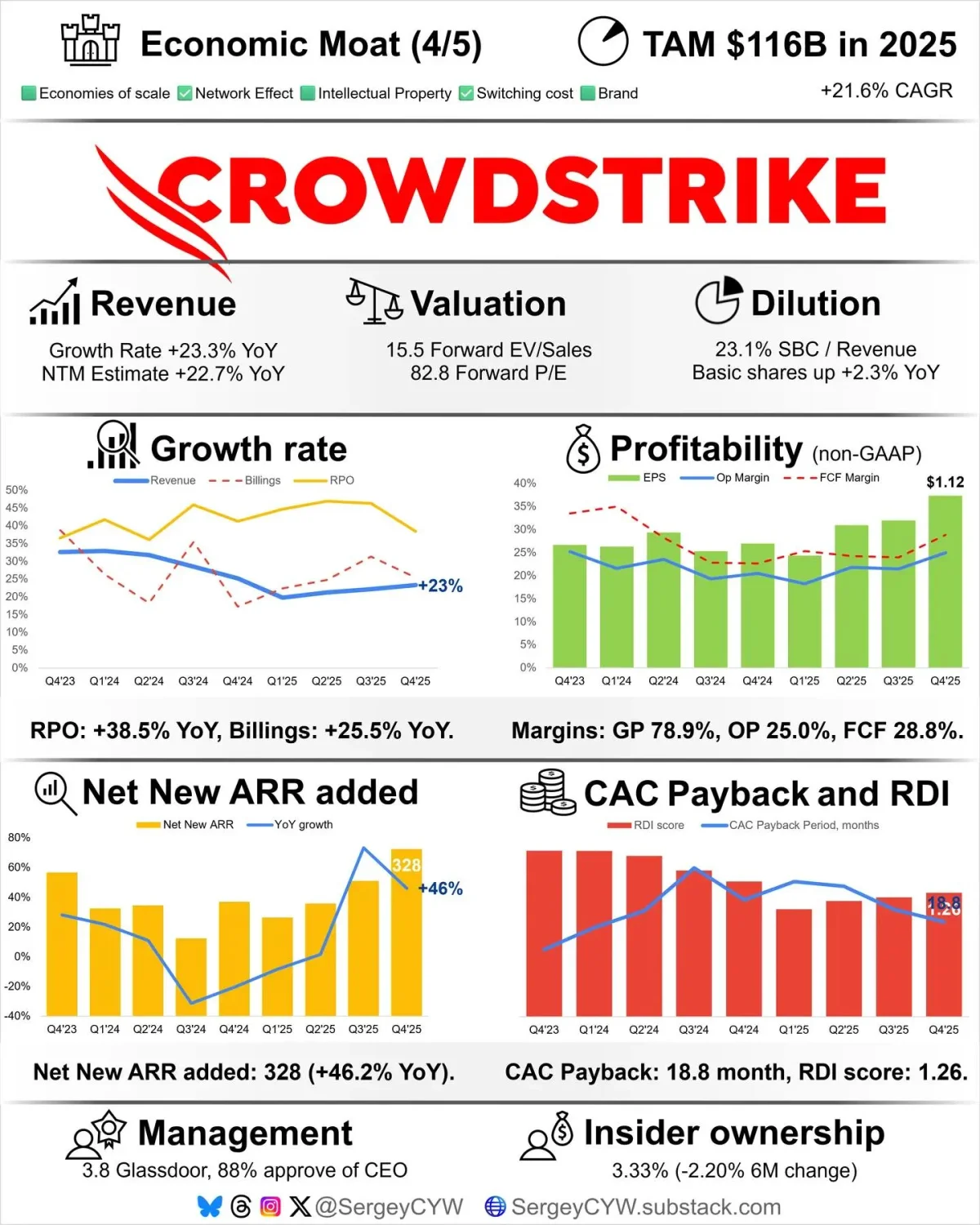
AI‑powered Threats Boost CrowdStrike’s Growth Prospects
Why I’m Bullish on CrowdStrike $CRWD The increasing use of AI in cyberattacks, along with the rapid advancement of more powerful AI models, is driving both the volume and complexity of cyber threats — making cybersecurity more critical than ever. CrowdStrike Falcon...

Google Tests Agent Tab, Prepares Desktop App to Challenge Cowork
They need to compete with Cowork -> Google develops its own desktop Agent to compete with Cowork "Google is testing a new Agent tab in Gemini Enterprise, hinting at an upcoming agentic workflow with task management features ahead of Google...

Cloud Storage Security Announces the Official Launch of DataDefender, a Novel DSPM Platform Focused on Data Stored in the Cloud
Cloud Storage Security launched DataDefender, an AI‑driven Data Security Posture Management (DSPM) platform that classifies and monitors cloud‑stored data in real time. The solution spotlights sensitive information across AWS environments, flagging misconfigurations, insider threats, and external attacks while supporting compliance...

Infor and AWS Team up for Indor on Sovereign Cloud
MyPOV - Good to see @Infor and @awscloud working together to get Indor available in the AWS Sovoereinf Cloud in Brandenburg. - likely ready end of the year. #InforAnalystSummit https://t.co/KtWH8Asgex

Infor's Agentic Framework: From Initiation to Outcome
How @Infor's Agentic Framework works - Initiate - Reason - Take action - Outcome #InforAnalystSummit https://t.co/o6Sib5LJQk
DataVisor Brings Conversational AI Agents to Fraud and AML Operations
DataVisor unveiled Vera, a conversational AI agent suite that lets financial institutions manage fraud and AML tasks through plain‑language commands. The platform automates detection, investigation, and regulatory reporting, promising up to three‑fold gains in detection coverage and a 20‑30× reduction...

Infor Unifies Solutions with Velocity Suite
And no surprise - @Infor brings it all together in the Velocity Suite. #InforAnalystSummit https://t.co/SVpDkRJDjM

From Two Decades of Infor to the Agentic AI Era
Samuelson breaks down the @Infor evolution of the last 20+ years - of course we are now in the Agentic AI era. #InforAnalystSummit https://t.co/Dc4dx03wr3

Wolseley's CTO on Oracle Fusion and AI - Start with the Easy 80%, and Bring up the Bottom Third
Wolseley Group, the UK’s largest specialist trade merchant with roughly $3.2 billion in annual revenue, is modernising its 700‑branch network using Oracle Fusion SCM. After eight years on Oracle Cloud for finance and recent supply‑chain upgrades, the company will pilot a...

SAP Patches Critical ABAP Vulnerability
SAP released 20 new and updated security notes on April 14, 2026, including two critical CVEs. The most severe, CVE‑2026‑27681 (CVSS 9.9), is a SQL‑injection flaw in Business Planning and Consolidation and Business Warehouse that enables arbitrary code execution. SAP mitigated the issue...

ServiceNow Embeds AI Across Entire Suite, Launches New Pricing and Build Tools
ServiceNow senior vice president John Aisien announced that AI is now embedded in every ServiceNow package, introducing three AI‑maturity pricing tiers, a Build Agent SDK for developers, and a Context Engine for personalized enterprise experiences. The moves signal a strategic...

Salesforce Shares Jump 4.8% After Analyst Raises Target to $280
Truist Securities analyst Terry Tillman lifted his price target for Salesforce (CRM) to $280, a 62% premium to the prior close, prompting the stock to climb 4.8% in a single session. The upgrade reflects confidence in the company's AI‑driven product...

OpenAI Memo Calls for Enterprise Platform Push, Flags Microsoft Cloud Limits
OpenAI’s chief revenue officer Denise Dresser circulated an internal memo urging the company to double‑down on an integrated enterprise platform, citing rising nine‑figure deals and fierce rivalry with Anthropic. The memo also warns that the long‑standing Microsoft cloud partnership limits...

REVEL Realty Launches RealDesk, a Unified Platform to Modernize Brokerage Operations
REVEL Realty Inc. rolled out RealDesk, a next‑generation, single‑pane brokerage platform that consolidates transaction management, accounting, CRM and compliance tools. The launch aims to cut administrative overhead and boost agent productivity amid growing pressure on traditional brokerage models.

Microsoft Tests OpenClaw‑Style Security Features for Enterprise 365 Copilot
Microsoft confirmed it is testing OpenClaw‑inspired security and governance controls for its Microsoft 365 Copilot, targeting large‑enterprise users. The effort builds on earlier agentic tools like Copilot Cowork and aims to deliver an always‑on assistant that can act autonomously while...

Why Design Is the Secret Weapon in AI-Powered Compliance
Quantifind argues that design is as critical as AI for financial‑crime compliance, shaping how investigators interact with complex models. By unifying risk signals, evidence and relationships in a single visual graph, the platform cuts cognitive load and replaces the “enterprise...

VA Restarts Federal EHR Rollout at Four Michigan Sites After Three‑Year Halt
The U.S. Department of Veterans Affairs went live with its federal electronic health record system at four Michigan medical centers on April 11, ending a three‑year pause. The deployment is the first of 13 sites slated for 2026 and aims...

Inspectorio AI Platform to Enhance Gap Supply Chain Oversight
Inspectorio announced its AI platform will be deployed across Gap Inc.'s portfolio—including Old Navy, Gap, Banana Republic and Athleta—to deliver end‑to‑end product traceability. The system automates task execution and centralises supplier data, enabling faster, data‑driven decisions. The move follows Gap's...

Sumsub and ComplyAdvantage Deepen AML Screening Partnership as Compliance Demands Rise
Sumsub and ComplyAdvantage have deepened their partnership by embedding ComplyAdvantage’s Mesh intelligence layer directly into Sumsub’s verification and monitoring platform. The integration adds real‑time sanction and watch‑list updates—delivered within minutes—and a Bring‑Your‑Own‑Key option that lets clients connect their own Mesh...

The AI Inflection Point: What Security Leaders Must Do Now
AI has moved from experiment to production in cybersecurity, forcing security leaders to treat it as an operating‑model shift rather than a bolt‑on tool. Threat reports show AI‑enabled adversaries accelerating attack timelines to under 30 minutes, outpacing human‑only triage. CISOs...

Hybrid Method Beats Pure Agile for ERP Projects
A hybrid approach often outperforms pure Agile. Later, we'll explore case studies of organizations that struggled with Agile for ERP implementation. #Agile #ERP #ProjectManagement https://t.co/wbz8sKEcDF
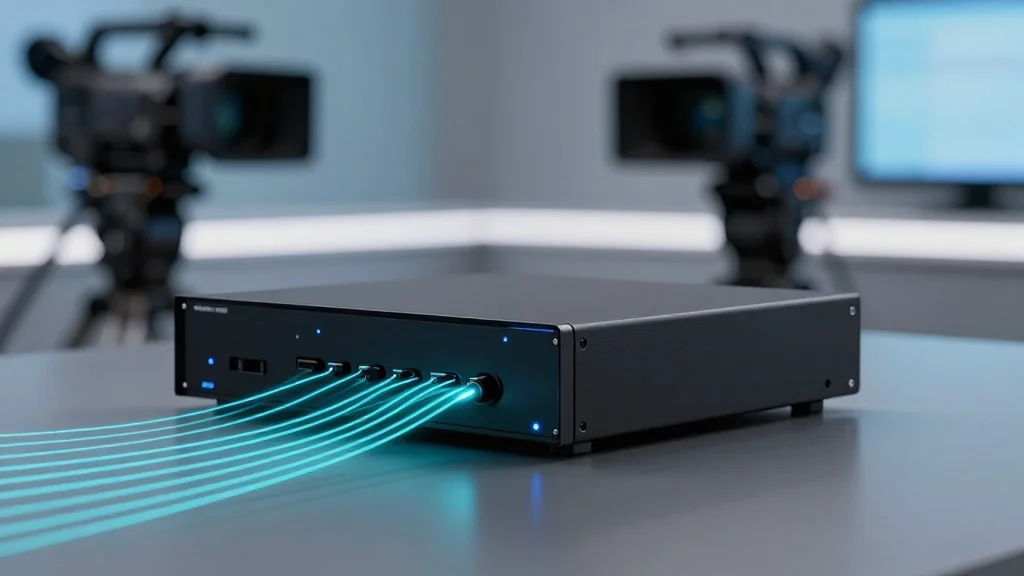
Appear Takes Its X Platform to the Edge
Appear announced the launch of Appear XM, a self‑hosted management console for its X Platform, aimed at simplifying operations across large, distributed broadcast deployments. The company also made its X5 edge appliance generally available, bringing broadcast‑grade AVC/HEVC encoding, Dolby audio,...

Vault Enterprise 2.0 Modernizes Identity Security at Scale
HashiCorp announced Vault Enterprise 2.0, now generally available, adding identity‑first secret distribution, expanded Linux credential rotation, and high‑performance envelope encryption for streaming workloads. The release also introduces a new versioning and support model aligned with IBM’s lifecycle policies, guaranteeing at...

Choosing the Right Integration Strategy and Framework for Manufacturers
Manufacturers increasingly confront integration bottlenecks as they layer ERP, MES, WMS, e‑commerce and AI tools. While point‑to‑point connections are quick to deploy, they become fragile and costly once three or more critical systems interconnect. Integration platform as a service (iPaaS)...

CRM System Examples: What CRMs Do (with Real Workflows)
The article explains how modern CRM platforms turn fragmented customer data into a single source of truth by centralizing contacts, deals, and support interactions. It highlights essential features such as pipeline tracking, task automation, reporting, and AI‑driven insights, stressing that...

Pointerra Wins Major Three-Year Western Power Digital Twin Contract
Pointerra Limited (ASX: 3DP) secured a three‑year contract with Western Power to deploy its Pointerra3D digital twin platform across 50 transmission substations in Western Australia. The agreement is valued at a minimum of A$413,442 (about $273,000 USD) and is designed...

Fiddler AI Acquires Lumeus.ai to Boost AI Security and Governance
Fiddler AI announced the acquisition of Lumeus.ai, a specialist in AI policy enforcement, to expand its control‑plane capabilities. The deal, whose financial terms were not disclosed, is intended to give enterprises end‑to‑end visibility and security for autonomous AI agents from...

Fortreum Acquires Kovr.AI to Boost AI‑Driven Cybersecurity Compliance Platform
Fortreum, a cybersecurity assessment firm backed by Gryphon Investors, announced the acquisition of FedRAMP‑authorized AI compliance platform Kovr.AI. The deal combines Fortreum's practitioner‑led assessment services with Kovr.AI's agentic AI engine, aiming to streamline compliance across FedRAMP, CMMC 2.0, DOD SRG,...

Yubi Group Appoints Varun Khullar as CRO to Accelerate AI‑Driven FinTech Growth
Yubi Group has hired Varun Khullar as chief revenue officer, tasking him with expanding the company’s AI‑powered operating system for financial services. Khullar brings senior leadership experience from LeadSquared, LinkedIn and Paytm, positioning Yubi to accelerate enterprise sales across lending,...

Scotiabank Rolls Out 'Scotia Intelligence' AI Platform to Global Workforce
Scotiabank has launched Scotia Intelligence, a unified AI platform that equips its worldwide staff with data, governance and cloud tools. The rollout promises to shift routine tasks to AI, freeing employees for higher‑value work and accelerating the bank’s digital transformation.

Barnard College to Deploy Workday Student ERP by Fall 2028, Consolidating Campus Systems
Barnard College announced a two‑year transition to Workday Student, a cloud‑based student information system that will go live for the fall 2028 semester. The rollout aims to merge fragmented academic and administrative platforms, a move prompted by rising debt and...

Financial Services Accelerate Shift to Autonomous AI Agents, Bypassing Co‑Pilot Era
QED Investors partner Amias Gerety announced that the financial services industry is moving from AI co‑pilot tools to autonomous "OpenClaw" reasoning agents that can execute entire workflows. Deployments at Freedom Mortgage and BMO illustrate the change, while investors remain cautious...