Today's Finance Pulse
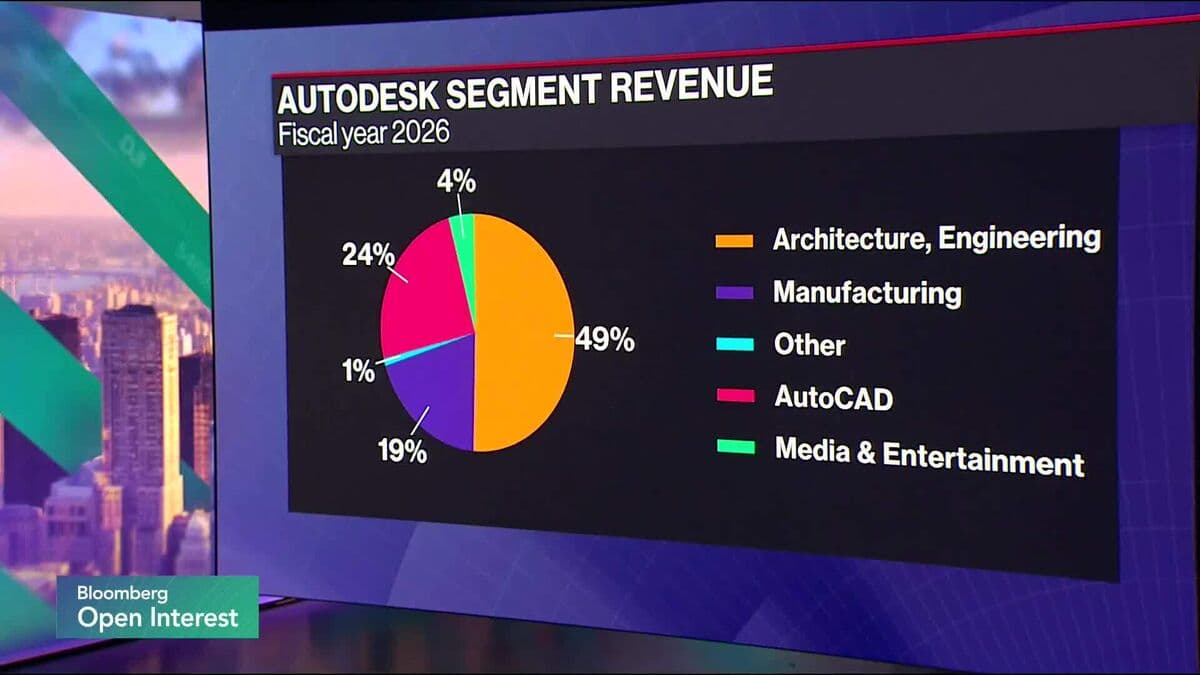
Autodesk to acquire MaintainX for $3.6B, expanding into operations software
Autodesk announced a $3.6 billion purchase of MaintainX, a leader in operational‑phase software for the built environment. The deal extends Autodesk’s portfolio from design and manufacturing into ongoing building operation, creating an end‑to‑end data loop. CEO Andrew Anagnost said the acquisition unlocks a $40 billion total addressable market.
Also developing:
By the numbers: Pemberton Asset Management closes $3.7B fourth vintage fund

Exclusive: Gauri Khan Family Trust to Re-Invests in Sleepy Owl
Sleepy Owl, the Indian D2C coffee brand, announced a fresh Series C2 funding round of Rs 12 crore (approximately $1.5 million). The round was led by Optiscape Network Holdings with a Rs 5 crore ($0.6 million) investment, and included contributions from Pramod Bhasin, the Gauri Khan Family Trust, and existing backers. The capital raise lifts the company’s post‑money valuation by 28% to roughly Rs 172 crore ($21 million). In FY25 the brand doubled revenue to Rs 44 crore ($5.4 million) while cutting its loss by 80% to Rs 2.1 crore ($0.26 million).

Institutional Investors Rapidly Expand Use of ETFs
Cerulli Associates and Invesco report that North American institutional investors have nearly doubled their ETF holdings over the past five years, reaching roughly $337 billion in 2025. The asset class grew at a 14.4% compound annual growth rate, far outpacing the...

Strata 2026 Healthcare Financial Outlook Report: Medicaid Cuts and Labor Costs Top CFO Concerns
Strata Decision Technology’s 2026 Healthcare Financial Outlook finds Medicaid reimbursement cuts and rising labor expenses now dominate CFO agendas, with 66% naming Medicaid cuts as their top concern. While 43% anticipate modest margin growth, 25% expect declines, underscoring a focus...

'It's Not Zero': WAF's Hyde on Kiaka's Sale Price
West African Resources (WAF) is negotiating the sale of a 25% stake in its Kiaka gold mine to the Burkina Faso government for an estimated A$175 million (about $115 million USD). Managing director Richard Hyde emphasized that the price is "not zero,"...

Digital Asset Funds See $1.4 Billion in Inflows as Institutional Momentum Builds:
Digital asset funds recorded a net $1.4 billion of inflows in a single week, marking the third straight week of positive net capital and the strongest surge since January. The bulk of the money flowed into Bitcoin‑focused products, but notable allocations...

Hedge Fund Redemptions Hit All-Time Low as Investor “Stickiness” Redefines Capital Stability:
Hedge fund redemptions dropped to a historic 1.26% in April 2026, the lowest level ever recorded according to SS&C GlobeOp’s Forward Redemption Indicator. The decline reflects a surge in investor “stickiness,” as institutional capital remains committed despite geopolitical tension and...

Sullivan & Cromwell Discusses Warnings to Bank CEOs About Cybersecurity Risks of Anthropic’s New AI Model
On April 7, 2026 Treasury Secretary Scott Bessent and Fed Chair Jerome Powell held a closed‑door meeting with CEOs of the nation’s largest banks to warn about the cybersecurity threats posed by Anthropic’s new AI model, Claude Mythos Preview. Anthropic...

Figure Lending's HELOC Pool Supports $383.4 Million in RMBS
Figure Lending is launching a $383.4 million residential mortgage‑backed securities (RMBS) transaction backed by a pool of home‑equity line of credit (HELOC) contracts. The FIGRE Trust 2026‑HE4 will issue seven tranches, ranging from AAA‑rated Class A to B‑rated Class F, each with distinct...

Octus: Private Credit & Deal Origination Insights – 4/20/2026
Octus released a Q4 2025 analysis of business development companies (BDCs) showing that adjusted nonaccrual levels are substantially higher than the figures reported by individual firms. By aggregating cost and fair‑value data for every tranche held across the sector, the study...

Leveraged Loan Insight & Analysis – 4/20/2026
Direct lenders in the United States raised less than $77 bn in the first quarter of 2026 to fund sponsor‑backed transactions. That represents a 30% drop from the fourth quarter of 2025, marking the steepest quarterly decline since 2022. The contraction...

State Street Projects $2.1 Trillion Inflows Into U.S. ETFs in 2026
State Street Global Advisors forecast $2.1 trillion of net inflows into U.S. exchange‑traded funds in 2026, up from $1.5 trillion in 2025. The outlook includes a $750 billion jump into active ETFs and the prospect of the first $1 trillion‑size fund, underscoring a structural...

Retailers Face Rising Cost Pressures as Tariff Concerns Surge
A February pulse survey of nearly 10,000 U.S. retailers reveals cost pressures are intensifying, with tariff concerns climbing to the second‑most‑cited challenge behind inflation. The survey, conducted before recent tariff reductions, shows retailers shifting focus from growth to cost‑cutting amid...

EU Clears RTL Group’s $538 Million Sky Deutschland Acquisition
The European Commission has given unconditional clearance for RTL Group’s €527 million (≈$538 million) purchase of Sky Deutschland, allowing the deal to close on June 1, 2026. The merger will combine RTL’s entertainment assets with Sky’s sports and streaming platforms, creating a DACH‑wide...

Natixis Leads $2.6 B Syndicated Letter of Credit Facility for Switch’s Data‑Center Power Expansion
Natixis Corporate & Investment Banking acted as structuring bank, lead arranger and agent to close a $2.6 billion syndicated letter of credit facility for Switch. The deal, the biggest U.S.‑dollar LCF for data‑center power, gives Switch credit backing for new transmission...

JPMorgan Structures $5.9 Billion Financing for Estée Lauder's Planned Puig Acquisition
JPMorgan is arranging a $5.9 billion financing package to support Estée Lauder Companies' potential acquisition of Spanish fragrance and fashion house Puig Brands. The deal, expected to be a mix of cash and stock, would create a combined entity poised to...

JPMorgan Raises Netflix to Buy Rating, Boosting Large‑Cap Streaming Stock
JPMorgan Chase & Co. upgraded Netflix (NASDAQ:NFLX) to a Buy rating on Wednesday, citing the company's robust earnings beat and accelerating subscriber growth. The move adds to a wave of recent analyst upgrades and could steer institutional capital back into...

Japan 10‑Year Yield Holds Near 2.4% as BOJ Policy Outlook Remains Unclear
Japan's 10‑year government bond yield steadied at roughly 2.4% on Wednesday, as investors weighed the Bank of Japan's likely hold on rates and the prospect of a policy shift as early as June. The sideways action follows weaker‑than‑expected trade surplus...

PBOC Injects $1.4 Billion, Extending China Bond Rally
The People’s Bank of China pumped a net 9.5 billion yuan ($1.4 billion) into the banking system through seven‑day reverse repos on April 21‑22, a move that surprised markets given already abundant liquidity. The injection lifted 10‑year futures for a third straight...

RTX Posts $187.26 Opening After Earnings, Analysts Keep $203 Target
Raytheon Technologies (RTX) reported quarterly earnings, opening at $187.26 and confirming a $0.68 per‑share dividend. Analysts kept price targets near $203, while insiders sold $18.2 million of stock, underscoring mixed sentiment in the defense sector.

Vero Fiber Completes Acquisition of TEC
Vero Fiber announced the closing of its acquisition of Telephone Electronics Corporation (TEC), extending its fiber‑to‑the‑home network into Mississippi, Alabama and Tennessee. The deal brings roughly 444,000 households—both active and prospective—under Vero’s service umbrella while allowing TEC to keep its...

Boeing Stock Price Resets After Earnings
Boeing reported a stronger first‑quarter, with revenue climbing 14% to $22.2 billion and GAAP loss narrowing to $0.11 per share. Operating cash flow improved to a negative $0.2 billion, a sharp turnaround from the $1.6 billion deficit a year ago, while the total...

Direct Investment Beats SPVs for Anthropic Allocations
Just to satiate the tail risk fomo we are migrating to the matrix, if it’s a real Anthropic SPV and not SPV^2 or ^3 that’s super tempting But what’s really wild to the Koala is at this point Anthropic type firms...
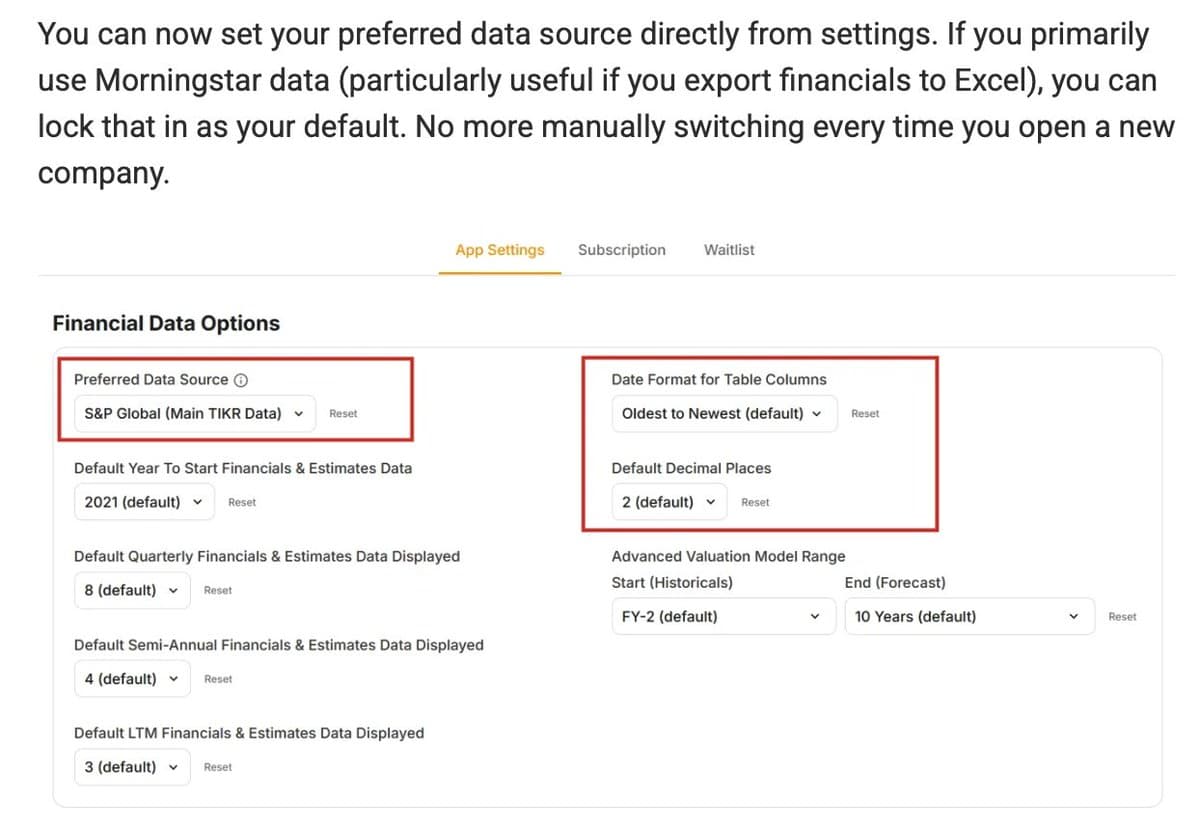
TIKR Streamlines Workflow, Eliminating CapitalIQ‑Morningstar Switching
Great move from TIKR. It may sound trivial, but not having to switch from CapitalIQ to Morningstar every time makes the experience more seamless https://t.co/JpbCegD9rx

Kite Realty Posts 17% Blended Cash Leasing Spread in Q2 2025, Highest in Five Years
Kite Realty Group Trust (KRG) announced a 17% blended cash leasing spread for the second quarter of 2025, the highest in five years. The spread, alongside new anchor leases with Whole Foods and Trader Joe’s, lifted same‑property NOI 3.3% and prompted...

Obama’s 2009 Chrysler Rescue Debate Mirrors Today
This reminds me of the March 2009 meeting Obama held on whether to save Chrysler (His team was divided on the question and polling was against it) https://t.co/yo1tQcYcBo

ASMPT Limited Q1 Profit Jumps 203% as Semiconductor Equipment Demand Surges
ASMPT Limited reported a first‑quarter profit of HK$253.8 million ($32 million), up 203% from a year earlier, while revenue rose 32% to HK$3.97 billion ($508 million). The Tokyo‑based supplier said the surge reflects accelerating demand for semiconductor manufacturing equipment, especially from its SEMI division,...

Registrar Corp Acquires Dell Tech to Bolster Canadian Regulatory Consulting
Registrar Corp announced the acquisition of Dell Tech, a niche consultancy specializing in Canadian chemical regulatory compliance. The deal adds more than 30 regulatory experts to Registrar’s 300‑plus staff, strengthening its global advisory platform for food, cosmetics, medical devices and...

Cboe Sees Record 6.7M SPX Call Contracts as Investors Chase Earnings Rally
Cboe Global Markets reported that S&P 500 call option volume hit a record 6.7 million contracts on Friday, driven by a sharp rally and fear of missing out. Call‑option skew jumped to the 90th percentile while put skew fell to the...

KeyCorp to Acquire Clearwater UK, Expanding Middle‑Market Advisory in Europe
KeyCorp announced a definitive agreement to acquire Clearwater Corporate Finance LLP, the UK‑based middle‑market investment‑banking advisory firm. The deal, expected to close in the second half of 2026, gives the Cleveland‑headquartered bank a foothold in Western Europe and broadens its...

Capital One Posts $2.2B Q1 Net Income as Consumer Banking Revenue Jumps 37% YoY
Capital One posted $2.2 billion GAAP net income for Q1 2026 and a 37% year‑over‑year rise in consumer banking revenue, driven by Discover integration and auto‑loan growth. The bank also completed a $4.5 billion Brex acquisition, underscoring a push to expand its commercial‑card...

Institutional Investors Add to Cisco Stake as Earnings Beat Expectations
Institutional investors such as Marquette Asset Management, Lowe Wealth Advisors, and Cedar Mountain Advisors expanded their Cisco positions in the third and fourth quarters, while insiders sold $3.57 million of stock. The activity coincides with Cisco's recent earnings beat and a...

HarbourVest Closes 13th Flagship Fund with $2.4 Bn Commitments
HarbourVest Partners announced the final close of its 13th U.S. flagship primary fund, securing roughly $2.4 bn in commitments from institutional and private‑wealth investors worldwide. The fund, which blends primary buyout and venture allocations with secondary and co‑investment layers, underscores continued...

Fidelity’s FIGB Beats iShares IEI Yield but Carries Higher Expense Ratio
Fidelity’s Investment‑Grade Bond ETF (FIGB) delivers a 4.1% distribution yield, outpacing iShares’ 3‑7 Year Treasury ETF (IEI) at 3.6%, but it charges a 0.36% expense ratio—more than twice IEI’s 0.15% fee. The trade‑off pits higher income against higher cost and...

EdgeCore Secures $1.5 Billion to Build Two Hyperscale Data Centers in Northern Virginia
EdgeCore Digital Infrastructure has closed a $1.5 billion construction financing package to build two fully leased hyperscale data centers in Sterling, Virginia. The facilities, slated for occupancy in late 2026 and mid‑2027, will provide 114 MW of power across 685,000 sq ft, positioning the...

Nestlé CEO Navratil Unveils 5‑Point Turnaround, Cuts 16,000 Jobs
Nestlé’s newly appointed chief executive, Phillipp Navratil, rolled out a five‑point turnaround plan that will eliminate roughly 16,000 positions – about 6% of the workforce – and concentrate the business on four core divisions. The move aims to deliver faster...

Iran Conflict Triggers 55% Oil Surge, TUI Cuts 2026 Revenue Guidance
Iran’s military action that blocked the Strait of Hormuz sent global oil prices soaring 55%, while European tour operator TUI AG trimmed its 2026 revenue guidance amid the fallout. The twin shocks highlight how geopolitical risk is reshaping energy markets...

US 20‑Year Treasury Auction Pushes Yield to 4.883%, Edges Higher to 4.886%
The U.S. Treasury’s 20‑year bond auction on April 22 lifted the benchmark yield to 4.883%, up from 4.817% in the prior issue. Within minutes the yield nudged higher to 4.886%, reflecting dealer activity and broader macro factors.

Beta Technologies Raises $1.01B IPO, Targets Cargo eVTOL Niche
Beta Technologies completed a $1.01 billion IPO and now holds $1.7 billion in cash while developing a conventional‑runway eVTOL for cargo and medical deliveries. The company’s dual‑track approach and charging‑network plan set it apart from passenger‑focused rivals Joby and Archer, but a...

PassiveLogic Hires CFO Joel Harvill, Veteran of $15B Capital Markets Deals
PassiveLogic announced the appointment of Joel Harvill as chief financial officer. Harvill, who has closed more than $15 billion across private credit, corporate finance and capital markets, will steer the firm’s financing strategy as it scales its physical‑AI platform for autonomous...

ServiceNow Posts $3.67 B Q1 Subscription Revenue, 22% YoY Growth
ServiceNow announced first‑quarter 2026 subscription revenue of $3.671 billion, a 22% year‑over‑year increase that topped the high end of its guidance. The company also highlighted a surge in large contracts, a $12.64 billion cRPO balance and the early close of its Armis...

ADB Commits $680 Million for Pacific Development in 2025
On April 23, 2026, the Asian Development Bank announced a $679.8 million commitment for its Pacific developing member countries in 2025, including $214.4 million in grants from the Asian Development Fund. The funding targets transport, water, energy, finance and public sector management,...

Coinbase Stock Poised to Outpace Bitcoin as an Investment
Coinbase (COIN) is trading up 7.4% while Bitcoin (BTC) hovers around $75,800, and analysts argue the exchange’s stable‑coin earnings and Base ecosystem give it a stronger growth trajectory. With $1.35 billion in 2025 stablecoin revenue and $4.5 billion locked in its Base...

Cochlear Cuts FY26 Profit Outlook to A$290‑330M Amid Weaker Demand
Cochlear Limited trimmed its fiscal 2026 underlying net profit guidance to A$290‑330 million (≈ $191‑$218 million) after flagging lower demand and a one‑point hit to gross margin. The guidance cut follows a 40.44% plunge in the company’s share price, underscoring pressure on the...

Tele2 AB Q1 Profit Surges 6.3bn SEK, Reinforces FY26 B2B Outlook
Swedish telecom operator Tele2 AB reported a first‑quarter net profit of 6.39 billion Swedish kronor (≈$575 million), up from 875 million kronor a year earlier. Revenue grew 2.5% organically to 7.25 billion kronor, and the company reiterated its fiscal‑2026 outlook, citing stronger enterprise contracts...

Carlisle Companies Inc (CSL) Q1 2026 Earnings Call Transcript
Carlisle Companies reported first‑quarter 2026 revenue of $1.1 billion, down 4% year‑over‑year, as severe winter weather and the absence of a $15 million tariff‑related pull‑forward weighed on sales. Adjusted EBITDA reached $235 million, delivering a 22.3% margin—a 50‑basis‑point improvement driven by cost discipline,...

Heritage Financial Corp (HFWA) Q1 2026 Earnings Call Transcript
Heritage Financial Corp reported a strong Q1 performance, highlighted by $160.7 million deposit growth—95% of which came from non‑maturity accounts—and a net interest margin rise to 3.44% driven by lower funding costs. Loan balances slipped $37 million due to elevated payoffs, while...

Huntington Bancshares Inc (HBAN) Q1 2026 Earnings Call Transcript
Huntington Bancshares reported 11% revenue growth and 16% adjusted EPS increase in Q1 2026, with loan portfolio expanding 14.4% year‑over‑year and net interest income rising 14% YoY to $86 million. The bank completed Veritex integration in 187 days and is preparing...

Alpine Income Property Trust Inc (PINE) Q1 2026 Earnings Call Transcript
Alpine Income Property Trust (PINE) reported a record $277.7 million of 2025 investments, driving 22.7% quarterly and 8.6% annual AFFO per share growth. The company expanded its commercial loan portfolio to $129.8 million, targeting a 20% allocation of undepreciated assets, while raising...

Kearny Financial Corp (KRNY) Q3 2026 Earnings Call Transcript
Korn Ferry reported Q3 FY2026 fee revenue of $717 million, a 7% year‑over‑year increase marking its fifth straight quarter of accelerating growth. Adjusted EBITDA rose 7.5% to $123 million, with the margin expanding to 17.2%. The company announced a 15% dividend hike...

Primis Financial Corp (FRST) Q1 2026 Earnings Call Transcript
Primis Financial Corp. posted Q1 2026 earnings of $29.5 million, or $1.20 per share, buoyed by a sale‑leaseback gain and stronger net interest margin. Net interest margin climbed to 3.28% from 2.90% a year earlier, while checking deposits surged 23% to...