
Kuwait Says Indian Worker Killed in an Iranian Attack on a Power and Desalination Plant
Kuwait confirmed an Iranian missile and drone strike on an integrated power‑generation and water‑desalination plant killed an Indian employee, marking the latest escalation in a series of attacks across the Gulf Cooperation Council (GCC). The strike also caused severe material damage to a service building, while a separate missile barrage wounded ten Kuwaiti soldiers at an army camp. Iran has vowed to match attacks after recent strikes on its own power facilities, prompting a surge of retaliatory hits on critical infrastructure. The Gulf region, which supplies roughly 40% of the world’s desalinated water, now faces heightened risk as power‑plant and desalination sites become explicit targets. Dozens of missiles and drones were reported over Bahrain, Saudi Arabia, the UAE and Kuwait, with several interceptions recorded. Officials highlighted the strategic importance of the attacked plant, noting that its outage could affect millions of residents dependent on desalinated water. Images of smoke over densely populated Sharjah and early‑warning alerts in Saudi’s eastern province underscored the civilian threat. Iranian statements framed the attacks as proportional responses to earlier Iranian facility hits. The incident raises concerns for multinational corporations operating in the region, especially those reliant on stable water and power supplies. It also spotlights the vulnerability of expatriate workers and may prompt governments and firms to reassess security protocols and contingency plans for critical infrastructure.

Keir Takes Charge on Iran Contingencies
The video outlines the rapid escalation of the Middle East crisis, noting that the United States has deployed an additional 3,500 troops to the region and is preparing for a possible ground invasion of Iranian territory. In response, the United...

Oil Prices Rise as Houthi Militants Enter Middle East War
The video discusses how the Houthi militia’s decision to join the Israel‑Hamas conflict is reshaping energy markets, especially by bringing the Red Sea into the geopolitical risk calculus. Following a weekend missile launch toward Israel, oil futures jumped to about $115...

The COB: Servo Support
The COB broadcast delivered a market snapshot for Australia on Monday, noting that the S&P/ASX 200 slipped about 0.8% and the broader SIBO index fell roughly 0.6% as Middle‑East tensions and oil price spikes weighed on sentiment. Policy makers responded with...

Why the U.S. Dollar Will Continue to Be the World’s Reserve Currency
The video argues that the U.S. dollar will continue as the world’s primary reserve currency, even as American economic hegemony erodes over time. The speaker predicts a decade of pronounced currency turbulence, with the dollar weakening against peers while gold embarks...

New Investment Opportunities in Venezuela
The Wall Street Journal highlighted a surge of interest in Venezuela after the capture of Nicolas Maduro, prompting Signum Global Advisors founder Charles Myers to lead a two‑day conference in Caracas. The event gathered 55 hedge‑fund and asset‑manager representatives to...

The Shock No One Can Price | The Weekly Wrap - 3/29/2026
The weekly wrap episode titled “The Shock No One Can Price” focuses on the current oil supply shock, its rapid price surge and the cascading effects on inflation and consumer spending. Bob Elliott explains that oil demand is highly inelastic; removing...

Can Pakistan Stop the Iran War? | DW News
DW News examines Pakistan’s sudden emergence as a mediator in the escalating US‑Israeli‑Iran confrontation, highlighting Islamabad’s offer to host talks and act as a bridge between Washington, Tehran and the broader Muslim world. Over the past week Pakistan’s foreign minister and...

Accumulate More Gold at Current Levels: Julius Baer CIO
Julius Baer’s chief investment officer urged clients and the bank’s own treasury to increase exposure to gold, arguing that current price levels present a rare entry point. He emphasized that the metal’s recent price rebound reflects both liquidity needs amid...

The European Banking System Just Did Something VERY Strange
The video highlights a puzzling disconnect within Europe’s banking sector: senior executives publicly dismissed the private‑credit crunch as a non‑issue, yet their balance sheets and recent actions suggest growing exposure and anxiety. At a Morgan Stanley conference, most CEOs claimed...

Failure Is Their Only Option
The video titled “Failure Is Their Only Option” argues that traditional monetary policy has reached its limits, suggesting the Federal Reserve can no longer rely on conventional tools to manage the economy. It points to the Fed’s exhausted balance sheet...

Bloomberg News Now: Houthis Join War, Saudi Pipeline Supply Offsets Hormuz, More
The segment opened with the Houthis firing ballistic missiles at Israel, marking the group’s first direct involvement in the month‑long Israel‑Iran war and raising alarms about a broader regional escalation. Analysts noted that the attacks could disrupt Red Sea shipping lanes,...

What’s Next for China: The Master Plan for the New Economic Phase | Global Investors' Symposium 2026
The Global Investors' Symposium 2026 opened with a deep‑dive into China’s freshly launched 15th Five‑Year Plan, which emphasizes original innovation, tax self‑reliance and a vigorous push for domestic consumption. Moderator Deborah Wong assembled a cross‑section of experts—from academia, asset management,...

China’s Role in Iran War, Global Fertilizer Disruptions, Matcha’s Supply Problem | Wall Street Week
The Federal Reserve left interest rates unchanged this week, warning that inflationary pressures remain uncertain. Meanwhile, the ongoing conflict in Iran is pushing up global fertilizer and fuel prices, tightening cost pressures for farmers and manufacturers. First‑time homebuyers are being...

U.S. Marines Are in the Middle East. Here’s How Trump Could Use Them | WSJ
The Wall Street Journal video outlines the recent arrival of the 31st Marine Expeditionary Unit (MEU) in the Middle East, highlighting how President Trump now has a highly mobile, versatile force at his disposal. A MEU consists of roughly 2,200...

Trump Administration Signals No Immediate Plans for Invasion
The interview with retired Brigadier General Mark Cimmitt focused on the Trump administration’s current stance toward the escalating Iran conflict, emphasizing that Washington sees no immediate need for a ground invasion. Cimmitt argued that the United States can meet its...

The TRUTH About The War In Iran: The Worst Crisis in 30 Years
The video dissects the escalating Iran‑U.S. confrontation, zeroing in on the Strait of Hormuz as the single strategic lever that could choke world trade. Host J Martin and macro analysts Luke Groman and Grant Williams argue that every U.S. administration since World War II...

Guinigundo: Time for BSP to Tighten Monetary Policy | Storycon
Guinigundo’s commentary centers on the urgent need for the Bangko Sentral ng Pilipinas (BSP) to tighten monetary policy as inflationary pressures shift from supply‑side shocks to emerging demand‑side dynamics. He argues that recent BSP meetings, which left rates unchanged, missed...

Taningco: Fertilizer Prices Likely to Rise Amid Middle East Tensions | Morning Matters
The video focuses on the emerging fertilizer price shock triggered by heightened tensions in the Middle East, specifically the disruption of shipping through the strategic Strait of Hormuz. Analysts warn that the choke point has curtailed the flow of key...

Price Impact a Concern: PM Wong on Middle East Conflict
Prime Minister Lawrence Wong told parliament Singapore is closely monitoring the Middle East conflict, emphasizing that price volatility is the immediate concern for the city‑state’s economy. He warned that a prolonged closure of the Strait of Hormuz would amplify energy...

'Starting a War Is Not a War Crime': Orbán's Hungary, the EU's Most Anti-Ukraine Government
Budapest’s Prime Minister Viktor Orbán used a recent interview to argue that starting a war is not a war crime, positioning Hungary’s narrative against the prevailing Western condemnation of Russia’s invasion of Ukraine. He framed the conflict as a product...

How Did Oil-Rich Venezuela Spiral to Instability?
The video traces Venezuela’s descent from a mid‑20th‑century oil boom to a 2026 political crisis, showing how the nation’s vast petroleum reserves became both a blessing and a curse. It outlines the shift from foreign‑controlled concessions to state‑run PDVSA, the...

Egypt Imposes Business Curfew to Counter Soaring Fuel Costs • FRANCE 24 English
Egypt’s government announced a month‑long curfew, ordering shops, restaurants and malls to close by 9 p.m. on weekdays and 10 p.m. on weekends, in an effort to stem the surge in energy costs triggered by the Iran‑Israel‑U.S. conflict. Prime Minister Mustapha Madbouly...
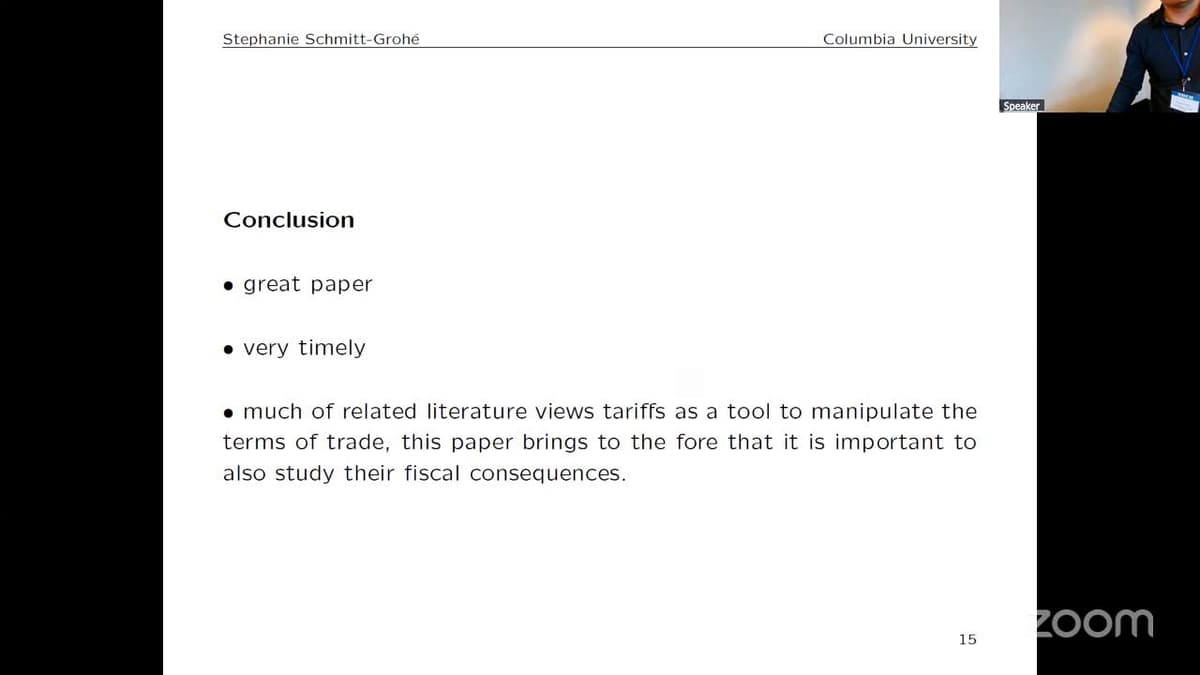
NBER International Finance and Macroeconomics Program Meeting
At the NBER International Finance and Macroeconomics meeting organizers opened with logistical announcements—shortening lunch and removing a coffee break to accommodate travel—and reiterated meeting norms and the NBER code of conduct. Attendees briefly introduced themselves from a wide range of...

Steven Feldman & Joe Cavatoni: Why Gold Dropped When Bombs Fell in Iran #Gold #Geopolitics
The video features Steven Feldman and Joe Cavatoni analyzing why gold prices fell immediately after the Iranian missile strikes, despite an initial surge. They explore the interplay between geopolitics, oil markets, and investor behavior. Their analysis notes that the first reaction...

Steven Feldman: Sovereign Defaults, AI, and the Death of the Old Playbook #Gold #AI #Investing
Steven Feldman warns that the investment world is still operating on an outdated playbook while a new reality of soaring sovereign debt and unchecked artificial intelligence reshapes risk. He points to a precarious global debt position—if the current conflict extends...

Steven Feldman: The Debt Doom Loop That Makes Gold Unstoppable #Gold #NationalDebt #DoomLoop
In the video, Steven Feldman warns that the U.S. is trapped in a “debt doom loop” where rising interest rates dramatically amplify deficits and debt—turning what were manageable shortfalls into multi‑trillion‑dollar burdens. He notes current annual deficits around $2 trillion,...

Today on Taking Stock | S&P 500 at Multi-Month Lows Amid Iran Conflict
The episode of Taking Stock focused on the S&P 500 slipping to multi‑month lows as the Iran‑Israel conflict rattles markets. Hosts Pedro Ballandrani and Ashley Mastronardi opened with a rundown of the Dow’s 800‑point drop and the broader correction affecting the...

Historic Oil Supply Disruptions Meet Shifting Diplomatic Deadlines. 3/30/26.
The week ahead pivots on President Trump’s revised April 6 deadline for Iran, which delays the next phase of strikes on Iranian energy assets. The extension, granted at Tehran’s request, keeps the Strait of Hormuz partially closed and sustains historic oil‑supply...

Raoul Gives an Update on Crypto, Macro, AI | REKT Vision, April 10, 2026
Raoul Pal, appearing on REKT Vision, delivered a comprehensive update covering the current business cycle, macroeconomic trends, cryptocurrency market dynamics, and the rapid evolution of artificial intelligence. He highlighted a potential slowdown in the mid‑cycle with inflation pressures receding, while...

Christine Lagarde: “Europe-Bashing Is “Vastly Excessive” | The Economist
In a candid interview, European Central Bank President Christine Lagarde warned that “Europe‑bashing is vastly excessive,” arguing that criticism often exceeds the continent’s actual performance and reflects unrealistic expectations. She recalled the original 1957 vision of a peace‑keeping union born...

Drinks With Real Vision Ft. Andreas and Mikkel | LIVE @ 4pm ET
Real Vision’s weekly "Drinks With Real Vision" livestream featured analysts Andreas Steno and Mikkel Rosenvold discussing the latest market moves and their personal Friday night unwind rituals in Copenhagen. The episode aired live at 4 p.m. ET and was open to...

The Big Issue with the Strait of Hormuz
The video examines the strategic vulnerability of global liquefied natural gas (LNG) flows, focusing not on oil but on the natural‑gas bottleneck at the Strait of Hormuz. While the waterway is a well‑known chokepoint, the real risk stems from Qatar’s...

At G7, France Hits Back at Lavrov, Says Russia Does Not Defend International Law • FRANCE 24
French Foreign Minister Jean‑Noël Barrot told reporters at the G7 summit in France that Russia does not defend international law, citing its war in Ukraine and its involvement in Iran. His remarks were a direct rebuttal to Russian Foreign Minister...

Why Pakistan Has Emerged as a Mediator Between US and Iran • FRANCE 24 English
Amid escalating tensions after U.S. and Israeli strikes on Iran in late February, Pakistan has stepped forward as an unexpected mediator between Washington and Tehran. Islamabad leverages its relatively cordial ties with both capitals to propose a diplomatic channel for...

Remarks From Philadelphia Fed Pres. & CEO Anna Paulson at the Macroecon & Monetary Policy Conference
Anna Paulson, President and CEO of the Federal Reserve Bank of Philadelphia, addressed the Macroeconomics and Monetary Policy Conference in San Francisco, highlighting the latest inflation trajectory, labor‑market resilience, and the Federal Reserve’s stance on interest rates. She noted that headline...

IFD Agreement: Bridging the Investment Gap
The video spotlights the IFD (International Finance Development) Agreement as a strategic response to the chronic investment shortfall confronting developing and least‑developed economies. It frames the gap as a barrier to infrastructure, climate resilience, and digital inclusion, noting a $4 trillion...

Iran War Could Cause A Stagflation Nightmare (Yes, Really) | Sovereign Debt Expert Lupin Rahman
The episode centers on Lupin Rahman’s warning that a prolonged closure of the Strait of Hormuz, sparked by the Iran‑Israel conflict, could unleash a stagflationary shock for energy‑importing economies and reshape sovereign‑debt markets. Rahman explains that the dominant risk is no...
Prolonged Iran War Could Impact Farm Decisions, Corn Acres
Spring planting in the United States and Canada is now being shadowed by the escalating conflict in Iran, which threatens the flow of natural‑gas‑derived ammonia used in nitrogen fertilizers. Natural gas underpins the production of urea, the world’s most common solid...

Daily Trader: Weekly Weakness in Stocks & Travel's Tentative Relief #shorts
U.S. and Iran tensions have reignited market volatility, pushing Wall Street into a fifth consecutive week of declines. The conflict has spiked crude oil prices, adding pressure to equity valuations across sectors. Despite the broader sell‑off, Alex Coffey highlights a...

Trump Administration Sidelines, Threatens Europe in Iran War: EU Flounders in New World Order
President Donald Trump warned European allies that failure to help reopen the Strait of Hormuz could jeopardize NATO’s future. Secretary of State Marco Rubio emphasized that the United States will make its own security decisions regardless of European input. The...

Richmond Fed President: Supported Fed Pause to Figure Out 'How We Should Be Leaning'
Richmond Federal Reserve President Tom Barkin said he supported the Fed’s pause at the last meeting, emphasizing the need to determine "how we should be leaning" on policy direction. He framed the current funds rate as being at the higher...

SPX Market Breadth Sours as U.S.-Iran War Continues
U.S.‑Iran hostilities are keeping S&P 500 market breadth weak, with fewer than half of the index’s constituents trading above their 200‑day simple moving average. Analyst Joe Mazzola says the market’s ability to rebound hinges on Friday’s closing level, and he...

Why Lower Rates Actually Mean Higher Prices
The video argues that falling mortgage rates do not automatically make homes cheaper; instead they spark a surge of buyers that pushes prices higher. Citing FHFA data, the narrator notes U.S. home values rose just over 1% year‑over‑year in Q4 2025, but...

Iran Has Been "Like a Religion" For Israel's Netanyahu | The Mishal Husain Show
The interview centers on Prime Minister Benjamin Netanyahu’s framing of Iran as an existential, almost religious adversary and how that narrative intertwines with Israel’s current military actions. Hostilities that erupted in June and have resurfaced now are presented not...

The China Connection - 27-Mar-26
The China Connection is a daily one‑hour livestream that dissects China’s economy, technology, policy and business developments. Hosted by veteran journalist Emily Tan from Hong Kong, it airs from 10:00‑11:00 am Singapore/Hong Kong time. The broadcast is geo‑restricted to Europe and India,...

A Conversation with Alberto G. Musalem, President of the Federal Reserve Bank of St. Louis
The video features a conversation between AEI’s Michael Strain and Alberto G. Musalem, President of the Federal Reserve Bank of St. Louis. Musalem outlines the Fed’s recent decision to keep the policy rate in the 3.5‑3.75 percent range, emphasizing that...

Middle East Tensions Drive up Costs, Yiwu Traders Respond with New Strategies
The video examines how escalating geopolitical tensions in the Middle East have driven up shipping rates and commodity prices, putting pressure on Yiwu’s vast network of small‑scale exporters. Data points reveal freight costs climbing roughly 25% since early spring and...

Luxury Giants Lose Billions In Market Value Amid Middle East Conflict
The video examines how the escalating Middle East conflict has rattled the luxury sector, wiping nearly $100 billion off the market capitalizations of LVMH, Hermès, and Richemont within a month. While the region accounts for only about 6% of global luxury...

This Pause Changes Nothing
The Daily’s analysis by @cvecchiofx argues that market optimism surrounding recent delays in geopolitical conflict is misplaced. Inflationary pressures are resurfacing as supply‑chain disruptions and higher commodity prices persist. Structural weaknesses in the economy—particularly in credit markets and consumer spending—are...