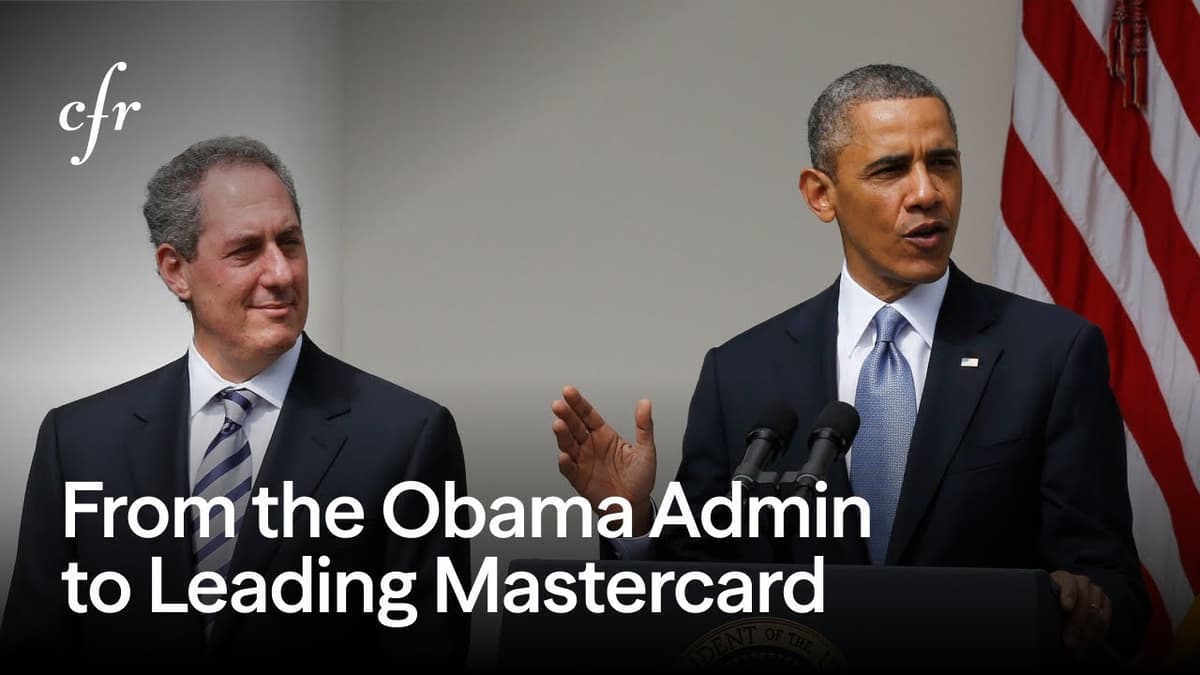
How I Got My Career in Foreign Policy: Michael Froman
In a candid conversation, former U.S. Trade Representative Michael Froman traces a winding path from childhood astronaut dreams to a lifelong career in foreign policy, sparked by a gap‑year encounter with presidential candidates in the early 1980s. After abandoning a pre‑med track at UC Berkeley, he pursued public and international affairs at Princeton, earned a PhD in international affairs and a law degree, and entered government service as a White House fellow during the Bush administration, where a mentor’s quip about “only trusting you with trade policy” redirected his focus. Froman’s résumé spans the Clinton and Obama eras: roles on the National Security Council, the newly created National Economic Council, a deputy assistant secretary at the Treasury overseeing post‑Dayton Balkans work, and chief of staff to Treasury Secretary Rubin. He later joined Citigroup and MasterCard, gaining private‑sector insight that he says reshaped his view of job creation and infrastructure. Returning to government, he helped steer the G20 response to the 2008‑09 financial crisis and, as U.S. Trade Representative, led the complex negotiations of the Trans‑Pacific Partnership, a deal ultimately undone by political opposition. Memorable moments include negotiating with Slobodan Milosevic on Dayton Accord implementation and describing his mentor’s influence: “the only thing I can trust you with is trade policy.” He highlights the value of cross‑sector experience, noting how private‑sector work on financial inclusion at MasterCard reinforced his belief that business can advance development goals. For aspiring policymakers, Froman stresses two takeaways: seek mentors who can teach you how to navigate careers, and remain open to opportunities beyond government, especially in the private sector where trade‑related challenges are often addressed. His story underscores the fluid boundary between public service and business, and the enduring relevance of trade expertise in shaping global economic stability.
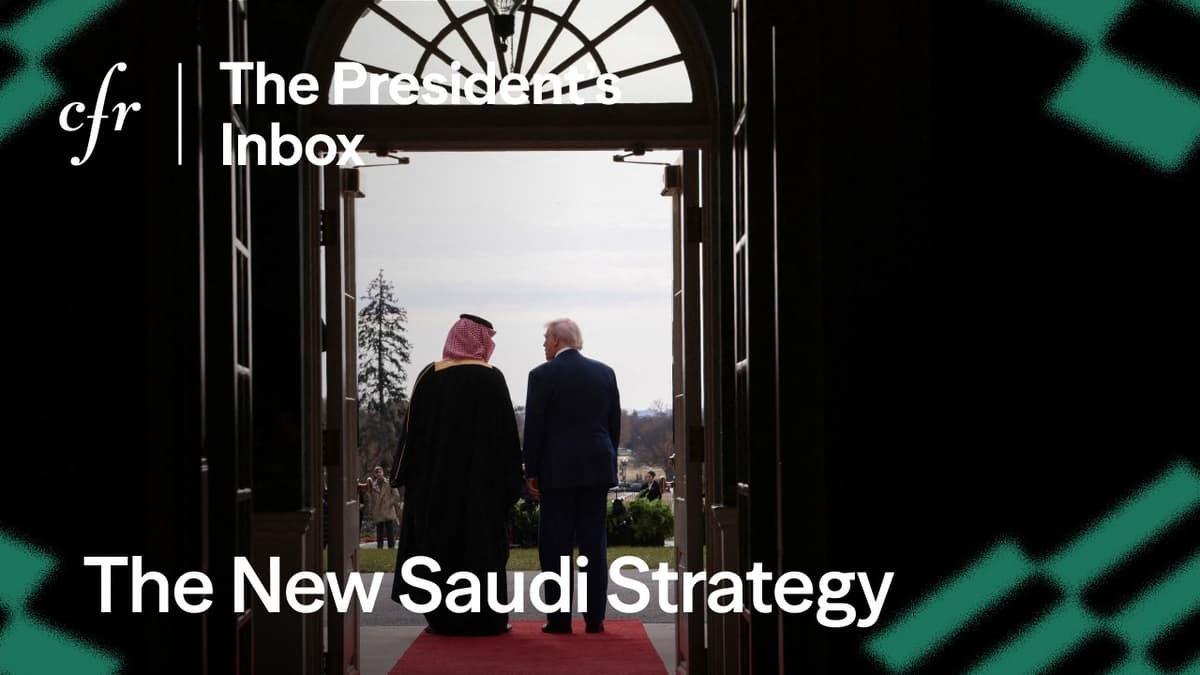
The New Saudi Strategy, With F. Gregory Gause III
The interview with F. Gregory Gause III explores Saudi Arabia’s evolving strategy under Crown Prince Mohammed bin Salman (MBS). After King Salman relinquished the prime‑ministership in 2022, MBS effectively became the kingdom’s sole decision‑maker, ending the historic consensus‑driven model...
The Two-Speed EU of the Future || Peter Zeihan
Peter Zeihan argues that Europe’s strategic paralysis stems from its consensus‑driven decision‑making, where every member state can veto major security actions. He contrasts this with the United States, where a single executive can mobilize forces within days, highlighting the EU’s...
Global Foresight 2036: What Will the Next Decade Bring?
The Atlantic Council unveiled its fifth annual Global Foresight 2036 report, a multi‑component effort that combines a survey of roughly 450 geostrategists from 72 countries, a series of “snow leopard” under‑the‑radar trends, and a new video series on artificial intelligence....
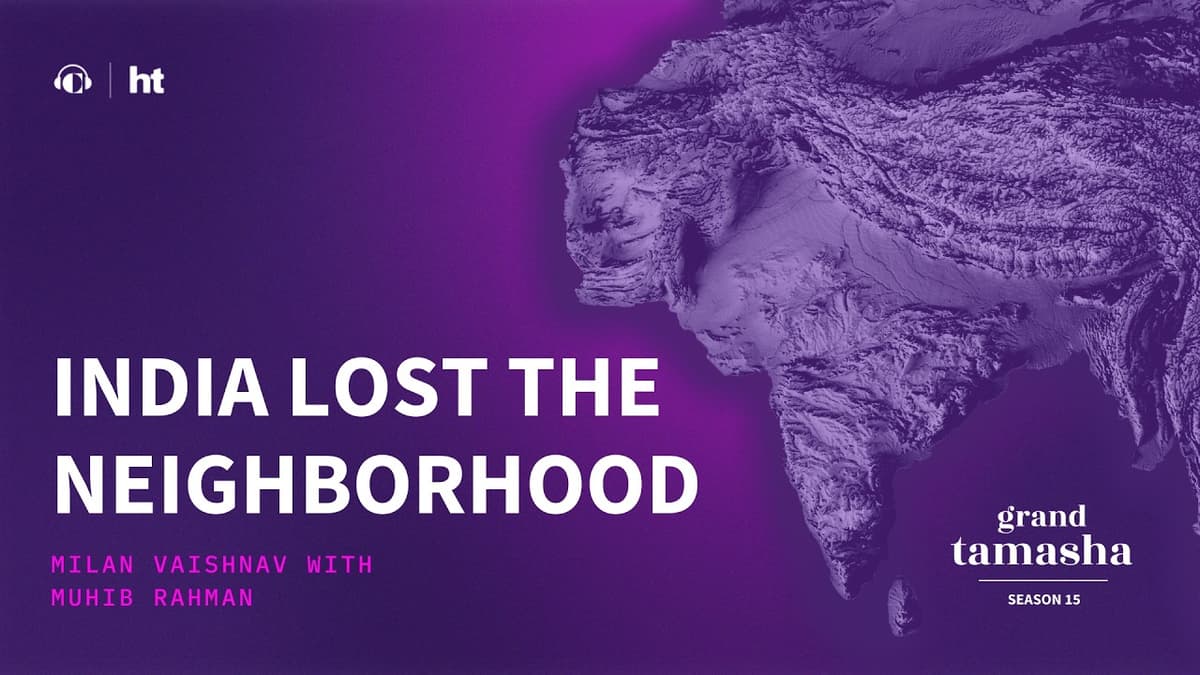
How India Lost the Neighborhood
The episode examines Muhib Ramman's essay “The Folly of India’s Illiberal Hegemony,” arguing that New Delhi’s backing of autocratic regimes has destabilized South Asia. While protests in Bangladesh, Nepal, Sri Lanka, and the Maldives stem from corruption, inflation and democratic backsliding,...
Global Foresight 2036: Forecasting with Artificial Intelligence
The video “Global Foresight 2036” uses ChatGPT to illustrate how artificial‑intelligence tools synthesize expert forecasts about two high‑impact scenarios: the likelihood of a major war in the next ten years and the arrival of artificial general intelligence by 2036. Analysts surveyed...
Is Venezuela Ready to Move On? || Peter Zeihan
Peter Zeihan discusses Venezuela’s latest political shift as interim president Delcy Rodríguez announces a blanket amnesty covering all crimes committed since Hugo Chávez took power in 1999, marking the first major concession after the United States helped remove Nicolás Maduro from office. The...
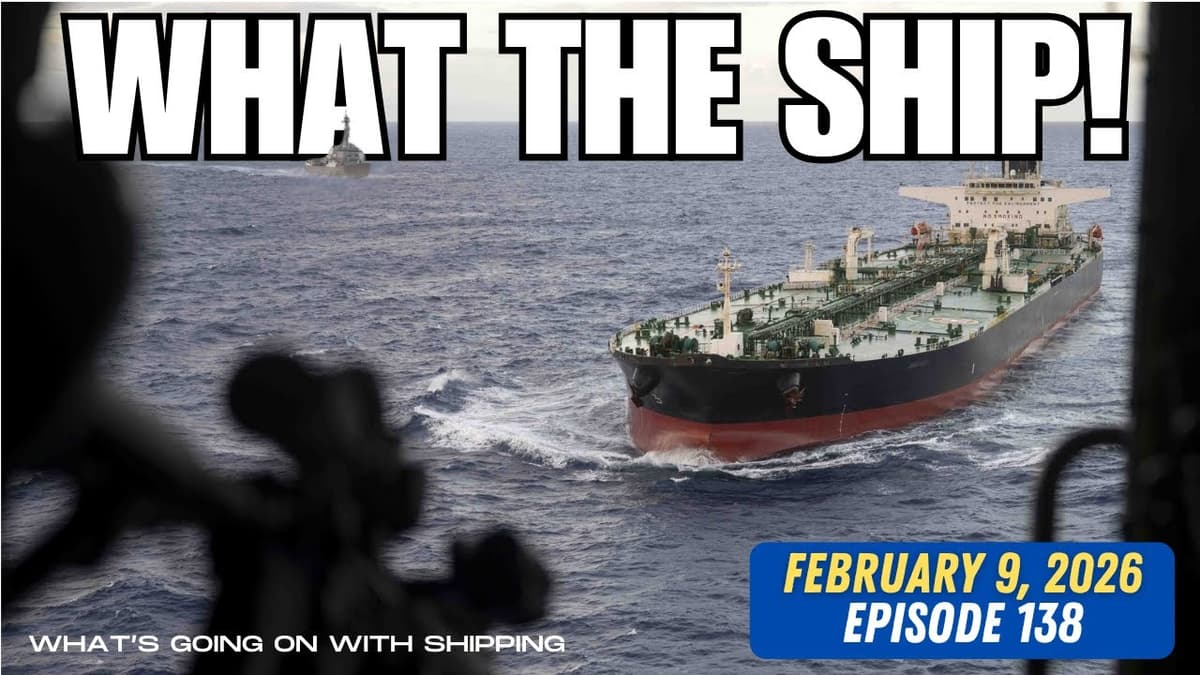
What the Ship (Ep138) | Tanker Seizures | Russia Oil | Panama | Net Zero | Containers
The February 9, 2026 episode of What the Ship highlighted five critical maritime developments. First, the United States and allied coast guards intensified sanctions enforcement, seizing a seventh shadow‑fleet tanker and detaining vessels linked to Venezuela and Iran. Second, Russia’s...
Vancouver & Toronto Real Estate Market Update February 2026
Vancouver and Toronto housing markets entered 2026 with a sharp slowdown, as home sales fell more than 20% year‑over‑year. Rising inventory and cautious buyers are pushing prices lower across multiple segments. The market’s direction now hinges on interest‑rate expectations, with...
Purge in Venezuela: The New President Is Selling Out Maduro’s Allies | VisualPolitik EN
The video examines the rapid consolidation of power by Delcy Rodríguez, the acting president of Venezuela, following the capture of Nicolás Maduro and his wife. Within weeks, Rodríguez’s inner circle has launched a purge of senior Chavista figures, arresting former...
The Real Winners After a Chinese Collapse || Peter Zeihan
Geopolitical analyst Peter Zeihan warns that holding or borrowing yuan ahead of a potential Chinese collapse would be futile because over 99% of yuan is trapped within mainland China and likely nontransferable. Historical collapses show domestic currencies often become worthless,...
New Fed Chair Kevin Warsh Nomination Crashes Gold, Silver & Bitcoin - What It Means For Crypto 2026
Markets plunged after President Trump nominated Kevin Warsh as Fed chair, with gold, silver and Bitcoin posting dramatic one-day losses amid investor uncertainty. Warsh, a former Fed governor (2006–2011) and longtime Wall Street insider linked to Stanley Druckenmiller, has praised...
Progress with Purpose | Asia Summit 2025
The Asia Summit 2025 panel centered on Dubai’s strategic response to a world riddled with wars, tariffs, rising nationalism and demographic shifts. Speakers emphasized that the greatest danger is inertia; Dubai combats this by breaking a ten‑year vision into three‑year...
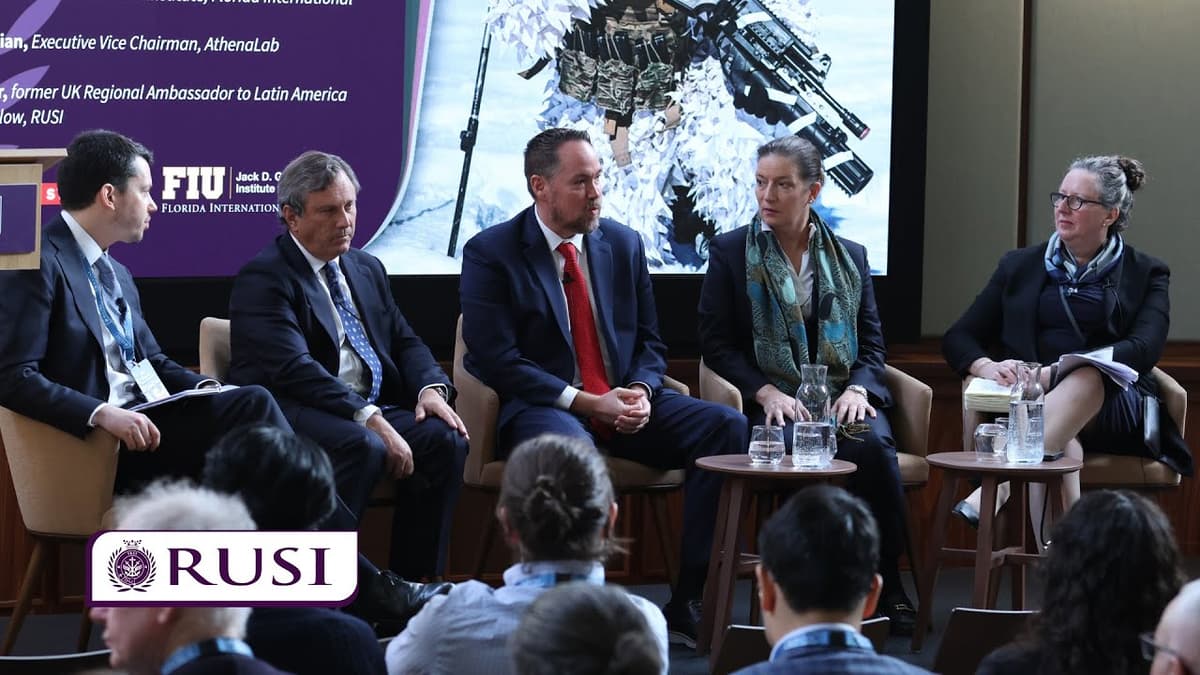
The Strategic Implications for Regional and Global Politics of the Venezuelan Crisis | LASC 2026
The LASC 2026 panel examined the Venezuelan crisis as a flashpoint for regional and global geopolitics, focusing on the surprise U.S. military operation dubbed "Operation Southern Spear" and its rapid escalation in early January. Panelists traced how the strike, described...

Oren Cass: How Economists Failed America
Oren Cass argues economists have failed America by focusing solely on consumption, ignoring community, family, industry, and national security. He frames the discussion as a critique of the prevailing neoliberal consensus and calls for a new "American system" of economic...
Why Everything Broke at Once (Crypto, Tech, Gold) & What Happens Next...
The episode opens by declaring a rare, simultaneous collapse across crypto, technology equities, and precious metals, dubbing February’s first week a “bare market” reset. Hosts note Bitcoin’s 21% weekly slide, Ethereum’s 30% plunge, and a 46% erosion of total crypto...
India: Overhyped or Global Player || Peter Zeihan
Peter Zeihan argues India is often overhyped as a unified global power because its fractured geography, deep linguistic and religious diversity, and hostile neighborhood limit national cohesion and power projection. India lacks clear geographic consolidation and strong regional influence, meaning...
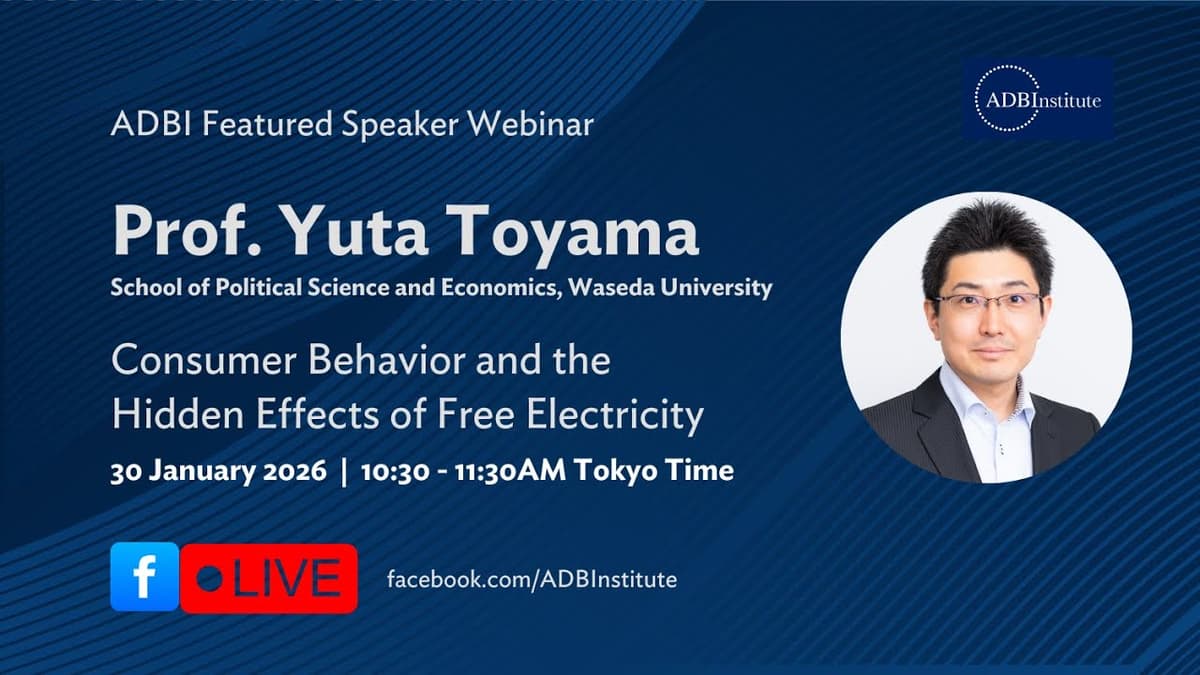
Featured Speaker Webinar with Prof. Yuta Toyama
The webinar featured Professor Yuta Toyama of Waseda University presenting his joint research on nonlinear electricity pricing, specifically how consumer misperception can undermine policy goals. Using the case of Bhutan’s 2013 free‑first‑100 kWh subsidy for rural households, the study blends structural...
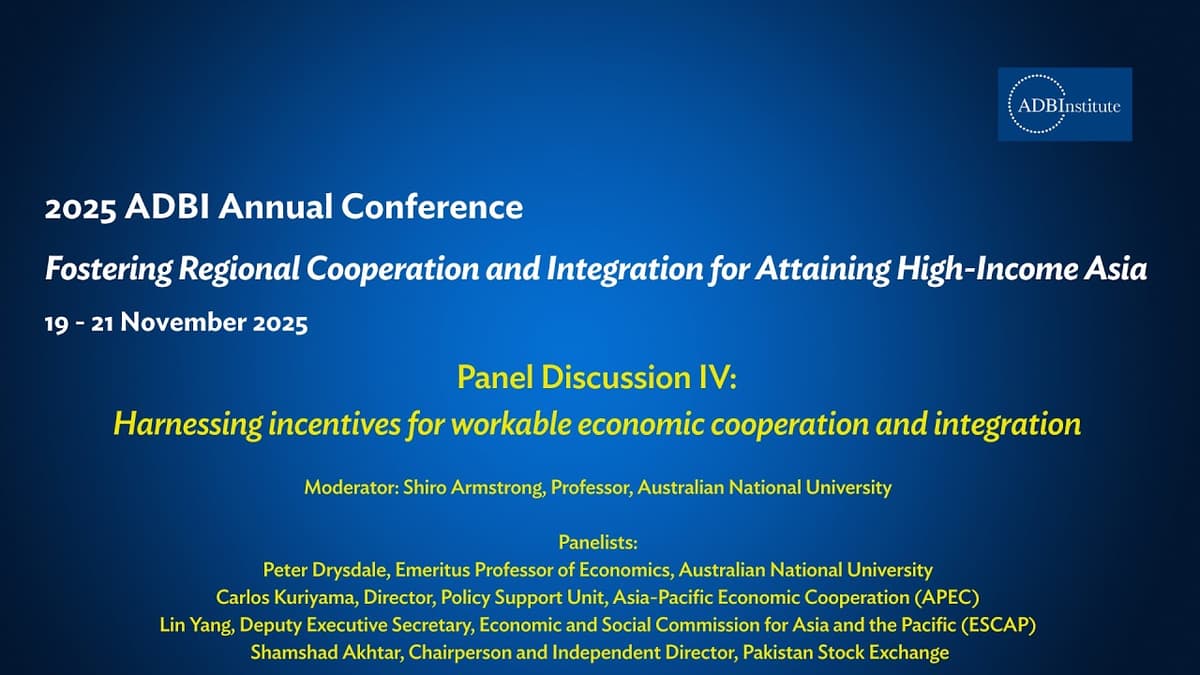
2025 ADBI Annual Conference Day 3 (Part 5/6): Harnessing Incentives for Economic Cooperation...
The final panel of the 2025 ADBI Annual Conference examined how to harness incentives for workable economic cooperation and integration across Asia. Chaired by Professor Shiro Armstrong, the discussion brought together senior officials from ESCAP, APEC, Pakistan’s financial sector and...