
Milliseconds Matter: How Agentic Edge AI Delivers Autonomous Action at the Source
Agentic edge combines advanced AI with edge computing, allowing autonomous decisions to be made directly on sensors, drones, and other devices instead of in centralized clouds. Federal agencies can leverage millisecond‑level response for disaster detection, infrastructure monitoring, and predictive maintenance, reducing latency and dependence on bandwidth. The approach promises faster, more resilient operations but demands multi‑year planning, cross‑disciplinary coordination, and robust responsible‑AI governance. As edge hardware and software mature, the technology is poised to become a strategic asset for mission‑critical government functions.

What Does the FCC Have to Do with Cyber Security?
The Federal Communications Commission (FCC) is intensifying its role in cybersecurity by hosting two workshops on May 14‑15 aimed at small and medium‑sized telecom and broadcast providers. Chief Zenji Nakazawa highlighted the growing threat from nation‑state actors and ransomware, which can...

A New AI Model Just Changed the Cybersecurity Game. Washington Wasn’t Ready.
In a 48‑hour swing, the White House floated then retracted an FDA‑style pre‑deployment vetting regime for frontier AI after Anthropic unveiled Mythos, a model that can locate and exploit software vulnerabilities. Mythos helped Mozilla fix more Firefox bugs in April...

OPM Sees 12,000 New Retirement Claims in April
The Office of Personnel Management recorded nearly 12,000 new retirement claims in April and cut its backlog to under 50,000 for the first time in five months, with digital filings processed in about two‑thirds the time of paper applications. The...

Unleashing AI Across the US Government: The Data Security Challenge Holding Back Decision Advantage
Former DoD CIO Terry Halvorsen warns that while federal agencies are rapidly deploying AI, most of their most valuable data remains locked away because current security architectures require decryption during processing. This "decrypt‑to‑use" vulnerability especially hampers Retrieval‑Augmented Generation (RAG) models,...

AI & Data Exchange 2026: NIH’s Susan Gregurick on Overcoming Data Silos with AI Analytics
At the AI & Data Exchange 2026, NIH associate director for data science Susan Gregurick outlined the agency’s aggressive push to use artificial intelligence for breaking data silos and accelerating health research. NIH is leveraging AI partnerships with the Energy Department...

DOGE Used ChatGPT in a Way that Was Both Dumb and Illegal, Judge Rules
U.S. District Judge Colleen McMahon ruled that the Department of Government Efficiency’s (DOGE) cancellation of more than $100 million in National Endowment for the Humanities grants was unconstitutional. The decision highlighted that DOGE relied on ChatGPT to scan grant descriptions and...

Philippines Expands Digital Connectivity in Zamboanga Del Sur Ahead of ASEAN 2026
The Philippine Department of Information and Communications Technology (DICT) is rolling out a new digital infrastructure program in Zamboanga del Sur ahead of the country’s ASEAN 2026 chairmanship. The GovNet project links the first 50 government agencies in Pagadian City...

Indonesia Positions DESLab to Support Digital Election Policy Development
Indonesia’s Ministry of Home Affairs has repurposed the Digital Election Simulation Lab (DESLab) from a showcase for e‑voting hardware into a policy‑development hub. Operated by the Domestic Policy Strategy Agency, DESLab will let officials, academics and civil‑society groups run end‑to‑end...

Solving the Gridlock: America’s Electric Supply Chain Opportunity
Rising electricity demand and aging infrastructure have created a severe grid‑hardware shortage in the United States, with large power transformers now facing up to four‑year lead times and prices for cables and transformers soaring 75% since 2019. Domestic production satisfies...

Pornhub Returns to UK, but only for iOS Users Who Verify Age with Apple
Pornhub has restored access for UK iOS users after Apple introduced a device‑based age‑verification feature in iOS 26.4. The platform will only allow users whose Apple ID age has been confirmed to view content, sidestepping the UK Online Safety Act’s...

AI & Data Exchange 2026: PRAC’s Ken Dieffenbach on Using AI Tools to Stay a Step Ahead of Fraudsters
The Pandemic Response Accountability Committee (PRAC) has extended its mandate through 2034 and is now leveraging artificial‑intelligence tools to oversee more than $5 trillion in pandemic‑era spending. Executive Director Ken Dieffenbach highlighted a new AI‑enabled fraud‑prevention engine that can scan 20,000...

AI & Data Exchange 2026: Casey Mulligan on Driving Continual Processes Improvements
Casey Mulligan, former chief counsel for advocacy at the SBA, unveiled "Sextant," an AI‑driven web tool that converts a legacy STATA application into HTML and JavaScript. The tool automates much of the Regulatory Flexibility Act reporting, freeing a single analyst...

You Can Buy Better Tools, but that Alone Won’t Get You to Perfect Cyber Security
In a Federal News Network interview, Fors Marsh senior director Nicole Togno argues that federal cyber‑security failures stem more from human behavior than from inadequate technology. She warns that agencies over‑invest in tools while neglecting the psychological drivers behind employee actions,...

AI & Data Exchange 2026: CDAO’s Andrew Mapes on Accelerating AI Adoption Departmentwide
At the AI & Data Exchange 2026, acting principal deputy chief digital and AI officer Andrew Mapes explained that the Pentagon’s recent realignment of the Chief Digital and Artificial Intelligence Office (CDAO) under the Office of the Under Secretary for...

Singapore Government Sets Safeguards for Civil Servants Using AI to Respond to Residents
Singapore’s Ministry of Digital Development and Information clarified that civil servants may use AI tools to draft replies to residents, but the final content remains the officer’s responsibility. The policy mandates AI literacy training, rigorous safety and data‑security assessments, and...

Australia Launches AI.gov.au to Support Responsible AI Adoption
Australia’s National AI Centre has launched AI.gov.au, a government‑run portal that consolidates guidance, tools, and case studies to help organisations adopt artificial intelligence responsibly. The site targets SMEs and not‑for‑profit groups, offering resources such as strategy templates, risk‑assessment frameworks, training...

FCC Commissioner Defends Blacklisting Foreign Drones over Security Fears
FCC Commissioner Olivia Trusty defended the agency’s decision to add foreign‑made drones and critical components to the Covered List, citing national security and AI‑driven infrastructure risks. The move intensifies scrutiny of Chinese‑origin drones, especially DJI, which has struggled to reach...

Poland Says Hackers Breached Water Treatment Plants, and the US Is Facing the Same Threat
Poland’s Internal Security Agency disclosed that hackers breached five water‑treatment plants, potentially gaining control of industrial equipment and endangering water safety. The agency linked the attacks to Russian intelligence activity, though it did not confirm the perpetrators. Similar incidents have...

Sen. Schumer Seeks DHS Plan on AI Cyber Coordination with State, Local Governments
Senate Minority Leader Chuck Schumer wrote to DHS Secretary Markwayne Mullin demanding a coordinated plan to protect state, local, tribal and territorial (SLTT) governments from AI‑enhanced cyber attacks. He set a July 1 deadline for a strategy covering talent identification, rapid...

How Mississippi’s Revenue Department Optimized Tech without Cloud
Mississippi’s Department of Revenue, which collects over $10 billion annually, has overhauled its legacy IT landscape without moving to the cloud. By consolidating data centers, shrinking server count by more than 20%, and converting mainframe applications into self‑managed web apps, the...

Algeria and Oman Gov'ts Partner to Establish Data Centers
Algeria and Oman have agreed to cooperate on building data centers and launching AI and digital‑government projects. The deal was sealed during Omani Minister Said bin Hamoud Al Maawali's visit to Algeria, where broader transport and IT agreements were also signed....

East African Countries Plan Regional Satellite Launch
Ministers from Kenya, Rwanda, South Sudan and Uganda have agreed to move forward with the Northern Corridor Regional Communication and Broadcasting Satellite Initiative (NCRCBSI), a joint effort to launch a satellite that will broaden communication and broadcasting services across East...

California's Battery Array as Powerful as 12 Nuclear Plants
California’s grid discharged just over 12,000 MW from battery storage, matching the output of twelve large nuclear plants. The discharge covered more than 40% of the state’s electricity demand during a peak evening period in late March. This is the first...

Bring AI Agents Into the Identity Fabric
Okta’s partner content warns that AI‑driven agents are emerging as a non‑human identity layer that expands the cyber‑attack surface. It calls for standardized AI lifecycle management to prevent machine‑speed threats from compromising agency missions. The piece positions the identity fabric...

Florida Has a New Law Regulating AI Data Centers
Florida enacted Senate Bill 484, a law that forces AI data centers operating in the state to pay for their own electricity, water and other utilities rather than passing those costs onto consumers. The legislation also allows companies to keep...

L3Harris to Advance ABMS Digital Infrastructure for US Air Force
L3Harris Technologies has secured a contract to develop key components of a secure, resilient digital infrastructure for the U.S. Air Force’s Advanced Battle Management System (ABMS). The work focuses on data integration, networking, and real‑time processing to enhance command and...

STB Advances ’Data Collection’ Streamlining Efforts
On May 8 the Surface Transportation Board issued a final rule (EP 787) that streamlines Class I railroad reporting by eliminating supplemental Positive Train Control expenditure filings and adding two weekly service metrics—Original Estimated Time of Arrival (OETA) and Industry Spot and Pull...

Louisiana Bill Would Bring Biometric Age Checks to Bars
Louisiana Senate Bill 499, called the Madison Brooks Law, would require patrons entering alcohol‑licensed venues to present a biometric age‑assurance credential that combines a QR code with a live facial match. The credential, issued by the state’s Office of Alcohol...

SLC Digital Patents Multi-Signal Fingerprint Biometric Sensor Array for Smart Cards
SLC Digital has secured a U.S. patent for a graphene‑based sensor that merges optical, ultrasound and capacitive signals into a single smart‑card biometric array. The hybrid sensor records high‑resolution fingerprint ridges, three‑dimensional subsurface skin structures and electrical properties, creating a...

Public-Sector AI Translation Has Saved Taxpayers More than $30 Million, Wordly Says
Wordly, an AI‑powered translation platform, reports that public‑sector use has saved U.S. taxpayers more than $30 million since its 2019 launch. Adoption by states, local governments and schools has surged fivefold in the past two years, driven by growing multilingual populations...

How AI Is Helping Legacy HVAC Systems Meet New York City’s Emissions Standards
Entech is retrofitting legacy HVAC systems with AI‑driven sensors and control software to help New York City buildings meet Local Law 97’s emissions mandates. Early adopters have already saved about $42 million and cut carbon output by roughly 137,000 tons, averaging a 22%...

After San Francisco Installed Traffic Cameras, Speeding Dropped by 80%
San Francisco became the first California city to deploy automated speed cameras under Assembly Bill 645, launching an 18‑month pilot that has now shown dramatic results. City data indicate an almost 80% drop in overall speeding, with only 2% of...

Alberta Plans to Build First Provincial Forensic DNA Lab in Western Canada
Alberta has allocated roughly $6.5 million USD in its 2026 budget to build Western Canada’s first provincial forensic DNA laboratory, to be housed in the ALERT facility in Sherwood Park. The lab, staffed by more than 40 full‑time analysts, is projected to...

Heliox Pilots Its New Flex Pro 480 kW DC Fast EV Charger with King County Metro
Heliox, a Siemens business, is piloting its new Flex Pro 480 kW DC fast charger with Seattle‑area transit agency King County Metro. The compact 12‑sq‑ft unit supports CCS1 and high‑current pantograph charging, delivering up to six simultaneous charging sessions. Operators can choose...

Uganda Targets Fossil-Fuel Free Public Transport by 2030
Uganda announced a $1.7 billion public‑transport electrification plan aiming to replace all buses and boda‑bodas with electric models by 2030. The initiative, part of the Fourth National Development Plan and the National E‑Mobility Strategy, has already secured $800 million in funding commitments....

Around the Commercial Drone Industry: Program Testing, FIFA World Cup, Amusement Park Restrictions
Leander, Texas, is piloting a two‑week drone‑first‑response program using Skydio X10 units that can launch in 20 seconds and reach incident sites in under 90 seconds, delivering live video and thermal imaging to police and fire crews. The drones can...

New Rules Will Keep Unmanned Aircraft Away From Prisons and Power Plants
The FAA issued a notice of proposed rulemaking to create Unmanned Aircraft Flight Restrictions (UAFRs) around critical infrastructure, including prisons, power plants, chemical facilities, and dams. Two tiers are proposed—a standard UAFR that caps drone altitude at 400 feet (or higher...

UN Launches New Advisory Body to Protect Submarine Cables
The International Telecommunication Union, under the UN, announced a new global advisory body to bolster the resilience of submarine fiber‑optic cables amid escalating geopolitical risks. Recent incidents—including a Houthi‑targeted vessel in the Red Sea and suspected sabotage in the Baltic—have...

Why Government Information Gets Reassigned by AI — and What that Means for Public Trust
AI chatbots often misattribute local government information to state or federal agencies because jurisdiction cues are implicit, not machine‑readable. When multiple sources address the same issue, the system infers authority, favoring broader or more frequently referenced documents. This default behavior...

Three Studies on Technical Solutions to Mark and Detect AI-Generated Content
The European Commission has commissioned three independent studies that evaluate technical solutions for marking and detecting AI‑generated content across text, audio, and image/video formats. The research, authored by experts Xavier Serra et al., Mario Joachim Fritz, and Giovanni Puccetti, assesses...

NATS Licence Change Brings New Role in UK Airspace Modernisation
On 6 May 2026 NATS received a revised air‑traffic services licence that authorises it to deliver the new UK Airspace Design Service (UKADS). The licence expands NATS’ remit to coordinate and design airspace changes, starting with the complex London Terminal Control Area...
Computerised Testing Closes Learner Licence Loophole
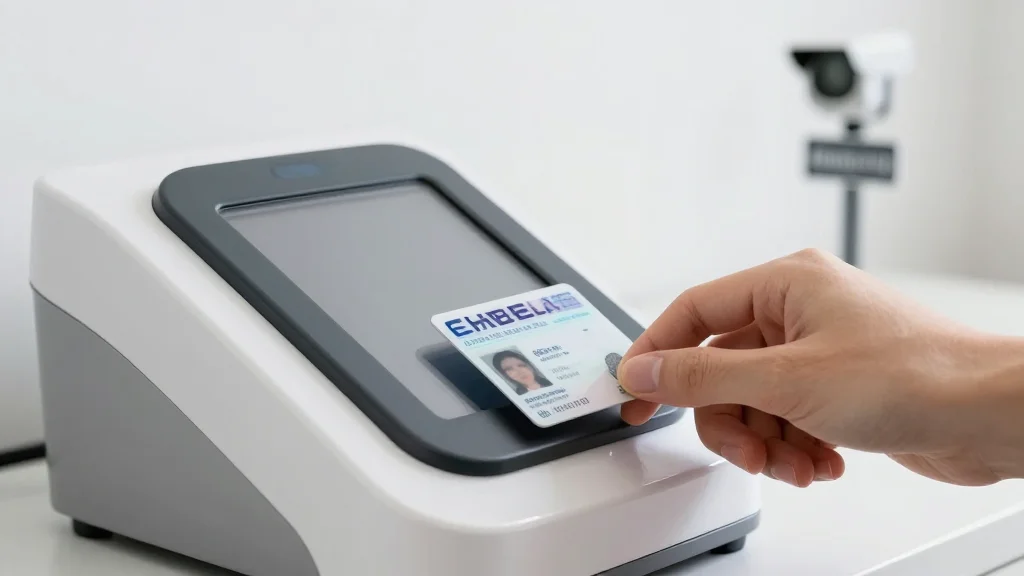
The Road Traffic Management Corporation (RTMC) has rolled out computerised learner‑licence testing nationwide, replacing paper‑based exams. The system randomises question papers and auto‑grades, closing a long‑standing loophole where officials supplied answers in advance. Since its 2021 introduction, the national pass...

Appeals Court Kills FCC Effort To Acknowledge Racism In Broadband Deployment
The 8th U.S. Circuit Court of Appeals unanimously struck down the FCC's 2023 rule that would have allowed consumers to file complaints over broadband services that cause disparate impact on low‑income and minority neighborhoods. The court held the agency exceeded...

U.S. Army Selects Windchill for Product Data Management
PTC’s Windchill platform has been selected as the U.S. Army’s official product data management and PLM solution. The ePDM system will serve as the Army’s system of record for lifecycle data, workflows, and configuration management under the Department of the...

Google Wallet Integrates Aadhaar Credentials
Google Wallet announced support for India’s Aadhaar Verifiable Credentials, letting users store their national ID data directly on Android devices. The solution uses on‑device storage and selective disclosure to keep personal details private while enabling verification. Built on the OpenID4VCI...

India Plans to Replace Highway Toll Plazas with Automated Distance-Based Collection System by 2026
India’s transport ministry announced that by the end of 2026 all physical toll plazas will be replaced with a Multi‑Lane Free Flow (MLFF) system that charges drivers based on distance travelled. The automated solution will use number‑plate recognition and FASTag‑linked...

SkyDrive Announces New Consortium to Manage Vertiport Developments in Osaka
SkyDrive Inc has created Japan’s first eVTOL vertiport consortium in Osaka, uniting the Osaka prefectural and municipal governments, Osaka Metro, Soracle and Marubeni. The partnership will manage the Osakako Vertiport on Osaka Bay and drive commercial eVTOL services across the...

E-Way Bill Generation Eases in April After March Peak
India’s electronic way‑bill system recorded 133.3 million permits in April, a 5% dip from the March peak of 140 million but still 12% above the same month last year. The decline reflects seasonal year‑end dispatches, while the year‑on‑year rise signals continued goods‑movement...

Fake Moustache Trick Raises Questions Over UK Online Safety Act Age Checks
The UK’s Online Safety Act, launched in July 2025, introduced stricter age‑verification and content‑moderation rules to protect children online. Early testing shows simple tricks—such as a 12‑year‑old drawing a fake moustache—can fool AI‑driven facial age checks, exposing a critical vulnerability....