
Inflammatory Glycogen Produced by Gut Microbes Contributes to Neurodegeneration
Researchers have identified inflammatory glycogen produced by gut microbes as a driver of age‑related neurodegeneration, especially in ALS and frontotemporal dementia linked to C9ORF72 mutations. In germ‑free mice lacking C9ORF72, colonization with glycogen‑producing Parabacteroides merdae triggered monocytosis, blood‑brain barrier breakdown, and T‑cell infiltration, while enzymatic digestion of gut glycogen improved survival. Human fecal analysis found inflammatory glycogen in 15 of 22 ALS patients, one FTD case, and only four of twelve healthy controls, indicating broader relevance across older adults. The study moves beyond correlation, pinpointing a modifiable microbial metabolite that influences brain inflammation.

Home Court Disadvantaged?
The episode examines Epic Systems' recent courtroom setback in the CureIS litigation, focusing on the court's denial of a motion to stay discovery and the nuanced protective order regarding "Highly Confidential – Attorneys' Eyes Only" information. It highlights how Epic's...

UMass Memorial Health Transformation Journey
In 2013 Dr. Eric Dickson took the helm of UMass Memorial Health as the system teetered on the brink of default and faced declining patient and caregiver satisfaction. He introduced a CEO‑driven lean management system that standardized nine core processes and...

Sword Intelligence Launches in the UK, Bringing Proven National-Scale AI Care Operations Set to Transform Healthcare in Greece
Sword Intelligence has launched its AI‑driven care‑operations platform in the UK, aiming to automate triage, coordination and scheduling to ease NHS waiting‑list pressures. The company is also building one of Europe’s first AI‑powered healthcare “front doors” in Greece for a...

Who Qualifies for the New FDA PreCheck Pilot Program?
The FDA has opened submissions for its PreCheck Pilot Program, targeting new U.S. drug‑manufacturing facilities that will begin construction by the March 1 2026 deadline. Eligible sites must be stand‑alone plants, located in the United States or its territories, and commit to...

CMS Posts Proposed NBPP 2027. Be Afraid; Be Very Afraid (Part 1)
The Centers for Medicare & Medicaid Services released its proposed 2027 Notice of Benefit & Payment Parameters, a 577‑page rule outlining changes to ACA implementation. Key proposals include stricter marketing restrictions, removal of the gender‑identity definition of sex, lowering the...

Nanopillar-Studded Plastic Films Physically Destroy Viruses, Cutting Infectivity by 94% without Chemicals
Researchers at RMIT and international partners engineered flexible acrylic films stamped with dense nanopillar arrays using ultraviolet nano‑imprint lithography. The 60 nm pitch configuration reduced human parainfluenza virus type 3 infectivity by up to 94 % within one hour, achieving mechanical rupture of...

Mobile Wound Care in 2026: Navigating Regulatory Pressures
Mobile wound‑care providers face tighter Local Coverage Determinations, heightened CMS surveillance, and expanded documentation mandates in 2026. These regulatory shifts narrow reimbursement, limit visit frequency, and force clinicians into defensive practices. The burden disproportionately impacts high‑acuity, home‑bound patients who rely...

Government Reports on Healthcare Require a Closer Look
The Bureau of Labor Statistics reported a 3.6% rise in hospital compensation costs and a 3.2% increase for nursing homes in 2025, while January 2026 saw healthcare add 82,000 jobs, the bulk of total payroll growth. The January CPI showed...

Why Smaller Hospitals May Be Faster for Cancer Diagnosis
A rural Taiwanese patient faced a 20‑day wait for a diagnostic mammogram at a large tertiary hospital, while a community hospital in Taipei provided immediate evaluation and treatment. The article attributes the delay to fragmented administrative structures, global‑budget constraints, and...

Missed Diagnosis Visceral Leishmaniasis: A Tragedy of Note Bloat
Louis‑Hunter Kean, a 34‑year‑old, died in November 2023 after a year of high fevers, organomegaly, and multiple hospitalizations. Although clinicians repeatedly noted “visceral leish” and ordered a PCR, the test was never completed and his travel to Tuscany was buried in...

From Pain Points to Progress: Medtronic’s Procurement Evolution
Medtronic is revamping its indirect procurement model to become a strategic, business‑focused function. By segmenting its supplier base, the company concentrates resources on high‑risk, high‑spend vendors while using digital pathways for low‑complexity suppliers. Leadership emphasizes speaking the language of EBITDA...

Carl Zeiss Meditec: When the Thesis Gets Punched in the Mouth
In this episode, the host revisits his deep‑dive analysis of Carl Zeiss Meditec, using the company’s Q1 FY2025/26 earnings call as a live case study to demonstrate how investment theses should evolve with new data. He critiques the common practice...

Mifepristone Restrictions: How Bans Force Patients Into Riskier Care
Mifepristone is banned in 14 states and restricted in another 10, forcing patients to rely on misoprostol‑only regimens. The dual‑drug protocol achieves 95‑98% success with less than 0.5% serious complications, while misoprostol monotherapy raises emergency department visits to 7.9% and...
Pediatric Care in Ghana: Addressing Malnutrition and Sickle Cell Disease
In Ghana, child mortality has fallen but remains high, with 37 per 1,000 children not reaching age five and neonatal deaths at 21 per 1,000. Malnutrition still affects roughly 17‑18% of under‑five children, while 15,000‑20,000 newborns are born with sickle...

Flickstop
On February 15, 2026, a blog post announced the first deployment of the Toumai robotic surgery system at Orsi Academy. The post features an image of a surgeon in blue scrubs operating the robot from a console, underscoring the hands‑on...
![Sabbaticals Provide a Critical Lifeline for Sustainable Medical Careers [PODCAST]](/cdn-cgi/image/width=1200,quality=75,format=auto,fit=cover/https://kevinmd.com/wp-content/uploads/The-Podcast-by-KevinMD-WideScreen-3000-px-3-scaled.jpg)
Sabbaticals Provide a Critical Lifeline for Sustainable Medical Careers [PODCAST]
Physicians rarely receive formal sabbaticals, yet burnout data shows they need extended breaks. A 2021 American Journal of Medicine survey found only 51% of medical schools reported any faculty sabbaticals, typically senior white‑male researchers rather than clinicians. Christie Mulholland’s experience...
Curing versus Caring in Medicine: Bridging the Gap in Patient Trust
The article argues that modern medicine’s obsession with cures has sidelined genuine caring, eroding patient trust. It highlights how women experience chronic pain yet often have their symptoms dismissed, and how minority groups remain invisible in clinical research. Evidence shows...

DNA Nanomachine Inside Living Cells Measures How Aggressive a Cancer Is
Researchers at Wenzhou and Fuzhou Universities unveiled a three‑wheel DNA nanomachine (TW‑harvester) that rides a gold‑nanoparticle track inside living tumor cells. The device uses a DNA tetrahedron with an aptamer targeting nucleolin and miR‑21‑triggered wheel activation to cleave fluorescent substrates,...

Beyond the Fitbit: Why Your Next Health Tracker Might Be a Button on Your Shirt
Scientists at King’s College London discovered that loose‑fit clothing can track human movement more accurately than tight wearables, delivering 40% higher precision while using 80% less data. The research, published in Nature Communications, suggests that simple fabric elements—such as a...
The $800B Open Secret: What the New Medicaid Spending Dataset Means for Health Tech Builders and Investors
The episode breaks down the release of the largest publicly available Medicaid claims dataset, detailing its composition, gaps, and immediate utility for health‑tech builders and investors. It quantifies the scale of Medicaid spending (~$849 B) and improper payments (over $30 B annually),...
The Fight for Payer Control Points
The episode explains InterSystems' new Payer Connector, clarifying that it is not a rival to Epic's Payer Platform but a complementary integration layer that helps payers connect Epic's standardized edge to their fragmented internal systems. It highlights the challenges payers...

Longevity Innovation Forum in San Diego
Longevity Global is launching the inaugural Longevity Innovation Forum in San Diego on March 11‑12, 2026, gathering leading scientists, clinicians, biotech founders and investors to accelerate healthy‑aging research. The two‑day summit features high‑profile speakers such as Mike Snyder, Eric Verdin,...

Cellular Reprogramming Rescues Memory-Encoding Neurons
Scientists at EPFL applied a three‑factor (OSK) partial reprogramming cocktail to memory‑encoding engram neurons in 9‑10‑month‑old mice and Alzheimer’s‑model strains. Using a dual‑AAV system gated by doxycycline, OSK expression was limited to neurons active during a learning event, preserving cell...

University of Minnesota Medical School Nixes Its Classroom “Partnership” With UnitedHealth Group After HEALTH CARE Un-Covered’s Expose
The episode examines the University of Minnesota Medical School’s decision to discontinue a UnitedHealth Group‑sponsored course after investigative reporting by Dr. Allison Leopold exposed the curriculum as corporate propaganda rather than unbiased medical education. Leopold, a participant in the pilot,...

The CMS ACCESS Model Update and Payment Rates
The episode breaks down CMS’s new ACCESS Model, which replaces fee‑for‑service chronic care payments with a per‑beneficiary Outcome‑Aligned Payment (OAP) that is partly withheld until specific clinical and patient‑reported outcomes are met. It explains the four clinical tracks—early and advanced...

From Williams-Sonoma to Medicine: What Retail Taught Me About Difficult Patients
Jason Wilt, an emergency and sports‑medicine physician, recounts his stint at Williams‑Sonoma and how the harsh retail environment taught him to handle difficult patients. He draws parallels between customer aggression and patient hostility, noting that many patients’ frustration stems from...
OpenClaw in the Clinic: A Business Plan for HIPAA-Compliant Deployment of Agentic AI at Scale in Payer and Provider Organizations
The episode dissects OpenClaw, an open‑source, agentic AI platform that can autonomously interact with files, commands, and dozens of applications, and evaluates its viability for payer and provider health organizations. It explains why the default, unsecured version violates HIPAA, outlines...
The FDA: Promoting Quack Nostrums Based on “Incredible Stories” While Rejecting Vaccines Despite Successful RCTs
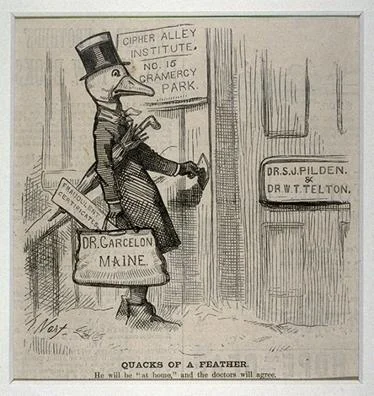
The U.S. FDA declined to review Moderna's mRNA influenza vaccine, even though two phase‑3 trials involving 43,800 participants demonstrated a 27% efficacy advantage over the standard Fluarix vaccine and a 49% reduction in hospitalizations. FDA officials cited the comparator arm...

Organoids and Artificial Intelligence 🫐
The episode explores the rapid convergence of organoid technology and artificial intelligence, highlighting how AI-driven image analysis, multidimensional data integration, and high‑throughput screening are transforming organoid research. It introduces the emerging field of Organoid Intelligence, where brain organoids act as...
The Medical Referral Process: Why It Fails and How to Fix It
The medical referral process is plagued by delays, miscommunication, and inappropriate specialist assignments, causing many patients to fall through the cracks. Studies show up to half of specialty referrals are never completed and over a third do not match the...
Physician Wellness Theater: Why Pizza Parties Do Not Fix Burnout
Physician wellness initiatives—pizza parties, mindfulness apps, and burnout surveys—are increasingly seen as superficial "wellness theater" that fail to address the structural drivers of physician distress. The article argues that burnout is better understood as moral injury arising from time pressure,...

Creating CAR-T Cells Using Current Alzheimer’s Antibodies
Researchers engineered CD4+ T cells with chimeric antigen receptors (CARs) derived from FDA‑approved Alzheimer’s antibodies aducanumab and lecanemab. The lecanemab‑based CAR (Lec28z) selectively bound fibrillar amyloid‑beta and reduced plaque burden in mouse brains, especially when delivered via transient mRNA transfection....
Antimicrobial Resistance Causes: Why Social Factors Matter More than Drugs
Antimicrobial resistance (AMR) is now a global health emergency, with the WHO noting up to one‑in‑five infections in parts of Africa are drug‑resistant. While antibiotic misuse is visible, the deeper drivers are social: poverty, overcrowding, and limited clean water fuel...
Private Insurance Is Seeping Into Every Public Health Program: Warning Signs From the Veterans Health Administration
The episode examines how private insurance is infiltrating the Veterans Health Administration via the Veterans Community Care Program (VCCP) and the proposed Community Care Network (CCN) Next Generation, a move that could channel up to $1 trillion of taxpayer money into...
Epic in the Crosshairs
The episode recaps the ASTP Annual Meeting, highlighting its role as the premier gathering for health‑tech and interoperability stakeholders and noting the scarcity of concrete announcements. The most significant insight came from a surprise panel on Information Blocking featuring the...

Immigrant Caregiver Burden: The Hidden Cost of the Five-Year Medicaid Wait
Immigrant families like the Sureshes are caring for elderly relatives while awaiting Medicaid eligibility, which requires a five‑year waiting period for lawful non‑citizen permanent residents. The father, a remote‑work tech professional, provides full‑time care for his 95‑year‑old mother, incurring high...
![Business Literacy Empowers Physicians to Lead Sustainable Health Systems [PODCAST]](https://hixhlmpcokxhartfkpyi.supabase.co/storage/v1/object/public/images/articles/4f44f3669b3c12e1a928e85742e2cb1b.webp)
Business Literacy Empowers Physicians to Lead Sustainable Health Systems [PODCAST]
In a recent KevinMD podcast, family physician Kelly Bain discusses how business literacy is essential for physicians navigating today’s increasingly employed and value‑based health‑care environment. Drawing from her three‑phase career—from rural solo practice to a large multi‑specialty group and finally...

FDA OKs Risky, Pioneering OSK Rejuvenation Trial with Sinclair’s ER-100
The U.S. Food and Drug Administration has cleared an investigational new drug application for Life Biosciences' ER‑100, a viral gene‑therapy that delivers inducible Oct‑4, Sox‑2 and Klf‑4 (OSK) to the eye. The first‑in‑human trial will enroll a small cohort of...
Legislative Lowdown: PBMs Must Disclose Pricing Information to Health Plans, Workers
Congress passed a spending bill that forces pharmacy benefit managers (PBMs) to disclose detailed pricing information to group health plans starting in 2028‑2029. The law requires semiannual reports on drug spreads, net prices, rebates, and out‑of‑pocket costs, and mandates that...
ICYMI: Patients Vs. Profits, Exposing the Insurance Middlemen (The Chad Prather Show)
In this episode of The Chad Prather Show, host and health‑care writer discuss the recent congressional hearing on big‑insurance CEOs, exposing how insurers have built vertically integrated conglomerates that drive up premiums, deductibles, and Medicare Advantage denials. They highlight the...
Real Talk if You’re Looking for a Job at a Health Tech Startup | Out-Of-Pocket
The article offers candid advice for professionals targeting health‑tech startup jobs, emphasizing the trade‑off between flashy titles and actual compensation. It stresses the need for candidates to be opinionated, self‑aware of their performance level, and to leverage AI tools for...
The ACA’s 2027 Overhaul: What the NBPP Proposed Rule Actually Means for Health Tech Entrepreneurs
The episode breaks down the CMS‑9883‑P proposed rule for the 2027 ACA payment notice, highlighting transformative provisions such as State Exchange Enhanced Direct Enrollment (SBE‑EDE), the certification of non‑network Qualified Health Plans, the repeal of standardized plan options, a lower...
ACI’s 22nd Annual Paragraph IV Disputes: Elevate Your 2026 Hatch-Waxman Strategy
The American Conference Institute will host its 22nd Annual Paragraph IV Disputes Conference on April 21‑22, 2026 in New York’s Times Center. The two‑day forum gathers brand‑name and generic drug stakeholders to discuss Hatch‑Waxman litigation strategies, recent case law, and evolving PTAB practices. Featured...
Hawley and Warren Introduce “Break Up Big Medicine Act” To Force Separation of Insurers, PBMs and Providers
Senators Josh Hawley and Elizabeth Warren introduced the Break Up Big Medicine Act, a "Glass‑Steagall"‑style bill that would prohibit common ownership of health‑care providers with insurers, PBMs, or drug/medical device wholesalers, forcing divestiture within a year. The legislation targets vertically...
Iterative Mindset versus AI and GLP-1s: Why Shortcuts Weaken the Brain
The article warns that reliance on AI tools and GLP‑1 weight‑loss drugs creates shortcut mentalities that weaken the brain’s motivation circuits. Behavior‑change expert Kyra Bobinet argues that these “easy buttons” prevent the iterative learning process that builds lasting competence. She...