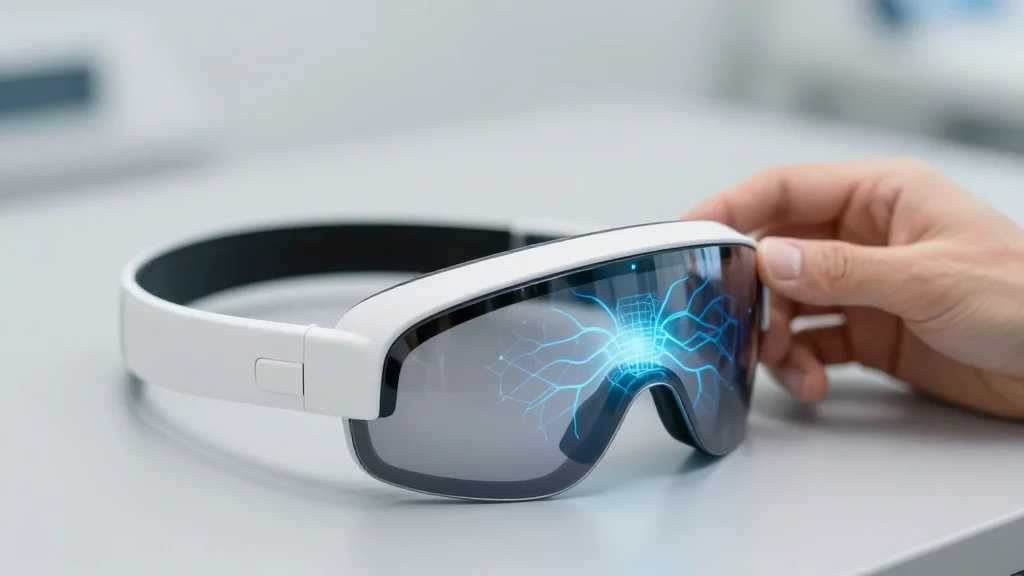
Heru Showcases PretestPro™ for the Heru VR-Powered Diagnostic Headset at Vision Expo
Heru unveiled PretestPro™ at Vision Expo, a VR‑powered diagnostic headset that completes four essential eye‑pre‑tests in under two minutes. The wearable platform merges visual field, near cover test, extraocular motility and quantitative pupillometry into a single, AI‑guided workflow, replacing multiple legacy devices. By automating these exams, PretestPro claims to run three times faster than traditional methods, boosting clinic throughput and patient experience. The FDA‑registered device was demonstrated on the company’s wearable platform in Orlando, FL.
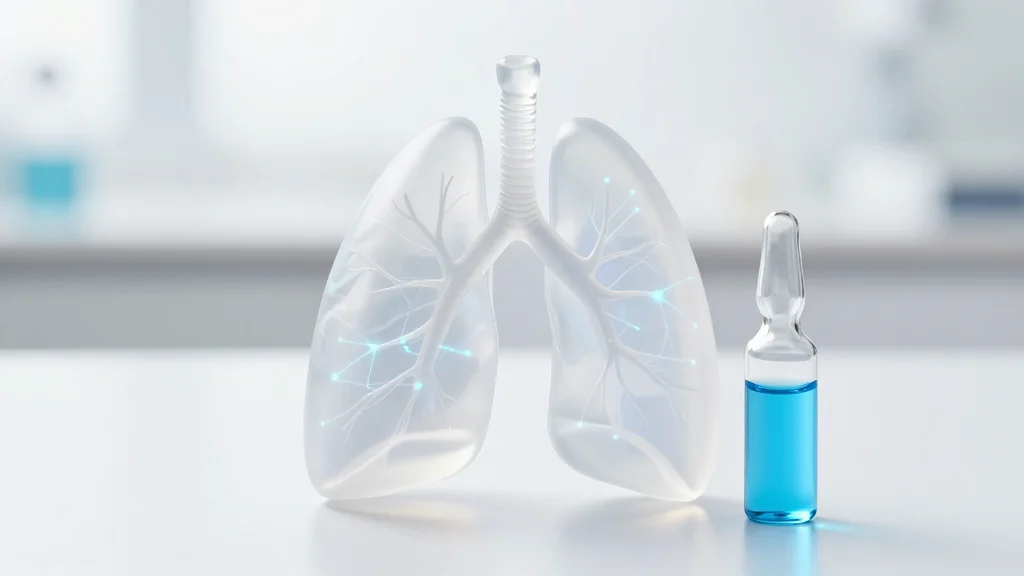
Baseimmune Announces Strategic Expansion Into Fibrosis with Lead Program Targeting Idiopathic Pulmonary Fibrosis (IPF)
Baseimmune announced a new fibrosis‑focused pipeline leveraging its computational protein design platform to create multi‑pathway immunotherapies, starting with idiopathic pulmonary fibrosis (IPF). The company aims to deliver proof‑of‑concept efficacy data for its lead IPF program in 2026‑2027, addressing the limitations...

NHS England Image Reading Design Sprint: Two Weeks Inside Breast Screening Reporting
dxw conducted a two‑week design sprint with NHS England to overhaul reporting for breast‑screening image readers. The team mapped the end‑to‑end workflow, built a unified data model, and defined key performance indicators for readers, unit directors, and the Screening Quality...

GSK Backs £11m Centre to Build Digital Twins of Organs for Faster Drug Discovery
GSK has pledged £11 million to launch the Modelling‑Informed Medicine Centre (MiMeC), a joint venture with Imperial College London and the University of Oxford. The centre will develop digital twins—computer‑based replicas of lungs, liver and kidneys—to run in‑silico experiments and speed...

How UK Can Adopt Digital-First Community Care to Provide Equitable Healthcare
The UK National Health Service faces widening health inequities driven by ageing demographics, workforce shortages, and funding gaps, especially in deprived regions. A digital‑first community care model—leveraging remote patient monitoring, telehealth, AI‑driven personalization, and integrated data analytics—offers a pathway to...

Michael Dalton, Ovatient
Ovatient, led by CEO Michael Dalton, is a telehealth platform built directly on Epic’s electronic health record system. The service originates from health‑system partnerships such as the Medical University of South Carolina and Metro Health in Cleveland. By embedding in...

Healthcare Organizations Are Using AI to Solve Real Problems
Dr. Ryan Ries outlines several AI deployments that are delivering tangible results in healthcare. At BreakAway Games, an Amazon Bedrock‑based virtual patient platform mimics real‑world patient variability, providing 24/7 training for nursing students and reducing reliance on standardized actors. Paynela’s...

Brainomix Deploys AI Imaging Platform Across West Virginia University Health System Network
Brainomix has rolled out its AI imaging platform, Brainomix 360 Stroke, to all 25 sites in the West Virginia University Health System. The tool provides real‑time, automated analysis of stroke scans, helping clinicians decide on treatment and transfer. The deployment aims to...

MiniMed Expands Sensor Portfolio in Europe with CE Mark for MiniMed 780G
MiniMed Group, Inc. received CE Mark approval for its MiniMed 780G automated insulin delivery system to be used with Abbott's Instinct continuous glucose monitor, adding a 15‑day wear sensor to the existing 7‑day options (Guardian 4 and Simplera Sync). The Instinct sensor is...
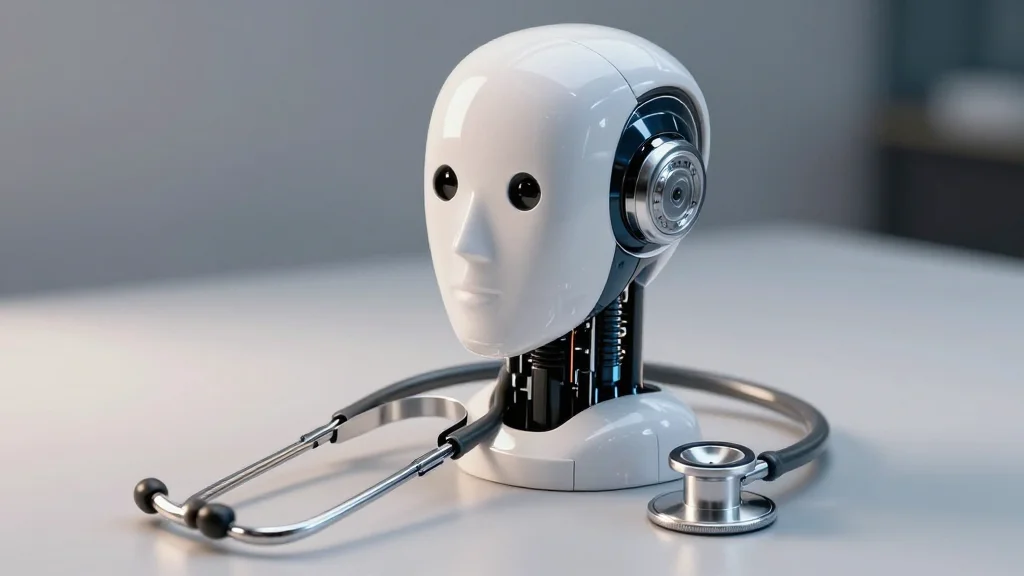
Cera’s 300 Billion Data Points to Accelerate Global Medical Research and Healthcare AI
Cera, Europe’s leading digital‑first home‑healthcare provider, announced it has surpassed 300 billion data points collected from more than 2.5 million patient visits each month. The dataset records symptoms, mobility changes, medication responses, nutrition, mood and behavioural signals, creating one of the world’s...

The Evolution of Shared Care Records: From Documents to Conversations
Shared Care Records (SCRs) have progressed from simple document‑exchange portals to intelligent, conversational platforms that actively assist clinicians and patients. The first generation provided read‑only visibility, while the second introduced structured, longitudinal data enabling real‑time contributions. A third phase turned...

Eurofins Biomnis Launches New Clinical LC‑MS/MS Method for the Detection of Cereulide Toxin in Stool Samples
Eurofins Biomnis has developed and validated a new LC‑MS/MS method to detect and quantify cereulide toxin in human stool samples. The assay meets ISO 15189 requirements, accounting for matrix effects, and delivers turnaround times suitable for routine clinical labs. Cereulide, linked...

Awards to Celebrate Healthcare AI Innovators
Health Tech World Awards 2026 will honor innovators across life sciences, medtech, and digital health, with a dedicated AI Innovation award recognizing breakthroughs that improve diagnosis, treatment, and research. Sponsored by international law firm Osborne Clarke, the award highlights AI applications...
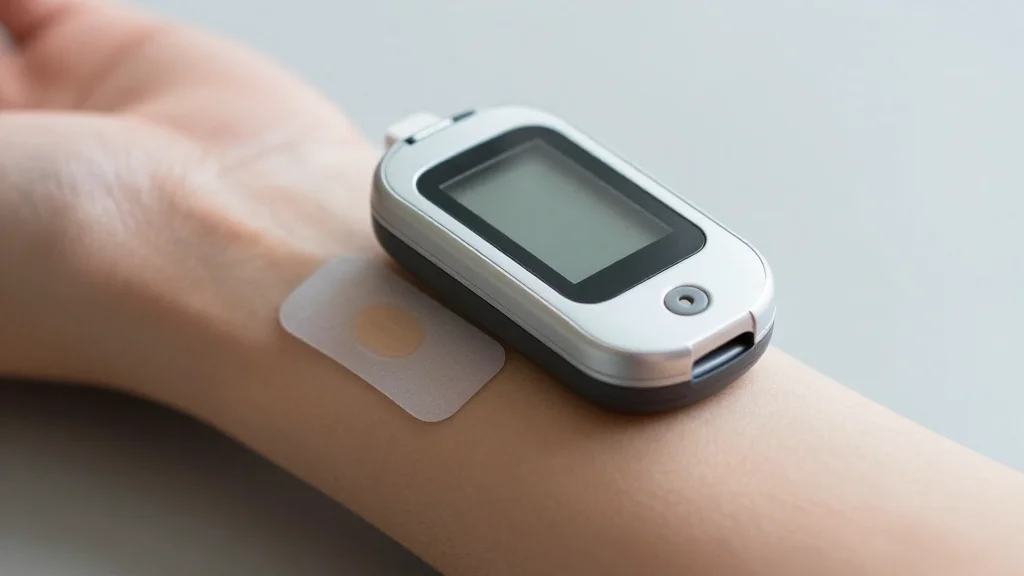
Dexcom Showcases Breakthrough Outcomes for People With Type 2 Diabetes and Product Roadmap at ATTD 2026
DexCom will unveil new real‑world evidence at ATTD 2026 showing its CGM improves HbA1c in non‑insulin‑treated Type 2 patients, reduces DKA‑related hospitalizations in Type 1 patients, and supports a safe Smart Basal insulin‑optimization system. The company also detailed a product roadmap featuring...

Building Trust for Transformation: Rethinking Innovation in Digital Health
The Newcastle upon Tyne Hospitals NHS Trust partnered with Solventum to co‑design an AI‑enabled Follow‑Up Finder tool that screens radiology reports for venous thromboembolism (VTE). By embedding the solution in the electronic patient record, the system achieved over 99.9% sensitivity...
![Understanding the Science Behind Embryo Grading Improves IVF Decision Making [PODCAST]](/cdn-cgi/image/width=1200,quality=75,format=auto,fit=cover/https://kevinmd.com/wp-content/uploads/Design-1-scaled.jpg)
Understanding the Science Behind Embryo Grading Improves IVF Decision Making [PODCAST]
In a KevinMD podcast, reproductive endocrinologist Dr. Erica Bove breaks down embryo grading, contrasting day‑three cell counts with day‑five blastocyst morphology. She explains how labs assess cell number, fragmentation, trophectoderm and inner cell mass to assign grades such as 8A...

HIMSS 2026 OpenClaw Strikes Back
Day one of HIMSS 2026 highlighted a growing momentum in health‑tech interoperability, with real‑world data exchanges like Clover Health’s CMS network monitor demonstration. The conference underscored pharmacists’ untapped potential as data‑rich care partners, yet noted fragmented systems limit their impact....

Who Will Be This Year’s Femtech Company of the Year?
The Femtech Company of the Year award, sponsored by Cross‑Border Impact Ventures (CBIV), seeks to elevate firms that are reshaping women’s health through technology. It recognizes companies tackling reproductive health, maternal care, menopause and related gaps, rewarding exceptional impact and...

3D Printing Meets Embryo Screening: Additive Manufacturing in IVF and Reproductive Medicine
Additive manufacturing is reshaping IVF and embryo screening by enabling high‑resolution microfluidic chips, biocompatible scaffolds, and precision tools. Two‑photon polymerization printers can produce sub‑50 µm channels in hours, cutting device lead times from weeks to days and improving embryo handling consistency....

Why Ambient Voice Technology Is Better when It’s Embedded in Your EPR
Sunrise Thread AI embeds ambient voice technology directly into the Sunrise electronic patient record (EPR), turning spoken clinical encounters into structured, audit‑ready notes in real time. By capturing, transcribing and interpreting conversations within the native workflow, clinicians can review and...

Interoperability, Half Finished
The article highlights e‑prescribing’s rapid national rollout, which eliminated paper scripts and enabled direct provider‑to‑pharmacy transmission. However, critical gaps remain: pharmacies cannot share real‑time inventory data, and pharmacy‑to‑pharmacy transfers still rely on fax and phone calls. The author’s personal experience—an...

AI Has Redefined Healthcare Communication — and There’s No Opting Out
Conversational AI tools such as ChatGPT Health and Claude for Healthcare are reshaping how patients and clinicians obtain medical information. OpenAI reports that over 5% of global ChatGPT interactions—about 40 million daily users—are health‑related, while 40% of U.S. healthcare workers use...
(PR) Intel Launches Core Series 2 Processor with Real-Time Performance and Expands Edge AI Portfolio
Intel unveiled the Core Series 2 processor at Embedded World 2026, featuring performance‑optimized P‑cores designed for deterministic, real‑time edge workloads. The chip delivers up to 4.4× lower PCIe latency, 2.5× faster deterministic response, and 1.5× higher multi‑thread throughput compared with AMD’s Ryzen 7 9700X....

FDA Grants Breakthrough Device Designation to ReVision Implant Visual Cortex Prosthesis
Belgian neurotechnology startup ReVision Implant has received FDA Breakthrough Device designation for its visual cortical prosthesis, Occular, clearing a path toward first‑in‑human trials. The system bypasses damaged retinas or optic nerves by directly stimulating the visual cortex via a wireless...

We Destroyed One of the Best Health IT Systems Ever Built — and Replaced It With Something Worse
Veterans Affairs’ homegrown VistA electronic health record, praised for usability and clinical outcomes, was replaced by Cerner’s commercial Millennium platform through a sole‑source $10 billion contract. The transition has ballooned to an estimated $37‑$50 billion, far exceeding the roughly $2 billion that modernizing...

NIHR Awards £2.31m for Tech Tackling Chronic Condition Progression
The NIHR has granted £2.31 million to 24 projects developing technology‑assisted solutions that stop a single chronic condition from evolving into multi‑morbidity. The funding, delivered via the i4i FAST programme, targets virtual rehabilitation, AI‑driven diagnostics, home monitoring devices and digital self‑management...
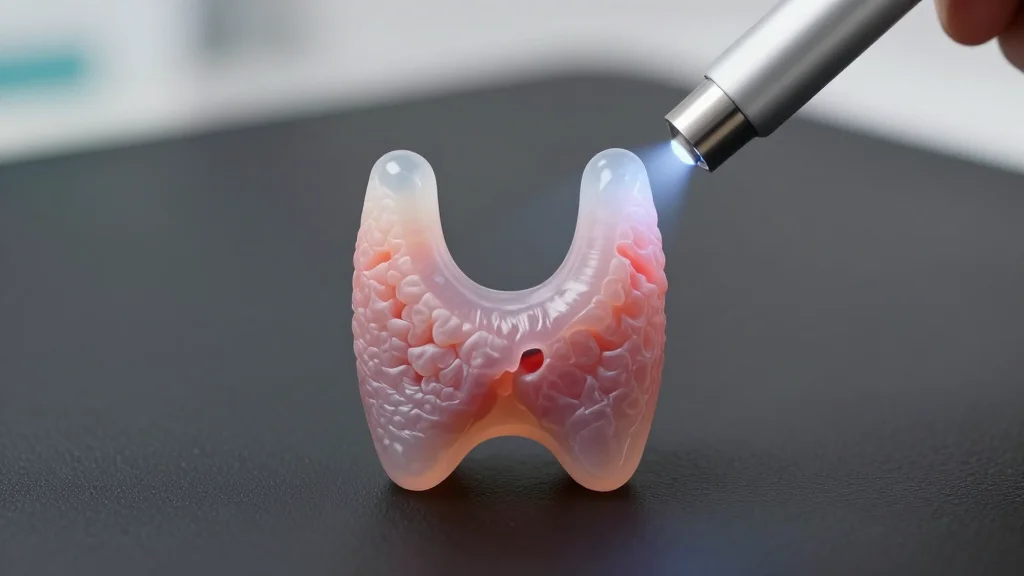
Pulse Biosciences Announces Clinical Data From nPulse™ Vybrance™ System First-In-Human Clinical Durability Study of Benign Thyroid Nodule Ablation
Pulse Biosciences reported long‑term results from its first‑in‑human nPulse Vybrance study, showing an average 74% reduction in benign thyroid nodule volume after 15‑22 months. The data, presented at the 2026 North American Society for Interventional Thyroidology meeting, revealed no nodule...

RFiD Discovery Launches Automated Contact Tracing Solution for Hospitals
RFiD Discovery has introduced an automated contact‑tracing solution for hospitals that leverages Bluetooth Low Energy (BLE) wristbands for patients and BLE‑enabled ID badges for staff. The system captures proximity, duration, distance and location data in real time, feeding it into...

Bausch+Lomb Chooses Steriline to Improve Production of Ophthalmic Medical Devices
Steriline has delivered its OFCM84 aseptic filling and capping line to Bausch+Lomb Italia to boost eye‑care product output. The line runs at 200 bottles per minute, features CIP/SIP automation, and complies with EU GMP Annex 1 grade‑A cleanroom requirements. Its design...

Epic’s Agent Factory and the End of the Middle Layer: What Health Tech Investors Need to Understand Right Now
At HIMSS26 Epic unveiled Agent Factory, a no‑code, drag‑and‑drop AI builder that lets health systems create and orchestrate autonomous agents across clinical and operational workflows. The move follows Epic’s dominant market position—42.3% of acute‑care hospitals and 54.9% of beds in...

Electric Fields Allow Bioprinting of Aligned Muscle Fibers
Researchers have integrated an electric field into electrohydrodynamic (EHD) bioprinting to orient fibrin‑alginate hydrogels, producing nanofiber alignment that directs myocyte organization. The conductive polymer‑enhanced constructs exhibit improved myotube differentiation and mimic native muscle conductivity. In vivo tests on rats demonstrated...

Don’t Miss Your Essential Update on Health Tech’s Progress
The March edition of Health Tech Tracker has been released, offering a concise monthly snapshot of the health‑tech ecosystem. It aggregates recent deals, emerging trends, regulatory challenges, and market opportunities observed over the past 30 days. The report also features...
The First Payer Jumped
Clover Health announced it is the first payer to go live on a CMS‑aligned health information exchange network, marking a tangible step toward nationwide interoperability. The rollout enables Medicare Advantage members to retrieve claims and clinical data through FHIR‑based APIs,...
The Pipes Are Finally Moving: Why Clinical Event Streaming Is the Infrastructure Bet Nobody Took Seriously Enough
The healthcare data landscape is finally moving from three‑decades of batch ETL to event‑driven pipelines powered by Kafka, Flink and modern cloud services. Legacy systems were built around billing cycles, leaving clinicians without real‑time data for urgent decisions. Recent API...

Artificial Intelligence and the Future of Fetal Heart Rate Monitoring
The article argues that traditional electronic fetal monitoring (EFM) relies on outdated pattern‑recognition, contributing to high C‑section rates without reducing cerebral palsy. It highlights that 35 % of cerebral palsy cases are genetic, underscoring the limits of current monitoring. Advances in...

The Hidden Dangers of AI Voice Assistants in Elder Care
AI voice assistants are increasingly used to combat senior loneliness, but they can create an illusion of care that misleads older adults into believing they are interacting with a compassionate human. The article highlights research linking isolation to mortality comparable...
The Medicare Login Upgrade Nobody’s Talking About: Why Identity Infrastructure Is the Most Underrated Distribution Rail in Health Tech
On March 3 2026, CMS announced that Medicare.gov will accept CLEAR, ID.me and Login.gov as login options, effectively embedding federally‑backed IAL2 identity verification into the nation’s largest payer platform. The move addresses a $5 billion annual fraud problem and signals that verified digital...
![AI Could End the Administrative Nightmare for Doctors [PODCAST]](/cdn-cgi/image/width=1200,quality=75,format=auto,fit=cover/https://kevinmd.com/wp-content/uploads/The-Podcast-by-KevinMD-WideScreen-3000-px-3-scaled.jpg)
AI Could End the Administrative Nightmare for Doctors [PODCAST]
Anthropic’s Claude for health care, a large language model tailored to clinical workflows, can automatically generate prior‑authorization narratives and other documentation by pulling data directly from patient charts. In pilot demonstrations, the tool reduced the time required for insurance paperwork...

MXene Smart Textiles Could Track Vitals, Kill Bacteria, and Harvest Solar Energy
Researchers at the University of Georgia reviewed MXene‑based smart textiles that can monitor heart rate, blood pressure, and temperature while providing antimicrobial protection and solar energy harvesting. MXenes, a two‑dimensional metal‑derived material, can be coated or printed onto fabrics, turning...
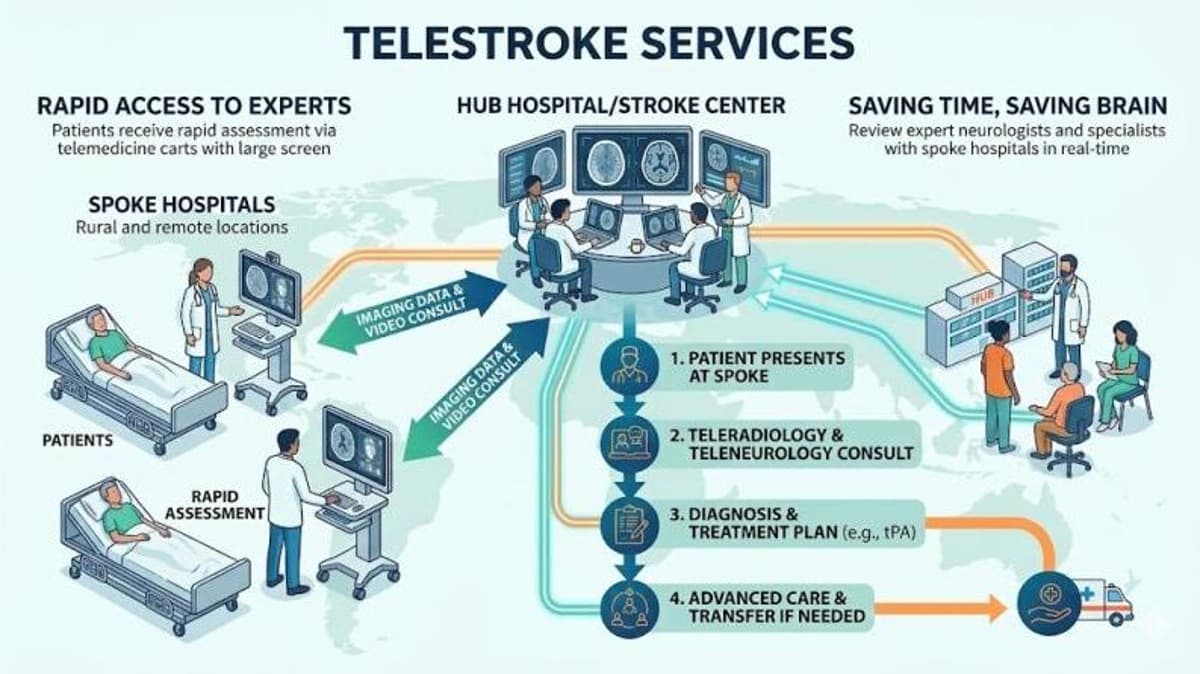
Telestroke Services Market Projected to Reach $7.2 Billion by 2033 as Stroke Rates Rise and Rural Access Gaps Widen
Stroke incidence in the United States is climbing, with an 8% rise overall and a 15% surge among adults under 65, while neurologist wait times exceed three months. These trends create urgent demand for telestroke platforms that connect remote specialists...
The Future of U.S. Medicine: 10 Health Care Trends in 2026
The Doctors Company’s 2026 outlook identifies ten health‑care trends reshaping U.S. medicine, from AI‑driven clinical workflows to a $1 trillion digital‑first migration. It flags mounting malpractice costs, hospital closures and widening access gaps that could push the uninsured rate above 11 percent....
Artificial Intelligence in Clinical Care: Shaping the HHS Policy Landscape
The U.S. Department of Health and Human Services (HHS) has opened a public comment period on how regulation, reimbursement, and research policies can speed AI adoption in clinical care. Dr. Ido Zamberg argues that AI’s greatest value lies in improving...

Open Source in Healthcare Is An Opportunity | Out-Of-Pocket
The author argues that open‑source software, a proven engine of innovation, is finally ready to disrupt the heavily proprietary healthcare IT landscape. By exposing code, licenses and community governance, open source can break the pay‑wall model that dominates clinical workflows...

Pharma Pulse: Eli Lilly’s Employer Connect Platform and Tandem Mobi Android Integration
Eli Lilly has introduced Employer Connect, a new platform that partners with more than fifteen independent administrators to provide cost‑transparent access to its obesity drug Zepbound for U.S. employees. The service is designed to close the insurance coverage gap affecting roughly...

Taming the AI Chaos in Drug Discovery
Biopharma R&D is witnessing a rapid influx of specialized AI models for tasks such as structure prediction, retrosynthesis, and image analysis. While each tool delivers measurable benefits, their isolated deployment creates fragmented data streams, hidden costs, and increased cognitive load...

AI in Pain Assessment: Balancing Innovation with Patient Safety
Healthcare systems in Northern California are deploying AI tools to make pain assessment more objective, using facial analysis, wearables, and electronic health records. Early pilots show potential for consistent pain detection and predictive analytics, yet most evidence remains limited to...

Pharma Funding Roundup: Cognito Therapeutics Closes Oversubscribed $105 Million Series C Financing, Nexcure Launches $19 Million Series A Financing
Cognito Therapeutics closed an oversubscribed $105 million Series C round to fund its at‑home Alzheimer’s stimulation device, Spectris, targeting a 2027 market launch after a pivotal readout. NexCure raised $19 million in a Series A to build an outpatient platform that standardizes and expands...

Pioneering ‘OSA Pacemaker’ to Prevent Airway Collapse During Sleep Now Available in the UK
Inspire Medical Systems has launched its implantable hypoglossal nerve stimulator, often called an OSA pacemaker, in the United Kingdom. The device offers a mask‑free alternative for moderate‑to‑severe obstructive sleep apnoea patients who cannot tolerate CPAP, delivering breath‑synchronised nerve stimulation to...

When No Two Spines Are Alike: Inside the First AI-Designed Cervical Implant
UC San Diego Health performed the world’s first fully personalized anterior cervical spine implant, combining high‑resolution imaging, AI‑driven design, and titanium 3D printing. The AI algorithm generated a patient‑specific geometry that matches the vertebral endplates, restores natural lordosis, and optimizes...

Cancer-Eating Bacteria Engineered to Consume Tumors From the Inside Out
University of Waterloo researchers have engineered the anaerobic bacterium Clostridium sporogenes to consume solid tumors from the inside out. The spores infiltrate the oxygen‑free tumor core, proliferate and break down cancerous tissue. By inserting an oxygen‑resistant gene and a quorum‑sensing...