
How Cloud Eliminates the ‘Peaks and Valleys’ of IT Spending
The video explains how moving IT workloads to the cloud eliminates the traditional "peaks and valleys" of capital‑expenditure spending, a challenge especially acute for health‑care organizations that must plan large, infrequent hardware refreshes. By shifting from a capex‑heavy model to a cloud‑based consumption model, firms can replace massive, upfront purchases with incremental, usage‑based spend that aligns with actual demand. Speakers highlight that CFOs struggle with the sine‑wave nature of IT budgeting: a $20 million refresh may be under‑estimated, forcing surprise requests for additional millions, while periods of low activity leave capital idle. Cloud services act like a dial, allowing organizations to scale compute and storage up or down in real time, thereby smoothing cash flow and reducing the risk of over‑ or under‑investment. A concrete example cited is a health system that set aside $20 million for a multi‑year upgrade, only to discover a shortfall of several million dollars as newer workloads emerged. In the cloud, that same organization could simply increase its spend incrementally, instantly access the latest hardware, and avoid costly, disruptive on‑premise upgrades. The implication is clear: cloud adoption transforms IT budgeting from a periodic, high‑risk gamble into a predictable, operational expense, enabling faster technology adoption, better financial planning, and a strategic edge for organizations facing tight fiscal oversight.

Executive Interview Redefining the Data Platform for Healthcare with Chris Kopinski
The interview announces Pure Storage’s transformation into Everpure, a shift from a pure‑hardware storage vendor to a comprehensive data platform provider for healthcare. The new name blends the legacy "pure" pedigree with an "evergreen" commitment to continuous, always‑on service, signaling...

P&S: Arch. & Algo. For Health & Life Sciences- L3: Storage Centric (Meta)Genomics I (Spr 2026)
The lecture introduces storage‑centric architectures for genomics and metagenomics, focusing on how embedding filtering logic directly inside storage devices can alleviate the massive data‑movement and preparation bottlenecks that dominate current pipelines. By moving simple, low‑cost operations—such as exact‑match detection and...

The Future of Heart Disease Diagnosis with AI
The podcast examines a new Health Affairs paper by Dr. Anna Zinc on the real‑world impact of an AI‑driven diagnostic tool, computed‑tomography fractional flow reserve (FFRCT), used alongside cardiac CT imaging. The discussion frames the study within the broader regulatory...

Aspetar Sports Injury and Illness Risk Management Tool
The video introduces Aspetar’s Sports Injury and Illness Risk Management Tool, the first systematic solution designed to move injury prevention beyond generic protocols and embed formal risk‑management principles into professional sport. By guiding clubs through a structured process of risk...

The Biggest Technology Skeptics Are Becoming the Biggest Fans.
The video recounts a rapid rollout of an ambient‑technology platform, achieving roughly 95% functionality within two weeks and fully converting operations in just two days. The presenter expected resistance from several providers, yet a curated list of skeptics embraced the system...

A Chat with the Impressive Mary Hawking - GP and Clinical Informatician
In this episode of Everything Digital Health, veteran GP and clinical informatician Mary Hawking recounts a career that spans pediatric training in the United States, a brief stint in transplant medicine, and a return to UK general practice in the...

Building AI for Better Healthcare — the OpenAI Podcast Ep. 14
The OpenAI Podcast’s fourteenth episode spotlights OpenAI’s health‑focused AI program, led by Dr. Nate Gross and Karan Singhal. They discuss how large language models are being engineered to answer sensitive medical questions, support clinicians, and streamline fragmented care. OpenAI built ChatGPT...

594 - Building Frictionless Healthcare: Updoc’s Journey to Improving Healthcare Access
The Talking Health Tech podcast episode spotlights UPDoc, a digital‑first primary‑care service that lets patients request prescriptions, referrals, and medical letters through a web or app interface. Users either subscribe or pay per consultation, after which their request joins a...

A Tiny Robot Fish Powered by Sound
Researchers have unveiled a micrometer‑scale acoustic robot that propels itself solely with ultrasound‑induced bubble jets. Dubbed the “stingray bot,” the device is a thin, flexible sheet perforated with thousands of microscopic holes that trap air bubbles, allowing it to swim...

Build vs Buy: How Is AI Changing the Equation?
The video tackles the growing "build versus buy" dilemma in healthcare IT, focusing on how artificial intelligence is reshaping the calculus for CIOs and executives. With major vendors charging premium prices for AI‑enhanced platforms, leaders are questioning whether the perceived...

Smart Technology Is Transforming How China Cares for Seniors
The video spotlights China’s rapid shift from traditional, home‑bound elder care to a high‑tech, community‑centric ecosystem. In districts like Shinjeku, senior service centers are built around a 15‑minute living circle, granting quick access to hospitals, dining halls, and care stations...

CEO Stephen From Is Building Tested Strategies Into a New Plan To...
The episode centers on Stephen, the newly appointed CEO of Vicarius Surgical, who argues that the company should be viewed primarily as a medical‑device firm rather than a pure robotics play. He outlines a “tested strategies” framework that prioritizes regulatory...

Building a Custom Orthotics Startup From the Ground Up
The episode of Wharton’s Marketing Matters podcast spotlights Dan Katali, founder and CEO of Groove, a footwear‑technology startup that creates custom‑fit inserts usable in any shoe. Katali shares how his own shoulder and foot injuries, coupled with a frustrating experience...

These Pricey Gut Tests May Tell You Nothing
The video highlights growing skepticism around costly microbiome testing kits, arguing that many of these commercial products deliver inconsistent and scientifically unsubstantiated results. A recent study cited in the clip found that identical stool samples were classified as both healthy and...

Global Medical Data Infrastructure for AI Systems with MedSyntra - Life Sciences Today Podcast Ep 52
The Life Sciences Today podcast introduced Medentra, a Tel‑Aviv‑based startup building a global infrastructure that transforms fragmented radiology and imaging data into AI‑ready assets for research and clinical use. Medentra’s platform normalizes DICOM files, strips proprietary tags, and fully de‑identifies patient...

Best Patient Impact of the Year| Synchrony Medical Wins at MedTech World Middle East 2026
Synchrony Medical was honored with the Best Patient Impact of the Year award at MedTech World Middle East 2026, highlighting its newly launched device that targets unmet clinical needs. The accolade underscores the company’s rapid ascent in the med‑tech landscape...

Group Papa - Local Medical Guidelines
A project led by Medical Action Myanmar aims to replace static PDF medical guidelines with a lightweight progressive web app. The system will let local health teams author, distribute, and update guidelines on low‑powered devices with limited connectivity. It incorporates...

Huawei Advances Inclusive Fitness Tech
Huawei unveiled a dedicated wheelchair mode for its newest line of smartwatches, positioning the feature as a milestone in inclusive health and fitness technology. The company highlighted that nearly 80 million people worldwide rely on wheelchairs, and a single tap now...

AI Meets Cell Therapy Manufacturing
Senti Biosciences executives Tim Lu and Claire Aldridge told Cell & Gene Live that artificial intelligence is reshaping cell‑therapy manufacturing by speeding up, not replacing, wet‑lab steps. They highlighted robust validation data that demonstrates AI‑driven processes are reliable. The speakers...

DName-iT Eliminating Errors in Testing with a Biotech Blockchain for Diagnostics
DName-iT is deploying patient‑specific molecular barcodes within next‑generation sequencing (NGS) workflows to curb misidentification in cancer and prenatal DNA tests. The approach embeds unique identifiers directly into each DNA fragment, promising lower laboratory costs and higher diagnostic confidence. Pilots are...

How Much Time Can AI Scribes Save? - The Medical Futurist
The video examines AI‑powered medical scribes as a solution to the chronic documentation burden that fuels physician burnout. By passively recording clinical conversations, converting speech to structured notes, and leaving final approval to the clinician, AI scribes promise to eliminate...

Too Many AI Features, Not Enough Answers
The speaker warns that existing vendors are bombarding their organization with a flood of AI features, many of which lack clear purpose or defined guardrails. This overload is prompting a call for a slower, more deliberate approach to AI adoption,...

Venture:How Olympus Innovation Ventures Invests in MedTech Startups with Abby Hunter Syed
Olympus Innovation Ventures (OIV), the corporate venture arm of Olympus, is actively investing in MedTech startups focused on endoscopy, diagnostics, and digital health, as explained by director Abby Hunter‑Syed. The discussion highlights OIV’s strategic approach—prioritizing founder conviction, transparent founder‑investor relationships,...

Breakthroughs in Action: Where Medical History Happens
The video spotlights Cincinnati Children’s Hospital as a cradle of pediatric medical breakthroughs, from the invention of the first functional heart‑lung machine that made open‑heart surgery possible to an oral polio treatment that nearly eradicated the disease worldwide. It chronicles...

Peter Fedichev on AI, Longevity & the Future of Anti-Aging Drugs MedTech World Middle East 2026
Peter Fedichev, speaking at MedTech World Middle East 2026, outlined how his company merges biotechnology with artificial intelligence to decode massive clinical and genetic datasets, aiming to uncover targets for drugs that address aging itself. He positioned anti‑aging therapeutics as...

Dr Alireza Daneshvar on Precision Oncology | MedTech World Middle East Dubai 2026
Dr. Alireza Daneshvar highlighted at MedTech World Middle East Dubai 2026 that precision oncology is evolving toward "GPS‑guided" immune cells that can locate and destroy cancer lesions, marking a next‑generation frontier in personalized medicine. He emphasized that the Middle East’s life‑science...

Dr Amel Havkic on Clinical Adoption in MedTech | MedTech World Middle East Dubai 2026
At MedTech World Middle East 2026, Dr. Amel Havkic warned that clinical adoption, not just regulatory clearance, is the true litmus test for MedTech startups seeking sustainable growth. He highlighted that the Middle East market sets priorities distinct from Europe, showing...

Solution Showcase: The Freeing Power of Testing Automation with Phillip Furukawa and Chris Paravate
The episode spotlights SH Test’s testing‑automation platform and its deployment at Northeast Georgia Health System (NGHS), a 1,000‑bed, multi‑hospital network running Epic across acute, long‑term and rehab care. The discussion centers on how automated regression testing reshapes the traditionally labor‑intensive...

From Image Review to Reporting, Radiology Workflows Are Becoming More Seamless and AI-Driven.
RapidAI unveiled Navigator Pro, an AI‑driven platform that merges advanced image analysis with 3D visualization and automated quantification. The solution streamlines radiology workflows by routing studies, highlighting critical findings, and generating structured reports. By embedding AI directly into the review...

Optimum Healthcare IT Frees Health Care Providers to Focus on Strategy
Optimum Healthcare IT has launched a managed services platform, dubbed a Center of Excellence, to handle routine IT operations for hospitals. By locating the service near‑shore in Costa Rica, the company alleviates staffing shortages and cost pressures that health systems...

What to Expect: Xenon MRI | Cincinnati Children's
Patients undergoing a Xenon‑enhanced MRI at Cincinnati Children’s Hospital receive a step‑by‑step guide that demystifies the scan. The video explains that MRI uses powerful magnets and computers to capture detailed lung images while the patient inhales a clear, odorless gas...

Women’s Health Matters: Science, Systems, and Global Change | LSE Event
The London School of Economics hosted Professor Michelle Williams, a Stanford epidemiologist and former Harvard dean, for its annual Health Policy lecture on International Women’s Day. Williams framed women’s health not merely as a medical issue but as a profound...

Lecture 1.2.4B | AI, Cybersecurity & Real-Time Health Systems | Masters in Medical Entrepreneurship
The lecture explores how artificial intelligence, cybersecurity, and real‑time health technologies intersect to reshape modern medical entrepreneurship. It outlines the growing reliance on digital infrastructure—ranging from network protection to wearable sensors—and argues that AI‑driven solutions are essential for safeguarding sensitive...

Intestinal Bowel Ultrasound (IUS) | Q&A
The video introduces intestinal bowel ultrasound (IUS) as a bedside, non‑invasive imaging modality designed to evaluate the small and large intestines in patients with inflammatory bowel disease (IBD). Using a handheld transducer, high‑frequency sound waves generate real‑time images that can identify...

Medicus Pharma Provides Additional Phase 2 Data for SkinJect Cancer Therapy
Medicus Pharma presented additional Phase 2 results for its SkinJect microneedle therapy, aimed at treating basal cell carcinoma without surgery. The data, discussed by CEO Dr. Raza Bokhari, focus on a non‑invasive approach that could alleviate the roughly one‑million annual Mohs...

Complexities and Capabilities of Scan4Safety in NHS Hospitals a Qualitative Study of a National Demo
The BMJ Health and Care Informatics journal club presented a qualitative evaluation of the Scan for Safety programme, a national demonstrator that applied GS1 global standards to barcode medical devices, medicines, patients and staff across NHS hospitals. The study examined...
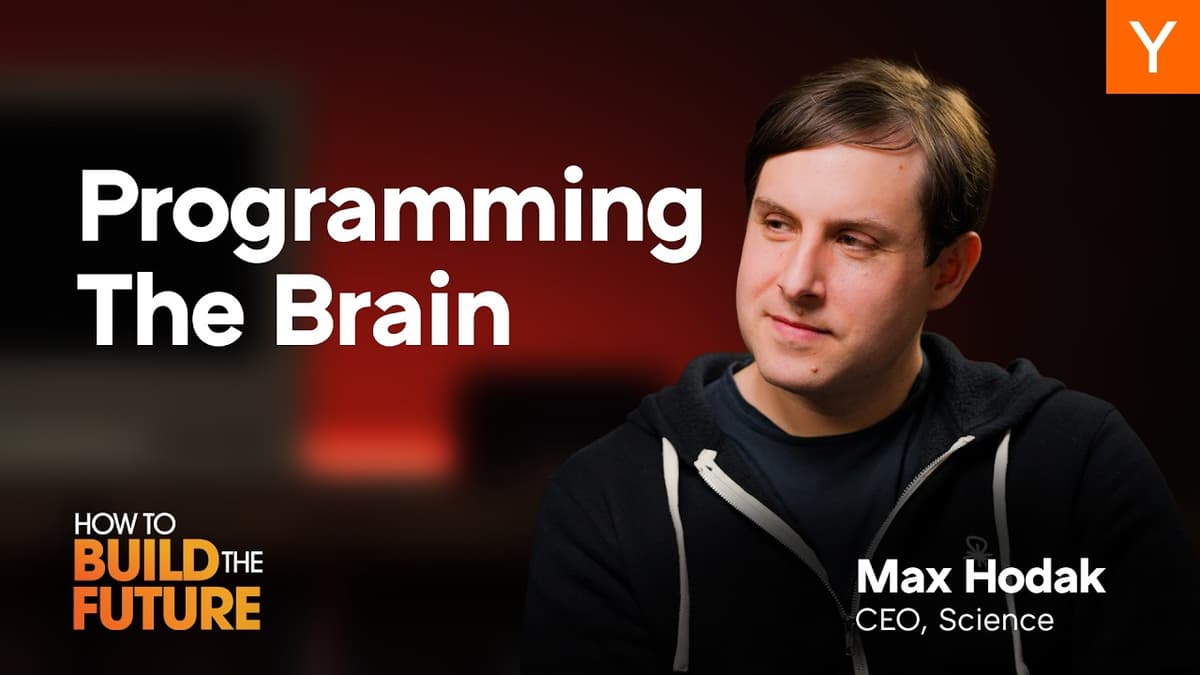
How To Build The Future: Max Hodak
The episode features Max Hodak, co‑founder of Neuralink and founder of Science, discussing the latest breakthrough in brain‑computer interfaces: a 2 mm × 2 mm retinal implant that has already restored functional vision to more than 40 patients in a multi‑site European trial. The...

SimChat | AI-Powered Simulation Training for Communication Skills & Assessment
SimChat is an AI‑powered platform that lets organizations replace scarce, in‑person role‑play sessions with on‑demand, high‑fidelity communication simulations. By eliminating the need for human actors, the tool promises consistent practice opportunities for learners regardless of schedule or location. The service lets...

Lecture 1.2.4A | AI & Technology Integration in Healthcare | Masters in Medical Entrepreneurship
The lecture titled “AI & Technology Integration in Healthcare” introduces how connecting artificial‑intelligence models with existing digital infrastructure turns theoretical algorithms into actionable clinical tools. Shanfa explains that AI alone—just code and models—cannot function without access to databases, networks, sensors, and...

Trusted Vendor or Still Needs Vetting: The Epic AI Debate - NEW
The discussion centers on a CIO’s claim that all Epic AI tools should be enabled automatically because Epic is a trusted vendor, prompting a heated debate among clinicians and administrators about the appropriate level of oversight. Panelists highlight a continuum of...

Why Healthcare Workers Are Sneaking AI Into Hospitals - NEW
The video highlights the growing phenomenon of “shadow AI” – clinicians independently adopting generative‑AI tools without hospital oversight, echoing earlier “shadow IT” episodes such as radiologists using Dropbox to exchange images. A recent study cited in the clip finds roughly 17 %...

Lyv Health: Satchu-Burgstone Runner-Up Rock Business Track, 2026 New Venture Competition
Lyv Health offers a clinical-supervision platform that lets wellness businesses—like health coaches and medspas—order labs, prescriptions and peptides for clients, addressing a market it estimates at $20 billion within the $2 trillion wellness sector. Launched three weeks ago, the startup...

Ethics of Wearable Technology: Privacy, PHI and IP Considerations
The session examined the growing ethical and legal challenges posed by wearable health technologies, focusing on privacy, personal health information (PHI), and intellectual‑property considerations. Speakers highlighted how these devices have evolved from simple pedometers to medical‑grade sensors that collect continuous...

Can Red Light Therapy Improve Brain Function?
Transcranial red light therapy is gaining attention for its purported ability to penetrate the skull and stimulate brain function. The video highlights the Vite NeuroGamma 4 device, which researchers claim can deliver red light through cranial bone, boosting mitochondrial activity, blood...

ARPA-H Funding, Brain Wearables, & Nanotech Biosensing | Longevity News Roundup — Week 10, 2026
The U.S. ARPA‑H agency announced a $144 million PROSPR program to accelerate human health‑span trials, awarding $30.8 million to Cambrian BioPharma for a next‑generation rapamycin analog and $22 million to Linnaeus Therapeutics for repurposed oncology drugs. Meanwhile, startups are pushing wearable and digital...

What Are the Biggest Issues Facing the NHS and Social Care Right Now? | Snapshot
The video outlines the NHS and social care’s most pressing challenges, centering on how to allocate scarce financial resources amid competing demands. It highlights an aging demographic that intensifies chronic disease burden, a surge in mental‑health issues among younger people, and...

AI’s Role in Personalisng Medical Decisions with Patients
The video explores how artificial intelligence can augment, but not replace, clinicians when personalizing medical decisions for individual patients. Speakers note that AI excels at managing the massive knowledge base and cognitive load inherent in modern medicine, delivering guideline‑driven treatment options...

"Un-Sexy" AI Stole the Show at ViVE2026
At ViVE2026 the AI‑scribe boom quieted, signaling a pivot toward using artificial intelligence for the “un‑sexy” administrative work that burdens health systems. Speakers highlighted practical applications such as 3D liveness for patient identity, AI‑driven point‑of‑care skin imaging, and new policies...

How Generative AI Can Make Diabetes Care Proactive, Not Reactive
Dexcom CTO Girish Naganathan highlights that behavior change remains the toughest hurdle in diabetes care. By pairing continuous glucose monitoring (CGM) with generative AI, raw glucose data can be transformed into real‑time, actionable recommendations. The technology aims to shift guidance...