Eradicating Leprosy Using Genetics
The video links a 2007‑08 excavation at Magdalin Hill near Winchester, where paleopathologists identified unmistakable leprosy lesions in skeletal remains, to today’s fight against the disease. Leprosy still generates roughly 200,000 new infections annually, and the World Health Organization has set a 2030 eradication target. Recent advances allow PCR‑based DNA testing of skin or nasal samples, turning a historically clinical diagnosis into a rapid molecular one. Genetic screening of a patient’s close contacts routinely uncovers about a quarter of them as asymptomatic carriers, enabling early antibiotic therapy. The speaker highlights the fibula with new bone growth as a classic archaeological marker, now mirrored by modern molecular markers. If widespread DNA testing and prophylactic treatment are adopted, transmission could be interrupted, making WHO’s 2030 goal realistic and reshaping leprosy control programs worldwide.
Strategies for Health System Transformation: Creating a Learning Health System
Mount Sinai kicked off its first Learning Health System (LHS) Grand Rounds, a quarterly forum announced by CEO Dr. Brendan Carr. The event brings together clinicians, researchers, administrators and nurses to align the health system around a data‑driven, continuous‑learning model. Carr...

Strategy& Insider Podcast - Episode 45 with Nils Von Dellingshausen
The Strategy& Insider podcast episode spotlights BetterDoc, a German digital‑health platform founded by Nils von Dellingshausen, his brother, and his wife. The company tackles the chronic problem of patients navigating fragmented specialist care by using data‑driven matching tools. Key strategic moves include...

How Does the Acquisition of Automedica Fit This Broader Vision & the Announcement of Heidi Evidence?
Heidi Health announced the acquisition of AI‑driven diagnostics firm Automedica, positioning the deal as a cornerstone of its broader vision to transform care delivery. The purchase expands Heidi's data‑science capabilities and paves the way for the launch of Heidi Evidence,...

598 - Behind the Scenes of Medical Software in Australia: MSIA’s Role and Priorities
The Talking Health Tech podcast episode spotlights the Medical Software Industry Association (MSIA), the umbrella body for virtually all health‑software providers in Australia. Founded in the late 1990s to tame a fragmented market, MSIA now operates as a company limited...

Are Disconnected Food Systems Your Hospital’s Biggest Blind Spot? Illumia Has The Solution.
The video introduces Illumia, a newly branded merger of Transact and Seaboard, offering a unified software platform that connects food services, nutrition management, and cashless retail operations in hospitals. By replacing fragmented, siloed systems with a single, interoperable solution, Illumia...

Clinicians Aren’t the Barrier—Why MedTech Fails in Hospitals
The podcast with Andra of Evomet examines why many MedTech products stumble in hospitals, arguing that clinicians are not the obstacle; rather, mismatched design and workflow integration are. She describes chaotic ICU environments, staffing shortages, and the need for solutions that...

AI-Powered Workouts: Gamifying Your Health | Good Tech
The video introduces LumiHealth, an AI‑driven fitness platform that turns ordinary workouts into a game‑like experience. By overlaying ranks, experience points, and quests onto the exercise routine, the app aims to make physical activity feel as compelling as popular mobile...
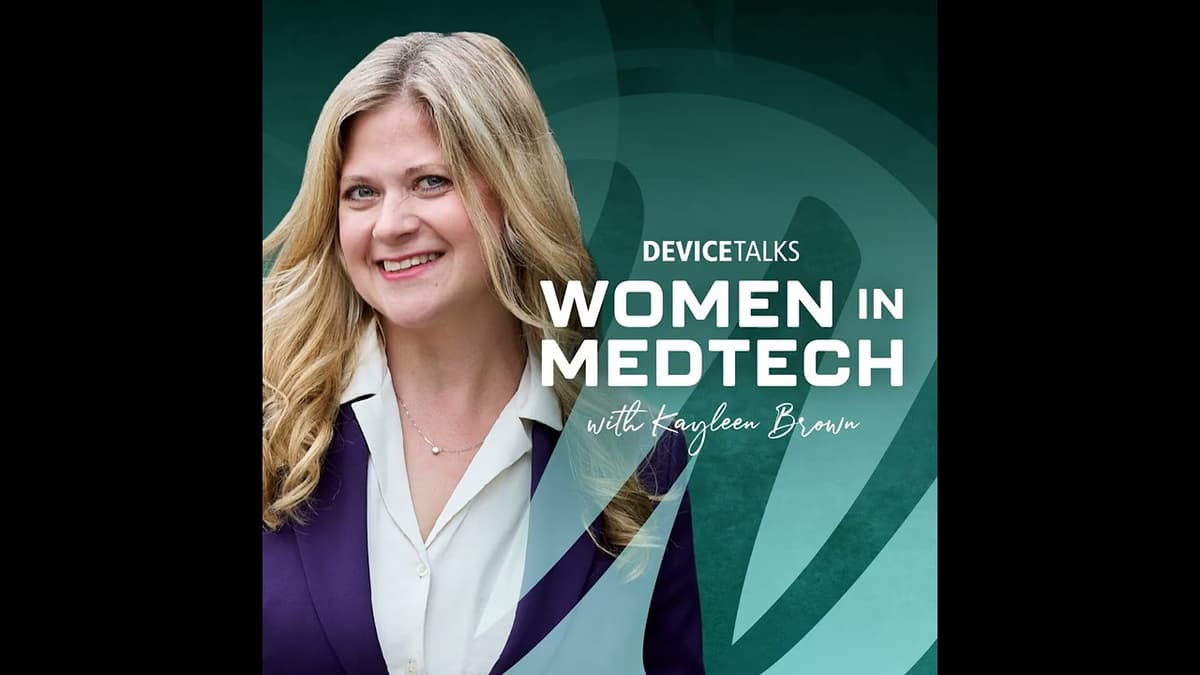
Patients Are the Co-Designer — Plexāā’s Gaele Lalahy
The Women in MedTech podcast episode features Gail Lalahy, COO of Plexa, discussing the company's 'patient as co‑designer' philosophy behind its Bloom device and how that approach reshapes product development. Plexa has institutionalized a rule that no decision proceeds without patient...

From Image to Insight: Clinical Edge AI in Practice
The panel at HIMSS explored how clinical edge AI is moving from hype to real‑world impact. Leaders from Heidi Health, Nvidia, Dell, and healthcare advisory firms discussed concrete deployments that improve clinician efficiency, patient access, and diagnostic accuracy. Heidi Health showcased...

Ramsoft and Lamb Technologies on Why Buying More IT Doesn’t Equal Higher Productivity in Radiology
The video spotlights a 20‑year partnership between Ramsoft and Lamb Technologies, illustrating how two veteran leaders have guided small‑hospital radiology from analog film digitization to cloud‑based, fully integrated imaging workflows. Their joint narrative underscores a shift from merely adding IT...
Sleep Better in One Night With This Method | Andy Mant
Andy Mant outlines a simple “321 rule” for nightly sleep optimization: stop eating three hours before bed, cease fluid intake two hours prior, and power down all screens one hour before sleep. He frames this routine as parasympathetic time, pairing...

The Question Everyone Is Asking, Who Owns Your AI Data - NEW
The video spotlights the unresolved question of who owns the data that fuels artificial‑intelligence models, especially in the health‑care sector where electronic health records (EHRs) are a primary source. Despite years of industry focus on data capture and model training, stakeholders...

The Limits of AI in Therapy | APA 2025 #psychology #ai #shorts
AI-driven tools are entering mental‑health practice, offering scalable screening and symptom monitoring. However, clinical psychologist Dr. Margaret Morris cautions that AI cannot interpret what remains unsaid, missing the nonverbal cues and contextual patterns that human therapists detect. The American Psychological...

OrthAlign CEO Eric Timko on the Opportunity for Fast Followers In...
The Device Talks podcast episode provides a broad snapshot of the current med‑tech landscape, from regulatory shifts and financing to cybersecurity and market growth. Host Tom Le and guests discuss recent events such as the MedTech Innovator Radar Forum, FDA...

ArticuTool: A Modular Active End-Effector for Robot Assisted Feeding
The video introduces ArticuTool, a modular active end‑effector designed for the Assistive Dextrous Arm (ADA) project, which aims to let robots autonomously deliver a plate‑full of food to users. By swapping interchangeable tools, the system can handle a variety of...

Neuralink Is Giving Back Dignity to Those with ALS and Paralysis #neuralink
The video highlights Neuralink’s brain‑computer interface as a breakthrough for individuals living with ALS and severe paralysis, offering a level of independence previously unattainable. The presenter describes moving from reliance on caregivers and limited assistive technology to controlling devices simply...

This AI Designs Drugs in Minutes
On March 17, 2026, Andre Watson, a biomeaterials scientist and founder of Ligendal, released a preprint describing a new AI system that designs peptide drugs in minutes. The system, called Ligan Forge, uses a discrete diffusion model that learns the physics...

How Are You Seeing Health Data Management and Archiving Move to Include Quality and Cost?
The video discusses how health‑data management and archiving are evolving to balance security, quality of care, and cost efficiency. Speakers stress that compliance remains the first hurdle, but the real value lies in aggregating multiple data sources into a single repository,...

From Blockchain Interest to a Massive Ecosystem of 25 Biobanks and 500,000 Samples #shorts
The video outlines a venture that leverages blockchain technology to turn donated biological samples into non‑fungible tokens (NFTs), creating a digital marketplace for research material. By minting each biosample as an NFT, the platform can embed metadata, enforce cryptographic de‑identification, and...

The NHS App Home Screen (BSL)
The video walks viewers through the NHS App’s home screen, outlining its layout and primary navigation elements for patients across England. At the top right, an ‘App help’ button offers instant guidance. The central area presents six key options—Prescriptions, Appointments, Test...

How to Request a Repeat Prescription in the NHS App
The video walks users through the step‑by‑step process for ordering a repeat prescription through the NHS App, a free digital service for patients in England. Starting from the home screen, users select “Prescriptions,” then choose “Request a repeat prescription.” They confirm...

Digital Surgery, How George Murgatroyd GM & VP of Medtronic Sees AI Transforming the OR!
The podcast features George Murgatroyd, Medtronic’s VP of Digital Technologies, discussing how artificial intelligence is poised to transform the operating room. He argues that current practices—surgeons still relying on USB sticks and DVDs for case review—are obsolete, and that high‑compute...

Why Healthcare Safety Is a Data Problem: A Conversation with RLDatix’s August Calhoun
In this interview, Healthcare IT Today’s John Lynn sits down with August Calhoun, president of North America at RLDatix, to explore why patient safety has become a data‑centric challenge for health systems. Calhoun argues that mounting financial pressures—reduced volumes and lower reimbursements—are...

MedPal AI Scales Rapidly with AI-Powered Digital Health Platform
MedPal, a UK‑based digital‑health startup, unveiled rapid scaling of its AI‑driven platform that unifies wearable data, clinical triage and automated pharmacy fulfillment. CEO Jason Drummond discussed recent milestones and the company’s roadmap into the United States. The platform pulls data from...

How Reliable Is AI for Infant Safe-Sleep Advice? Evaluating Accuracy Against National Guidelines
The study presented by Johns Hopkins medical student Evan Rosschud examined how reliably large‑language models (LLMs) provide infant safe‑sleep guidance compared with the 2022 American Academy of Pediatrics (AAP) recommendations. Researchers extracted nine frequent caregiver questions from Reddit’s New Parents forum,...

First-of-Its-Kind Cancer Treatment Plan Using Protons to Zap Tumors | 90 Seconds W/ Lisa Kim
Stanford University unveiled a first‑of‑its‑kind proton therapy clinic built around the world’s tiniest superconducting cyclotron. The compact accelerator generates high‑energy protons and, unlike traditional facilities, incorporates a built‑in CT scanner that images the patient in real time, allowing clinicians to...

Original Article: Left Atrial Appendage Closure in Afib (CLOSURE-AF)
The CLOSURE‑AF trial evaluated left atrial appendage (LAA) closure versus guideline‑directed medical therapy in over 2,000 high‑risk atrial fibrillation patients. After three years, the device strategy failed to meet the predefined non‑inferiority margin for a composite of stroke, systemic embolism,...

The EHR Is Broken. Why Greenway Started Over with Novare.
Greenway Health announced Novari, a new end‑to‑end electronic health record platform designed specifically for ambulatory practices. Unlike legacy EHRs that evolved as data repositories, Novari embeds artificial intelligence throughout the entire patient encounter, aiming to streamline clinical documentation, revenue‑cycle...

Can $7 Save a Child’s Life? | ChildLife Foundation, 2026 #SkollAwardee
The video spotlights the ChildLife Foundation’s effort to slash child mortality in Pakistan by overhauling emergency departments and deploying tele‑medicine. In a country where pneumonia claims roughly 1,000 children under five each day, families often face nine‑hour trips and...

Digital Health Unplugged: Rolling Out the FDP and AVT at Scale
The Digital Health Unplugged episode captured at Digital Health Rewired 2026 highlighted how University Hospitals Leicester (UHL) and University Hospitals Northampton (UHN) are scaling two cornerstone initiatives – a Federated Data Platform (FDP) and Ambient Voice Technology (AVT) – across...

MedPal AI Record £5m Run-Rate — Can AI Pharmacy Deliver Profits?
MedPal AI announced a record month, dispensing 41,600 prescriptions in March and reaching a £5 m annualized run‑rate within five months of launch, highlighting rapid scaling of its AI‑driven pharmacy platform. The company has processed over 200,000 orders since November, maintains a...

Technology's Role in Enhancing Human Connection in Care
Technology's role in care is framed as a catalyst that frees caregivers to focus on human connection rather than routine tasks. The speaker argues that while robots and software cannot replace empathy, they can automate administrative and logistical duties, granting...

EIZO at SAGES2026 Showcases 4K Monitors for Surgery and Radiology
At the SAGES2026 conference in Tampa, EIZO’s North American health‑care VP Larry Pearlman unveiled the company’s complete 4K display portfolio, targeting both surgical suites and radiology departments. The showcase highlighted monitors designed for cart‑based use, integrated operating‑room systems, and specialized...

How UMass Memorial Health Implemented 200,000 Improvement Ideas (KaiNexicon 2022)
UMass Memorial Health unveiled how it migrated a paper‑based idea‑capture system into Kexus’s digital “Innovation Station,” celebrating its 100,000th improvement suggestion on Jan. 25, 2022. The rollout covered 16,000 caregivers across hospitals and clinics in western Massachusetts. The initiative began in FY13,...

597 - General Practice in Transition: AI, Technology Adoption and Clinic Operations
The episode of Talking Health Tech centers on how a rural Queensland general practice, run by GP‑entrepreneur Casey Gong, is leveraging artificial intelligence and other digital tools to address the unique operational pressures of primary care. Gong, who also founded...

Why Schneider Electric Was at HIMSS26 (And Why CIOs Need to Take Note)
Schneider Electric’s presence at HIMSS26 highlighted a growing convergence between healthcare IT and traditional electrical infrastructure. Malcolm Murray explained that as hospitals adopt AI‑driven imaging, edge computing, and robotic surgery, the underlying power requirements are exploding, prompting health systems to...

In Conversation With Yuzu's Max Kauderer & Ryan Lee
The interview centers on Yuzu, a startup founded by Max Kauderer and Ryan Lee, which aims to modernize health‑insurance administration. After an initial attempt to launch their own insurer, the founders realized the real bottleneck lay in third‑party administration (TPA)...

BillionToOne Is Solving One of Biotech’s Hardest Problems
Billion to One is redefining molecular diagnostics by turning the needle‑in‑a‑haystack problem of rare DNA fragments into a tractable mathematical one. Its flagship prenatal test, now processing more than 600,000 samples a year and holding roughly 20% of the U.S....

Neuralink Patient with ALS Used AI to Clone Voice #neuralink #ai
The video showcases a man with amyotrophic lateral sclerosis (ALS) who leverages 11 Labs’ voice‑cloning platform to recreate the timbre of his pre‑disease speech, turning a medical communication barrier into a personal restoration. He recorded short phrases on his iPhone, submitted...

LogMAR and PRIMA Highlights in 90 Seconds
The video explains LogMAR, the logarithmic metric for visual acuity, and introduces PRIMA, a photovoltaic retinal prosthesis designed to restore central vision. LogMAR is the base‑10 logarithm of the minimum angle of resolution; a 0.1 increase corresponds to losing one...

Cellbricks Secures $10M
Berlin‑based Celicks announced a $10 million financing round aimed at accelerating its proprietary 3D bioprinting platform for vascularized tissue implants. The capital will fund the transition of its lead programs from pre‑clinical studies into early‑stage clinical trials, positioning the startup at...

How Hims & Hers Reached a $4.3BN Market Cap on $2.3BN of Revenue | Andrew Dudum
The interview with Andrew Dudum, founder and CEO of Hims & Hers, explores how the tele‑health company reached a $4.3 billion market cap on $2.3 billion in revenue after an early public listing. Dudum frames the public markets as a “boot‑camp” that...

New Pharaoh CEO Amaza Reitmeier Explains Why Now’s the Time to Ta...
The Device Talks episode centers on Amaza Reitmeier, the newly appointed CEO of Pharaoh Neuro, who explains why the company believes the current moment is optimal for advancing its neuro‑technology platform. Reitmeier, a former Medtronic executive, details her decision to...

What's Something About RCM and AI in Healthcare that People Don't Realize Is Happening, Butt Should?
The video discusses how artificial intelligence is reshaping revenue cycle management (RCM) in healthcare, alleviating the administrative load that traditionally burdens physicians. The speaker argues that this shift could make the current era one of the most attractive times to...

Early Brain Screening Expands
Premas, a neuro‑tech firm, has announced a partnership with Health is One to roll out its early‑brain‑screening platform across the health‑system network. The initiative focuses on detecting neurodegenerative disease risk factors before patients exhibit any clinical signs. The screening leverages proprietary...

Can Aging Be Treated Like a Disease? | Longevity News Roundup — Week 14, 2026
The Longevity Technology Unlocked episode spotlights four converging developments: PMAZ’s partnership with Health is One to roll out an early‑brain‑screening platform, Eli Lilly’s expanding multi‑pathway longevity portfolio, Berlin‑based Cell Bricks securing $10 million for vascularized bioprinted tissue implants, and coordinated global rallies...

Nine Month Wait Times and a Scheduling System No One Could Trust - SOL
The video highlights a chronic nine‑to‑ten‑month wait for specialist appointments at a health system, exposing a scheduling platform that clinicians cannot trust. While clinicians report that once patients are in the clinic the visit runs smoothly, patients endure months of silence...

Increasing Productivity in Clinical Research - Life Sciences Today Podcast Episode 48
Life Sciences Today host Danny Lieberman interviews Zena Sarif, founder of Yandu, about the chronic inefficiencies that prolong clinical‑trial timelines and how her startup aims to streamline the process. Sarif explains that up to 12‑18 months of a drug’s development are...

Caregility Connects the Patient with Virtual Nursing - Check Out the Caregility Demo
Caregility showcased its end‑to‑end virtual nursing platform at the HIMS 26 conference, demonstrating how its Duo edge‑device and connected‑room ecosystem aim to extend clinical care beyond the bedside. The company positions the solution as a response to global nursing and physician...